AUDAZ REVISTA
Navidad en España
From the lottery on 22 December to the Three Kings on 6 January.
01 / 09
El Gordo
The big one: the top prize of the Christmas lottery, drawn on 22 December.
Schoolchildren from San Ildefonso sing every winning number aloud.
02 / 09
El décimo
A tenth of a lottery ticket, sold for 20 euros. If it hits El Gordo, it pays 400,000 euros.
The chance of the first prize is 0.001%.
03 / 09
La Nochebuena
Christmas Eve, the good night. In most of Spain it's the main family dinner of the season.
Dessert is turrón, made of honey, egg and almonds.
04 / 09
El belén
The Nativity scene. You'll find one in many homes, schools and shops.
The Christmas tree isn't traditional in Spain, though it has become very popular.
05 / 09
Las uvas de la suerte
The lucky grapes. At midnight on 31 December, you eat one with each stroke of the clock.
Finish all 12 in time and, tradition says, you'll have a year of good luck.
06 / 09
Las campanadas
The strokes of the bell. Television has broadcast the midnight chimes from the Puerta del Sol since 1962.
Many people eat the grapes at home after dinner.
07 / 09
Los Reyes Magos
The Three Kings bring the presents on the night of 5 January.
In one survey, 54% of Spanish families said the Kings' night matters more than Papá Noel's.
08 / 09
El carbón dulce
Sweet coal, for children who were only so-so. Good children find presents by their shoes.
Many leave water or food for the camels.
09 / 09
El roscón de Reyes
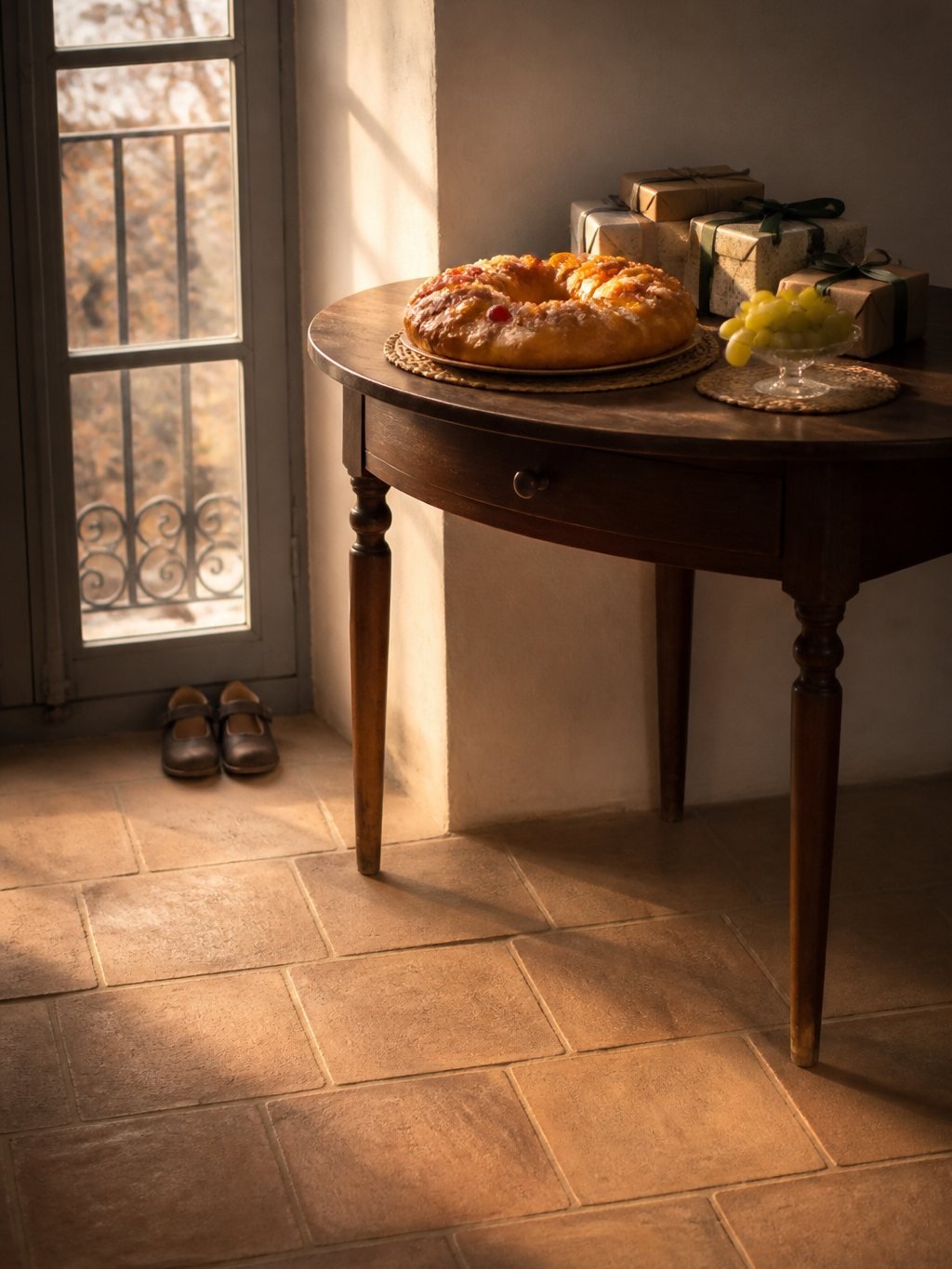
The ring-shaped Kings' cake. Find the figurine and you're crowned.
Find the dried bean, el haba, and in many homes you pay for the roscón.
Tap for the whole season, date by date, with the Spanish for each day.