Comprehensive Guide, 6, 000+ words
Have you ever stood at a bustling Spanish market, desperately trying to understand how much that gorgeous handwoven bag costs, only to realize you can’t count past diez? Learning Spanish numbers is one of the most practical skills you’ll ever master, it’s the key that unlocks shopping, traveling, making reservations, and connecting with over 500 million Spanish speakers worldwide.
Whether you’re planning your first trip to Barcelona or simply want to finally understand what your Spanish-speaking colleagues are saying about dates and prices, this comprehensive guide will take you from complete beginner to confidently counting to 1000 and beyond.
In this guide, you’ll discover the logical patterns that make Spanish numbers surprisingly easy to learn, master the pronunciation that will help you sound like a native speaker, and practice with real-world scenarios that you’ll actually encounter in your Spanish-speaking adventures.
Key Takeaways
- Spanish numbers follow predictable patterns, once you learn 0-30, the rest becomes formulaic
- Numbers 1-15 must be memorized individually as they’re unique
- Gender matters for uno/una and hundreds (200-900)
- Cien vs. ciento, Use cien for exactly 100; ciento when followed by other numbers
- Practice with prices, dates, and phone numbers for real-world fluency

Table of Contents
2. Numbers 11-20: First Patterns
3. Numbers 21-100: Building Blocks
4. Numbers 100-1000: Hundreds
5. Large Numbers. Thousands & Beyond
6. Ordinal Numbers
7. History & Origin of Spanish Numbers
8. Regional Variations
9. Numbers in Spanish Culture
10. Fractions & Decimals
11. Math Operations in Spanish
12. Numbers in Everyday Conversations
13. Common Expressions with Numbers
14. Numbers for Different Professions
15. Practice Exercises
16. Frequently Asked Questions
Numbers 0-10: The Essential Foundation
Every Spanish learner’s journey with numbers starts here. These eleven numbers are the building blocks for everything that follows, and unlike later numbers, they must be memorized individually. The good news? Once you master these, you’ve already learned the hardest part.
Pay special attention to the pronunciation of each number, Spanish is a phonetic language, so what you see is what you say. Notice how most Spanish numbers end in vowels, giving the language its characteristic musical flow.
Memory Trick
Create a story linking each number, “UNO card on DOS shelves with TRES cats eating CUATRO CINCO de Mayo tacos while SEIS people watch SIETE OCHO-puses swim past NUEVE DIEZ-mals.” Silly stories stick in your memory!

Checkpoint, You’ve now learned numbers 0-10! That’s 11 essential building blocks. These form the foundation for everything else. Keep going!
Numbers 11-20: Where Patterns Begin
The numbers 11-15 continue to be unique and require memorization, but starting at 16, you’ll notice your first pattern emerging. Numbers 16-19 are compound words that literally translate to “ten and six, ” “ten and seven, ” and so on, they’re written as single words, dieciseis, diecisiete, dieciocho, diecinueve.
This is where Spanish starts to reveal its logical beauty. Once you see the pattern, you can predict what comes next, a skill that will serve you well as numbers get larger.
Quick Quiz. Test Yourself!
What’s the pattern for numbers 16-19 in Spanish?
Click to reveal answer
They all start with “dieci-” (from diez = 10) + the unit number. So 16 = dieci + seis = dieciseis!
Checkpoint, You’ve now mastered numbers 0-20! That’s 21 essential numbers. You’re making excellent progress!
Numbers 21-100: Master the Tens and Build Any Number
This is where Spanish numbers become beautifully predictable. Once you learn the tens (20, 30, 40, etc.), you can construct any number up to 100 by simply combining them with units using “y” (and). For example, 47 is cuarenta y siete, literally “forty and seven.”
The 20s are special, they’re written as single compound words (veintiuno, veintidos, veintitres). But from 30 onward, you’ll use the pattern, tens + y + units.
The Essential Tens
The 20s. Written as One Word
Correct
Veintiuno
21, written as one word
Incorrect
Veinte y uno
Wrong, don’t separate 21-29
30-99: The Simple Pattern
From 30 onward, use this formula, Tens + y + Units
- 31: treinta y uno
- 45: cuarenta y cinco
- 67: sesenta y siete
- 89: ochenta y nueve
- 99: noventa y nueve
Memory Trick
Notice that 30-90 all end in -enta? This consistent ending makes them easier to remember. Just memorize the beginning of each, tre-, cuare-, cincu-, ses-, set-, och-, nov-. The pattern is your friend!
Numbers 100-1000: Mastering the Hundreds
The hundreds in Spanish are straightforward once you understand the cien vs. ciento rule and the gender agreement for 200-900. These numbers unlock your ability to discuss prices, years, addresses, and quantities in real-world Spanish conversations.
The Cien vs. Ciento Rule
Use CIEN when,
- The number is exactly 100
- Before a noun, cien libros
- Before mil, cien mil
- Before millones, cien millones
Use CIENTO when,
- Followed by another number
- 101 = ciento uno
- 150 = ciento cincuenta
- 199 = ciento noventa y nueve
The Hundreds (100-900)
Common Mistake, Watch out for the three irregular hundreds, 500 (quinientos, not cincocientos), 700 (setecientos, not sietecientos), and 900 (novecientos, not nuevecientos).
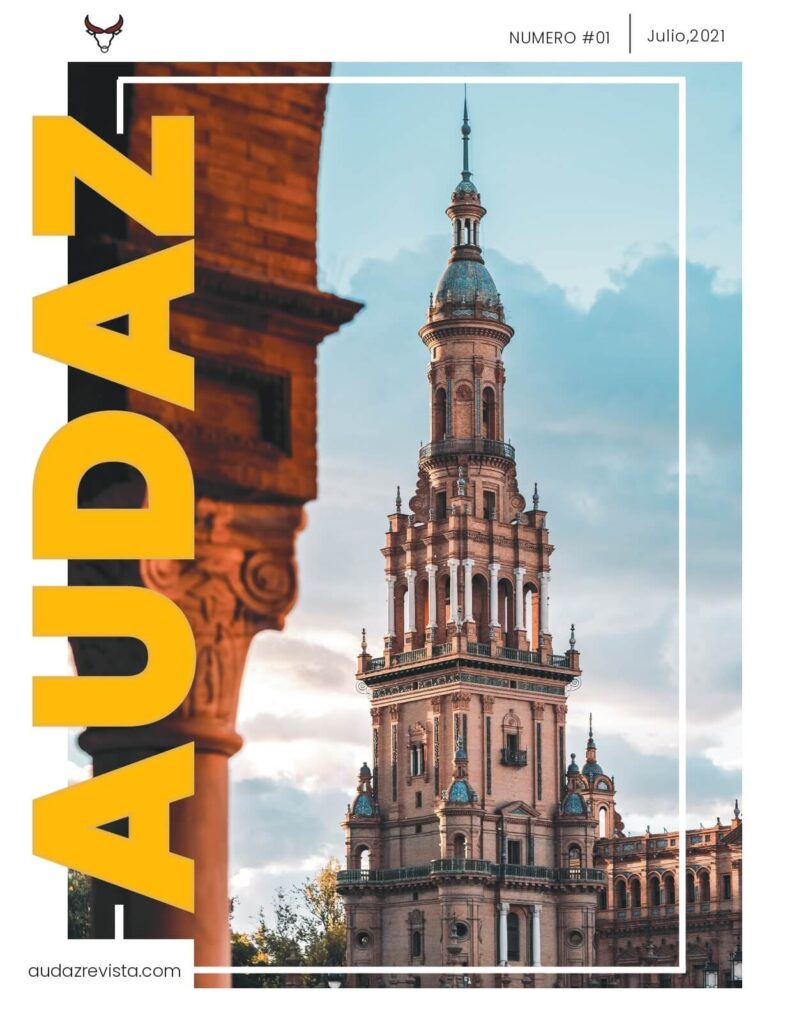
Want to go deeper? Audaz Revista Issue 1 covers topics like this with original cultural features and language insights you will not find in a textbook. Explore Issue 1
Large Numbers. Thousands, Millions, and Beyond
Understanding large numbers in Spanish opens up conversations about populations, prices in different currencies, historical dates, and statistics. The key differences from English are important to grasp, especially the concept that Spanish uses “mil millones” for billion.
Thousands (Mil)
The word mil (thousand) never changes for plural, you never say “dos miles.” Also, unlike uno, you don’t say un mil for 1, 000, just mil.
Millions and Billions
Important, Unlike mil, millon DOES pluralize (millones) and requires de before a noun.
Common Mistake, The Spanish billon equals one trillion (1, 000, 000, 000, 000) in US English, NOT one billion! Spanish uses “mil millones” for what Americans call a billion.
Ordinal Numbers. First, Second, Third…
Ordinal numbers indicate position or rank. They’re essential for giving directions, discussing dates, talking about floors in buildings, and understanding rankings. Unlike cardinal numbers, ordinals agree in gender AND number with the noun they describe.
Pro Tip, Primero and tercero drop the final “o” before masculine singular nouns, el primer piso (the first floor), el tercer libro (the third book).
The History & Origin of Spanish Numbers
Spanish numbers have a rich history that reflects the language’s evolution over centuries. Understanding where these words come from can actually help you remember them better and appreciate the linguistic journey they’ve taken.
Arabic Influence, While the words themselves come from Latin, the number system we use (0-9 with positional notation) came to Spain through Arabic mathematicians during the Moorish occupation (711-1492 CE). The concept of zero (cero) was revolutionary and came from the Arabic “sifr.”
This blend of Latin vocabulary with Arabic mathematical concepts created the number system Spanish speakers use today. The word “algebra” itself comes from the Arabic “al-jabr, ” showing how deeply Arabic mathematical thinking influenced Spain.
Regional Variations in Number Pronunciation
Spanish is spoken in 21 countries, and while the numbers are written the same everywhere, pronunciation can vary significantly. Understanding these differences will help you communicate with Spanish speakers from any country.
Spain vs. Latin America
Spain (Castilian)
C before E/I and Z, Pronounced like “TH” in “think”
Cinco sounds like “THEEN-koh”
Diez sounds like “dee-EHTH”
Latin America
C before E/I and Z, Pronounced like “S”
Cinco sounds like “SEEN-koh”
Diez sounds like “dee-EHS”
Other Regional Notes,
- Argentina and Uruguay, The “ll” in millones sounds like “sh” or “zh”
- Caribbean Spanish, Final consonants may be softened or dropped
- Mexico, Clear, distinct pronunciation often used as a standard for learners
Pro Tip, Both pronunciations are correct! Choose one style to practice consistently, but train your ear to understand both. Most Spanish learners start with Latin American pronunciation as it’s often considered easier for English speakers.
Numbers in Spanish Culture. Lucky, Unlucky & Superstitions
Numbers carry cultural weight in every society, and Spanish-speaking cultures have their own unique beliefs and traditions around certain numbers. Understanding these can help you navigate social situations and appreciate cultural nuances.
Lucky and Unlucky Numbers
Lucky Numbers
7 (siete), Universally considered lucky across most Spanish-speaking cultures
3 (tres), Associated with the Holy Trinity in Catholic traditions
8 (ocho), Symbol of infinity and abundance
Unlucky Numbers
13 (trece), Unlucky, but not as feared as in the US
Tuesday the 13th, In Spain, Martes trece (not Friday!) is the unlucky day
15 (quince), Can be unlucky in some regions
Cultural Number Traditions
Quinceanera (15), The celebration of a girl’s 15th birthday is one of the most important coming-of-age traditions in Latin America. The number fifteen marks the transition from childhood to womanhood.
New Year’s Eve Grapes (12), In Spain, it’s tradition to eat 12 grapes (doce uvas) at midnight on New Year’s Eve, one grape for each chime of the clock, representing good luck for each month of the coming year.
Day of the Dead (November 1-2), These dates (primero y dos de noviembre) are significant throughout Mexico and other Latin American countries for honoring deceased loved ones.
Fractions & Decimals in Spanish
Understanding fractions and decimals is essential for real-world Spanish, from cooking recipes to understanding discounts. Spanish handles these differently from English in some key ways.
Common Fractions
Decimals. The Comma vs. Period Difference
Important, Spanish-speaking countries use commas for decimals and periods for thousands, the opposite of US English!
English (US)
1, 234.56
One thousand two hundred thirty-four point fifty-six
Spanish
1.234, 56
Mil doscientos treinta y cuatro coma cincuenta y seis
How to say decimals, Use “coma” (comma) where English uses “point”,
- 3.14 = tres coma catorce (three point one four)
- 0.5 = cero coma cinco (zero point five)
- 99.99 = noventa y nueve coma noventa y nueve
Math Operations in Spanish
Whether you’re helping a child with homework, discussing business figures, or just splitting a restaurant bill, knowing math vocabulary in Spanish is incredibly practical.
Basic Operations
Quick Quiz. Test Yourself!
How do you say “25 divided by 5 equals 5” in Spanish?
Click to reveal answer
Veinticinco dividido entre cinco son cinco
Additional Math Vocabulary
- Percentage, porcentaje, “El veinte por ciento” (20%)
- Square, al cuadrado, “Tres al cuadrado son nueve” (3 squared = 9)
- Square root, raiz cuadrada, “La raiz cuadrada de nueve es tres”
- Greater than, mayor que, “Diez es mayor que cinco”
- Less than, menor que, “Tres es menor que siete”
Numbers in Everyday Conversations
Let’s practice numbers in realistic scenarios you’ll encounter in Spanish-speaking countries. These dialogues will help you understand how numbers flow naturally in conversation.

Shopping at a Market
Vendedor, Buenos dias. Cuanto quiere?
Tu, Quiero medio kilo de manzanas, por favor.
Vendedor, Muy bien. Son dos euros con cincuenta.
Tu, Aqui tiene cinco euros.
Vendedor, Gracias. Su cambio, dos euros con cincuenta.
Making a Restaurant Reservation
Recepcionista, Restaurante El Sol, buenas tardes.
Tu, Buenas tardes. Quisiera hacer una reservacion para el sabado.
Recepcionista, Por supuesto. Para cuantas personas?
Tu, Para seis personas, a las ocho y media de la noche.
Recepcionista, Perfecto. Su nombre y telefono?
Tu, Maria Garcia. Mi numero es seis uno cinco, cuatro tres dos, uno cero nueve ocho.
At the Doctor’s Office
Doctor, Cuantos anos tiene?
Tu, Tengo treinta y cinco anos.
Doctor, Y cuanto pesa?
Tu, Peso setenta y dos kilos.
Doctor, Bien. Su presion arterial es ciento veinte sobre ochenta. Muy bien.
Common Spanish Expressions with Numbers
Spanish is rich with idiomatic expressions that use numbers. Knowing these will make you sound more natural and help you understand native speakers in everyday conversation.
Popular Number Idioms
“En un dos por tres”, In a flash, very quickly (literally, in a two by three)
Termino el trabajo en un dos por tres. (I’ll finish the work in a flash.)
“A las mil maravillas”, Wonderfully, perfectly (literally, to the thousand wonders)
Todo salio a las mil maravillas. (Everything turned out wonderfully.)
“Cuatro ojos ven mas que dos”, Two heads are better than one (literally, four eyes see more than two)
Revisemos juntos el contrato. Cuatro ojos ven mas que dos.
“Buscarle tres pies al gato”, To overcomplicate things (literally, to look for three feet on a cat)
No le busques tres pies al gato, es muy simple.
“Estar en la luna”, To be daydreaming, distracted
No me escucha, esta en la luna.
“Costar un ojo de la cara”, To cost an arm and a leg (literally, to cost an eye from the face)
Ese coche cuesta un ojo de la cara.
“No hay dos sin tres”, Things come in threes
Ya son dos veces que te llama. No hay dos sin tres!
“Ser el numero uno”, To be the best, number one
En este deporte, el es el numero uno.
Numbers for Different Professions
Different professions use numbers in specialized ways. Here’s vocabulary that will help if you work in these fields or need to communicate with professionals in Spanish.
Audaz Revista
Take Your Spanish Further
Audaz Revista Issue 1 is out now, a full-length bilingual magazine for serious Spanish learners. Latin American culture, grammar deep-dives, and language insights written by educators.
Healthcare
- Blood pressure, presion arterial, “Ciento veinte sobre ochenta” (120/80)
- Temperature, temperatura, “Treinta y siete grados” (37 degrees Celsius)
- Heart rate, pulso / frecuencia cardiaca, “Setenta latidos por minuto”
- Dosage, dosis, “Tome dos pastillas cada ocho horas”
- Weight, peso, “Sesenta y cinco kilos”
Business & Finance
- Invoice, factura, “La factura es de quinientos euros”
- Discount, descuento, “Un descuento del veinte por ciento”
- Budget, presupuesto, “El presupuesto es de diez mil dolares”
- Interest rate, tasa de interes, “Una tasa del cinco coma cinco por ciento”
- Quarter (fiscal), trimestre, “El tercer trimestre del ano”
Education
- Grade/Score, nota / calificacion, “Saque un nueve sobre diez” (I got 9/10)
- Page number, pagina, “Abran el libro en la pagina cuarenta y cinco”
- Grade level, grado / curso, “Esta en quinto grado”
- Semester, semestre, “El segundo semestre”
- Class size, tamano de la clase, “Hay veinticinco estudiantes”
Checkpoint, You’ve now covered all the major number topics! Time to practice with exercises and test your knowledge.
Practice Exercises. Test Your Knowledge
Put your Spanish number skills to the test with these interactive exercises. Click to reveal the answers after you’ve tried!
Exercise 1: Write These Numbers in Spanish
Exercise 2: Translate These Phrases
Exercise 3: Say These Years

Frequently Asked Questions
Next Steps in Your Spanish Journey
Congratulations! You now have a comprehensive understanding of Spanish numbers from 0 to millions and beyond. But learning numbers is just the beginning of your Spanish adventure.

Daily Practice Tips
Make Numbers Part of Your Day
- Count your steps in Spanish during walks
- Read prices in Spanish when shopping
- Say the time in Spanish throughout the day
- Practice phone numbers of friends and family
- Calculate tips and totals in Spanish at restaurants
Ready to Master More Spanish?
Join thousands of Spanish learners who receive our weekly tips, vocabulary lessons, and cultural insights straight to your inbox!
Written by the Audaz Revista editorial team
Audaz Revista is the reading guide for Spanish learners. We tell you what you can read in Spanish at your level, and help you finish it.
Found this guide helpful? Share it with fellow Spanish learners and bookmark it for reference. Spanish numbers will become second nature before you know it!
Audaz Numero #01: The Premiere Collector’s Edition
If this article got you excited, the magazine is going to blow your mind. The Audaz Premiere Edition goes way deeper into the traditions, histories, and cultural nuances that make Spanish-speaking worlds so fascinating. Think of it as a semester abroad in 80 pages.