Latin American Culture: What Makes Each Country Uniquely Beautiful
Key Takeaway, Latin America is not a single culture. It is 19 countries, hundreds of Indigenous nations, and centuries of layered history. Understanding each country’s unique character is what separates a surface-level Spanish learner from someone with genuine cultural fluency.
When people say “Latin American culture, ” they often picture a single, unified identity. The reality is far richer. Latin America spans from the deserts of northern Mexico to the glaciers of Patagonia. It includes 19 countries, 650 million people, hundreds of Indigenous languages, and cultural traditions shaped by Aztec and Inca empires, Spanish and Portuguese colonizers, African enslaved peoples, and waves of immigrants from Europe, Asia, and the Middle East.
As a native of Buenos Aires with years spent traveling and teaching across the continent, I can tell you firsthand, arriving in Mexico City feels nothing like arriving in Lima, which feels nothing like arriving in Havana. The Spanish is different. The food is different. The music, the architecture, the sense of humor, the relationship to time, all different.
This guide explores what makes each major country unique, while also celebrating the deep cultural threads that connect them all.
What Unites Latin America
Despite enormous diversity, certain cultural threads run through most of Latin America. Understanding these helps you navigate the region and connect with people across borders.
Familismo is the most powerful of these threads. Latin American cultures place family at the center of social life. Extended families typically live close together, celebrate milestones collectively, and rely on each other for support in ways that can surprise visitors from more individualistic cultures. Sunday family lunches can last four hours. No one thinks this is unusual.
Catholic heritage shapes everything from architecture to the calendar. Religious festivals punctuate the year in every country. Even in increasingly secular urban environments, Catholic traditions shape social customs around birth, marriage, and death. The Day of the Dead is perhaps the most vivid example of Catholic and Indigenous beliefs fusing into something uniquely Latin American.
Food as community is another near-universal value. Across the continent, sharing a meal is a profound act of connection. The diversity of Latin American food is staggering, from Mexico’s complex mole sauces to Peru’s ceviche to Argentina’s asado. But in every country, eating well and eating together is a priority, not a luxury.
Music and dance are not entertainment in Latin America. They are a language. Salsa, cumbia, tango, merengue, samba, vallenato, mariachi, son cubano, each genre is a cultural identity in its own right. These musical traditions have shaped global popular music more than almost any other regional culture.
Cultural Highlights, 8 Countries at a Glance
Each country has its own Spanish dialect, accent, and slang, learning cultural context makes language learning 40% faster.
Want to go deeper? Audaz Revista Issue 1 covers topics like this with original cultural features and language insights you will not find in a textbook. Explore Issue 1
Mexico. Where Ancient and Modern Collide
Mexico is the cultural powerhouse of Latin America, with a global influence far beyond its size. Its cultural identity is built on one of the world’s great ancient civilizations, the Aztec Empire, known to its people as the Mexica, layered with Spanish colonial history and centuries of mestizo creativity.
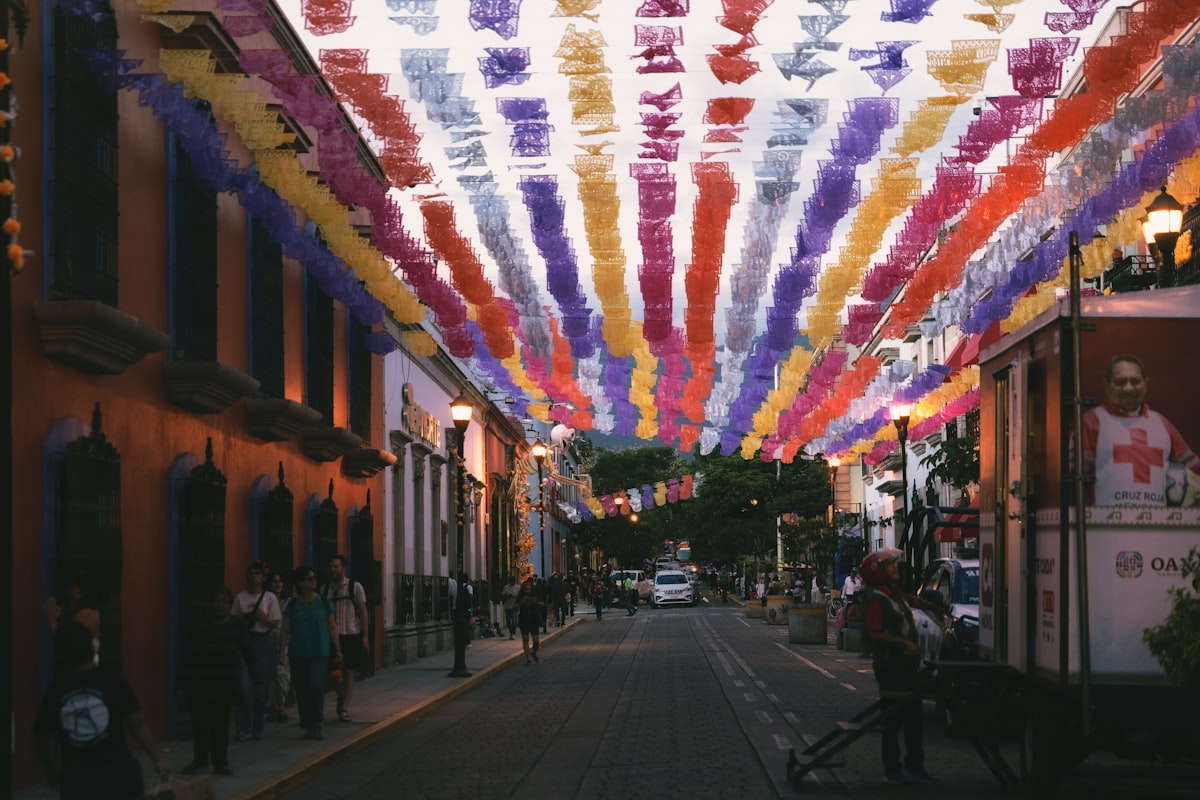
The Day of the Dead (Día de los Muertos) is Mexico’s most iconic cultural export. A three-day celebration blending pre-Columbian rituals with Catholic All Saints’ Day, it is one of the most visually and emotionally powerful traditions in the world. Families build elaborate altars (ofrendas) for departed loved ones, decorating them with marigolds, food, photographs, and personal objects. The belief is that the dead return to visit for these three days, and the living celebrate rather than mourn.
Mexican art has shaped world culture in ways that are difficult to overstate. The muralist movement of the early 20th century, led by Diego Rivera, José Clemente Orozco, and David Alfaro Siqueiros, brought Indigenous history and working-class struggle into public spaces. Frida Kahlo, whose self-portraits became icons of feminist and Indigenous identity, remains one of the most recognized artists in history. Her work is inseparable from her Mexican identity and her experience as a woman navigating a male-dominated world. For more on women who have shaped Latin culture, read our piece on pioneering Hispanic women leaders.
Mexico’s cuisine has been recognized by UNESCO as an Intangible Cultural Heritage of Humanity, the only cuisine in Latin America to receive this honor. The complexity of dishes like mole negro, with its 30+ ingredients and days of preparation, reflects a culinary sophistication that rivals any culture in the world.
Colombia. The Country of Magical Realism
Colombia is a country of extraordinary contrasts. Caribbean beaches, Andean mountains, Amazon rainforest, and Pacific coast all within one national border. Its cultural identity reflects this geographic diversity, a mix of Indigenous, African, and Spanish influences that varies dramatically by region.
The Caribbean coast is where Colombia’s most exuberant cultural expressions live. Carnaval de Barranquilla, held each February, is the second-largest carnival in the world after Rio de Janeiro. It is a four-day explosion of cumbia, porro, and mapalé music, elaborate costumes, and street dancing that draws hundreds of thousands of visitors. The carnival was declared an Oral and Intangible Heritage of Humanity by UNESCO in 2003.
Colombia’s literary tradition stands among the greatest in the Spanish-speaking world. Gabriel García Márquez, born in the coastal town of Aracataca, created the genre of magical realism with works like One Hundred Years of Solitude and Love in the Time of Cholera. His vision of a world where the miraculous and the mundane coexist has influenced writers on every continent.
Shakira, born in Barranquilla, has brought Colombian musical identity to a global audience. Her fusion of Arabic music (from her Lebanese heritage), Colombian cumbia and vallenato, and international pop created a sound that is entirely her own, and distinctly Colombian in its hybrid DNA.
Argentina. Tango, Literature, and Passionate Identity
Argentina is a country that takes its cultural identity with extraordinary seriousness. As someone from Buenos Aires, I say this with affection and self-awareness. Argentines are passionate about tango, football, politics, literature, and asado (barbecue), and they will discuss any of these topics at length, with great conviction, for as long as you are willing to listen.
Tango is Argentina’s greatest cultural gift to the world. Born in the working-class neighborhoods of Buenos Aires and Montevideo in the late 19th century, it is a music and dance form of extraordinary emotional intensity. At its heart, tango is a conversation between two people, sometimes tender, sometimes combative, always deeply present. UNESCO recognized tango as Intangible Cultural Heritage in 2009. The milongas (tango dance halls) of Buenos Aires are still some of the most compelling cultural experiences in the world.
Argentina’s literary tradition is equally remarkable. Jorge Luis Borges, who spent most of his life in Buenos Aires, created an entirely new form of literature, philosophical, labyrinthine, precise, and surreal. His stories about libraries, mirrors, maps, and labyrinths influenced writers from Umberto Eco to Neil Gaiman. Isabel Allende, though Chilean by birth, spent years in Argentina and her work reflects the intellectual climate of the Southern Cone. Her novel The House of the Spirits remains one of the great works of Latin American fiction.
Argentine Spanish is immediately recognizable. The voseo (using vos instead of tú) and the distinctive Italian-influenced intonation, a legacy of the massive waves of Italian immigration between 1880 and 1930, make porteño Spanish sound unlike any other variety of the language.
Peru. The Seat of the Inca Empire
Peru is one of the world’s great cradles of civilization. The Inca Empire, which at its peak stretched from present-day Colombia to central Chile, was the largest empire in pre-Columbian America. Its capital, Cusco, was one of the most sophisticated cities in the world, built without the wheel, iron tools, or a written language, and yet engineering structures like Machu Picchu that still baffle architects today.
Peruvian food has emerged in the 21st century as one of the world’s great cuisines. Lima has consistently ranked among the top culinary destinations on earth. Ceviche, raw fish cured in citrus juice with chili and red onion, is Peru’s national dish and one of the most copied dishes in the world. The fusion of Indigenous, Spanish, Japanese, Chinese, and African ingredients and techniques has created a cuisine of extraordinary complexity and variety.
Quechua, the language of the Inca Empire, is still spoken by approximately 8 million people across the Andes. Many Peruvians are bilingual in Spanish and Quechua, and Quechua words have entered Spanish and even English, condor, puma, quinoa, and llama all come from Quechua.
Cuba and the Caribbean. The Rhythm of the Atlantic World
Cuba sits at a cultural crossroads. Indigenous Taíno heritage, Spanish colonialism, and the forced migration of hundreds of thousands of Africans created a culture of extraordinary musical richness. Son cubano, the foundation of salsa, was born in Cuba’s eastern provinces in the early 20th century. Afro-Cuban religions like Santería, which blends Yoruba spiritual practice with Catholic iconography, remain living spiritual traditions for many Cubans.
Cuban music changed the world. The Buena Vista Social Club project, which brought veteran Cuban musicians to international attention in the late 1990s, introduced a global audience to the depth and beauty of traditional Cuban son. Celia Cruz, known as the “Queen of Salsa, ” remains one of the most influential musicians Latin America has produced.
The Dominican Republic gave the world merengue and bachata. Puerto Rico, a Caribbean island with deep ties to both Latin American culture and the United States, has been central to the rise of reggaeton, the genre that now dominates global popular music. Bad Bunny, J Balvin, Ozuna, and Daddy Yankee have collectively accumulated more streams than almost any other artists in the world.
Chile, Venezuela, and the Andean Nations
Chile is one of the world’s most geographically extreme countries, a thin strip of land stretching 4, 300 kilometers from the Atacama Desert to Patagonia. Its cultural identity reflects this extremity, intellectually rigorous, wine-obsessed, and fiercely independent.
Pablo Neruda, who spent much of his life in Chile’s coastal towns, is widely considered the greatest Spanish-language poet of the 20th century. His Nobel Prize in Literature in 1971 brought global attention to Chilean literary culture. Isabel Allende, his niece by marriage, carried that tradition into the realm of fiction, with novels that have sold 77 million copies worldwide and been translated into 42 languages.
The Mapuche people of southern Chile and Argentina represent one of the few Indigenous groups that successfully resisted Inca and Spanish conquest. Their cultural identity, language, and spiritual practices remain alive and politically active today.
Venezuela, despite its recent political and economic difficulties, has a rich cultural legacy. The llanero tradition of the Venezuelan and Colombian plains, expressed in joropo music and equestrian skill, is one of South America’s most distinctive regional cultures. Bolivia and Ecuador are home to some of the most vibrant Andean Indigenous cultures, with communities that maintain Quechua and Aymara language traditions, textile arts, and spiritual practices connecting them directly to pre-Columbian civilization.
Audaz Revista
Take Your Spanish Further
Audaz Revista Issue 1 is out now, a full-length bilingual magazine for serious Spanish learners. Latin American culture, grammar deep-dives, and language insights written by educators.
| Country | Cultural Icon | Music/Dance | UNESCO Heritage |
|---|---|---|---|
| Mexico | Frida Kahlo | Mariachi, Banda | Cuisine, Mariachi, Day of Dead |
| Colombia | Gabriel García Márquez | Cumbia, Vallenato | Carnaval de Barranquilla |
| Argentina | Jorge Luis Borges | Tango | Tango (shared with Uruguay) |
| Peru | Mario Vargas Llosa | Marinera, Festejo | Machu Picchu, Cuisine |
| Cuba | Celia Cruz | Son Cubano, Salsa | Old Havana, Rumba |
| Chile | Pablo Neruda | Cueca | Rapa Nui, Valdivian Churches |
How Cultural Knowledge Transforms Your Spanish Learning
Understanding Latin American culture is not a bonus feature of language learning. It is essential to it. When you know that Argentines use vos instead of tú, you stop being confused when they speak to you. When you understand that Mexican Spanish is peppered with Nahuatl words (chocolate, tomate, aguacate), you start noticing layers of history in everyday vocabulary.
Cultural context also gives you better instincts for when and how to use what you learn. The formal register you need in a Buenos Aires business meeting is different from the warm, joke-filled speech of a Colombian family gathering. Knowing the culture helps you read the room.
For more on building cultural fluency alongside language skills, read our guides on Hispanic traditions across Latin America and explore the remarkable festivals of the Spanish-speaking world. And when you are ready to practice what you have learned, our guide to Spanish conversation practice techniques will help you put cultural knowledge into real-world use.
Frequently Asked Questions
What is Latin American culture?
Latin American culture encompasses the art, music, food, language, religion, and traditions of the 19 countries in Latin America. It is shaped by Indigenous civilizations, Spanish and Portuguese colonization, African influences, and immigration from Europe and Asia. It is not a single culture but a diverse family of related cultures sharing history, language, and values.
What do all Latin American countries have in common?
Most Latin American countries share Spanish or Portuguese as their official language, a predominantly Catholic heritage, strong family values (familismo), a vibrant food culture, and a rich tradition of music and dance. Many also share historical experiences of colonization, independence movements, and the ongoing fusion of Indigenous, European, and African cultural elements.
Which Latin American country has the most cultural influence globally?
Mexico has the largest global cultural footprint, with its cuisine (the only Latin American cuisine with UNESCO recognition), art (Frida Kahlo, Diego Rivera), music (mariachi, regional Mexican), and film industry recognized worldwide. Argentina dominates in literature and tango. Colombia has had an outsized influence on music, with artists like Shakira and J Balvin reshaping global pop.
How does Latin American culture differ from Spanish culture?
Spain is a European country with its own distinct culture. Latin American cultures share Spanish colonial heritage with Spain but have developed independently over 200+ years since independence. Latin American cultures have deep Indigenous and African roots that Spain does not share. The Spanish spoken in Latin America varies significantly from Peninsular Spanish, and traditions like the Day of the Dead, quinceañera, and tango are distinctly Latin American.
Deepen Your Cultural Fluency
Get weekly Spanish lessons, cultural insights, and learning strategies from our team of native speakers and language experts.
Written by Carlos Rivera
Carlos is a native Spanish speaker from Buenos Aires with a passion for making language learning accessible. He has helped over 5, 000 students achieve fluency through his innovative teaching methods.
Share
Topics

audazrevista
You may also like


Get the Inside Scoop