8 Hidden Spots in Mallorca Only Locals Know About
In This Guide
- Cala Deià. The Hidden Cove the Artists Found First
- Pollença Old Town on a Tuesday Morning
- Sa Calobra. Worth Every Hairpin Bend
- Binissalem. The Wine Village Most People Drive Past
- Capdepera Castle at Dusk
- The Tramuntana Villages Beyond Sóller
- Es Trenc. The Beach That Feels Like the Caribbean
- Palma’s Santa Catalina Neighbourhood
- Learning the Language of the Island
- 🧭 Interactive. Which Mallorca Spot Matches Your Style?
- Conclusion
Mallorca (mah-YOR-kah) has a reputation problem. Ask most people and they’ll tell you it’s all package holidays, overcrowded beaches, and English breakfasts. They’re not entirely wrong about the tourist strips. But they’re missing the island that actually exists beyond them.
The real Mallorca is one of the most beautiful places in the Mediterranean. Ancient villages, olive groves, limestone mountains, and coastline so dramatic it looks painted. These eight spots will change that.
1. Cala Deià. The Hidden Cove the Artists Found First
The village of Deià (day-YAH) in the Tramuntana mountains has attracted artists and writers for over a century. Robert Graves lived here for most of his adult life. The village itself sits 300 metres above sea level, all golden stone and flowering gardens.
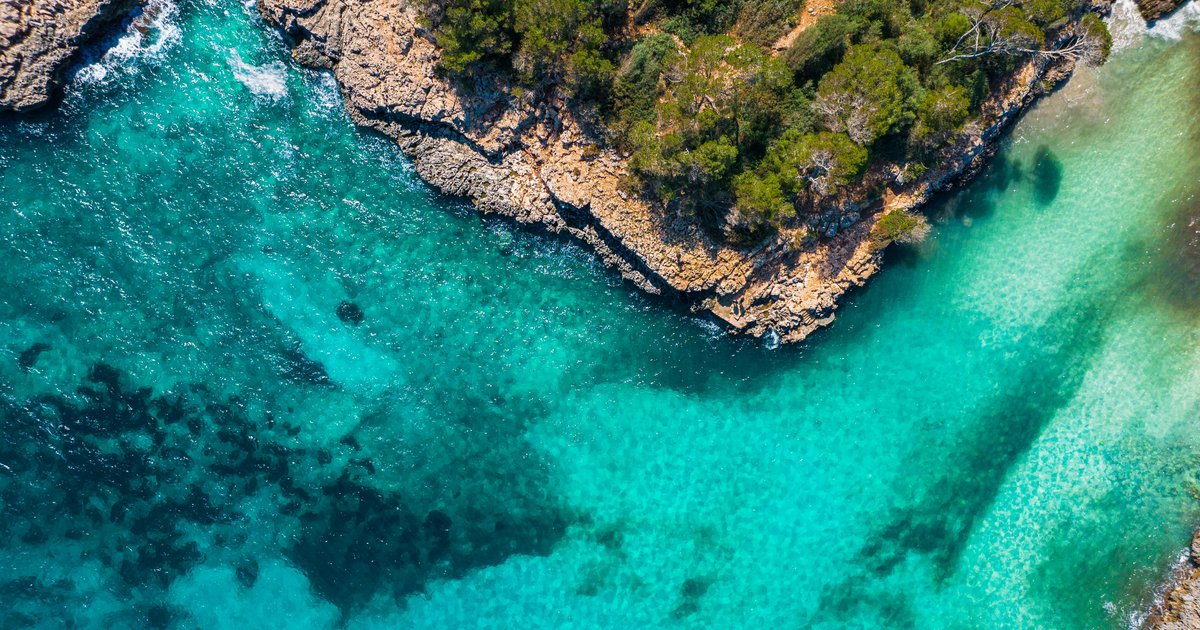
Below it, accessed by a steep path through olive trees, is Cala Deià. It’s not a beach in the traditional sense. It’s a pebble cove with water so clear and cold it takes your breath away. There are no sunbed rentals, no beach bars to speak of. Just the water, the rocks, and the sound of the mountains above. Go early, by 11am in July and August it fills up.
2. Pollença Old Town on a Tuesday Morning
Pollença (poh-LEN-thah) is one of Mallorca’s most beloved inland towns, but most visitors come on Sunday for the market. That’s the wrong day. Come on a Tuesday or Wednesday morning when the town belongs to its residents.
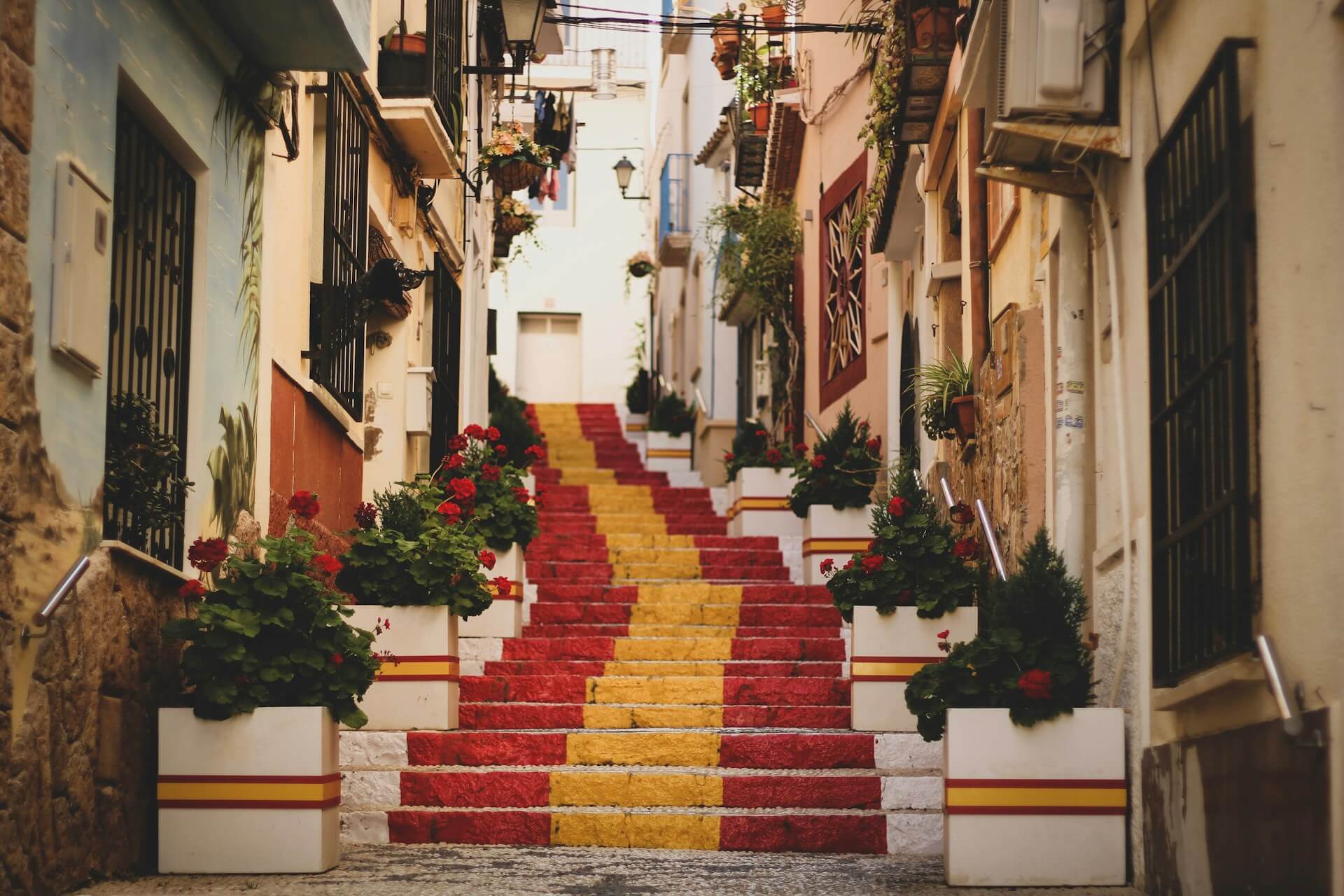
The 365 steps of the Calvari (kal-VAH-ree) staircase lead to a small chapel at the top with sweeping views over the Tramuntana foothills. Local families have been climbing these steps on Good Friday in a candlelit procession for centuries, the tradition dates back to the 17th century according to the municipal records of Pollença. At the bottom, sit at one of the cafes on the main square with a cortado (kor-TAH-doh) and watch the town go about its morning.
3. Sa Calobra. Worth Every Hairpin Bend
The road to Sa Calobra (sah kah-LOH-brah) is famous among cyclists as one of the most spectacular and technically demanding descents in Europe. Tour de France riders train here. The road twists through 26 hairpin bends down 800 metres of limestone cliff to a tiny cove at the bottom.
At Sa Calobra, the Torrent de Pareis, a dramatic gorge carved through the mountain, meets the sea. Walk through the tunnel at the back of the beach into the gorge. In spring, water trickles through it. In summer, it’s dry and you can hike deep into the mountain. Arrive by 9am or after 5pm to avoid the tour boats.
4. Binissalem. The Wine Village Most People Drive Past
Want to go deeper? Audaz Revista Issue 1 covers topics like this with original cultural features and language insights you will not find in a textbook. Explore Issue 1
The highway from Palma to Alcúdia passes through the centre of Mallorca’s wine country, and most tourists drive straight through without stopping. That’s a significant mistake.
Binissalem (bin-ee-SAH-lem) is a quiet market town surrounded by vineyards growing the local Manto Negro (MAN-toh NAY-groh) grape variety, which produces rich, earthy reds found almost nowhere else in the world. The local cooperative, Bodega José L. Ferrer, has been producing wine since 1931 and offers tastings and tours. The town square in the late afternoon with a glass of local wine and a plate of sobrasada (so-bra-SAH-dah) is one of the most genuinely relaxing experiences the island offers.
5. Capdepera Castle at Dusk
Most of Mallorca’s tourist activity clusters in the southwest and northwest of the island. Drive to the northeast and you find a different place entirely. Capdepera (cap-deh-PAY-rah) is a small town crowned by a 14th-century castle that’s been almost entirely preserved.
The castle walls are walkable and the views take in the entire northeastern coastline, including the island of Menorca on clear days. Come at dusk when the stone catches the last light and most of the day visitors have left. Entry costs just €3. Below the castle, the pastisseria (pas-tee-seh-REE-ah) on the main street sells ensaimades (en-sigh-MAH-dess), Mallorca’s spiralled pastry, that locals will tell you are the best on the island.
6. The Tramuntana Villages Beyond Sóller
Everyone knows Sóller (SOH-yehr). The vintage tram, the orange groves, the old town. It’s beautiful and deservedly popular. But Sóller is the gateway to a string of smaller villages most visitors never reach.
Fornalutx (for-nah-LOOCH) sits about four kilometres above Sóller and is regularly voted one of the most beautiful villages in Spain. The population is around 500 people. The streets are stone, the houses are terracotta, and there’s a single bar on the square that has probably looked identical for 50 years. Walk from Sóller through the orange and lemon groves, about one hour, clearly marked. The café in Fornalutx does a lunch menu for €12 that includes fresh vegetables from local farms.
To prepare Spanish phrases for asking locals about trails and directions, our guide to 100+ Common Spanish Phrases Every Beginner Needs to Know covers the conversational basics that make travel genuinely easier.
7. Es Trenc. The Beach That Feels Like the Caribbean
Mallorca’s southern coast is flat, and most of it is developed. But Es Trenc (ess TRENG) is protected as a natural park, which means no hotels, no beach bars, and no development of any kind. The water here is Caribbean blue-green. The sand is white and fine. The beach stretches for nearly four kilometres without interruption.
Getting here requires either a long walk from a car park or a 20-minute bike ride from the nearest town, Ses Covetes. That inconvenience keeps it from being completely overrun. Go on a weekday in June or September. Bring everything you need including food and water.
8. Palma’s Santa Catalina Neighbourhood on a Friday Evening
Palma gets written off as just a transit hub by visitors rushing to the beach. That’s genuinely their loss. The city has a beautiful old town, a spectacular Gothic cathedral, and a neighbourhood called Santa Catalina (san-tah kah-tah-LEE-nah) that has become one of the most exciting eating and drinking areas in Spain.
The covered market at its centre, the Mercat de Santa Catalina, has stalls serving everything from Japanese ramen to Mallorcan cocas (KOH-kahs, flat savoury pastries). Buy a glass of wine from one stall, a tapa from another, and find a spot at a communal table. This is how modern Mallorca actually eats.
Learning the Language of the Island
Mallorca is a bilingual island. Spanish is universal, but Mallorquín (mah-yor-KEEN), a dialect of Catalan, is widely spoken. A few words go a long way. Gràcies (GRA-see-es) means thank you. Bon dia (bon DEE-ah) means good morning. Attempting even these basic phrases will earn you genuine warmth from locals.
Our article on 7 Spanish Words Your Textbook Never Taught You covers the kinds of authentic usage that bring real travel conversations to life.
🧭 Which Hidden Mallorca Spot Matches Your Travel Style?
Answer three quick questions to find your perfect Mallorca destination.
1. What’s your ideal Mallorca morning?
2. How far will you go to avoid crowds?
3. Your perfect Mallorca lunch is…
Audaz Revista
Take Your Spanish Further
Audaz Revista Issue 1 is out now, a full-length bilingual magazine for serious Spanish learners. Latin American culture, grammar deep-dives, and language insights written by educators.
Conclusion
The real Mallorca is out there. It’s just past the airport transfer bus, past the resort strip, past the tourist beaches. It’s in a mountain village bar where the menu is handwritten and nobody speaks English. It’s in a cove you reached by walking 40 minutes downhill. It’s in a glass of Manto Negro at a bodega that’s been making wine since 1931.
Every one of these places rewards your Spanish too. The local at Pollença market who tells you about the best hike. The bodega owner in Binissalem who lights up when you ask about the Manto Negro grape. The fisherman at Sa Calobra who explains where the gorge leads.
Pack your bags. The real Mallorca is waiting just past the tourist strip, and it’s extraordinary. ¡Bon dia! 🌊
Share
Topics

audazrevista
You may also like
Get the Inside Scoop