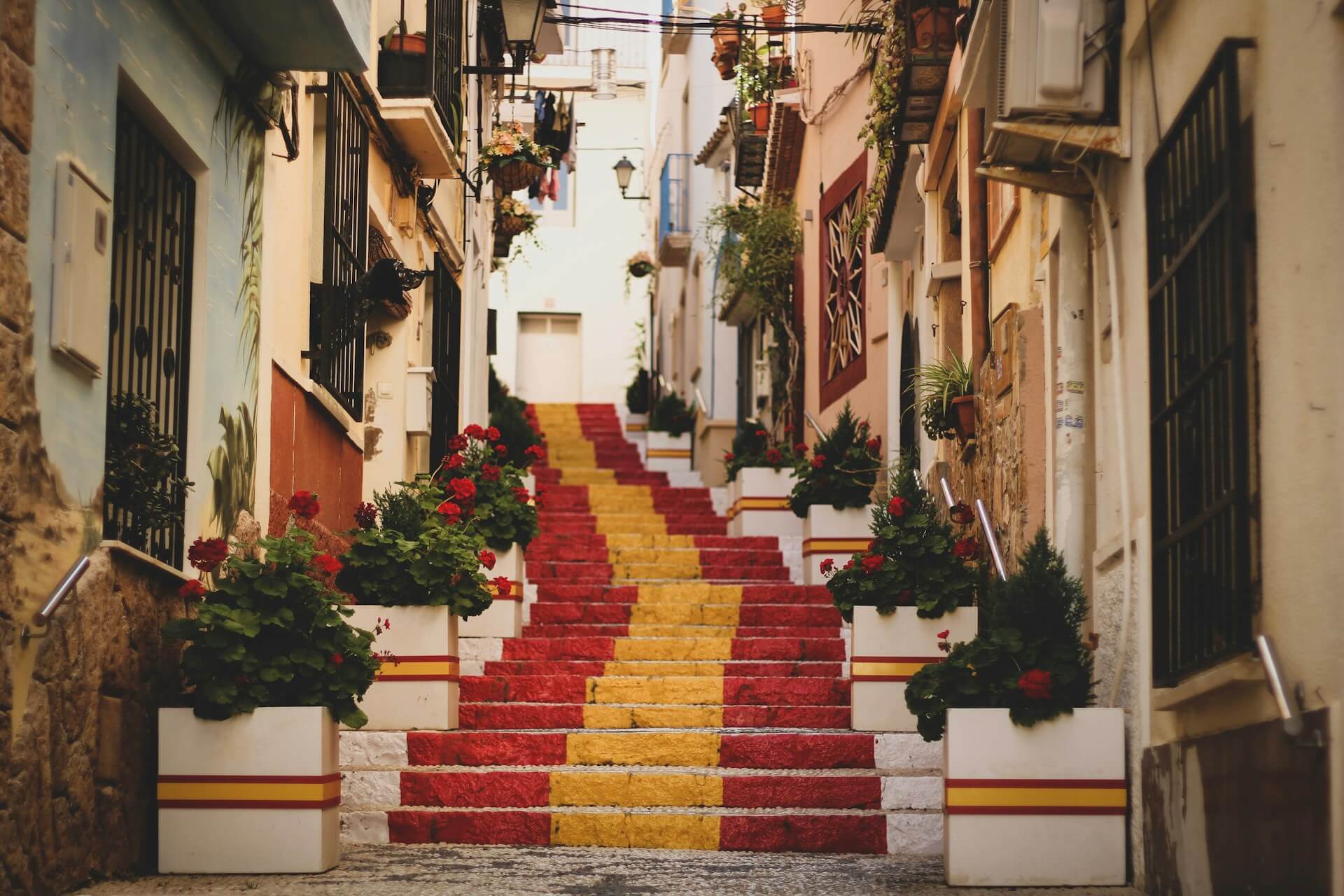
The Complete Pamplona Travel Guide: Beyond the Running of the Bulls
In This Guide
- Understanding the City’s Geography
- The Old Town. More Than a Bull Run Route
- The Food of Navarre. Spain’s Most Underrated Cuisine
- The San Fermín Festival. What Actually Happens
- Day Trips from Pamplona
- The Camino de Santiago
- Key Spanish Phrases for Pamplona
- 🐂 Interactive. Should You Run the Encierro?
- When to Visit
- Conclusion
Most people know one thing about Pamplona (pam-PLOH-nah), the running of the bulls. Some know two things, the running of the bulls and Ernest Hemingway’s novel that made it famous worldwide. But Pamplona is a city of 200, 000 people with a year-round life, a remarkable old town, exceptional food, and a history that stretches back to Roman times.
The San Fermín festival (sahn fair-MEEN) that includes the bull run lasts nine days in July. For the other 356 days of the year, Pamplona is a handsome Navarrese city that most travellers pass through without stopping. This guide is about what you’ll find when you actually stay.
Understanding the City’s Geography
Pamplona sits on a plateau in the Pyrenean foothills of northern Spain. The old town (the casco antiguo, KAS-koh an-TEE-gwoh) sits on a raised promontory above the Arga river and is enclosed by massive Renaissance walls. These fortifications, built between the 16th and 18th centuries, are extraordinarily well preserved. Walking the full circuit of the walls takes about an hour and gives you a panoramic view of the city and the surrounding farmland.
The Old Town. More Than a Bull Run Route
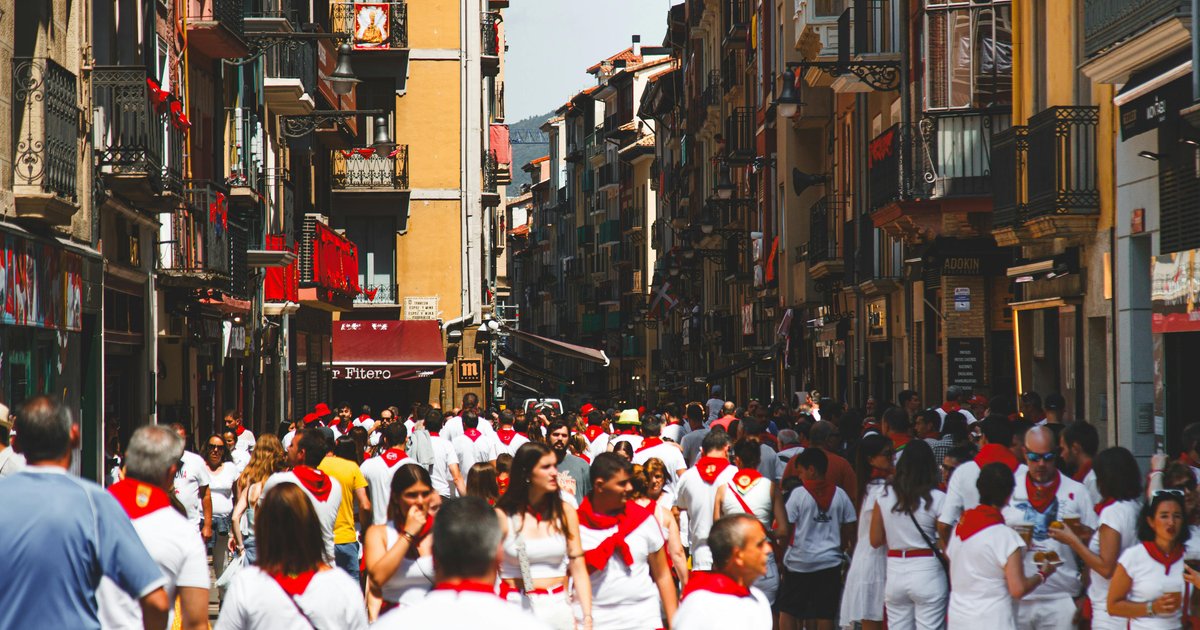
The route of the encierro (en-see-EH-rroh, the bull run) runs 875 metres from the corrales (pens) near the city walls down through Santo Domingo street, around the curve at the Town Hall, and along the Estafeta (es-tah-FEH-tah) street to the bullring.
Every visitor photographs Estafeta Street. Fewer people explore what’s just off it. The old town is a dense grid of narrow streets packed with pintxos bars, independent shops, medieval churches, and plazas that fill with local life in the evenings.
Plaza del Castillo is the heart of it, a large rectangular square ringed by arcaded buildings, the social centre of Pamplona since the 16th century. The Bar Txoko on the square was Hemingway’s regular during his visits. Sit under the arches with a wine and watch the plaza life.
The Cathedral of Santa María la Real is one of the finest Gothic cathedrals in Spain, begun in the 14th century and completed in the 15th. The cloister is exceptional, light, airy, and almost completely overlooked by visitors focused on more famous Spanish cathedrals. Entry costs €5.
The Food of Navarre. Spain’s Most Underrated Cuisine
Navarre has one of the best regional cuisines in Spain, and almost nobody outside Spain knows it. This is your advantage.
Pimientos del piquillo (pee-MYEN-tos del pee-KEE-yoh), small, sweet red peppers from the Navarre town of Lodosa, roasted over wood fires and peeled by hand. You’ll find them stuffed with bacalao (bah-kah-LAH-oh, salt cod) or simply dressed with olive oil. They’re extraordinary.
Pochas (POH-chas) are fresh white beans from the Navarre valley, cooked simply with vegetables. Chistorra (chees-TOH-rah) is a thin, fast-curing chorizo-style sausage fried quickly in olive oil, available in almost every pintxos bar for €2–3.
The local wine is Navarra designation rosé, made primarily from Garnacha (gar-NAH-chah) grapes, a serious wine that pairs perfectly with everything on a pintxos bar counter. Order it as un rosado navarro (oon roh-SAH-doh nah-VAH-rroh).
The San Fermín Festival. What Actually Happens
Want to go deeper? Audaz Revista Issue 1 covers topics like this with original cultural features and language insights you will not find in a textbook. Explore Issue 1
The festival opens at noon on July 6 with the chupinazo (choo-pee-NAH-thoh), a rocket fired from the Town Hall balcony while tens of thousands of people pack the square below. The crowd goes completely wild. If you’re anywhere near the plaza at noon on July 6, this will be one of the most viscerally exciting moments of your life.
The bull run itself takes place at 8am every morning from July 7 to 14. It lasts between 3 and 5 minutes. According to official statistics from the San Fermín festival organisation, between 200 and 300 people are injured during the eight runs each year, with serious injuries averaging around 10–15. Thirteen people have been killed by bulls since 1910.
San Fermín is much more than the run. There are bullfights every evening, concerts, processions, fireworks (the best in Spain, according to many Spaniards), and nine days of continuous street celebration. The city genuinely does not sleep.
Day Trips from Pamplona
The Roncesvalles Pass (ron-thes-VAH-yes), 45 minutes north, is the entry point into Spain on the French pilgrimage route to Santiago de Compostela. The 12th-century monastery has been receiving pilgrims for nearly 900 years.
Olite (oh-LEE-teh), 40 minutes south, is a medieval town built around a spectacular royal palace. The old town is tiny and exquisite, and the local bodega produces excellent Navarra reds and rosés.
The Bardenas Reales (bar-DAY-nahs reh-AH-les), about one hour southeast, is a semi-desert natural park, Spain’s own badlands, with eroded clay and limestone formations rising from a flat plain. Hire a bike or a 4WD and spend a day there.
The Camino de Santiago. Pamplona as a Starting Point
Thousands of people walk into Pamplona every day between April and October on the Camino Francés. Even if you have no intention of walking to Santiago, the Camino culture in Pamplona is worth engaging with. The city has excellent pilgrim infrastructure and a warm culture of hospitality. The route through the old town is marked with scallop shells.
For those learning Spanish with travel as motivation, the Camino is one of the best linguistic immersion environments available. Our guide to 10 Proven Spanish Conversation Practice Techniques gives you the strategies to maximise every conversational opportunity on the road.
Key Spanish Phrases for Pamplona
- ¿Dónde está la muralla? (DON-day es-TAH lah moo-RAH-yah), “Where are the city walls?”
- ¿A qué hora empieza el encierro? (ah kay OH-rah em-PYEH-thah el en-see-EH-rroh), “What time does the bull run start?”
- Ponme una chistorra, por favor (PON-may OO-nah chees-TOH-rah), “Give me a chistorra, please”
- ¡Viva San Fermín! (BEE-vah sahn fair-MEEN), the festival toast, answered with ¡Gora San Fermín! in Basque
Our collection of 50 Spanish Idioms and Expressions covers the authentic phrases that make you sound like someone who actually lives in Spain.
🐂 Should You Run the Encierro? Find Out in 60 Seconds
The decision tree every San Fermín visitor needs before July 7.
🐂 Should You Run the Encierro?
When to Visit
July (San Fermín) is extraordinary but expensive and crowded, book accommodation six to twelve months ahead. May, June, September, and October offer the best combination of good weather, manageable crowds, and full access to everything the city offers. Winter in Pamplona is cold and sometimes snowy, but the old town is beautiful under frost and you’ll have it almost entirely to yourself.
Audaz Revista
Take Your Spanish Further
Audaz Revista Issue 1 is out now, a full-length bilingual magazine for serious Spanish learners. Latin American culture, grammar deep-dives, and language insights written by educators.
Conclusion
Pamplona is not just a nine-day party in July. It’s a city with character, history, and food worth travelling for at any time of year. The Gothic cathedral deserves your attention. The Bardenas Reales will surprise you. The chistorra will make you wonder why nobody told you about Navarrese food before.
And yes, if you’ve answered all five questions in the flowchart honestly and you’re still planning to run, then run. Do it properly. Study the route. Stay sober. Know where to fall. Feel every second of those 3 minutes.
Your Spanish will get a genuine workout no matter what you choose to do. Every conversation in a pintxos bar, every ¡Viva San Fermín! you shout back, every Gora! from a local who hears you try, it all adds up. Pack your bags. Give Pamplona the time it deserves. Let’s go. 🐂
Share
Topics

audazrevista
You may also like

Get the Inside Scoop