Salamanca’s Best Kept Secrets: A Language-First Travel Guide
In This Article
- Why Salamanca Is Spain’s Best-Kept Secret for Language Learners
- The City With Spain’s Purest Spanish
- 5 Hidden Gems Beyond the Plaza Mayor
- Student Culture: Why Salamanca Feels Different
- Where to Eat Like a Salmantino
- Your Language Immersion Itinerary
- Salamanca-Specific Vocabulary
- Conclusion
Pack your bags. We’re going somewhere incredible. And this time, it’s not Barcelona, Madrid, or Seville.
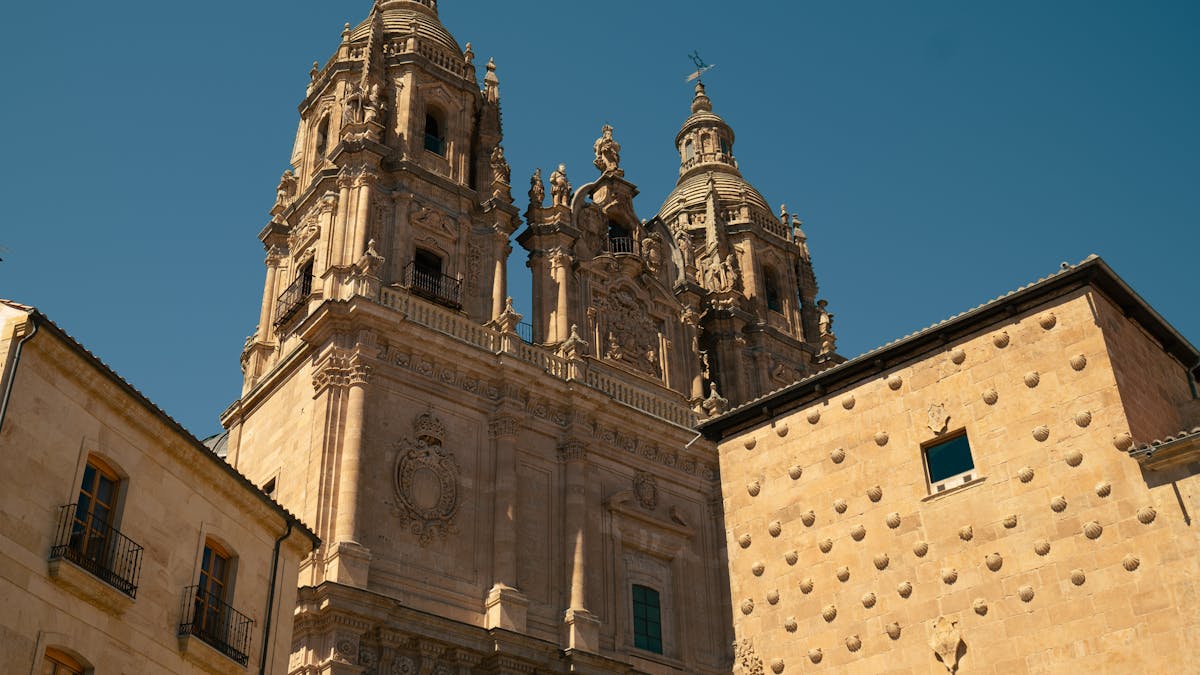
Salamanca (sah-lah-MAHN-kah) is a city of 150,000 people in western Spain that most international tourists skip entirely. That’s their loss. Because Salamanca has something no other Spanish city can match: the clearest, most neutral Spanish accent in the country, wrapped inside one of Europe’s most beautiful university cities.
Founded in pre-Roman times and home to the University of Salamanca since 1218 (the oldest university in Spain and the third oldest in the world), this city has been teaching language for over eight hundred years. It knows what it’s doing.
According to the Instituto Cervantes, Salamanca is consistently ranked as one of the top destinations for Spanish language immersion worldwide. International students from over 70 countries come here specifically because the local accent is considered the standard for spoken Castilian Spanish.
Why Salamanca Is Spain’s Best-Kept Secret for Language Learners
Every city in Spain has its own accent. Andalusians drop consonants. Catalans mix Catalan and Castilian. Madrileños speak quickly with distinct intonation. But Salamanca? Salamanca speaks castellano (kahs-teh-YAH-noh) in its clearest, most standard form.
This matters enormously for language learners. When you practise in Salamanca, you hear every syllable. Every consonant is pronounced. Every verb ending is distinct. The locals speak at a moderate pace, articulate clearly, and use standard vocabulary without heavy regional slang.
But Salamanca isn’t just about clear pronunciation. It’s a city where language is culture. Every stone building, every medieval street, every tapas bar conversation carries eight centuries of linguistic tradition. If you’ve been building your skills with proven learning techniques, Salamanca is where those techniques come alive.
The City With Spain’s Purest Spanish
When linguists discuss “standard” Castilian Spanish, they’re talking about the accent of Old Castile, the historical region that includes Salamanca, Valladolid, and Burgos. This is the accent used in Spanish language textbooks worldwide, in official government communications, and by newsreaders on national television.
What makes Salmantine Spanish distinctive:
- Clear distinción (dees-teen-thee-OHN): Salamancans distinguish between “s” and “z/c” sounds. Caza (hunting, KAH-thah) sounds different from casa (house, KAH-sah). In Andalucía, they often sound identical.
- Full pronunciation: Every letter is spoken. The “d” at the end of verdad (ber-DAHD) is pronounced, unlike in Madrid where it often disappears.
- Moderate pace: Not as fast as Madrid, not as drawling as the south. A comfortable middle ground.
- Standard vocabulary: Minimal regional slang. What you hear in Salamanca matches what you read in textbooks.
For Spanish learners, this is gold. You’re not just learning Spanish. You’re learning the version that works everywhere.
5 Hidden Gems Beyond the Plaza Mayor
Every guidebook talks about the Plaza Mayor. And yes, it’s spectacular, one of Spain’s most beautiful squares. But Salamanca has depths that most visitors never discover.
1. The Frog on the University Facade
The main entrance to the University of Salamanca is covered in intricate Plateresque carvings from the 16th century. Hidden among them is a tiny frog (rana, RAH-nah) sitting on a skull. Legend says that students who find it without help will pass their exams. Tourists spend twenty minutes staring at the facade trying to spot it. Here’s a clue: look at the rightmost pillar, about two-thirds up.
The phrase you’ll hear: “¿Has encontrado la rana?” (ahs en-kon-TRAH-doh lah RAH-nah, Have you found the frog?)
2. Huerto de Calixto y Melibea
A hidden garden (huerto, WEHR-toh) tucked behind the cathedral walls. It’s named after the characters in La Celestina, a 15th-century Spanish literary masterpiece. Most tourists don’t know it exists. The views of the Tormes River valley from here are extraordinary, and it’s one of the most peaceful spots in the city.
3. Convento de San Esteban
While tourists crowd the two cathedrals, this Dominican monastery sits quietly across the plaza. Its facade rivals anything in the city, and inside you’ll find Gothic cloisters, a museum, and an atmosphere that hasn’t changed in centuries. Christopher Columbus reportedly stayed here while seeking support for his voyage.
4. The Roman Bridge at Sunset
The Puente Romano (PWEN-teh roh-MAH-noh) is 2,000 years old and still standing. Walk across it at sunset, then turn around and look back at Salamanca’s skyline. The golden sandstone of the entire city glows amber and pink. This is why Salamanca is called La Dorada (lah doh-RAH-dah, The Golden City).
5. Barrio de la Latina
The university neighbourhood where students have been living for eight centuries. Narrow streets, affordable tapas bars, bookshops, and the kind of energy that comes from thousands of young people living their best intellectual lives. On Thursday nights (the traditional student night out), the barrio comes alive.
Student Culture: Why Salamanca Feels Different
Salamanca has approximately 30,000 university students in a city of 150,000. That’s one in five people. This ratio shapes everything about the city: its energy, its prices, its nightlife, and its openness to outsiders.
What student culture means for visitors:
- Affordable tapas: Student budgets keep prices low. You can eat well for 8-12 euros.
- International openness: With thousands of foreign exchange students, locals are used to speaking slowly, explaining things, and welcoming newcomers.
- Active nightlife: Salamanca has more bars per capita than almost any city in Spain.
- Cultural events: Free lectures, concerts, exhibitions, and literary events happen constantly.
The student tradition of los jueves universitarios (lohs HWEH-behs oo-nee-ber-see-TAH-ree-ohs, university Thursdays) fills the streets with energy every week. If you’re there on a Thursday night, you’ll experience Salamanca at its most vibrant.
Where to Eat Like a Salmantino
Salamanca’s cuisine is hearty, unpretentious, and deeply connected to the surrounding Castilian countryside.
Must-try dishes:
- Hornazo (or-NAH-thoh) – A savoury pie filled with chorizo (cho-REE-thoh), jamón (hah-MOHN), and boiled eggs. The city’s signature dish.
- Chanfaina (chan-FAI-nah) – A traditional rice dish with offal, herbs, and spices. Rustic and flavourful.
- Farinato (fah-ree-NAH-toh) – A local sausage made with breadcrumbs and pork fat. Unique to the region.
- Jamón ibérico de bellota (hah-MOHN ee-BEH-ree-koh deh beh-YOH-tah) – Acorn-fed Iberian ham. The province of Salamanca produces some of Spain’s finest.
Where to go:
- For tapas: Calle Van Dyck. An entire street lined with tapas bars where a drink comes with a free tapa. Walk the strip, stopping at each bar for one round.
- For the menú del día: Any bar in the Barrio de la Latina. Student prices, generous portions.
- For hornazo: Any bakery in the old town. It’s sold by the slice and makes perfect walking food.
Your Language Immersion Itinerary
3-Day Salamanca Language Immersion Plan
Day 1: Explore and Listen
- ☐ Morning: Walk the Plaza Mayor. Sit at a café and eavesdrop on conversations. Note new phrases.
- ☐ Midday: Visit the University facade. Find the frog. Ask a local for help (in Spanish).
- ☐ Lunch: Menú del día at a Barrio de la Latina bar. Order entirely in Spanish.
- ☐ Afternoon: Huerto de Calixto y Melibea. Read the information panels in Spanish.
- ☐ Evening: Tapas crawl on Calle Van Dyck. Chat with bartenders.
Day 2: Engage and Practise
- ☐ Morning: Visit the Mercado Central. Buy fruit, bread, and cheese. Practise food vocabulary.
- ☐ Midday: Convento de San Esteban. Join a guided tour in Spanish.
- ☐ Lunch: Sit at a communal table. Start a conversation with fellow diners.
- ☐ Afternoon: Browse bookshops in the old town. Buy a short novel in Spanish.
- ☐ Evening: Join the jueves universitario (if Thursday) or find a live music venue.
Day 3: Connect and Reflect
- ☐ Morning: Walk the Roman Bridge at sunrise. Practise describing what you see in Spanish.
- ☐ Midday: Visit a language school for a trial class (many offer them free).
- ☐ Lunch: Hornazo from a bakery, eaten on the cathedral steps.
- ☐ Afternoon: Write down every new word you learned in three days. You’ll be surprised.
- ☐ Evening: Final tapas. Say goodbye to your favourite bartender. In Spanish.
Salamanca-Specific Vocabulary
| Word | Pronunciation | Meaning |
|---|---|---|
| Salmantino/a | sal-man-TEE-noh/nah | Person from Salamanca |
| La Dorada | lah doh-RAH-dah | The Golden (Salamanca’s nickname) |
| La rana | lah RAH-nah | The frog (the famous hidden carving) |
| Hornazo | or-NAH-thoh | Salamanca’s signature meat pie |
| Charro/a | CHAH-rroh/rrah | Traditional person from Salamanca region |
| Tuna | TOO-nah | University musical troupe (tradition since 13th century) |
If you’re building your vocabulary systematically, these regional terms complement what you’ll find in our guide to Spanish words your textbook never taught you.
Conclusion
Salamanca isn’t on most tourists’ lists. That’s exactly why you should go. The clearest Spanish accent in the country, a welcoming student culture, affordable food, hidden architectural treasures, and eight centuries of language-teaching tradition make it the perfect destination for any Spanish learner.
Whether you visit for three days or three months, Salamanca offers something that Barcelona, Madrid, and Seville can’t: a city where language learning isn’t just an activity. It’s the entire atmosphere. Every conversation, every tapas order, every walk through the golden sandstone streets is a lesson.
Now you’re ready to explore. Go use these phrases and have an incredible experience.
]]>Share
Topics

audazrevista
You may also like


Get the Inside Scoop