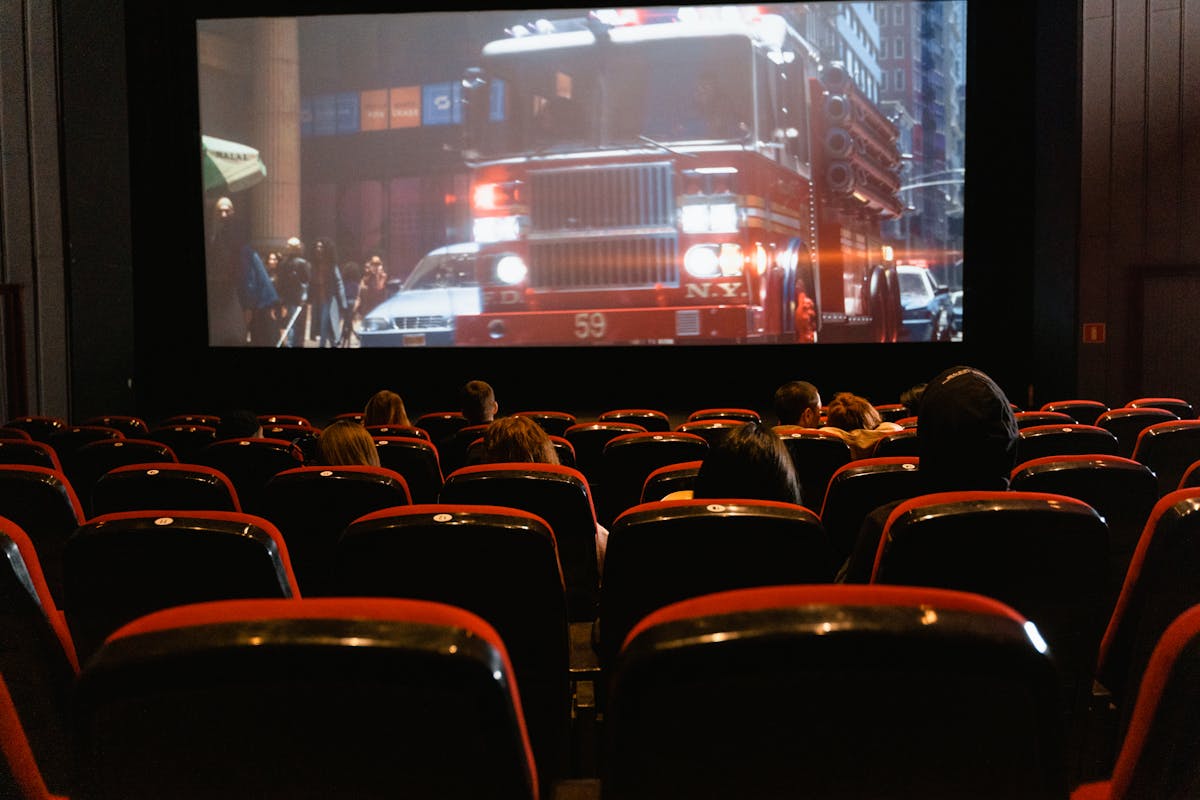
From Franco’s Censors to Almodovar’s Revolution: How Spanish Cinema Became a Global Force
Forget what your textbook told you about Spain. If you really want to understand Spanish culture, the language, and the soul of this country, you need to watch its films. Spanish cinema is one of the most powerful, emotionally raw, and visually stunning film traditions in the world. And most people outside Spain barely know it exists.
Here’s the real talk. While Hollywood dominates global screens, Spain has been quietly producing masterpieces for over a century. Films that tackle identity, passion, political trauma, gender, and what it means to be human, all wrapped in a visual style that’s impossible to mistake for anything else.
Your Spanish is about to level up in ways no grammar book can offer. Watching Spanish cinema immerses you in authentic dialogue, regional accents, slang, and emotional expression that textbooks simply can’t replicate. Ready? Let’s dive in.
The Golden Age: Spanish Cinema Before Almodovar
Spanish cinema didn’t start with Pedro Almodovar, even though many people think it did. Spain’s film history stretches back to the 1890s, and its golden age produced some of the most daring filmmakers in European history.
Luis Bunuel: The Original Rebel
Luis Bunuel (loo-EES boon-yoo-EHL) is the godfather of Spanish cinema. Born in 1900 in Aragon, he created Un Chien Andalou (oon chee-EN an-dah-LOO) in 1929 with Salvador Dali, a surrealist short film that still shocks audiences nearly a century later.
Bunuel spent much of his career in exile, first in France, then Mexico, because of the Franco dictatorship. But his films, including Viridiana (vee-ree-dee-AH-nah) in 1961 and El Angel Exterminador in 1962, are deeply, unmistakably Spanish. They’re dark, provocative, and obsessed with religion, class, and desire.
According to the Real Academia de las Artes y las Ciencias Cinematograficas de Espana (Spain’s Academy of Motion Picture Arts and Sciences), Bunuel’s Viridiana won the Palme d’Or at Cannes in 1961 and was immediately banned by Franco’s censors. It wasn’t shown in Spain until 1977, after Franco’s death.
Carlos Saura and the Art of Saying Everything by Saying Nothing
During the Franco era (1939-1975), Spanish filmmakers had to be creative. Censors reviewed every script. Direct criticism of the regime was impossible. So directors like Carlos Saura (KAR-lohs SOW-rah) developed a visual language of metaphor, symbolism, and coded meaning.
Saura’s Cria Cuervos (KREE-ah KWEHR-vohs, meaning “Raise Ravens”) from 1976 is a masterclass in this technique. On the surface, it’s about a little girl dealing with family trauma. Underneath, it’s a devastating critique of Spain under dictatorship. The phrase “cria cuervos y te sacaran los ojos” is a Spanish proverb meaning “raise ravens and they’ll peck out your eyes,” a warning about the consequences of nurturing darkness.
This era of Spanish cinema taught audiences something crucial: how to read between the lines. It’s a skill that enriches your understanding of Spain’s artistic traditions like flamenco, which also carries layers of hidden meaning.
The Almodovar Revolution: When Spanish Cinema Went Global
Then came Pedro Almodovar (PEH-droh al-moh-DOH-var). And everything changed.
Born in La Mancha in 1949, Almodovar arrived in Madrid during La Movida Madrilena (lah moh-VEE-dah mah-dree-LAIN-yah), the explosive cultural movement that erupted after Franco’s death. This was Spain’s punk rock moment. Young artists, musicians, and filmmakers were finally free to express themselves, and they went wild.
Almodovar’s early films, including Pepi, Luci, Bom (1980) and Que He Hecho Yo Para Merecer Esto? (1984), were chaotic, colourful, provocative, and completely new. Nothing like them had ever come out of Spain.
The Films That Defined a Generation
Three Almodovar films fundamentally changed how the world sees Spanish cinema:
- Mujeres al Borde de un Ataque de Nervios (moo-HEH-res al BOR-deh deh oon ah-TAH-keh deh nehr-vee-OHS), meaning “Women on the Verge of a Nervous Breakdown” (1988). This was Spain’s international breakout moment. Nominated for an Academy Award, it introduced the world to Almodovar’s signature style: vivid colours, strong women, dark comedy, and emotional honesty.
- Todo Sobre Mi Madre (TOH-doh SOH-breh mee MAH-dreh), meaning “All About My Mother” (1999). Won the Academy Award for Best Foreign Language Film. A devastatingly beautiful story about motherhood, identity, and loss that showcases Barcelona at its most gorgeous.
- Volver (vol-VEHR), meaning “To Return” (2006). Starring Penelope Cruz in what many consider her finest performance. Set in La Mancha, it’s about family secrets, resilience, and the fierce bond between Spanish women.
What makes Almodovar essential for Spanish learners? His dialogue is authentic, emotional, and packed with colloquial expressions. Watching his films is like eavesdropping on real Spanish conversations. If you’re working on describing people in Spanish, his character-driven films give you a masterclass.
Modern Spanish Cinema: The New Wave
Spanish cinema didn’t stop with Almodovar. A new generation of filmmakers is pushing boundaries and winning global recognition.
Alejandro Amenabar
Alejandro Amenabar (ah-leh-HAHN-droh ah-meh-NAH-bar) directed Abre los Ojos (AH-breh lohs OH-hohs), meaning “Open Your Eyes” (1997), which was later remade by Hollywood as Vanilla Sky. His 2004 film Mar Adentro (mar ah-DEN-troh), meaning “The Sea Inside,” won the Academy Award for Best Foreign Language Film. It tells the true story of Ramon Sampedro, a quadriplegic fighting for his right to die with dignity.
J.A. Bayona
J.A. Bayona (bah-YOH-nah) went from the Spanish horror film El Orfanato (el or-fah-NAH-toh), meaning “The Orphanage” (2007), to directing Jurassic World: Fallen Kingdom and the first two episodes of The Lord of the Rings: The Rings of Power. His journey shows how Spanish cinema talent is now shaping global entertainment.
Rodrigo Sorogoyen
For something more recent, Rodrigo Sorogoyen’s (soh-roh-GOH-yen) El Reino (el RAY-noh), meaning “The Realm” (2018), is a political thriller about corruption in Spanish politics. It’s fast, tense, and uses contemporary Madrid Spanish that’s perfect for advanced learners.
According to the Instituto de la Cinematografia y de las Artes Audiovisuales (ICAA), Spain’s film industry body, Spanish cinema production reached over 250 feature films annually by 2024, with international co-productions making up a growing share. The industry contributes over 4 billion euros to Spain’s economy.
Essential Spanish Cinema Vocabulary
This is where the magic happens for language learners. Watching Spanish cinema is incredible, but knowing the vocabulary to discuss it takes the experience to another level. Here are the essential Spanish phrases for talking about film:
Basic cinema vocabulary:
- La pelicula (lah peh-LEE-koo-lah): the film/movie
- El director / la directora (el dee-rek-TOR / lah dee-rek-TOH-rah): the director
- El guion (el gee-OHN): the screenplay
- El reparto (el reh-PAR-toh): the cast
- La taquilla (lah tah-KEE-yah): the box office
- Los subtitulos (lohs soob-TEE-too-lohs): subtitles
- La banda sonora (lah BAHN-dah soh-NOH-rah): the soundtrack
Discussing films like a native:
- “Me ha encantado” (meh ah en-kahn-TAH-doh): “I loved it” (this is what Spaniards actually say, not “me gusto mucho”)
- “Es una obra maestra” (es OO-nah OH-brah mah-ES-trah): “It’s a masterpiece”
- “No me esperaba ese final” (noh meh es-peh-RAH-bah EH-seh fee-NAHL): “I didn’t expect that ending”
- “Esta basada en hechos reales” (es-TAH bah-SAH-dah en EH-chohs reh-AH-les): “It’s based on true events”
- “Me ha dejado sin palabras” (meh ah deh-HAH-doh seen pah-LAH-brahs): “It left me speechless”
Try these phrases the next time you discuss a film in Spanish. You’ve got this.
Where to Stream Spanish Films in 2026
Finding Spanish cinema has never been easier. Here’s where to start:
- Netflix Spain: The largest collection of contemporary Spanish films and series. Use a VPN if you’re outside Spain for the full catalogue
- MUBI: Curates art house and classic Spanish cinema. Excellent for Bunuel, Saura, and independent films
- Filmin: Spain’s own streaming platform, specialising in European and independent cinema. The best single source for Spanish cinema specifically
- Amazon Prime Video: Growing Spanish-language catalogue, including original Spanish productions
- FlixOle: Dedicated entirely to Spanish cinema, from golden age classics to modern releases
Pro tip: start with subtitles in Spanish, not English. It forces your brain to connect spoken and written Spanish simultaneously. Our guide to the best Spanish TV shows for learning Spanish in 2026 has more recommendations for immersive viewing.
5 Spanish Films Every Language Learner Should Watch
If you’re just getting started with Spanish cinema, these five films offer the perfect combination of accessible language, cultural depth, and unforgettable storytelling:
- Volver (2006) by Almodovar. Clear Castilian Spanish, family themes, beautiful La Mancha setting. Perfect for intermediate learners.
- El Orfanato (2007) by Bayona. A supernatural thriller with suspenseful pacing and clear dialogue. Great for building listening comprehension through tension.
- Ocho Apellidos Vascos (OH-choh ah-peh-YEE-dohs VAHS-kohs), meaning “Spanish Affair” (2014). Spain’s highest-grossing comedy. It’s a romantic comedy about the culture clash between Andalusia and the Basque Country. Hilarious, and you’ll learn about Spain’s incredible regional diversity.
- El Laberinto del Fauno (el lah-beh-REEN-toh del FOW-noh), meaning “Pan’s Labyrinth” (2006) by Guillermo del Toro. Technically a Mexican-Spanish co-production, set during the Spanish Civil War. Stunning visuals and relatively slow, clear dialogue.
- Dolor y Gloria (doh-LOR ee GLOH-ree-ah), meaning “Pain and Glory” (2019) by Almodovar. Antonio Banderas at his absolute best, playing a version of Almodovar himself. Meditative, personal, and filled with gorgeous Madrid Spanish.
How Spanish Cinema Teaches You What Textbooks Can’t
Here’s why Spanish cinema matters so much for language learners. It’s not just about vocabulary or listening practice, though both are massive benefits.
Spanish films teach you:
- Emotional register: How Spaniards express anger, love, grief, and joy differently from English speakers
- Cultural context: Why certain topics are sensitive, what family dynamics look like, how social class operates
- Regional accents: Andalusian characters sound different from Catalan characters. Films expose you to real accent diversity
- Body language: Spanish communication is highly physical. Films show you the gestures, the proximity, the expressiveness
- Humour: Spanish humour is dry, self-deprecating, and often untranslatable. Films let you experience it naturally
The Instituto Cervantes, Spain’s official institution for promoting the Spanish language globally, actively recommends film as one of the most effective immersion tools for advanced learners. Their annual film cycles screen classic and contemporary Spanish cinema in over 80 centres worldwide.
Pack your bags. Well, grab your remote. Spanish cinema is waiting for you, and it’s going to change how you hear, feel, and understand this incredible language.
Now you understand this culture better. Use this knowledge to connect authentically.
Share

audazrevista



Get the Inside Scoop