Dating in Spain runs on rules nobody hands you at the airport. The biggest surprises: dinner dates start at 10 PM or later, your first “dates” are usually group hangouts with your partner’s friend group, and the romance moves slowly at first but turns exclusive fast. Here are 15 things to know about dating in Spain, from the vocabulary you actually need to the family lunches you cannot dodge, so you walk into the Spanish dating scene prepared instead of confused.
Why dating in Spain feels like a different language
Dating in Spain does not follow any rulebook you have read before. The timelines are different. The social rules are different. Even the vocabulary is different. Walk in expecting it to work like dating back home, and you are in for a wild ride.
Spain is open, expressive, and passionately romantic, but romantic in ways that catch newcomers off guard. Plenty of expats stumble through their first Spanish relationship with good intentions and zero preparation. Let’s fix that.
1. Forget everything you know about dating
Your Spanish is about to level up, and so is your love life. The first thing to drop is the assumption that Spanish dating mirrors dating anywhere else. The pacing, the social structure, and the unwritten signals all run on their own logic. Once you stop fighting that, the whole thing gets a lot more fun. For more on how Spaniards socialise day to day, our guide to social etiquette in Spain is worth a read first.
2. Why is the dating timeline so slow?
In many countries the timeline is neat: first date, second date, “define the relationship” chat by date five. In Spain, throw that out the window. Spanish people tend to take things slow, sometimes spending weeks in a grey zone that feels like more than friends but not quite dating. This is not confusion or mixed signals. It is just how it works here.
The concept of ir conociéndonos (eer ko-no-see-EN-do-nos, “getting to know each other”) means there is a long, relaxed discovery period. Nobody rushes. Try to slap a label on things too early and you will likely get a confused look. Patience is not optional here.
3. Why are your first dates actually group dates?
Your first few “dates” in Spain probably will not be dates at all by traditional standards. Spanish people meet potential partners through their existing social circle, their pandilla (pan-DEE-ya, “friend group”). You will be invited to group outings, tapas nights, and weekend plans with ten other people. This is the screening process.
Your potential partner’s friends are watching, in a “does this person fit our group energy?” way. Social compatibility matters enormously. If the pandilla does not vibe with you, it is an uphill battle. Be warm, be yourself, and learn a few common Spanish phrases for beginners. Making the group laugh goes further than any grand romantic gesture.
4. How early do you meet the family?
If you are dating a Spaniard seriously, you are dating their family. Full stop. Spanish families are tight, and Sunday lunch at the parents’ house is sacred. Meeting the family happens earlier than you might expect. When your partner says te presento a mi familia (tay pray-SEN-toe ah mee fah-MEE-lee-ah, “I’ll introduce you to my family”), that is significant, not casual.
Many Spaniards in their twenties still live with their parents, so your first romantic dinner might happen with your partner’s mother in the next room. The upside is real: Spanish families are incredibly welcoming. Once you are in, you are in. Expect to be fed constantly, hugged firmly, and asked invasive questions with pure love.
5. The dating vocabulary you actually need
Spanish has an entire vocabulary for relationship stages that English simply does not cover. These are the words that tell you where you actually stand:
- Quedar (keh-DAR): to meet up. “¿Quedamos mañana?” means “Shall we meet up tomorrow?” Casual and low-pressure.
- Salir (sah-LEER): to go out with someone. “Estamos saliendo” means “We’re dating,” signalling early-stage romance.
- Enrollarse (en-ro-YAR-say): to kiss or make out, often after a night out. “Nos enrollamos” means “We kissed.”
- Rollo (RO-yo): a casual fling or hookup. “Es un rollo” means it is nothing serious.
- Pareja (pah-RAY-hah): partner, the real deal. “Mi pareja” is official.
- Novio / Novia (NO-vee-oh / NO-vee-ah): boyfriend / girlfriend, more formal than you might expect.
- Relación (reh-lah-see-ON): relationship, used when things are serious and defined.
A Spaniard who says estamos saliendo is in a very different place than one who introduces you as mi pareja. Learn the difference and you will read Spanish relationships like a local.
6. Is public affection really that common?
Public displays of affection in Spain are completely normal, expected even. Couples kiss on park benches, hold hands everywhere, and sit on the same side of the restaurant table. If you come from a culture where PDA is kept to a minimum, Spanish affection levels can feel like a lot at first.
Here is the warm part. Spain normalises physical affection in a genuinely affectionate way. The standard greeting between friends is dos besos (dos BAY-sos, “two kisses”), one on each cheek. If your Spanish partner reaches for your hand in public, that is not a power move. It is just Tuesday.
7. Why do dates start so late at night?
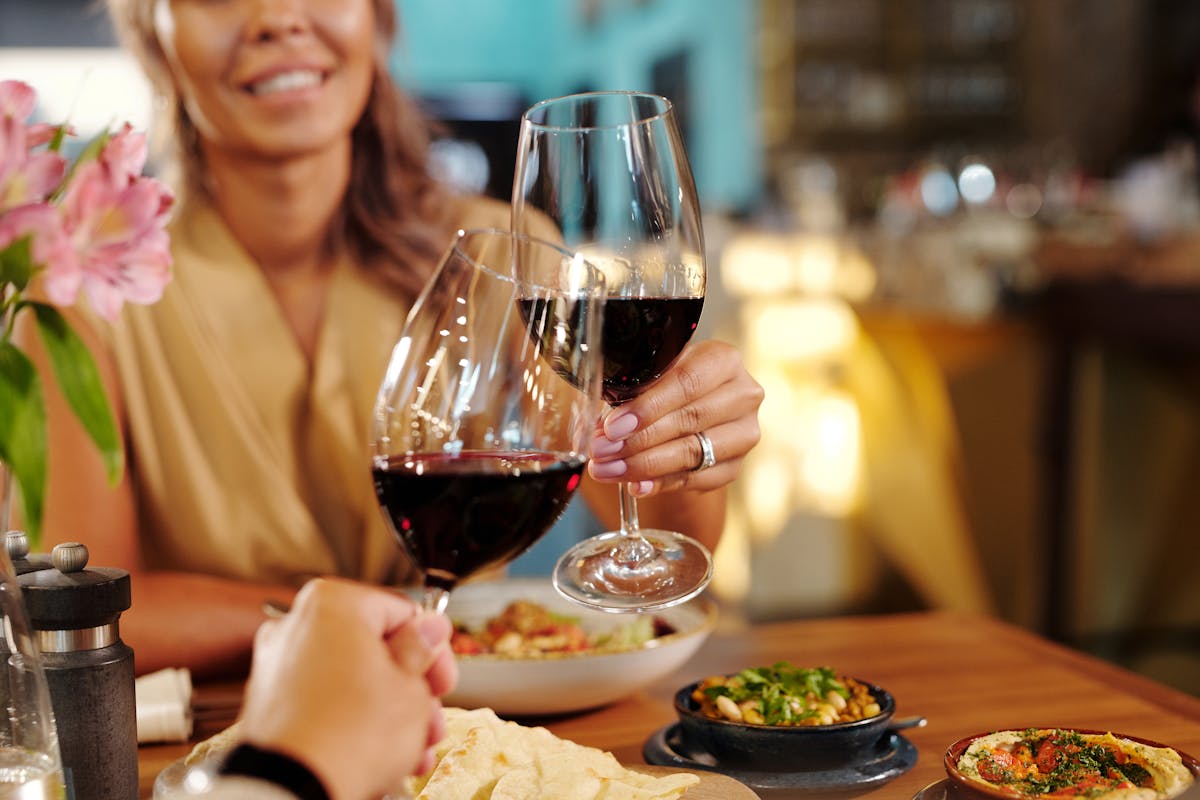
Suggesting dinner at 7 PM in Spain is like suggesting breakfast at 4 AM anywhere else. It does not compute. Spanish people eat dinner between 9 PM and 11 PM. A date might start at 10 PM, you will not sit down to eat until 11, and you might not leave the restaurant until 1 AM. This is the Spanish rhythm, explored more in our look at Spanish lifestyle habits.
The sobremesa (so-bray-MAY-sah, “after-meal chat”) is sacred. After eating, you stay at the table and talk for a long time. Rushing off after dessert reads as rude and a bit suspicious. If you cannot handle a three-hour dinner conversation, you might not be ready for Spanish dating yet.
8. What are the texting rules in Spain?
Forget the “wait three days to text” rule. In Spain, communication is frequent and enthusiastic from the start. Spanish people send long voice notes, text good morning, share memes, and call you to chat for forty-five minutes about nothing. If someone likes you, you will know. The energy is unmistakable.
The flip side is just as clear. If a Spaniard stops texting back, that is a signal in itself. Spanish people are generally warm and expressive, so radio silence speaks volumes. Do not chase ghosts. If the energy drops, trust it.
9. Who pays on a date?
The days of “the man always pays” are fading fast, especially among younger generations. Ir a medias (eer ah MAY-dee-as, “going halves”) is standard on most dates and nobody thinks twice about it. Some couples alternate, one person covering drinks and the other dinner.
On a first date, offering to pay is polite. Insisting on paying when the other person clearly wants to split can feel controlling. The Spanish approach is refreshingly egalitarian, so let it be easy.
10. Does exclusivity happen quickly?
Here is the plot twist. The “getting to know you” phase is long and casual, but once things turn romantic, exclusivity tends to happen quickly. The North American idea of “dating around,” seeing several people at once, does not really exist in mainstream Spanish culture.
Once you have moved past the rollo stage into saliendo territory, you are generally expected to focus on one person. This is not a formal “define the relationship” conversation so much as an unspoken understanding. If you are going on multiple dates with the same person, you are both probably assuming it is exclusive. Hedge at your own risk.
11. Do Spaniards actually use dating apps?
Tinder, Bumble, and Hinge all exist in Spain, but they do not dominate the social scene the way they do elsewhere. The traditional emphasis on meeting through friends, at fiestas, in bars, or through shared activities remains strong. Many Spaniards find it more natural, and more trustworthy, to meet someone through their pandilla than through an app.
Apps are growing in big cities like Madrid and Barcelona. If you are an expat with a small social circle, they can be a great starting point. Just know that many Spanish users treat them casually, sometimes for making friends rather than finding serious partners.
12. Is living with parents a red flag?
In many Western countries, a 28-year-old living with their parents might raise eyebrows. In Spain it is completely standard. The housing market is brutal, youth unemployment runs high, and salaries in many cities do not match rental costs. Leaving the family home in Spain happens later than almost anywhere in Europe.
So if your date mentions they live with their parents, do not panic. It says nothing about their maturity, ambition, or independence. It says everything about the Spanish economy and the cultural value placed on family closeness.
13. Why are Spaniards so direct about feelings?
Spanish people tend to be refreshingly direct about emotions. If they like you, they will tell you. If they do not, they will not waste your time for long. The directness extends to compliments: a Spaniard might call you guapísimo / guapísima (gwah-PEE-see-mo / gwah-PEE-see-mah, “incredibly attractive”) on the first date. That is not them being forward, just honest.
The flip side is equally direct. Spanish people will tell you if something bothers them, if they disagree, or if they need space. That can feel confrontational if you are used to subtlety, but it is a gift. You will never have to guess where you stand. India shares more of this warmth and candour than you might expect, as our piece on the cultural similarities between India and Spain explores.
14. How LGBTQ+ inclusive is the Spanish dating scene?
Spain legalised same-sex marriage in 2005, among the first countries in the world to do so, and society genuinely embraces diversity. Madrid’s Chueca neighbourhood is one of Europe’s most vibrant LGBTQ+ districts, and Barcelona’s scene is equally lively. Across the country, same-sex couples show affection publicly without a second glance.
For LGBTQ+ travellers and expats, Spain is one of the most welcoming places to date. The culture celebrates authenticity, and the dating scene reflects that openness.
15. When does the marriage talk start?
If you are dating a Spaniard and wondering when marriage comes up, take a deep breath. Spain is in no rush. Many couples live together happily for years, even decades, before considering marriage, and some never marry at all. The concept of pareja de hecho (pah-RAY-hah deh EH-cho, “domestic partnership”) is legally recognised and widely accepted.
This is not commitment avoidance. It is valuing the relationship itself over the institution. Spanish couples often treat living together, sharing a life, and being committed as proof enough. The paperwork stays optional.
Quick check: are you ready to date in Spain?
Answer honestly. Score yourself one point for each “yes.”
- Can you handle dinner starting at 10 PM?
- Are you comfortable with constant physical affection?
- Can you survive a three-hour sobremesa without checking your phone?
- Are you ready to be interrogated, with love, by their family?
- Can you tell apart rollo, saliendo, and pareja?
- Will you split the bill without making it awkward?
- Can you charm an entire pandilla at once?
Six or seven yeses and you are ready, so pack your bags. Three to five and you are almost there, so read this one more time. Two or fewer, and it is worth brushing up on the basics before you start.
Dating in Spain, the short version
Dating in Spain is warm, expressive, slow-paced, and deeply social. It will not match anything you have experienced elsewhere, and that is exactly what makes it worth it. Let go of your expectations, embrace the long dinners and group hangouts, learn the vocabulary that matters, and stay patient. For more honest guides to Spanish life, language, and culture, Audaz Revista has you covered.
Ready to date like a local? Start by sharpening your Spanish with our common Spanish phrases for beginners, then walk into your first pandilla night already speaking the language of romance.
Frequently Asked Questions
What is the dating culture like in Spain?
Dating in Spain is social, affectionate, and slow to label. People often meet through their friend group rather than apps, the early stages stay casual for weeks, public affection is normal, and dinner dates start late at night. Once a couple turns romantic, though, exclusivity tends to happen quickly.
What time do dates usually start in Spain?
Late. Spanish dinner runs from roughly 9 PM to 11 PM, so a dinner date may start around 10 PM and stretch past midnight, including the sobremesa (after-meal chat) where you stay at the table and talk for an hour or more.
What does estamos saliendo mean?
Estamos saliendo means “we’re dating” or “we’re going out,” signalling an early-stage romance. It sits between a casual rollo (fling) and a committed pareja (official partner), so it tells you a relationship is forming but not yet fully defined.
Do Spaniards split the bill on dates?
Often, yes. Ir a medias (going halves) is standard, especially among younger people. Offering to pay on a first date is polite, but insisting when the other person wants to split can come across as controlling.
Is Spain a good country for LGBTQ+ dating?
Yes. Spain legalised same-sex marriage in 2005 and is widely seen as one of the most welcoming countries for LGBTQ+ people. Districts like Madrid’s Chueca and scenes across Barcelona are vibrant, and same-sex couples show affection publicly without a second glance.
Share

audazrevista
You may also like

Get the Inside Scoop