Toledo’s best experiences happen away from the main tourist drag. Skip the marzipan-sword shops and the 10 a.m. tour-bus circuit, and head instead for the thousand-year-old Mezquita del Cristo de la Luz (Cristo de la Luz mosque) and a plate of carcamusas (Toledo’s signature pork stew) at Bar Ludeña. That, plus a sunset walk along the Río Tajo (Tagus River), is the Toledo most visitors never see.
Just 30 minutes by high-speed train from Madrid sits a city that once held three religions, two rivers, and one of the greatest painters in European history. Toledo (toh-LEH-doh) is often called the “City of Three Cultures” because Christians, Muslims, and Jews lived side by side here for centuries. Most visitors arrive on a day trip, follow the same guided tour through the same three monuments, buy a marzipan sword, and leave thinking they have seen Toledo. They haven’t.
The real Toledo happens in the quiet alleys, in the neighbourhood bars where locals eat carcamusas (kar-kah-MOO-sahs), and in the conversations you have when you wander off the map. And yes, your Spanish is about to level up, because this guide comes loaded with the phrases you will actually need.
What are the biggest tourist traps in Toledo?
The biggest trap is timing. Forget what every travel blog tells you about arriving at 10 a.m. on a Saturday. That is when every tour bus in central Spain descends on the old town, the monuments clog up, and the restaurants on the main plaza switch to laminated photo menus (always a red flag in Spain).
The second trap is the day trip itself. The insider move is to arrive in the late afternoon and spend the night. The day-trippers vanish by 5 p.m., and Toledo transforms. The monuments light up dramatically against the night sky, the narrow cobblestone streets empty out, and you feel like you have the entire medieval city to yourself.
When is the best time to visit Toledo?
October through March. The summer heat in Castilla-La Mancha is brutal, often hitting 40 degrees. Autumn and winter bring cooler temperatures, golden light, and far fewer crowds.
One more local secret: when you arrive, skip the taxi. Take the escaleras mecánicas (ehs-kah-LEH-rahs meh-KAH-nee-kahs, public escalators) from the bottom of the hill up into the walled city. Yes, Toledo has free public escalators built into the hillside. They save your legs and your dignity.
Where do locals actually go in Toledo?
This is where the magic happens. Forget the tourist map. These are the places that Toledanos (toh-leh-DAH-nohs, people from Toledo) actually love.
Why visit the Cristo de la Luz mosque?
Most visitors rush to the cathedral, and yes, Toledo’s cathedral is stunning. But the Mezquita del Cristo de la Luz (mehs-KEE-tah del KREES-toh deh lah LOOTH) is where the real history lives. This tiny mosque dates back to 999 AD. Let that sink in. It has been standing for over a thousand years, making it one of Spain’s oldest surviving Moorish buildings.
The horseshoe arches, the Arabic inscriptions, the stillness of the space. It tells you more about how cultures intersect and influence each other than any history lecture. Ask the guide: “¿Puede contarme la historia de esta mezquita?” (PWEH-deh kohn-TAR-meh lah ees-TOH-ree-ah deh EHS-tah mehs-KEE-tah), meaning “Can you tell me the history of this mosque?” You will get a story that spans multiple civilisations.
Where is El Greco actually buried?
Not in the big museum. Not in the cathedral. El Greco is buried in the Convento de Santo Domingo el Antiguo, a quiet, unassuming convent that most tourists walk right past. Inside, you will find some of his earliest works in Toledo, displayed in a serene space far from the crowds at the El Greco Museum. The nuns still live here, the atmosphere is hushed and contemplative, and entry costs just a few euros.
What hidden ruins can you visit for free?
Tucked into a residential neighbourhood below the old town, the Circo Romano (THEER-koh roh-MAH-noh) ruins are the remnants of a massive Roman chariot-racing arena that once seated 15,000 spectators. Most visitors have no idea it exists. You can walk around the ruins freely, imagining the roar of crowds nearly 2,000 years ago.
Which streets should you eat on instead of the main plaza?
Every tourist eats on the main plaza. Don’t do that. Instead, find Calle de la Sillería (KAH-yeh deh lah see-yeh-REE-ah). This narrow street is lined with small bars and restaurants where locals actually eat. Prices are lower, portions are bigger, and the food is genuinely good. Also explore Calle Alfileritos (KAH-yeh al-fee-leh-REE-tohs) for authentic tapas bars that won’t empty your wallet.
What should you eat in Toledo, and how do you order it?
Toledo has its own food identity, and it is different from Madrid’s. Here is your essential eating guide.
What is the one dish you have to try?
If you eat one thing in Toledo, make it carcamusas (kar-kah-MOO-sahs). This hearty pork stew features tender meat simmered in a rich tomato sauce with peas, a touch of chorizo, and a hint of chilli. It was invented in the 1950s at Bar Ludeña (bar loo-DEH-nyah) in Plaza de la Magdalena, and it is still served there today.
The name? Legend says the owner, José Ludeña, named it after his regulars, his “carcas” (oldies) and his “musas” (muses). Order it by saying: “Ponme unas carcamusas, por favor” (PON-meh OO-nahs kar-kah-MOO-sahs, por fah-BOR). It traditionally arrives in a small cazuela (kah-THWEH-lah, clay dish) with bread on the side, perfect for soaking up every last drop of that sauce.
What other local dishes are worth trying?
- Perdiz estofada (pehr-DEETH ehs-toh-FAH-dah), slow-braised partridge. Castilla-La Mancha is hunting country, and this dish is a regional classic. Rich, gamey, and incredibly tender.
- Queso Manchego (KEH-soh mahn-CHEH-goh). You are in La Mancha. The Manchego cheese here is fresher and more flavourful than anything you will find exported. Ask for it “curado” (koo-RAH-doh, aged) for the strongest flavour.
- Mazapán (mah-thah-PAHN), Toledo’s famous marzipan. Yes, the tourist shops sell it. But the real deal comes from convents where nuns still make it by hand using recipes that are centuries old. Look for the Santo Tomé brand.
- Venado (beh-NAH-doh), venison. Common on menus in the cooler months. Castilla-La Mancha’s hunting tradition means game meats feature heavily in local cuisine.
For more essential vocabulary that will transform your dining experience, check out these food terms that make your Spanish sound native.
Where do locals eat in Toledo?
These are the restaurants that Toledanos recommend, not the ones with laminated menus and photos outside.
- Bar Ludeña. The birthplace of carcamusas. No-frills, family-run, and packed with locals at lunchtime. This is the real deal.
- La Clandestina. A beautifully hidden spot with a garden terrace. The croquetas here are legendary. Creative cooking that stays true to Spanish flavours.
- Taberna Skala. Traditional tavern with generous portions. The staff are warm and won’t steer you wrong. Ask for the “plato del día” (PLAH-toh del DEE-ah, dish of the day) for the best value.
- El Albero. Three decades of history. Tucked away from tourists with a loyal local following. Creative takes on traditional dishes.
When you sit down, try this phrase: “¿Qué me recomienda?” (keh meh reh-koh-mee-EN-dah), meaning “What do you recommend?” Spanish servers love this question. It tells them you trust their expertise, and they will point you toward whatever is best that day.
Which Spanish phrases do you actually need in Toledo?
Forget what your textbook told you. These are the phrases that actually matter when you are walking Toledo’s cobblestone streets. If you want to brush up first, the magazine Audaz Revista has a handy roundup of common Spanish phrases for beginners to get you started.
How do you find your way around?
- “¿Por dónde se va a…?” (por DOHN-deh seh bah ah), “How do I get to…?” Essential in a city where GPS regularly fails in the narrow medieval streets.
- “Estoy perdido/perdida” (ehs-TOY pehr-DEE-doh / pehr-DEE-dah), “I’m lost.” You will get lost. Toledo’s old town is a labyrinth. Embrace it.
- “¿Esto es el camino al mirador?” (EHS-toh ehs el kah-MEE-noh al mee-rah-DOR), “Is this the way to the viewpoint?” Toledo’s viewpoints are spectacular, and locals will happily point you right.
How do you connect with locals?
- “¿De aquí eres?” (deh ah-KEE EH-rehs), “Are you from here?” A simple conversation starter that opens doors. Toledanos are proud of their city.
- “¿Qué sitio me recomiendas que no sea turístico?” (keh SEE-tee-oh meh reh-koh-mee-EN-dahs keh noh SEH-ah too-REES-tee-koh), “What place do you recommend that isn’t touristy?” Ask this at your hotel, at a bar, anywhere. This single question will give you better tips than any guidebook.
- “Me encanta esta ciudad” (meh en-KAHN-tah EHS-tah thee-oo-DAHD), “I love this city.” Say it. Mean it. Watch how people light up.
What do you say at the shops and markets?
- “¿Es artesanal?” (ehs ar-teh-sah-NAHL), “Is this handmade?” Toledo is famous for its steel and sword-making tradition. The tourist shops sell mass-produced junk, and the real artisans are harder to find. This question helps you sort the genuine from the fake.
- “¿Tienen mazapán hecho a mano?” (tee-EH-nen mah-thah-PAHN EH-choh ah MAH-noh), “Do you have handmade marzipan?” The answer you want is sí (yes).
A little reading on Spanish social etiquette goes a long way too, because how you say these phrases matters as much as the words themselves.
What is the best view in Toledo?
Here is the insider tip that turns a good Toledo visit into an unforgettable one. Cross the Puente de San Martín (PWEN-teh deh san mar-TEEN), the medieval bridge on the western side of the city. Most tourists stop on the bridge for a photo and turn back. Don’t.
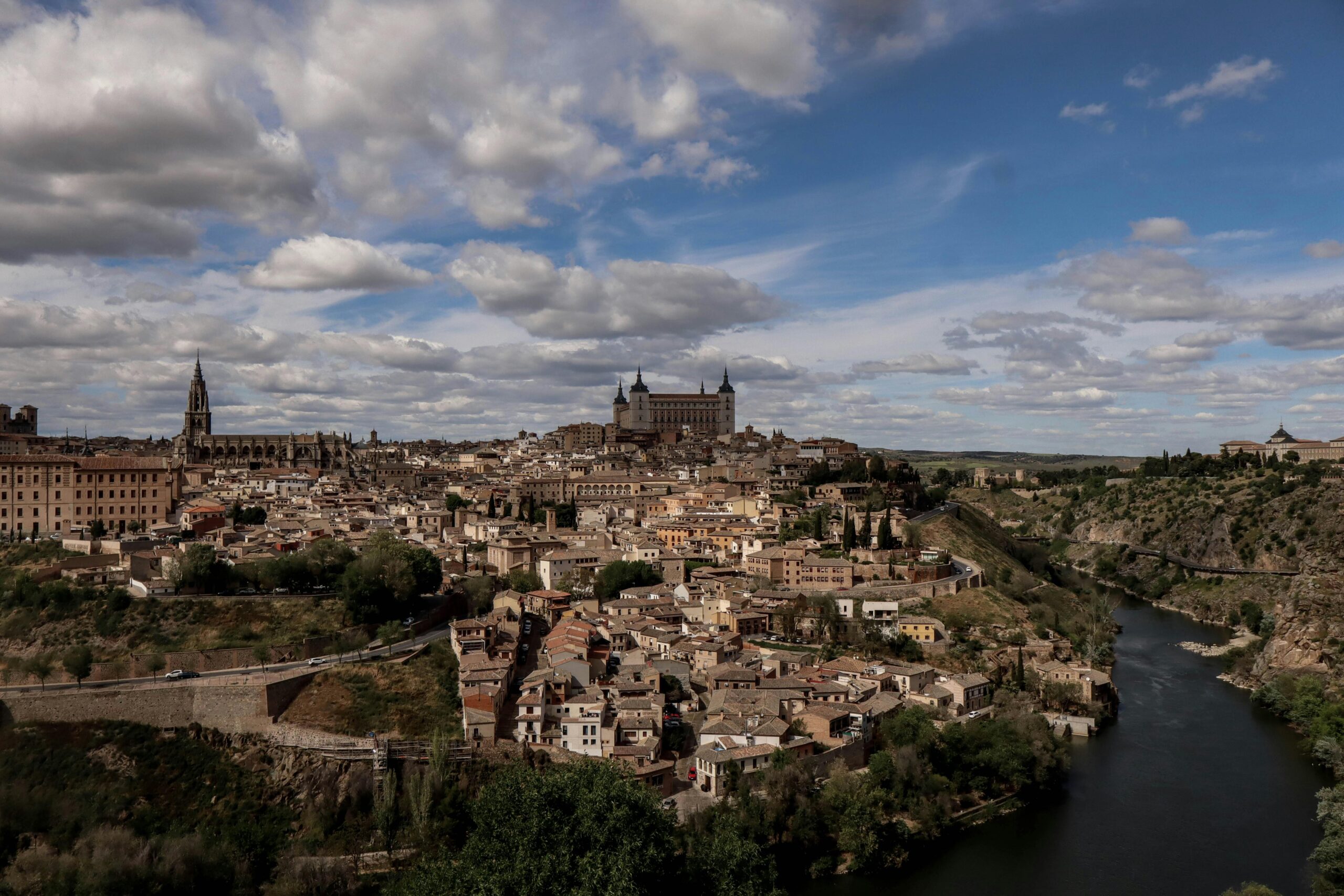
Keep walking along the path that follows the Río Tajo (REE-oh TAH-hoh, Tagus River) below the city walls. This trail gives you a panoramic view of Toledo that is, without exaggeration, one of the most beautiful city views in all of Spain. El Greco painted this exact view in the 1600s, and it looks almost identical today.
Go at sunset. Bring something to drink. Sit on the rocks by the river and watch the light turn the city gold and then pink. This is the Toledo that the tour buses never see. If someone asks what you are doing, tell them: “Estoy disfrutando de las vistas” (ehs-TOY dees-froo-TAHN-doh deh lahs BEES-tahs), meaning “I’m enjoying the views.” They will nod approvingly.
Your Toledo insider checklist
Ready to do Toledo the right way? Here is your plan.
- Arrive late afternoon. Let the day-trippers leave first.
- Stay overnight. Toledo after dark is a completely different city.
- Take the escalators up. Save your energy for the cobblestones.
- Visit Cristo de la Luz. The thousand-year-old mosque most tourists skip.
- Find El Greco’s grave at Convento de Santo Domingo el Antiguo.
- Eat carcamusas at Bar Ludeña. Order them in Spanish. You have the phrase.
- Walk the Río Tajo path at sunset. Bring your camera. Bring your patience.
- Buy real marzipan. Ask “¿Es artesanal?” before you buy.
- Get lost on purpose. Toledo rewards wanderers. Use “Estoy perdido” when you need rescuing.
- Ask a local: “¿Qué sitio me recomiendas que no sea turístico?” Then go wherever they send you.
One quick note for anyone planning a wider Spanish road trip: if you are weighing up where else to go, our breakdown of Bilbao vs Tarragona, and where you should actually go, pairs nicely with a Toledo stop. Spain is bigger and stranger than the postcard version, whether you are deep in spanish bilbao spain territory up north or wandering Toledo’s medieval lanes in the centre.
Toledo is waiting, and so is your Spanish
Toledo isn’t just one of Spain’s most beautiful cities. It is a crash course in Spanish history, food, and conversation, all packed into a walled city you can walk across in twenty minutes. But you have to do it right. Skip the tour bus. Stay the night. Eat where locals eat. Walk the paths that tourists miss. And use your Spanish, even if it is imperfect. Toledanos will appreciate the effort more than you know.
Ready to go? Pick your dates between October and March, book a night in the old town, and pack these phrases. Then go use them and have an incredible experience.
Frequently Asked Questions
Is Toledo worth visiting as a day trip from Madrid?
It is, but you will see a watered-down version. Day-trippers arrive mid-morning and leave by 5 p.m., right when Toledo becomes magical. If you can, arrive in the late afternoon and stay overnight. The monuments light up, the streets empty, and you get the medieval city almost to yourself.
What is the most famous food in Toledo?
Carcamusas, a hearty pork stew in a rich tomato sauce with peas, chorizo, and a hint of chilli. It was invented in the 1950s at Bar Ludeña, where it is still served today. Toledo is also known for handmade mazapán (marzipan), with the Santo Tomé brand being the traditional choice.
Where is the best view of Toledo?
Cross the Puente de San Martín and follow the path along the Río Tajo (Tagus River) below the city walls. This is the panoramic view El Greco painted in the 1600s, and it looks almost identical today. Go at sunset for the best light.
Do I need to speak Spanish to visit Toledo?
No, but a few phrases transform the trip. Learning to order food, ask for recommendations, and say you are lost will open doors that English never will. Toledanos genuinely appreciate the effort, even when your Spanish is imperfect.
What is the best time of year to visit Toledo?
October through March. Summers in Castilla-La Mancha are brutal, often hitting 40 degrees, while autumn and winter bring cooler temperatures, golden light, and far fewer crowds.
Sources:
- Spain Less Traveled. “Our Guide to Toledo, Spain.” spainlesstraveled.com
- TasteAtlas. “Carcamusa: Traditional Stew from Province of Toledo.” tasteatlas.com
- Lonely Planet. “Toledo Travel Guide.” lonelyplanet.com
Share

audazrevista
You may also like



Get the Inside Scoop