Coffee Culture in Salamanca: The Insider’s Guide
Coffee Culture in Salamanca: The Insider’s Guide
The smell of freshly roasted coffee beans. The sound of spoons clinking against ceramic cups. The low hum of university students debating philosophy at the next table. This is Salamanca.
If you think you know Spanish coffee culture, Salamanca will rewrite everything. This golden-stone city in western Spain, home to one of the oldest universities in the world, has a café scene that runs deeper than any espresso you’ve ever tasted. It’s not just about the coffee. It’s about what happens around it.
Welcome to your insider’s Salamanca Spain cafe guide. Pack your bags. We’re going somewhere incredible.
Why Salamanca’s Coffee Scene Is Unlike Anywhere Else
Spain has incredible coffee everywhere. So what makes Salamanca special?
Three things. First, the university. The Universidad de Salamanca (oo-nee-ver-see-DAHD deh sah-lah-MAHN-kah) was founded in 1218, making it the oldest in Spain and one of the oldest in Europe. For over 800 years, students, professors, writers, and thinkers have gathered in Salamanca’s cafés to argue, create, and dream. According to the university’s official history, its intellectual tradition has shaped Spanish thought for eight centuries.
Second, the architecture. Almost every café in the historic centre is housed in a building made from piedra de Villamayor (pee-EH-drah deh vee-yah-mah-YOR, Villamayor sandstone). This stone glows golden in sunlight, earning Salamanca its nickname: La Ciudad Dorada (lah see-oo-DAHD doh-RAH-dah, The Golden City). Drinking coffee here feels like sitting inside a painting.
Third, the tertulias (ter-TOO-lee-ahs, social gatherings for discussion and debate). More on those soon. They’ll change how you think about cafés forever.
How to Order Coffee Like a Salmantino
Forget what your textbook told you. Ordering coffee in Salamanca, and all of Spain, is nothing like ordering at a chain café. There’s no “large” or “medium.” No syrup pumps. No asking for your name. Just pure, simple, excellent coffee.
Here’s your essential Spanish coffee culture Salamanca vocabulary:
The Coffee Types You Need to Know
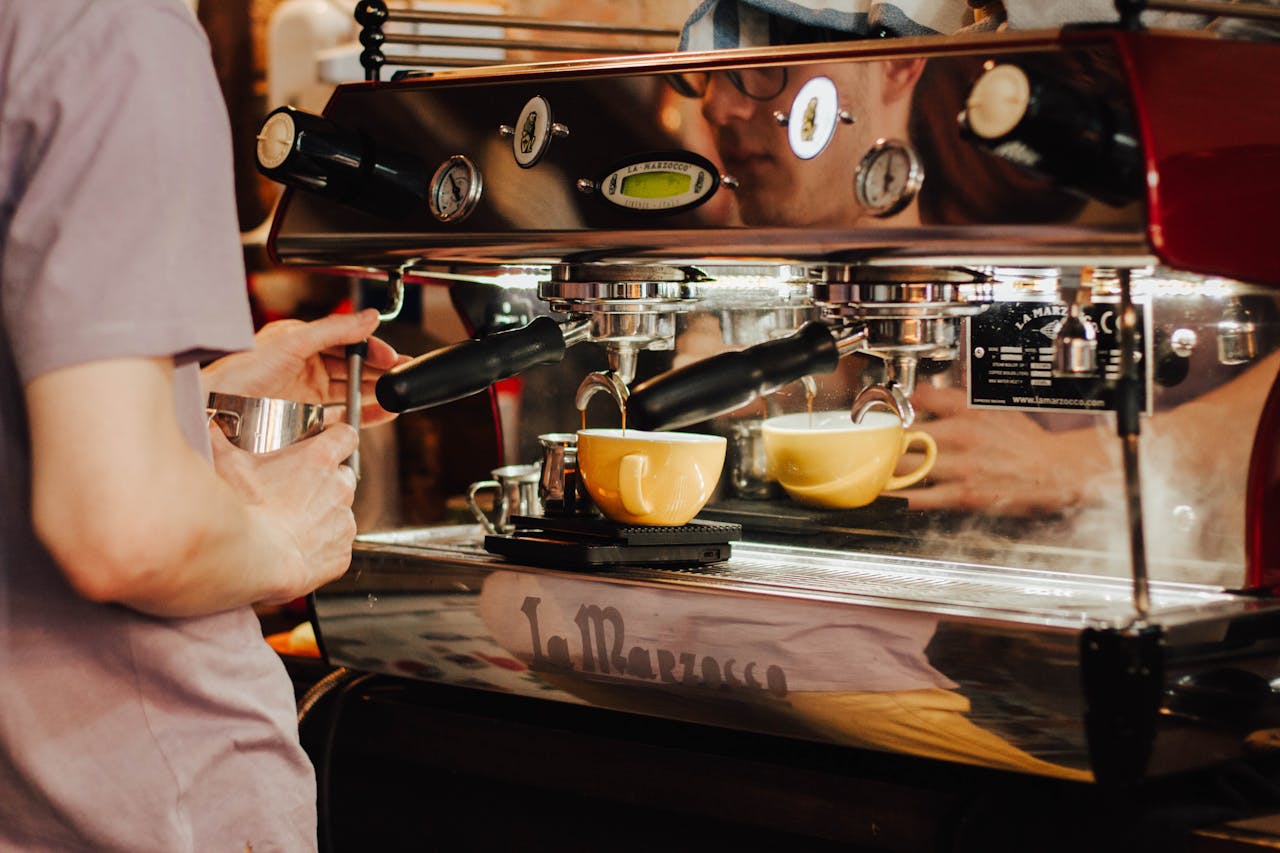
- Café solo (kah-FEH SOH-loh) – A straight espresso. Strong, small, and the backbone of Spanish coffee culture. This is what most Spaniards drink.
- Café con leche (kah-FEH kon LEH-cheh) – Espresso with hot milk. The most popular morning coffee in Spain. Roughly equal parts coffee and milk.
- Cortado (kor-TAH-doh) – Espresso “cut” with a small splash of milk. Stronger than a café con leche, gentler than a solo. Perfect mid-morning.
- Café americano (kah-FEH ah-meh-ree-KAH-noh) – Espresso diluted with hot water. If you’re used to filter coffee, this is your closest match. But honestly, try the local way first.
- Café bombón (kah-FEH bom-BOHN) – Espresso with condensed milk. Sweet, indulgent, and surprisingly popular in some regions. A treat, not an everyday order.
- Carajillo (kah-rah-HEE-yoh) – Espresso with a shot of brandy or other spirit. Often served after lunch. Yes, at 2pm. Nobody blinks.
Ordering Phrases That Sound Natural
Walk up to the bar (yes, you order at the bar in most Spanish cafés) and try these:
- “Ponme un café con leche, por favor.” (PON-meh oon kah-FEH kon LEH-cheh, por fah-VOR) – “Give me a café con leche, please.” The casual ponme (literally “put me”) is how native speakers actually talk.
- “Un cortado, cuando puedas.” (oon kor-TAH-doh, KWAHN-doh PWEH-dahs) – “A cortado, when you can.” Polite and relaxed.
- “¿Tenéis descafeinado?” (teh-NEH-ees des-kah-feh-ee-NAH-doh) – “Do you have decaf?” No judgement. Plenty of Spaniards drink it, especially in the evening.
Stop here and practise this. Say “Ponme un café solo” out loud right now. Seriously, do it. Your pronunciation improves when you actually move your mouth, not just read silently. If you want to build your ordering vocabulary for restaurants and bars, we’ve got guides for that too.
The Unwritten Rules of Spanish Coffee Culture
Now you know what to order. But Spanish coffee culture Salamanca has a whole set of invisible rules that locals follow without thinking. Breaking them won’t get you arrested, but knowing them will make you feel like an insider.
Rule 1: Coffee Has a Schedule
Spaniards don’t drink coffee randomly. There’s a rhythm:
- Morning (8-10am): Café con leche with toast (tostada, tohs-TAH-dah). This is breakfast.
- Mid-morning (11am-12pm): A cortado or café solo. Quick break, often standing at the bar.
- After lunch (2-4pm): A café solo. Sometimes a carajillo if it’s been a long day.
- Afternoon (5-6pm): Café con leche with a pastry (merienda, meh-ree-EN-dah, afternoon snack).
Notice what’s missing? Nobody orders a café con leche after lunch. Milk in coffee is a morning thing. Order one at 3pm and the barista might raise an eyebrow. Not rudely, just curiously.
Rule 2: Standing at the Bar Is Cheaper
In most Spanish cafés, there are two prices: barra (BAH-rah, bar) and terraza (teh-RAH-sah, terrace). Sitting outside costs more. Standing at the bar is the cheapest option and, honestly, the most social. You’ll chat with the barista and the regulars. This is where the magic happens.
Rule 3: Take Your Time (But Not Too Much)
Spaniards don’t rush coffee. A café con leche is savoured, not gulped. But there’s an art to knowing when to linger and when to move on. At the bar, ten to fifteen minutes is normal. At a table, you can stretch to an hour, especially if you order something else. Nobody will ever bring you a bill you didn’t ask for.
To ask for the bill: “La cuenta, por favor” (lah KWEN-tah, por fah-VOR). They’ll never rush you.
Tertulias: Where Coffee Becomes Culture
Now we get to the heart of Salamanca’s café identity. The tertulia (ter-TOO-lee-ah) is a tradition that dates back centuries. It’s an informal gathering, usually in a café, where people come together to discuss literature, politics, philosophy, art, or whatever fires them up.
Think of it as a book club without the book. Or a pub quiz without the quiz. It’s conversation elevated to an art form.
A Brief History of the Tertulia
Tertulias became a defining feature of Spanish intellectual life in the eighteenth and nineteenth centuries. Writers like Miguel de Unamuno (mee-GEL deh oo-nah-MOO-noh), who was rector of the University of Salamanca, were famous for their café tertulias. According to historian Ian Gibson’s work on Spanish literary culture, Unamuno’s gatherings at the Café Novelty in Salamanca’s Plaza Mayor drew intellectuals from across Europe.
The tradition nearly died during the Franco dictatorship, when free speech was dangerous. But it survived, quietly, in the back rooms of cafés. After Spain’s transition to democracy in the late 1970s, tertulias roared back to life.
Today, Salamanca’s university population keeps the tradition alive. Walk into certain cafés on a weekday evening and you’ll find groups passionately debating everything from Cervantes to climate change. It’s magnificent.
How to Join (or Start) a Tertulia
You don’t need an invitation. Tertulias are informal by nature. Here’s how to find one:
- Ask at the café. “¿Hay alguna tertulia aquí?” (eye ahl-GOO-nah ter-TOO-lee-ah ah-KEE, “Are there any tertulias here?”)
- Check university notice boards. Student groups often organise public tertulias on specific topics.
- Just listen. If you hear an animated group discussion that sounds welcoming, catch someone’s eye and smile. Spaniards are remarkably inclusive with curious foreigners.
Even if your Spanish isn’t perfect, participating in a tertulia is one of the most extraordinary language learning experiences you’ll ever have. Real conversation, real passion, real vocabulary that no textbook covers.
The Cafés You Must Visit in Salamanca
Every Salamanca Spain cafe guide should give you specific places to try. Here are the ones locals love.
Café Novelty (Plaza Mayor, 2)
The oldest café in Salamanca, opened in 1905. It sits right on the Plaza Mayor, which is arguably the most beautiful main square in all of Spain. A bronze statue of Unamuno sits at his favourite table by the window. Order a café solo and sit where one of Spain’s greatest thinkers once held court.
Yes, it’s touristy. Go anyway. The history is real, the coffee is good, and watching the Plaza Mayor from those windows is an experience you won’t forget.
Café El Alcaraván
Tucked away from the main tourist routes, this cosy spot is where university lecturers disappear between classes. The ambiente (ahm-bee-EN-teh, atmosphere) is warm and intellectual. They serve an excellent cortado and their tarta de queso (TAR-tah deh KEH-soh, cheesecake) is legendary among locals.
Café Mandala
A favourite with students and young professionals. More modern than the traditional cafés, but still unmistakably Salmantino. They have a solid selection of teas if coffee isn’t your thing, and the Wi-Fi actually works. A good spot for combining language study with people-watching.
La Regenta
Near the Calle Compañía, this café-bar serves some of the best tostas (TOHS-tahs, open-faced toasted sandwiches) in the city alongside proper espresso. Come for the mid-morning almuerzo (ahl-MWER-soh, late breakfast/early lunch) and you’ll see professors, shopkeepers, and students all sharing the same bar. That’s Spanish coffee culture at its most democratic.
Coffee Vocabulary for Your Salamanca Trip
Here’s a quick reference for all the cultural vocabulary you’ll need at a Spanish café:
- La barra (lah BAH-rah) – The bar counter
- La terraza (lah teh-RAH-sah) – The outdoor terrace
- El camarero / la camarera (el kah-mah-REH-roh / lah kah-mah-REH-rah) – The waiter/waitress
- La taza (lah TAH-sah) – The cup
- El azúcar (el ah-SOO-kar) – The sugar
- La cucharilla (lah koo-chah-REE-yah) – The small spoon
- La cuenta (lah KWEN-tah) – The bill
- Solo/a (SOH-loh/lah) – Alone/black (as in coffee)
- Templado (tem-PLAH-doh) – Lukewarm (ask for your milk templada if you don’t want it scalding)
Pro tip: if your coffee arrives and it’s too strong, ask for “un poco más de leche” (oon POH-koh mahs deh LEH-cheh, “a little more milk”). Nobody will judge you.
The Morning Ritual: Desayuno in Salamanca
Spanish breakfast is delightfully simple. And in Salamanca, the morning café ritual is practically sacred.
Here’s how it works. You walk into your neighbourhood café. The barista already knows your order because you’ve been coming for three days. (Spaniards are creatures of habit with their morning coffee spots.) You get your café con leche and a tostada con tomate (tohs-TAH-dah kon toh-MAH-teh, toast with crushed tomato and olive oil).
You stand at the bar. You read the sports section of the newspaper, or scroll your phone, or chat briefly with the person beside you. Ten minutes. Maybe fifteen. Then you’re off.
This ritual, called desayuno (deh-sah-YOO-noh, breakfast), costs between two and four euros in most Salamanca cafés. For the quality of the coffee and the warmth of the experience, that’s extraordinary value.
If you want to go full local, try ordering “Lo de siempre” (loh deh see-EM-preh, “The usual”). You’ll need to have been a few times first, obviously. But when the barista nods and starts making your coffee without asking? That’s the moment you stop being a tourist and start being a regular. Your Spanish is about to level up.
Why Coffee Culture Matters for Language Learning
This is where the magic happens. Spanish coffee culture Salamanca isn’t just about beverages. It’s a language learning accelerator.
Think about it. Every coffee order is a micro-conversation. Every interaction at the bar is practice. Every tertulia is an advanced listening exercise. The café is a classroom without walls, without tests, and without the anxiety of formal learning.
What You’ll Learn at a Café (That No Class Teaches)
- Natural greetings. How locals actually say hello in the morning vs. the evening.
- Informal commands. “Ponme” (give me), “dame” (DAH-meh, hand me), “tráeme” (TRAH-eh-meh, bring me). These casual imperative forms are everywhere in café Spanish.
- Small talk. Weather, football, local news. The bar counter is where you learn the art of conversational Spanish that feels genuine.
- Listening comprehension. Native speakers at natural speed, with natural accents, using natural vocabulary. No slowed-down audio recordings here.
- Cultural confidence. The more comfortable you become in a café, the more comfortable you become in Spanish overall.
According to the Instituto Cervantes, immersive social environments like cafés and markets are among the most effective contexts for developing communicative competence in Spanish. Textbooks give you the grammar. Cafés give you the confidence.
A Perfect Coffee Day in Salamanca
Here’s your ideal itinerary for experiencing the full depth of Salamanca Spain cafe guide culture in a single day:
- 8:30am: Desayuno at a neighbourhood café near your accommodation. Café con leche and tostada con tomate. Stand at the bar.
- 11:00am: Mid-morning cortado at Café Novelty. Sit at the window. Watch the Plaza Mayor wake up.
- 2:30pm: After lunch, a café solo at La Regenta. Stand at the bar and chat with whoever’s beside you.
- 5:30pm: Merienda at Café El Alcaraván. Café con leche and that legendary tarta de queso. Bring a book or a notebook.
- 8:00pm: If you’re feeling brave, find a tertulia or simply linger at a café near the university and soak in the evening atmosphere.
Five coffees might sound like a lot. But remember, Spanish espressos are small. And the day isn’t about caffeine. It’s about connection, culture, and conversation.
Bring Salamanca’s Coffee Culture Home
You don’t have to be in Salamanca to embrace Spanish coffee culture. Here’s how to carry it with you:
- Slow down. Stop drinking coffee at your desk. Sit somewhere pleasant. Even five minutes of intentional coffee time changes your day.
- Make it social. Invite a friend for coffee and conversation. No phones. Just talking. That’s the tertulia spirit.
- Order in Spanish. Even at your local café. “Un café con leche, por favor” is a tiny act of practice that adds up.
- Find your regular spot. Go to the same café often enough that the staff recognises you. Build that relationship.
Salamanca’s cafés taught generations of Spain’s greatest writers, philosophers, and thinkers. They can teach you too. Not just Spanish language and culture, but a whole different way of moving through the world. Slower. Warmer. More connected.
Next time you order a coffee, anywhere in the world, think of Salamanca. Think of the golden stone, the animated conversations, the clink of tiny cups on saucers. Think of Unamuno at his window table. Then say your order in Spanish, even if it’s just to yourself.
Now you understand this culture better. Use this knowledge to connect authentically. Your Spanish is about to level up, one café con leche at a time.
Share
Topics

audazrevista
You may also like

Get the Inside Scoop