Coffee Culture in Salamanca: The Insider’s Guide
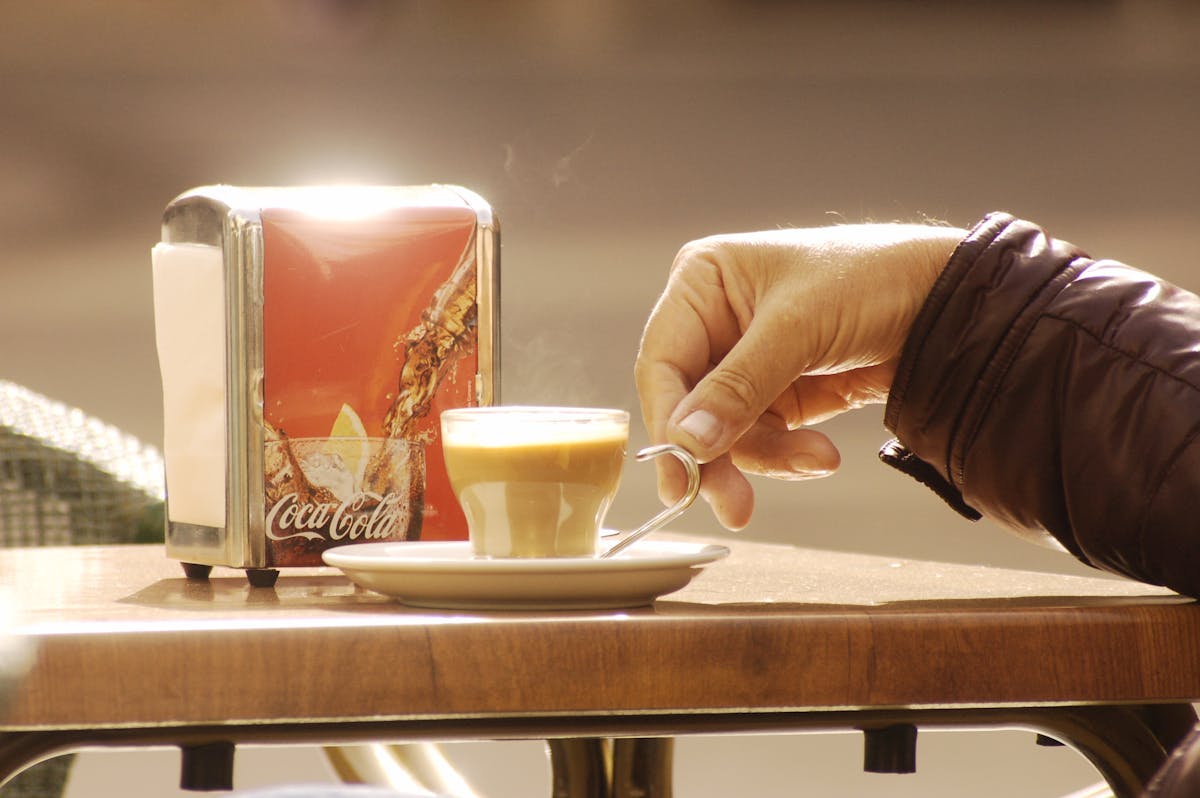
How to Order Coffee Like a Local in Salamanca
You walk into a café in Salamanca. The barista glances at you. You have approximately three seconds before they move on to someone else.
Welcome to Spanish coffee culture, where ordering is an art form and hesitation is the biggest sin.
Here’s the thing. In Salamanca, nobody says “Can I please have a medium latte with oat milk?” That sentence would earn you a confused stare and possibly a laugh. Spanish coffee is direct. Efficient. Beautiful in its simplicity.
Let’s master it.
The Essential Coffee Orders
- Café solo (ka-FEH SO-lo) – A straight espresso. Small, strong, no messing about. The default order for anyone in a hurry.
- Café con leche (ka-FEH kon LEH-cheh) – Espresso with hot milk, roughly 50/50. Spain’s most popular coffee. Your safe bet.
- Cortado (kor-TAH-do) – Espresso “cut” with a small splash of milk. Stronger than a con leche, softer than a solo. The sophisticated choice.
- Carajillo (ka-ra-HEE-yo) – Espresso with a shot of brandy or whisky. Yes, at 10am. Nobody judges you. This is Spain.
- Café bombón (ka-FEH bom-BOHN) – Espresso with condensed milk. Sweet, indulgent, and visually stunning in a glass cup.
- Café con hielo (ka-FEH kon YEH-lo) – Hot espresso served with a separate glass of ice. You pour it over yourself. Summer essential.
- Descafeinado (des-ka-fay-NAH-do) – Decaf. Specify “de máquina” (from the machine) or “de sobre” (from a sachet). No shame in this choice.
The Magic Phrase
Forget “Can I have…” or “I’d like…”
In Salamanca, you say: “Ponme un cortado” (PON-meh oon kor-TAH-do). Literally: “Put me a cortado.”
It sounds demanding in English. In Spanish, it’s perfectly polite. Direct. Efficient. The barista appreciates it because you’re not wasting their time with unnecessary pleasantries.
Other variations:
- “Ponme un café con leche” (PON-meh oon ka-FEH kon LEH-cheh)
- “Marchando un solo” (mar-CHAN-do oon SO-lo) – “Coming right up, an espresso” (what the barista says back)
- “¿Me pones otro?” (meh PO-nes OH-tro) – “Will you get me another?” (for your second cup)
The Social Rituals You Must Know
Standing at the Barra Is Cheaper
This is the insider tip that saves you money every single day in Spain.
In most Salamanca cafés, there are two prices: barra (BAR-ra, the counter) and terraza (teh-RAH-sa, the outdoor terrace). A café con leche might cost 1.40 euros at the barra and 2.20 euros at the terraza.
Same coffee. Same cup. Different price based purely on where your feet are standing.
Locals know this. They pop in, stand at the bar, knock back their café solo in two sips, leave a few coins, and walk out. Total time: three minutes. Total cost: 1.20 euros.
Never Rush Your Coffee
But here’s the contradiction. While ordering is fast, drinking is slow. Once you sit down with your café con leche, you are not expected to leave quickly. You can sit for an hour nursing a single coffee and nobody will bring you the bill or give you dirty looks.
In Spain, the café is your living room extension. Read a newspaper. Watch people. Have a conversation. The table is yours for as long as you want it.
Ask for the bill only when you’re ready: “La cuenta, por favor” (la KWEN-ta por fa-BOR). They’ll never bring it unprompted.
Tipping Culture
Tipping in Salamanca cafés is simple. Leave the small coins from your change. If your coffee was 1.40 euros and you paid with a two-euro coin, leaving the 60 cents is generous. A few 20-cent coins on the saucer is standard. Never feel obligated. Nobody expects it, but everyone appreciates it.
Famous Cafés Near Plaza Mayor
Salamanca’s Plaza Mayor (PLA-sa ma-YOR), completed in 1755, is considered one of Spain’s most beautiful squares. And the cafés surrounding it are legendary.
Café Novelty (Founded 1905)
This is Salamanca’s oldest café, and it’s magnificent. Sitting on the southwest corner of Plaza Mayor, Café Novelty has been serving coffee for over 120 years.
Writers, poets, and intellectuals have gathered here for generations. There’s even a bronze statue of author Gonzalo Torrente Ballester sitting at his favourite table outside, forever mid-conversation with an empty chair.
Order a cortado at the bar and look around. The same marble tables that Miguel de Unamuno once sat at are still there. The mirrors, the wood panelling, the ancient coffee machine hissing in the background. This place is living history.
A coffee here costs slightly more (around 2.50 euros in the terraza), but you’re paying for over a century of atmosphere.
Café El Corrillo
Just off Plaza Mayor on the square of the same name, Café El Corrillo is where students and professors mix. The atmosphere is more relaxed than Novelty, with better people-watching opportunities from the terraza.
It’s the kind of place where you’ll overhear a philosophy debate at the next table and a group of Erasmus students badly conjugating verbs at the other. Perfect for eavesdropping practice (which is just immersive listening, really).
Mandala Café
For something more modern, Mandala offers a different energy. Popular with younger crowds, it has a more contemporary vibe while still respecting the Spanish café tradition of slow service and long stays. The coffee is excellent, and they make a mean tostada con tomate (toast with fresh tomato) for breakfast.
The Tertulia Tradition: Where Coffee Meets Intellectual Life
Now we’re getting into the really good stuff.
A tertulia (ter-TOO-lya) is a regular gathering of friends, intellectuals, writers, or artists who meet at the same café, at the same time, to discuss ideas. It’s part social club, part debate society, part philosophical salon.
And Salamanca has been doing them since the 17th century.
The concept is beautifully simple. A group chooses a café. They claim a table (often the same one, always). They meet weekly or daily. And they talk. About politics. Literature. Art. Life. The meaning of existence. Whatever emerges.
Famous Spanish tertulias shaped entire literary movements. The Generation of ’98 writers (Unamuno, Machado, Baroja) held regular tertulias in Madrid and Salamanca. Federico García Lorca was a legendary tertulia participant. These weren’t formal meetings with agendas. They were organic, passionate, spontaneous exchanges that happened to produce some of Spain’s greatest literature.
In modern Salamanca, tertulias still happen. They’re less famous now, but no less real. Walk into Café Novelty on a Tuesday morning and you’ll likely find a group of retired professors debating something with extraordinary passion over their second café con leche.
How to Spot a Tertulia in Progress
- A group of 4-8 people at a table with empty coffee cups piling up
- Animated conversation with lots of hand gestures
- Nobody looking at their phone
- The waiter knowing everyone’s order without asking
- They’ve clearly been there for hours and show no signs of leaving
Morning, Afternoon, and Evening: When Spaniards Drink Coffee
In Spain, coffee isn’t just a morning drink. It punctuates the entire day. Understanding when and why Spaniards drink coffee reveals the rhythm of daily life.
Desayuno (7:30-10:00am)
Desayuno (deh-sa-YOO-no, breakfast) is simple. A café con leche or café solo with a tostada (toast) or a croissant. Many Salamanca workers stop at a bar on their way to work rather than eating at home. It’s quick, social, and costs 2-3 euros for coffee plus food.
Almuerzo (11:00am-12:00pm)
Almuerzo (al-MWER-so) is the mid-morning coffee break. This is when the second coffee happens. Usually a cortado or a solo. It’s the “I need fuel to make it to lunch” coffee. Many offices have a designated almuerzo break.
After-Lunch Coffee (2:30-4:00pm)
Lunch in Spain is the main meal. It’s big. It’s heavy. And it demands a coffee afterwards. The post-lunch café solo is sacred. It signals the transition between eating and returning to work (or beginning the siesta, depending on your schedule).
This is when you’ll hear: “¿Un cafelito?” (oon ka-feh-LEE-to, A little coffee?). The diminutive makes it sound small and innocent, even though it’s a full espresso.
Merienda (5:30-7:00pm)
Merienda (meh-ree-EN-da, afternoon snack) is the late afternoon coffee moment. Often paired with something sweet. This coffee is more leisurely. It’s social. It’s the “meeting a friend for coffee” time slot. In Salamanca, the cafés around Plaza Mayor fill up beautifully during merienda hours.
After-Dinner (10:00pm+)
Yes. Spaniards drink coffee at 10pm. Often at 11pm. Sometimes at midnight. Usually a cortado or a solo. Always decaf? No. Often full caffeine. How they sleep remains one of Spain’s great mysteries.
The University Influence: 30,000 Students, One Coffee Culture
The University of Salamanca, founded in 1218, is one of the oldest continuously operating universities in the world (UNESCO recognised Salamanca’s Old City as a World Heritage Site in 1988). Today, it brings approximately 30,000 students into a city of just 145,000 people.
This student population shapes coffee culture profoundly.
Students study in cafés for hours. They hold meetings in cafés. They celebrate exams finishing in cafés. They cry about exams in cafés. The café is their library, their office, their therapy room, and their social hub.
This creates a specific energy in Salamanca cafés that you won’t find in other Spanish cities. The mix of young international students (Salamanca is Spain’s most popular Erasmus destination), Spanish students, and lifelong academics creates a uniquely intellectual atmosphere where learning feels like the natural state of being.
Coffee Vocabulary Masterclass
Master these words and you’ll navigate any Salamanca café with complete confidence:
- Ponme (PON-meh) – “Give me” / “Put me” – Your go-to ordering verb
- Marchando (mar-CHAN-do) – “Coming right up” – What the barista says
- La barra (la BAR-ra) – The counter/bar – Where coffee is cheaper
- La terraza (la teh-RAH-sa) – The outdoor terrace – Where people-watching happens
- El camarero (el ka-ma-REH-ro) – The waiter (male) / La camarera (female)
- La cuenta (la KWEN-ta) – The bill – Only when YOU ask for it
- Una de azúcar (OO-na deh ah-SOO-kar) – A sugar packet
- Caliente (ka-lee-EN-teh) – Hot
- Templado (tem-PLA-do) – Warm/lukewarm – For when you want your milk not too hot
- Solo/a (SO-lo/SO-la) – Alone/black – Both a coffee type and a state of being
- Tertulia (ter-TOO-lya) – Regular intellectual gathering at a café
- Sobremesa (so-breh-MEH-sa) – The time spent lingering at the table after a meal
Interactive: Your Coffee Order Builder
Match your situation to the perfect order:
| Your Situation | Your Order | Say This |
|---|---|---|
| Running late, need energy fast | Café solo at the barra | “Ponme un solo” |
| Meeting a friend for a chat | Café con leche at the terraza | “Dos con leche, por favor” |
| After a big lunch, need a reset | Cortado | “Un cortadito, porfa” |
| It’s hot and you need cooling down | Café con hielo | “Ponme un café con hielo” |
| Feeling adventurous before noon | Carajillo | “Un carajillo de coñac” |
| Want something sweet | Café bombón | “Un bombón, por favor” |
| It’s 11pm and somehow you need caffeine | Cortado (no shame) | “Ponme un cortado” |
| You want to blend in completely | Whatever the person next to you ordered | “Lo mismo” (the same) |
Why Salamanca’s Coffee Culture Matters
Coffee in Salamanca isn’t about caffeine. It’s about connection.
It’s about the professor who’s been having his cortado at the same bar stool for 30 years. The students huddled over textbooks and café con leches before their literature exam. The friends who meet every Saturday at Café Novelty and have done since university.
When you sit down in a Salamanca café, you’re participating in something centuries old. You’re joining a tradition that values conversation over consumption, presence over productivity, and human connection over hurried schedules.
So take your time. Order your coffee with confidence. Watch the world go by from the terraza. And remember: in Salamanca, the café isn’t where you go between activities. The café IS the activity.
Sources: UNESCO World Heritage Committee, “Old City of Salamanca” inscription (1988); University of Salamanca, founded 1218, one of Europe’s oldest continuously operating universities.
Related reading: Discover more about Spanish culture and traditions on Audaz Revista.
Share
Topics

audazrevista
You may also like

Get the Inside Scoop