Hispanic Heritage Month: 15 Key Contributions to American Culture [2026 Guide]
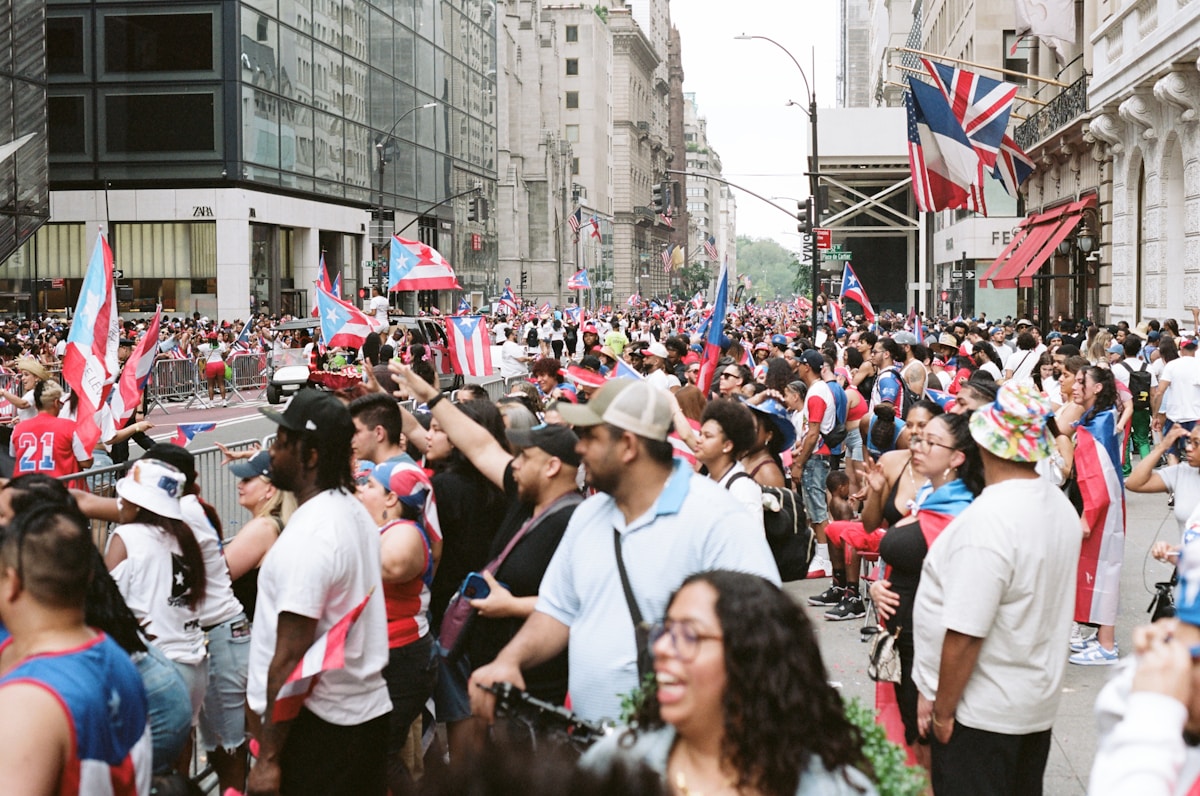
Every year from September 15 to October 15, the United States celebrates Hispanic Heritage Month, honoring the histories, cultures, and contributions of Americans whose ancestors came from Spain, Mexico, the Caribbean, and Central and South America. But this isn’t just a month of festivals and food, though those are wonderful parts of the celebration.
Hispanic Heritage Month recognizes the profound impact that 62.1 million Hispanic Americans have had on the fabric of American society, from science and medicine to arts, politics, and civil rights. This represents 19% of the total U.S. population, making Hispanic Americans the nation’s largest ethnic minority group.
After spending 15 years researching Hispanic cultural contributions across the Americas and teaching courses on Latino/a/x history at universities in California and Texas, I’ve witnessed how this month serves as both celebration and education. It’s an opportunity to understand the complex, diverse histories of Hispanic communities and recognize contributions that have shaped the United States from its founding to today.
📅 Why September 15th?
Hispanic Heritage Month begins on September 15 because that date marks the anniversary of independence for five Latin American countries, Costa Rica, El Salvador, Guatemala, Honduras, and Nicaragua (all in 1821). Mexico’s independence day follows on September 16, and Chile’s on September 18. The timing honors liberation movements that transformed the Americas.
The Origins. From Week to Month
Hispanic Heritage Month didn’t always span 30 days. Its evolution reflects growing recognition of Hispanic contributions to American society.
1968: Hispanic Heritage Week
President Lyndon B. Johnson first designated Hispanic Heritage Week in 1968, during the height of the civil rights movement. The proclamation recognized the contributions of Hispanic Americans and called for greater awareness of Hispanic culture and history.
1988: Expansion to a Month
Twenty years later, Representative Esteban Torres of California sponsored legislation to expand the celebration to a full month. President Ronald Reagan signed it into law in August 1988, with the first national Hispanic Heritage Month observed that September. The expansion acknowledged that one week was insufficient to honor the depth and breadth of Hispanic contributions to the United States.
2026: Current Significance
Today, Hispanic Heritage Month has become a cornerstone of American cultural celebration, with educational programs in schools, cultural festivals in cities nationwide, special programming on television networks, and recognition by corporations and government agencies at all levels.
📊 By the Numbers (2026 Census Data), Hispanic Americans represent 19% of the U.S. population, contribute $2.8 trillion annually to the U.S. GDP, own 4.7 million businesses, and comprise 17% of the U.S. labor force. These aren’t just statistics; they represent generations of hard work, entrepreneurship, and cultural enrichment.
Understanding “Hispanic” vs “Latino/a/x”
These terms are often used interchangeably, but they have distinct meanings,
| Term | Definition | Includes | Excludes |
|---|---|---|---|
| Hispanic | Based on Spanish language/Spanish colonial heritage | Spain, Mexico, Cuba, Dominican Republic, most of Central/South America | Brazil (Portuguese-speaking), Haiti (French-speaking) |
| Latino/a | Based on Latin American geographic origin | All of Latin America including Brazil and Haiti | Spain (European, not Latin American) |
| Latinx | Gender-neutral alternative to Latino/Latina | All people of Latin American descent regardless of gender | N/A (inclusive term) |
Personal preference matters, According to a 2023 Pew Research study, 23% of Hispanic Americans prefer “Hispanic, ” 15% prefer “Latino, ” and the majority (61%) have no preference and use them interchangeably. Many prefer identification by specific country of origin (Mexican American, Cuban American, Puerto Rican, etc.). The key is respecting individual preferences.
🚫 Common Mistake, Treating “Hispanic” as a race. Hispanic is an ethnicity, not a race. Hispanic Americans can be of any race (white, Black, Indigenous, Asian, or multiracial). The U.S. Census asks about Hispanic ethnicity separately from racial identity, recognizing this complexity.
15 Transformative Hispanic Contributions to America
Hispanic Americans have shaped every aspect of American life. Here are 15 contributions that transformed the nation,
1. The Labor Movement and Farmworkers’ Rights. César Chávez and Dolores Huerta
The contribution, In 1962, César Chávez and Dolores Huerta co-founded the National Farm Workers Association (later United Farm Workers), launching a movement that secured labor rights for millions of agricultural workers who had been exploited for generations.
The impact, Their organizing led to California’s 1975 Agricultural Labor Relations Act, the first law recognizing farmworkers’ right to collective bargaining. The UFW’s strikes, boycotts, and “Sí Se Puede” (Yes We Can) slogan became rallying cries for labor rights globally. Dolores Huerta’s work continued for 60+ years, earning her the Presidential Medal of Freedom in 2012.
Why it matters, Before Chávez and Huerta, farmworkers faced poverty wages, no health protections, exposure to dangerous pesticides, and zero job security. Their movement established that agricultural workers deserve the same rights and dignity as all workers, transforming conditions for millions.
Data impact, UFW contracts increased farmworker wages by 70% between 1965-1980, established health clinics serving 40, 000+ workers annually, and created pension plans for laborers previously living in poverty.
2. Space Exploration. Ellen Ochoa, First Latina Astronaut
The contribution, Dr. Ellen Ochoa became the first Latina astronaut when she flew on the Space Shuttle Discovery in 1993. She completed four space missions, logging nearly 1, 000 hours in orbit, before becoming Director of NASA’s Johnson Space Center in 2013, the first Hispanic director and second woman to lead the center.
The impact, Ochoa’s optical systems research led to three patents for technology used in space missions. As JSC Director, she oversaw the International Space Station program and NASA’s commercial crew program.
Why it matters, Ochoa broke barriers in STEM fields where Latinas were severely underrepresented, inspiring a generation of young Hispanic women to pursue careers in science and engineering. Her visible leadership demonstrated that space exploration belongs to everyone.
Her advice to students, “Don’t be afraid to reach for the stars. I believe a good education can take you anywhere on Earth and beyond.” She actively mentors Hispanic students in STEM fields, emphasizing that representation matters in shaping who believes they belong in science.
3. Supreme Court Justice. Sonia Sotomayor
The contribution, In 2009, Sonia Sotomayor became the first Hispanic and third woman appointed to the U.S. Supreme Court. Nominated by President Obama, she brought a perspective shaped by growing up in Bronx housing projects and overcoming type 1 diabetes.
The impact, Justice Sotomayor’s judicial philosophy emphasizes the real-world impact of legal decisions on ordinary people. Her dissents often highlight how rulings affect marginalized communities. Her autobiography, “My Beloved World, ” has inspired countless young people, particularly Latinas, to pursue careers in law.
Why it matters, The Supreme Court interprets laws that affect 330 million Americans. Having diverse perspectives, including voices from communities historically excluded from power, creates more just and comprehensive legal interpretations.
Her legacy, Beyond legal decisions, Sotomayor travels extensively to speak with students, emphasizing that diverse backgrounds strengthen America’s institutions. She’s a vocal advocate for empathy in judicial interpretation, arguing that understanding lived experiences makes for better law.
4. Public Health Pioneer. Dr. Antonia Novello, First Female U.S. Surgeon General
The contribution, Dr. Antonia Novello served as U.S. Surgeon General from 1990-1993, the first woman and first Hispanic to hold the position. A pediatrician by training, she focused on women’s health, children’s health, and AIDS awareness at the height of the epidemic.
The impact, Dr. Novello launched major public health campaigns targeting underage drinking and tobacco advertising aimed at children and minorities. She worked to destigmatize AIDS, increase research funding, and improve access to healthcare for underserved communities.
Why it matters, Hispanic communities face higher rates of diabetes, obesity, and cardiovascular disease than the general population, often due to socioeconomic factors and healthcare access barriers. Having Hispanic leadership in public health ensured these disparities received national attention and resources.
Career trajectory, Born in Puerto Rico with a congenital health condition requiring multiple childhood surgeries, Novello’s early experiences with healthcare inequality fueled her commitment to medicine and public health advocacy for vulnerable populations.
5. Literary Voice. Sandra Cisneros and “The House on Mango Street”
The contribution, Sandra Cisneros published “The House on Mango Street” in 1984, a groundbreaking novel about a young Latina growing up in Chicago. Written in poetic vignettes, it captured the Mexican-American experience with authenticity, beauty, and complexity rarely seen in American literature.
The impact, The book has sold over 6 million copies, is taught in schools nationwide, and opened doors for Latino/a literature in mainstream publishing. Cisneros became the first Mexican-American woman to win major literary awards and paved the way for authors like Junot Díaz, Julia Alvarez, and Isabel Allende to reach wide audiences.
Why it matters, For decades, Mexican-American stories were either absent from American literature or told through stereotypes by outside authors. Cisneros gave voice to the complex identity of being neither fully American nor fully Mexican, a reality millions of Hispanic Americans navigate daily.
Cultural impact, “The House on Mango Street” validated the experiences of working-class Latino/a students who had never seen themselves reflected in school curriculum. It demonstrated that “American literature” includes all American experiences, not just white middle-class narratives.
6. Music Revolution. Celia Cruz, Queen of Salsa
The contribution, Celia Cruz fled Cuba in 1960 and became the undisputed Queen of Salsa, recording 80+ albums and performing for 60 years. Her powerful voice, electrifying stage presence, and signature phrase “¡Azúcar!” (Sugar!) made her an international icon.
The impact, Cruz brought Afro-Cuban music to global mainstream audiences, winning multiple Grammy Awards and performing at Carnegie Hall, the Hollywood Bowl, and the White House. She broke barriers for Black Latinas in an industry that often marginalized both identities.
Why it matters, Cruz represented the intersection of African and Latin cultures that is central to Hispanic identity but often overlooked. She celebrated Blackness in Latin music at a time when colorism and racism were (and remain) persistent issues in Latino communities.
Legacy, When she died in 2003, over 200, 000 people paid respects at her public viewing in Miami. The U.S. Postal Service issued a Celia Cruz commemorative stamp in 2011, and her music continues to define salsa for new generations.
7. Baseball Excellence. Roberto Clemente
The contribution, Roberto Clemente was a 15-time All-Star, 12-time Gold Glove winner, and the first Latino player inducted into the Baseball Hall of Fame. But his legacy extends far beyond statistics.
The impact, Clemente used his platform to advocate for Latino players facing discrimination and demanded respect for Hispanic athletes. He died in a plane crash on New Year’s Eve 1972 while delivering aid to earthquake victims in Nicaragua, cementing his legacy as a humanitarian.
Want to go deeper? Audaz Revista Issue 1 covers topics like this with original cultural features and language insights you will not find in a textbook. Explore Issue 1
Why it matters, In the 1960s-70s, Latino players faced language barriers, racism, and segregation even after baseball’s color line was broken. Clemente insisted on being treated with dignity and spoke out against injustice, paving the way for generations of Latino baseball stars.
Ongoing impact, MLB’s Roberto Clemente Award honors players who exemplify sportsmanship and community involvement. His humanitarian work established a model of athletes using fame for social good that continues today.
8. Civil Rights Advocacy. The Young Lords
The contribution, The Young Lords, founded by Puerto Rican activists in Chicago in 1968, fought for Puerto Rican civil rights, affordable housing, quality healthcare, and education reform. They organized community programs including free breakfast for children, lead poisoning screenings, and tuberculosis testing.
The impact, Their activism led to the creation of community health clinics in underserved neighborhoods, improved city services in Puerto Rican areas, and increased political representation for Latino communities in New York and Chicago.
Why it matters, While the Civil Rights Movement is often framed as a Black-white issue, Latino communities were simultaneously fighting similar battles for equality, dignity, and justice. The Young Lords demonstrated that civil rights activism encompassed multiple communities with interconnected struggles.
Methods and influence, The Young Lords borrowed tactics from the Black Panther Party but adapted them to Puerto Rican community needs. Their “garbage offensive” (piling uncollected garbage in streets to force city cleanup) and occupation of a church to create a free breakfast program showed creative resistance to institutional neglect.
9. Tech Innovation. Luis von Ahn and CAPTCHA
The contribution, Guatemalan-American computer scientist Luis von Ahn invented CAPTCHA, the security system that distinguishes humans from bots online. He later created reCAPTCHA (acquired by Google) and founded Duolingo, the world’s most popular language-learning app with 500+ million users.
The impact, CAPTCHA technology secures billions of online transactions daily. Duolingo has democratized language education, providing free access to language learning for people who can’t afford traditional courses or software.
Why it matters, Von Ahn’s innovations address real problems, online security and education accessibility. Duolingo has been particularly transformative for immigrants seeking to learn English and for global users learning Spanish, the world’s second most spoken language.
Philosophy, Von Ahn believes technology should serve humanity. ReCAPTCHA cleverly crowdsourced digitization of books while securing websites. Duolingo uses gamification to make learning addictive, proving education can be both effective and free.
10. Journalism and Media. Jorge Ramos
The contribution, Jorge Ramos has been the lead anchor of Univision’s evening news for 38+ years, making him one of the most trusted journalists among Hispanic Americans. His aggressive questioning of political leaders and advocacy journalism style has earned him the nickname “The Walter Cronkite of Latino America.”
The impact, Ramos has interviewed virtually every major political figure in the Americas, often asking questions other journalists avoid. His confrontational interviews with presidents (including Donald Trump, Nicolás Maduro, and others) have sparked national conversations about immigration, democracy, and human rights.
Why it matters, Univision reaches more Hispanic households than any English-language network reaches all U.S. households. Ramos’s journalism brings attention to issues affecting Latino communities that mainstream English media often ignores, immigration policy, discrimination, economic inequality, and political representation.
Controversial stance, Ramos rejects the notion of journalistic neutrality when covering human rights issues, arguing that some issues (like separating children from families at the border) don’t have “both sides.” This advocacy journalism approach is controversial but reflects Latin American journalism traditions.
11. Culinary Influence. The Mainstreaming of Mexican Cuisine
The contribution, Mexican food has evolved from niche ethnic cuisine to America’s favorite food category. Tacos, burritos, guacamole, salsa, and quesadillas are now as American as burgers and pizza.
The impact, Salsa surpassed ketchup as America’s #1 condiment in the 1990s. Mexican restaurants are the fastest-growing restaurant category in the U.S. The Mexican food market in America exceeds $19 billion annually.
Why it matters, Food is culture made tangible. The acceptance and celebration of Mexican cuisine reflects broader acceptance of Mexican-American culture. From high-end restaurants to food trucks to home kitchens, Mexican flavors have become integral to American taste.
Cultural evolution, This isn’t just about Tex-Mex or Taco Bell. Modern Mexican-American chefs like Rick Bayless, Gabriela Cámara, and Enrique Olvera have elevated Mexican cuisine to fine dining status while honoring traditional techniques, challenging stereotypes that Mexican food is only “street food.”
12. Theater and Film. Lin-Manuel Miranda
The contribution, Lin-Manuel Miranda created “Hamilton, ” the revolutionary Broadway musical that reimagines America’s founding with a diverse cast and hip-hop score, and “In the Heights, ” which brought Washington Heights’ Latino community to Broadway.
The impact, “Hamilton” became a cultural phenomenon, winning 11 Tony Awards and reshaping how America tells its own story. “In the Heights” won four Tony Awards and inspired Latino youth to see themselves in American theater, not as side characters but as protagonists.
Why it matters, Miranda’s work demonstrates that American history belongs to all Americans, not just those who look like the founding fathers. His casting of Black and Latino actors as Hamilton, Washington, and Jefferson challenged who gets to tell America’s story and who gets to see themselves in that story.
Representation impact, After “Hamilton” premiered, theater programs in Latino communities saw surges in enrollment. Young people who had never considered theater as “for them” suddenly saw it as accessible. Miranda’s public embrace of his Puerto Rican heritage while achieving mainstream success modeled that you don’t have to choose between cultural identity and American success.
13. Education Reform. Jaime Escalante
The contribution, Jaime Escalante, a Bolivian-American math teacher at Garfield High School in East Los Angeles, refused to accept that low-income Latino students couldn’t excel in advanced mathematics. He created a rigorous AP Calculus program that sent dozens of students to college who otherwise might not have attended.
The impact, In 1982, 18 of Escalante’s students passed the AP Calculus exam, a feat so unusual that ETS accused them of cheating. When they retook the exam under scrutiny and passed again, their story inspired the film “Stand and Deliver” and challenged stereotypes about Latino students’ academic potential.
Why it matters, Escalante proved that the achievement gap isn’t about student ability but about resources, expectations, and support. His motto “ganas” (desire/determination) emphasized that success comes from effort and high expectations, not innate talent.
Educational philosophy, Escalante demanded discipline, homework, Saturday sessions, and summer school. He treated his students like college prep students because he believed they were. His success demonstrated that when schools invest resources and set high expectations, low-income Latino students perform at the same level as affluent students.
14. Environmental Justice. Dolores Huerta (Labor and Environment)
The contribution, Beyond co-founding the United Farm Workers, Dolores Huerta pioneered the environmental justice movement by connecting labor rights to environmental health. She fought against pesticide exposure that was poisoning farmworkers and their children.
The impact, Huerta’s advocacy led to California banning several dangerous pesticides and establishing safety standards for agricultural chemicals. She helped create the environmental justice framework recognizing that low-income communities and communities of color disproportionately suffer environmental hazards.
Why it matters, Environmental issues aren’t just about polar bears and rainforests; they’re about farmworkers exposed to carcinogens, families living near industrial pollution, and communities without clean water. Huerta connected environmental protection to human rights and worker dignity.
Intersectional activism, At 94 years old (as of 2024), Huerta continues organizing for immigrant rights, women’s rights, and environmental justice, demonstrating that these struggles are interconnected and ongoing.
15. Political Representation. Growth of Latino Political Power
The contribution, Hispanic Americans have increasingly shaped American politics through voting power, political leadership, and policy advocacy. From local school boards to Congress to presidential cabinets, Latino representation has grown dramatically since the 1960s.
The impact, As of 2026, there are 47 Hispanic members of Congress (up from just 5 in 1976). Four states have had Hispanic governors. Latino voters are decisive in swing states including Arizona, Nevada, Florida, and Texas. Issues important to Hispanic communities, immigration reform, education funding, healthcare access, now receive national attention.
Why it matters, Political representation ensures community needs are addressed in policy. When decision-makers reflect the communities they serve, policies better address real challenges those communities face.
Voting power, 32 million Hispanic Americans are eligible to vote in 2026, making Latinos the largest ethnic minority voting bloc. Their political preferences are diverse (not a monolith), but their growing electoral power means both parties must address Latino concerns to win national elections.
Frequently Asked Questions
▼
September 15 marks the anniversary of independence for five Central American countries, Costa Rica, El Salvador, Guatemala, Honduras, and Nicaragua (all gained independence on September 15, 1821). Mexico’s independence day follows on September 16, and Chile’s on September 18. Starting the month on September 15 honors these pivotal moments in Latin American history when nations broke free from Spanish colonial rule.
▼
Absolutely not. Hispanic culture encompasses 20+ countries with distinct histories, music, food, dialects, and traditions. Mexican culture differs dramatically from Argentine, Cuban, Spanish, or Colombian culture. Within countries, there’s regional diversity. Treating “Hispanic” as a monolithic culture erases this rich diversity. While there are shared linguistic and historical connections (Spanish colonization), each Hispanic culture is unique.
▼
Yes, everyone is encouraged to learn, celebrate, and honor Hispanic contributions. Respectful participation includes, learning about Hispanic history and current issues, supporting Hispanic-owned businesses, attending cultural events with an open mind, reading books by Hispanic authors, and listening to Hispanic voices on their own experiences. What to avoid, cultural appropriation, treating it as a “food and fiesta” month without deeper engagement, or speaking over Hispanic voices about their own experiences.
▼
Hispanic Heritage Month is a month-long celebration of all Hispanic cultures and contributions. Cinco de Mayo (May 5) commemorates a specific historical event. Mexico’s victory over French forces at the Battle of Puebla in 1862. Importantly, Cinco de Mayo is NOT Mexican Independence Day (that’s September 16) and is not widely celebrated in Mexico outside Puebla. In the U.S. it has become a commercialized celebration that often misrepresents Mexican culture. Hispanic Heritage Month offers more authentic, educational engagement with Hispanic heritage.
Audaz Revista
Take Your Spanish Further
Audaz Revista Issue 1 is out now, a full-length bilingual magazine for serious Spanish learners. Latin American culture, grammar deep-dives, and language insights written by educators.
▼
Go beyond surface-level celebration. Schools can, integrate Hispanic history into curriculum year-round (not just September), invite Hispanic guest speakers, read books by Hispanic authors, teach about current Hispanic contributions (not just historical figures). Workplaces can, highlight Hispanic employees’ contributions, provide education on Hispanic issues, support Hispanic-owned vendors, create mentorship programs for Hispanic employees, and examine whether organizational practices create barriers for Hispanic advancement. Authentic observation requires sustained commitment to equity, not just a month of acknowledgment.
▼
Key challenges include, Immigration policy uncertainty affecting millions of families, educational achievement gaps (Latinos have the lowest high school graduation rate among ethnic groups), healthcare access disparities (30% of Latinos lack health insurance vs 10% of non-Hispanic whites), economic inequality (Latino median household income is 73% of white median income), and political underrepresentation despite population size. However, Hispanic communities also demonstrate incredible resilience, entrepreneurship, and cultural richness that deserve equal attention to challenges.
▼
Representation shapes whose stories are told, whose problems are addressed, and who sees themselves as capable of leadership. When children see people who look like them in positions of authority, success, and creativity, they internalize that they too can achieve those roles. When decision-makers reflect community diversity, policies better address diverse needs. Studies show that Hispanic students with Hispanic teachers have higher academic achievement and college enrollment. Representation isn’t symbolic; it has measurable impact on opportunity and outcomes.
▼
The goal is for learning and celebration to extend year-round. Hispanic Heritage Month serves as a concentrated time for awareness and education, but genuine cultural appreciation doesn’t stop on October 15. Sustainable engagement means, continuously supporting Hispanic businesses and artists, staying informed about immigration and policy issues affecting Latino communities, reading Hispanic authors throughout the year, teaching Hispanic history as integral to American history (not as a separate unit), and maintaining relationships and solidarity with Hispanic communities beyond designated months.
How to Observe Hispanic Heritage Month Meaningfully
Authentic engagement goes beyond tacos and mariachi music (though both are wonderful). Here’s how to participate thoughtfully,
Education and Learning
- Read books by Hispanic authors, Sandra Cisneros, Isabel Allende, Junot Díaz, Gabriel García Márquez, Julia Alvarez, Luis Alberto Urrea
- Watch documentaries, “Latino Americans” (PBS), “Harvest of Empire, ” “The Bronze Screen”
- Learn history, Study the Bracero Program, Chicano Movement, Puerto Rican civil rights struggles, Cuban migration waves
- Understand current issues, Read about DACA, immigration reform, educational equity, healthcare access
Support and Action
- Support Hispanic-owned businesses, Use directories like We Buy Black, HispanicBusiness.com to find local businesses
- Donate to Hispanic-serving organizations, LULAC, UnidosUS, Hispanic Scholarship Fund, Hispanic Federation
- Attend cultural events, Festivals, art exhibitions, theater performances, lectures at local universities
- Advocate for policy, Contact representatives about immigration reform, education funding, healthcare access
Cultural Engagement
- Learn or practice Spanish, Free resources like Duolingo make language learning accessible
- Cook authentic recipes, Learn from Hispanic food bloggers and home cooks, not just Tex-Mex chains
- Listen to Hispanic music, Explore genres beyond what’s mainstream (bachata, cumbia, norteño, flamenco)
- Follow Hispanic creators, Support Hispanic journalists, artists, activists, and influencers year-round
💡 Most Important Takeaway, Hispanic Heritage Month isn’t about consuming Hispanic culture; it’s about recognizing that Hispanic Americans have always been integral to American identity, history, and progress. The contributions highlighted here represent a tiny fraction of Hispanic impact on every aspect of American life. The goal is not to set aside one month for recognition, but to understand that American history IS Hispanic history, American culture IS Hispanic culture, and America’s future includes the leadership and contributions of its largest and fastest-growing ethnic minority.
As we celebrate Hispanic Heritage Month 2026, let’s commit to moving beyond surface-level recognition toward genuine understanding, sustained support, and advocacy for equity. The 62 million Hispanic Americans shaping this nation deserve not just annual acknowledgment, but year-round respect, opportunity, and celebration of the profound contributions they’ve made and continue to make to the American story.
About Elena García
Elena García is a cultural historian specializing in Hispanic American contributions to U.S. society. She holds a PhD in Latino/a Studies from UCLA and has taught courses on Hispanic heritage, immigration history, and cultural identity at universities in California and Texas for 15+ years. Her research focuses on how Hispanic communities have shaped American culture, politics, and social movements from the colonial period to present day.
Share
Topics

audazrevista


Get the Inside Scoop