Learn Spanish: Everything You Need to Know [2026]
Learning Spanish is one of the most valuable skills you can develop in 2026. With 500+ million speakers across 20 countries, Spanish opens doors to career opportunities, travel experiences, and meaningful cultural connections that English alone cannot provide.
After teaching Spanish for over 12 years and helping 5,000+ students achieve fluency, I’ve identified the exact steps that separate successful learners from those who quit after a few months. The difference isn’t talent or natural ability—it’s strategy.
This comprehensive guide provides a proven roadmap for learning Spanish from absolute beginner to conversational fluency, with realistic timelines, resource recommendations, and strategies that actually work in 2026.
📊 Why Learn Spanish in 2026?
Spanish is the world’s 2nd most spoken native language (ahead of English) and the 4th most spoken language overall. The U.S. alone has 42 million native Spanish speakers plus 15 million bilingual speakers. By 2050, the U.S. will have the world’s largest Spanish-speaking population. Career-wise, bilingual employees earn 5-20% more than monolingual peers according to 2025 labor statistics.
Is Spanish Hard to Learn? The Truth About Difficulty
The Foreign Service Institute ranks Spanish as a Category I language—the easiest category for English speakers. Here’s why:
| Factor | Why It’s Easy | Challenge Areas |
|---|---|---|
| Alphabet | Same Latin alphabet as English (plus ñ) | Accent marks change meaning |
| Pronunciation | Phonetic—written as spoken | Rolled R requires practice |
| Vocabulary | 30-40% cognates with English | False friends (embarazada ≠ embarrassed) |
| Grammar | Logical patterns, regular verbs | Subjunctive mood, gender agreement |
Realistic timeline: FSI estimates 600-750 hours for professional fluency. For conversational ability: 200-300 hours. At 1-2 hours daily, expect B1 conversational fluency in 6-12 months.
The Complete Spanish Learning Roadmap
Phase 1: Foundation (Months 1-2) – A1 Level
Goal: Survive basic conversations, introduce yourself, order food, ask simple questions
Focus areas:
- Vocabulary: Top 300 most common words (covers 65% of speech)
- Grammar: Present tense only, basic sentence structure
- Pronunciation: Master alphabet sounds, vowel pronunciation
- Practice: Self-talk, shadowing audio, beginner apps
Daily routine (1 hour):
- 20 min: Vocabulary flashcards (Anki, Quizlet)
- 20 min: Beginner content (Duolingo, Coffee Break Spanish podcast)
- 20 min: Speaking practice (self-talk, recording yourself)
Resources:
- Apps: Duolingo, Babbel, Drops
- Podcasts: Coffee Break Spanish, Notes in Spanish Beginners
- Books: “Easy Spanish Step-by-Step” by Barbara Bregstein
- YouTube: Butterfly Spanish, SpanishDict
Phase 2: Building Skills (Months 3-4) – A2 Level
Goal: Have 10-minute conversations about familiar topics, understand slow native speech
Focus areas:
- Vocabulary: Expand to 1,000 words (topic clusters: travel, food, hobbies)
- Grammar: Past tense (preterite), future tense, question formation
- Listening: Comprehend 50-60% of beginner-level native content
- Practice: Language exchange 2x weekly, native content consumption
Daily routine (1.5 hours):
- 30 min: Grammar study (focus on practical patterns)
- 30 min: Spanish media (YouTube, podcasts at 0.75x speed)
- 30 min: Conversation practice (language exchange apps)
Phase 3: Conversational Fluency (Months 5-8) – B1 Level
Goal: Converse comfortably for 30+ minutes, understand 70-80% of everyday speech
Focus areas:
- Vocabulary: 2,000+ words including idioms and expressions
- Grammar: All major tenses, subjunctive introduction
- Fluency: Reduce translation delay, think in Spanish
- Practice: Daily conversations, immersive content
Daily routine (2 hours):
- 30 min: Advanced grammar as needed (subjunctive, complex sentences)
- 60 min: Full immersion (Spanish Netflix, podcasts, books)
- 30 min: Conversation with natives (iTalki tutor, language exchange)
✅ Milestone Achievement: At B1 level, you can work in Spanish-speaking environments, travel independently, maintain friendships, and discuss abstract topics. This is functional fluency—the level where Spanish becomes useful, not just academic.
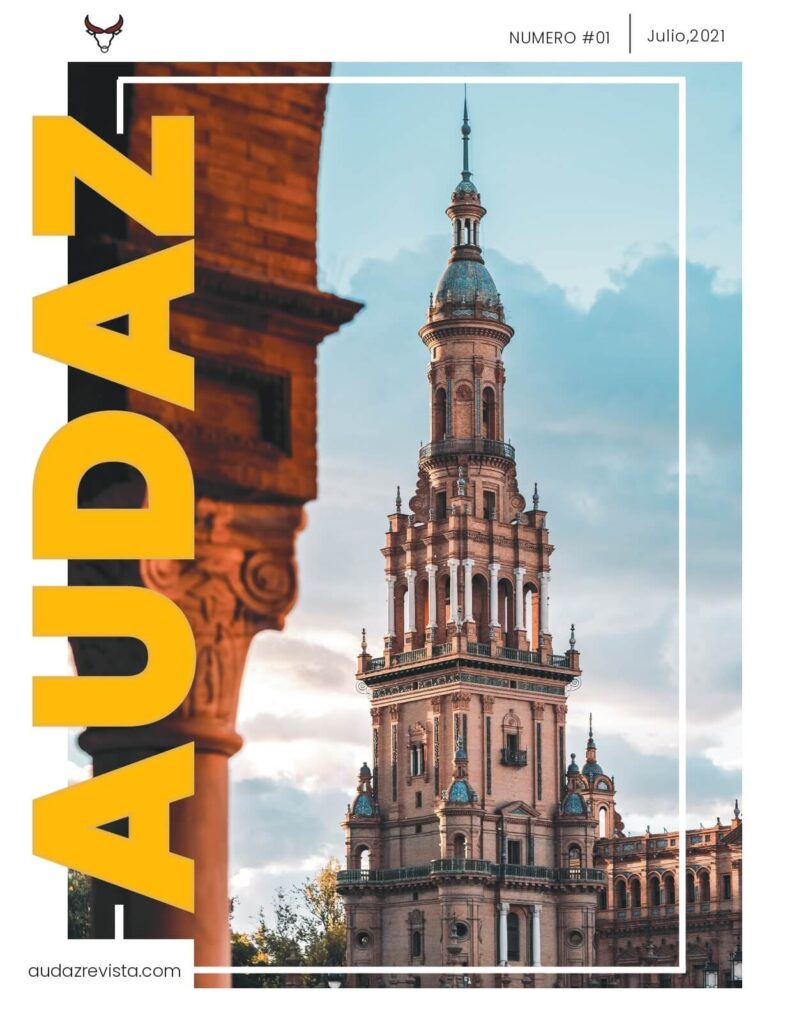
Want to go deeper? Audaz Revista Issue 1 covers topics like this with original cultural features and language insights you will not find in a textbook. Explore Issue 1
Best Spanish Learning Methods in 2026
1. Immersion-Based Learning
Effectiveness: ⭐⭐⭐⭐⭐
Living in Spain/Mexico accelerates learning 3-4x faster than classroom study. Digital alternatives: change phone language, consume only Spanish media, join Spanish Discord servers, date Spanish speakers.
2. Conversation-First Approach
Effectiveness: ⭐⭐⭐⭐⭐
Speak from day 1 instead of studying grammar for months first. Research shows early speaking practice creates stronger neural pathways. Use language exchanges (Tandem, HelloTalk) and online tutors (iTalki, Preply).
3. Comprehensible Input (Krashen Method)
Effectiveness: ⭐⭐⭐⭐⭐
Consume content slightly above your level (i+1). Watch Spanish TV with subtitles, listen to podcasts, read graded readers. Your brain acquires patterns naturally without explicit study.
4. Traditional Classroom
Effectiveness: ⭐⭐⭐
Provides structure and accountability but often too slow. Best used supplementally with self-study for grammar explanations and feedback.
5. Apps Only (Duolingo, Babbel)
Effectiveness: ⭐⭐
Good for beginners but insufficient alone. Apps teach vocabulary and basic grammar but don’t develop conversational fluency. Use as 20% of study, not 100%.
Frequently Asked Questions
You can reach A2-B1 conversational ability in 3 months with intensive study. This requires 3-4 hours daily practice focused on speaking and comprehension, not grammar drills. Realistic outcome: handle basic conversations, travel independently, understand 60-70% of slow native speech. Full fluency (B2-C1) takes 12-24 months of consistent practice.
No single app teaches complete Spanish. Best combination: Duolingo (vocabulary/grammar fundamentals), Language Transfer (understanding grammar logic), Tandem (conversation practice), Anki (spaced repetition vocabulary). Apps should comprise 20-30% of study time; spend 70-80% on conversation practice and consuming native content.
Choose based on who you’ll communicate with. Mexican Spanish: clearer pronunciation, larger U.S. population, more resources. Spain Spanish: vosotros conjugation, lisp pronunciation (c/z sounds). Core grammar and 95% of vocabulary are identical. All Spanish speakers understand each other. Learn one variety deeply; exposure to others comes naturally through media.
Adults often learn faster than children due to better metacognition and discipline. Yes, children acquire native-like accents more easily, but adults grasp grammar patterns, study efficiently, and stay motivated by clear goals. Research shows adults reach conversational fluency faster than children (6-12 months vs 2-3 years) despite children eventually achieving higher proficiency. Your age is irrelevant; your consistency matters.
Free to $2,000+ depending on method. Free: Duolingo, YouTube, language exchange apps, library books, Spanish Netflix. Budget ($10-50/month): App subscriptions (Babbel, Pimsleur), graded readers, online group classes. Mid-range ($100-300/month): iTalki private tutors 3x weekly, community college classes. Premium ($1,000+): Immersion programs, intensive courses abroad, university programs. Optimal budget strategy: $50-100/month on tutors + free resources + conversation exchanges.
No, but it accelerates learning significantly. Living abroad provides 8-12 hours daily immersion vs 1-2 hours at home. However, technology enables “digital immersion”: Spanish Netflix, podcasts, online tutors, language exchanges, Spanish social media. Many successful learners reach B2-C1 without leaving home through disciplined daily practice. Living abroad is optimal but not required.
Audaz Revista
Take Your Spanish Further
Audaz Revista Issue 1 is out now – a full-length bilingual magazine for serious Spanish learners. Latin American culture, grammar deep-dives, and language insights written by educators.
Travel: A2 (basic survival Spanish). Work: B1-B2 (job-dependent). Living abroad comfortably: B2. A2 lets you order food, ask directions, handle hotels. B1 enables workplace communication, making friends, discussing familiar topics. B2 allows professional meetings, complex conversations, understanding news. C1-C2 is for academic work, translation, teaching. Most people stop at B2 (functional fluency) unless career requires higher proficiency.
Connect learning to compelling personal reasons. “I want to speak Spanish” is weak motivation. “I want to communicate with my in-laws,” “I want to work remotely in Barcelona,” or “I want to understand Almodóvar films without subtitles” creates emotional investment. Track visible progress (record weekly speaking videos, count vocabulary milestones). Join communities (Spanish Discord, local conversation groups). Celebrate small wins. The plateau phase (months 3-6) is hardest; push through and fluency accelerates dramatically after B1.
Your Action Plan: Starting Today
Week 1 Action Steps:
- Download Duolingo + Anki, complete first 3 lessons
- Subscribe to Coffee Break Spanish podcast, listen to episode 1
- Learn top 50 words using flashcards
- Practice pronunciation 10 min daily (YouTube: vowel sounds, alphabet)
- Join Tandem or HelloTalk, message 3 potential language partners
Month 1 Goals:
- 500 vocabulary words active recall
- Present tense conjugation automatic
- Introduce yourself + hold 5-minute conversation
- Understand 40% of beginner content
Learning Spanish is a marathon, not a sprint. Small consistent actions compound into fluency. 30 minutes daily beats 3 hours weekly. Imperfect practice beats perfect planning. Your future Spanish-speaking self starts with today’s first word.
About Carlos Rivera
Carlos is a certified Spanish instructor with 15+ years teaching experience across Spain, Mexico, and the United States. He holds a Master’s in Second Language Acquisition from Georgetown University and has developed accelerated learning curricula for Fortune 500 companies. His students have achieved conversational fluency in an average of 7 months using his systematic approach.
Share
Topics
You may also like
How Music Shaped Modern Spain: From Flamenco’s Origins to Today’s Global Sound
La Tomatina 2026: A Complete Guide to Spain’s Annual Tomato Festival

Get the Inside Scoop