The real Pamplona is far more than the Running of the Bulls. Outside the nine days of San Fermin, this Navarrese city is one of Spain’s great food destinations, built around a pintxo (PEEN-choh, a small snack served on bread) crawl through Calle Estafeta and Calle San Nicolas, a medieval old quarter called the Casco Viejo (KAHS-koh vee-AY-hoh, old town), and a living Basque culture you won’t find anywhere else in the country. Learn a few words, stand at the right bar, and the city opens up.
Pamplona sits in Navarre, on the edge of the Basque Country, so you’ll hear two languages here: Spanish and Basque (Euskara, ews-KAH-rah). That mix is the whole point. Locals call themselves pamploneses (pahm-ploh-NAY-says, people of Pamplona), and they know their city hums all year, not just in July. Forget what the guidebook told you. Here are eight things worth your time.
1. The Pintxo Crawl Nobody Tells Tourists About
First rule: in Pamplona you don’t order “tapas.” You order pintxos (PEEN-chohs, small snacks served on bread, usually pinned with a toothpick). Get this wrong and you’ve marked yourself as a tourist before the first bite.
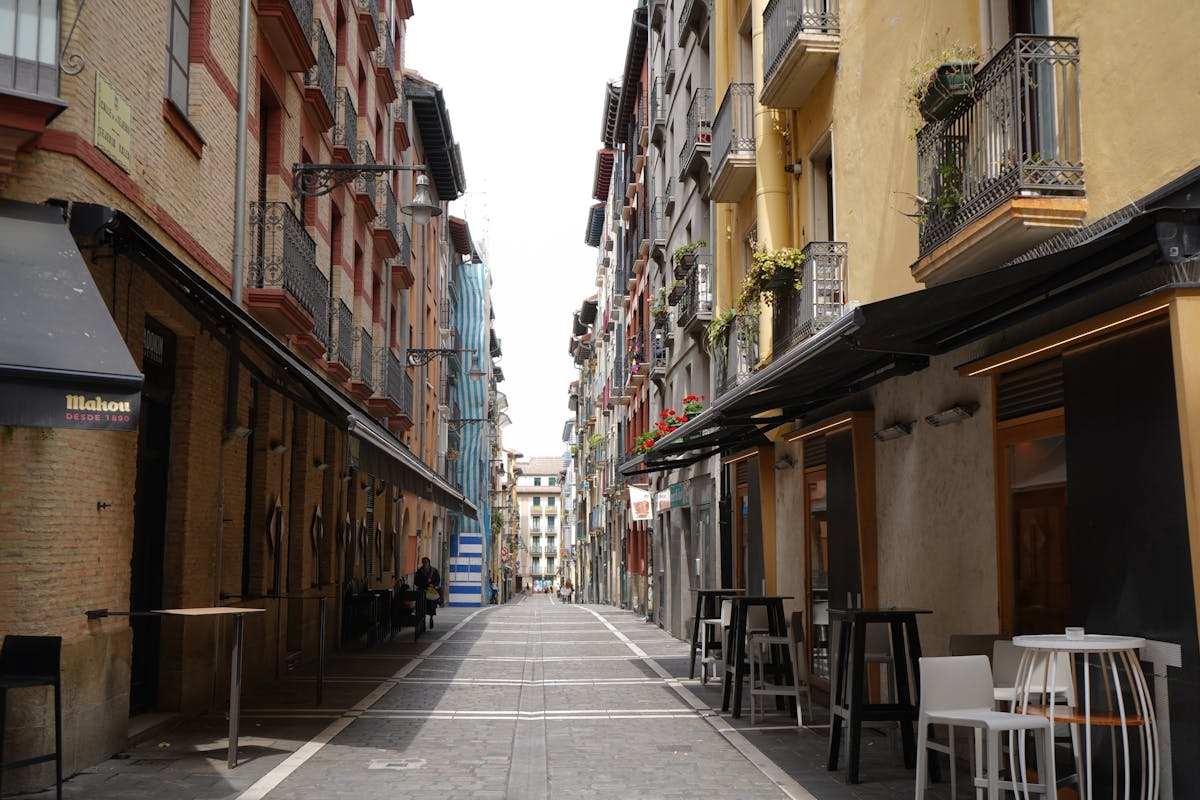
The action happens on two streets: Calle Estafeta and Calle San Nicolas. The guidebooks point you to the flashiest bars. Skip those. The best spots are the ones where the barra (BAR-ah, the bar counter) is packed three people deep at 8pm.
Where do locals actually eat pintxos in Pamplona?
- Baserriberri: The most inventive pintxos in the city. Their bombeja (bohm-BAY-hah, brioche stuffed with sheep’s milk and slow-cooked meat) is legendary, and locals queue for it.
- Bar Gaucho: Right on Plaza del Castillo, famous for its foie pintxo. Order a txikito (chee-KEE-toh, a small glass of red wine) alongside it.
- Bar Iruñazarra: A cosy, no-frills spot where the quality does the talking. Traditional and modern pintxos side by side.
The ritual is called txikiteo (chee-kee-TAY-oh, hopping bar to bar for small drinks and pintxos). You don’t sit. You stand at the bar, eat one or two pintxos, and move on. Try this line and watch the bartender grin: “Ponme un txikito y un pintxo de la casa” (Give me a small wine and the house pintxo).
If you love collecting food terms that make your Spanish sound native, these Navarrese specialities will hand you a whole new vocabulary to play with.
2. Getting Lost in the Casco Viejo
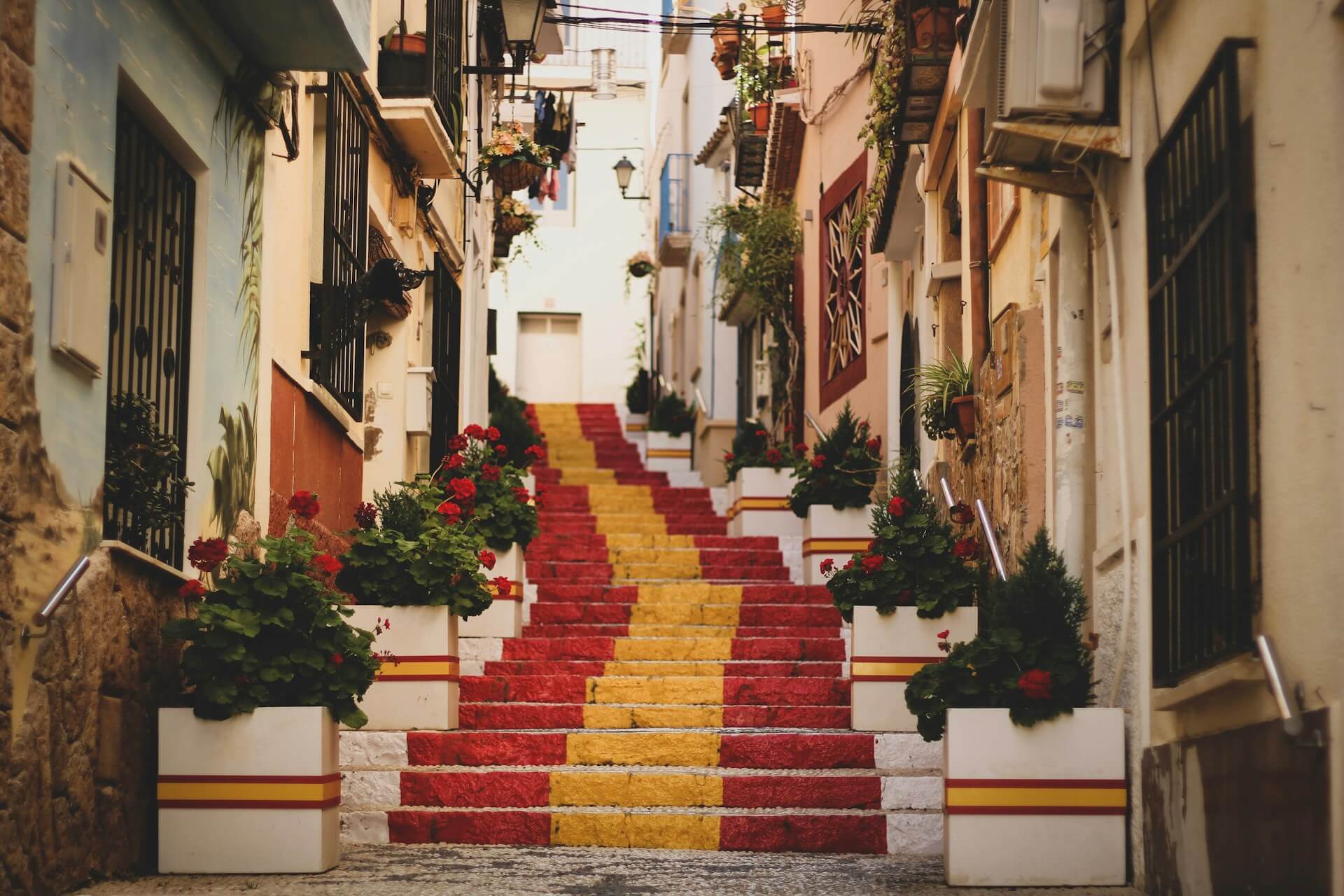
The Casco Viejo (KAHS-koh vee-AY-hoh, old quarter) is where Pamplona’s soul lives. Narrow medieval streets twist between sandstone buildings, balconies drip with flowers, and around every corner sits a small plaza where neighbours gather for an evening chat.
Walk through the Burgo de San Cernin. This medieval quarter feels like stepping back five hundred years. The Iglesia de San Nicolas stands here with its imposing Gothic facade, and most tourists walk straight past it.
When is the best time to explore the old quarter?
Late afternoon, around 6pm. The light turns golden, the streets empty after the midday rush, and the terrazas (teh-RAH-sahs, outdoor cafe terraces) fill with locals having their pre-dinner drinks. Stop at Plaza del Castillo, the living room of Pamplona. Hemingway drank here, and so did generations of pamploneses before and after him. Order a coffee, sit, and watch the city breathe.
3. The Basque Words That Open Doors
Here’s what surprises most visitors. Pamplona sits in Navarre, on the edge of the Basque Country, so while everyone speaks Spanish, you’ll hear Basque (Euskara) everywhere: on street signs, in market stalls, between friends. Learn even two Basque words and the whole trip changes, because locals light up when a foreigner makes the effort.
Which Basque phrases should I know in Pamplona?
- Kaixo (KAI-shoh) – Hello. Use it when you walk into small shops.
- Eskerrik asko (ess-KEHR-ik AHS-koh) – Thank you. The phrase that makes locals beam.
- Agur (ah-GOOR) – Goodbye. Simple and lovely.
- Gora Pamplona! (GOH-rah pahm-PLOH-nah) – Long live Pamplona! Save it for festivals.
- Mesedez (meh-SEH-deth) – Please. Politeness travels a long way here.
Basque is one of Europe’s oldest languages. It predates Latin, Germanic, and Celtic tongues, and nobody knows exactly where it came from. That mystery is part of what makes the region so fascinating. You’ll even notice Pamplona has a Basque name: Iruña (ee-ROO-nyah), printed on signs, stadiums, and restaurant names across the city. Knowing it is a cultural shortcut that shows real respect.
If you’re still building a foundation of common Spanish phrases, adding a few Basque words on top makes you stand out as someone who genuinely cares about local culture.
4. Taconera Gardens: Pamplona’s Hidden Zoo
Most visitors have no idea Pamplona keeps a free, open-air zoo right in its centre. The Jardines de la Taconera (har-DEE-nehs day lah tah-koh-NAY-rah, Taconera Gardens) have been the city’s oldest park since 1830.
Inside you’ll find French-style gardens, towering beech trees, and a sequoia stretching skyward. In the old moat of the Taconera bastion, nearly three hundred animals live: deer, swans, peacocks, pheasants, squirrels, and rabbits. Locals bring their kids on weekend mornings, couples walk the shaded paths after lunch, and students study on the benches. This isn’t a tourist attraction. It’s where Pamplona actually lives.
The best part: it’s completely free. Walk in, sit under a magnolia tree, and watch the peacocks strut past like they own the place. In Pamplona, they kind of do.
5. The Ciudadela at Golden Hour
The Ciudadela (thee-oo-dah-DAY-lah, citadel) is a star-shaped Renaissance fortress that most tourists photograph from outside, then leave. Big mistake. Walk inside. The Vuelta del Castillo park wraps around it, and within the fortress walls you’ll find art exhibitions, sculptures, and some of the most peaceful green space in northern Spain.
Come at golden hour, about an hour before sunset. The old stone walls glow amber, runners circle the outer paths, and families picnic on the grass. The Ciudadela was built in the sixteenth century as a military fortification. In 1964 the city council took it over and turned it into a cultural space, and today it hosts everything from contemporary art to outdoor concerts.
If you’re weighing up where else to go in northern Spain, our take on Bilbao vs Tarragona pairs nicely with a Pamplona stop on the same trip.
6. Walking the Arga River Like a Local
The Parque Fluvial del Arga (the Arga River Park) is one million square metres of green space threading through the city. Not a typo. One million.
The walking paths follow the river past Pamplona’s historic bridges: the Puente de la Magdalena, the Puente de San Pedro (the oldest in the city), and the Puente de Rochapea. Pilgrims on the Camino de Santiago have crossed these for over a thousand years. But locals don’t come here for history. They come to escape. The walled old city gives way to ash trees, willows, and alders along the banks, shared by joggers, cyclists, and families.
Walk south from the Magdalena bridge on a Sunday morning and the light filters through the trees while the river hums beside you. Pro tip: bring a bocadillo (boh-kah-DEE-yoh, a sandwich on crusty bread), find a bench by the water, and that’s a Pamplona Sunday done right.
7. Festivals Beyond San Fermin
San Fermin runs July 6 to 14. That’s nine days. Pamplona has three hundred and fifty-six others, and plenty of them carry their own celebrations.
What festivals does Pamplona have apart from the bulls?
- Semana Santa (Holy Week): Solemn religious processions wind through the old quarter. Powerful, atmospheric, deeply moving.
- Fiestas de Barrio: Every neighbourhood throws its own multi-day party through summer, with live music, street food, and neighbours dancing in the streets.
- Olentzero (Christmas): A Basque tradition where a charcoal-maker figure parades through town while the streets fill with Basque carol singers and market stalls.
- Javierada (March): A mass pilgrimage to the Castle of Javier, birthplace of Saint Francis Xavier, where thousands walk together through the Navarrese countryside.
The soundtrack to all of it? The txistu (CHEES-too, a traditional Basque flute) and the tamboril (tahm-boh-REEL, a small drum). Once you hear them echoing through Pamplona’s stone streets, the sound stays with you. Understanding Spanish social etiquette will help you join in like a local rather than a spectator.
8. The Phrases That Make Locals Smile
These are the phrases you actually need in Pamplona. Not textbook Spanish, but the real, local, heard-on-the-street version.
- “Ponme otro txikito” (POHN-may OH-troh chee-KEE-toh) – “Give me another small wine.” Essential for the pintxo crawl.
- “Qué buena pinta tiene” (kay BWAY-nah PEEN-tah tee-AY-nay) – “That looks amazing.” Point at a pintxo and say it. Guaranteed smile.
- “Esto está brutal” (EHS-toh ehs-TAH broo-TAHL) – “This is incredible.” Locals use brutal the way English speakers use “awesome.”
- “Vamos de txikiteo” (BAH-mohs day chee-kee-TAY-oh) – “Let’s go bar hopping.” This is how locals suggest a night out.
- “Gora San Fermin!” (GOH-rah sahn fehr-MEEN) – The Basque cheer for the festival. Use it year-round and locals will love you.
This is how native speakers really talk: warm, fast, and a little loose. The cleaned-up textbook versions get you a polite nod. These get you a seat at the bar.
Frequently Asked Questions
Is Pamplona worth visiting outside of San Fermin?
Yes. Outside the nine days of San Fermin (July 6 to 14), Pamplona offers a world-class pintxo scene on Calle Estafeta and Calle San Nicolas, the medieval Casco Viejo, the free Taconera Gardens with its open-air zoo from 1830, and the riverside Parque Fluvial del Arga. Many locals prefer the city the rest of the year, when it’s quieter and entirely theirs.
Do people speak Basque in Pamplona?
Everyone in Pamplona speaks Spanish, but the city sits in Navarre on the edge of the Basque Country, so you’ll also see and hear Basque (Euskara). Pamplona’s Basque name is Iruña (ee-ROO-nyah). Learning a couple of words like kaixo (hello) and eskerrik asko (thank you) goes a long way with locals.
What is a pintxo and how is it different from a tapa?
A pintxo (PEEN-choh) is a small snack served on bread, usually held together with a toothpick, and it’s the northern Spanish word you should use in Pamplona instead of “tapa.” The local custom of moving bar to bar for pintxos and small drinks is called txikiteo (chee-kee-TAY-oh). You stand at the bar, eat one or two, and move on.
How many days do you need in Pamplona?
Two to three days is plenty to enjoy Pamplona beyond the bulls. That gives you time for a pintxo crawl in the Casco Viejo, a golden-hour walk at the Ciudadela, a Sunday stroll along the Arga, and an afternoon in the Taconera Gardens, with room to pair it with another northern Spain stop.
Pack Your Bags for the Real Pamplona
Pamplona is one of Spain’s best-kept secrets, and that’s exactly how the locals like it. Beyond the nine days of San Fermin, you get world-class pintxos, medieval streets full of stories, Basque culture you won’t find anywhere else, and some of the warmest people in the country. The real Pamplona is about sobremesa (soh-bray-MAY-sah, the long, lazy conversation after a meal), a sunset by the Arga, and learning that kaixo opens more doors than any guidebook ever will.
Try one phrase today: walk into any bar and say “Ponme un txikito.” Then explore more of Spain with Audaz Revista, where we help you travel like a local and speak like one too. Start with our guides above and plan your trip north.
Sources: Pamplona City Council Official Tourism Portal (pamplona.es) | Rick Steves’ Spain Travel Guide (ricksteves.com) | Navarra Tourism Board (visitnavarra.info)
Share

audazrevista
Get the Inside Scoop