15 Spanish Idioms and the Countries That Use Them
By the Audaz Revista editorial team
Updated October 16, 2026 · Reviewed by the Audaz editorial team
What are some Spanish idioms, and where are they used? Spanish idioms change from country to country. In Mexico you echar aguas to warn a friend. In Colombia you dar papaya when you leave yourself open, and in Peru people tirar arroz when they ignore you. Below are 15 Spanish idioms, each pinned to the countries the language academies list for it. 8 of them are recorded in one country only.
- Every idiom here is checked in the dictionaries of the Spanish language academies.
- 8 of the 15 are recorded in one country only, while dar bola is listed in 11.
- Some idioms change meaning by country, like coger lucha in Cuba and the Dominican Republic.
A textbook idiom works anywhere, but a real one tells people where you learned your Spanish. That is why we went looking for idioms with a home. At Audaz Revista, we checked each one in the dictionaries the Spanish language academies publish together.
How did we match each idiom to a country?
We used 2 dictionaries for this. The first, the Diccionario de americanismos, covers words and phrases used in the Americas. The Association of Academies of the Spanish Language published it in 2010. Each entry lists the countries where a phrase is used.
For Spain we used the main dictionary, the Diccionario de la lengua española. It marks some phrases as used in Spain only.
The country codes take a minute to learn. Mx is Mexico, Co is Colombia, Ar is Argentina and RD is the Dominican Republic. A code like Ho:N means one part of a country, here northern Honduras.
There is one caution, though. A dictionary records where a phrase is used, but it can’t tell you how often people say it today. So treat each country below as the place an idiom lives, and listen for it there.
Which Spanish idiom belongs to Spain?
1. Tela marinera (Spain)
Tela means cloth and marinera means sailor’s, but together they simply mean a lot. The dictionary’s own example is Tardó tela marinera, he took ages. It is the only idiom on our list that the main dictionary marks for Spain alone.
Which idioms will you hear in Mexico and Central America?
2. Echar aguas (Mexico)
Literally it means to throw waters, and it is how you warn someone of a risk or a threat. The dictionary lists it for Mexico only. So if a friend te echa aguas, they are telling you to watch out.
3. Ponerse buzo (Mexico and Central America)
Buzo means diver, and ponerse buzo means to be wide awake and fully alert. The dictionary lists Mexico, Guatemala, El Salvador, Nicaragua and northern Honduras.
In Mexico, Guatemala and El Salvador, buzo on its own can also describe a sharp, watchful person.
4. Pura vida (Costa Rica)
The words mean pure life. In Costa Rica it is a greeting, and it is also the answer to one. Ask ¿Cómo estás? and pura vida is a fine reply. In Mexico and Costa Rica, pura vida can also describe something excellent.
Which idioms belong to Colombia, Venezuela and Peru?
5. Dar papaya (Colombia, Venezuela, Ecuador)
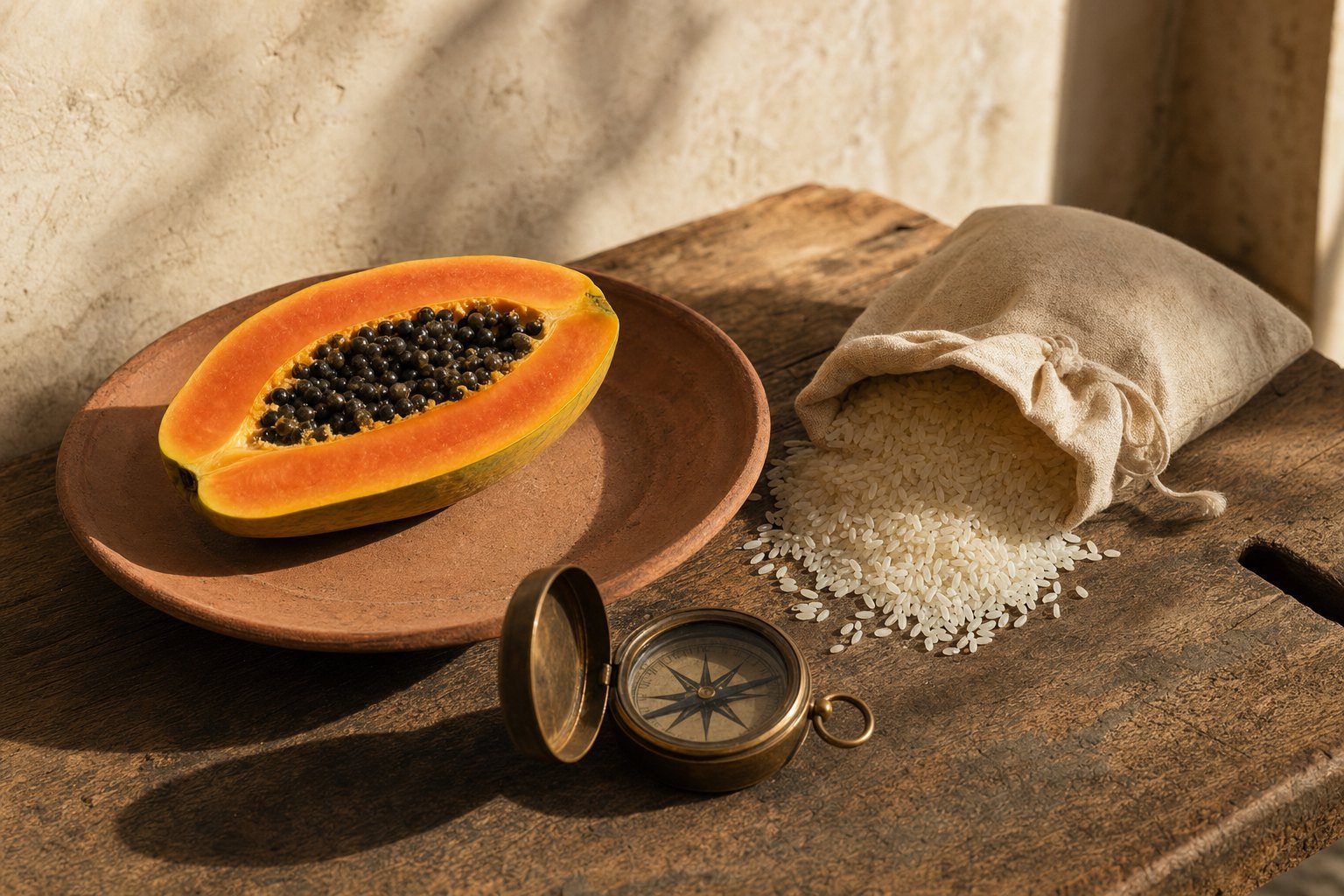
Literally you give papaya, and it means you give someone the chance to take advantage of you. Leave your phone on a café table, and a friend might tell you no des papaya, don’t give papaya.
6. Echar los perros (8 countries)
Literally it means to throw the dogs. In most places that use it, it means to flirt with or court someone. The dictionary lists Mexico, Guatemala, Nicaragua, Panama, Puerto Rico, Colombia and Venezuela, plus rural Chile.
Honduras surprised us, because there the same words mean to insult or scold someone.
7. Capar clase (Colombia)
Capar literally means to castrate. In Colombia, capar clase is what students do when they skip class on purpose.
8. Tirar arroz (Peru)
The words mean to throw rice, and in Peru the idiom means to ignore someone. If a friend stops answering your messages, they are tirándote arroz.
9. Hacerse la vaca (Peru)
Literally you make yourself the cow, and it is how Peruvians say skip class. The dictionary marks it as student slang.
Which idioms belong to Chile, Argentina and Uruguay?
10. Pasarlo chancho (Chile)
Chancho means pig, so this is to have a pig of a time. In Chile it means to have a great time. Lo pasamos chancho means we had a great time.
11. Hacerse la rata (Argentina, Uruguay)
Literally you make yourself the rat, and it means to skip class. It is our favourite entry, because the dictionary adds that your parents don’t know.
12. Dar bola (11 countries)
Literally you give ball, and it means you pay attention to someone. It is the most widely listed idiom here. The dictionary records it from Guatemala all the way down to Argentina.
In Argentina, Uruguay, Peru, Bolivia and Chile, it can also mean to accept someone’s romantic interest. So no me da bola can mean she isn’t listening, or that he isn’t interested.
Which idioms belong to the Caribbean?
13. Coger lucha (Cuba, Dominican Republic)
Coger is to take, and lucha is a fight. In Cuba it means to get anxious about something or someone. In the Dominican Republic it means to work hard. The words are the same on both islands, but the meaning isn’t.
14. Estar en la fuácata (Dominican Republic, Cuba)
It means to have no money at all. Fuácata appears in the dictionary only inside this phrase, so you won’t meet it anywhere else.
15. Tirar bomba (Puerto Rico)
The words mean to throw a bomb, and in Puerto Rico the idiom means to stand someone up. It can also mean to promise something and then not do it.
| Idiom | What it means | Where it is listed |
|---|---|---|
| tela marinera | A lot | Spain |
| echar aguas | To warn someone | Mexico |
| ponerse buzo | To be alert | Mexico and 4 Central American countries |
| pura vida | Hello, or I’m fine | Costa Rica |
| dar papaya | To leave yourself open | Colombia, Venezuela, Ecuador |
| echar los perros | To flirt | 8 countries |
| capar clase | To skip class | Colombia |
| tirar arroz | To ignore someone | Peru |
| hacerse la vaca | To skip class | Peru |
| pasarlo chancho | To have a great time | Chile |
| hacerse la rata | To skip class | Argentina, Uruguay |
| dar bola | To pay attention | 11 countries |
| coger lucha | To worry (Cuba), to work hard (Dominican Republic) | Cuba, Dominican Republic |
| estar en la fuácata | To be broke | Dominican Republic, Cuba |
| tirar bomba | To stand someone up | Puerto Rico |
How do Spanish speakers say skip class in each country?
Of all the ideas we checked, skipping school had the most idioms. The dictionaries list at least 6 ways to say it, and 3 of them use an animal.
| Phrase | Literal meaning | Where it is listed |
|---|---|---|
| hacer novillos | To make young cattle | The main dictionary, with no country mark |
| hacer la cimarra | To do the cimarra | Chile, western Argentina, Uruguay |
| hacerse la rata | To make yourself the rat | Argentina, Uruguay |
| la rabona | A noun for skipping class | Uruguay |
| capar clase | To castrate class | Colombia |
| hacerse la vaca | To make yourself the cow | Peru, as student slang |
How do Spanish speakers say they’re broke?
Money troubles get their own words too, and we found 3 of them in 3 different entries.
| Phrase | What it means | Where it is listed |
|---|---|---|
| estar sin blanca | To have no money | The main dictionary, with no country mark |
| estar misio | To have no money | Peru |
| estar en la fuácata | To have no money at all | Dominican Republic, Cuba |
Idioms are one layer of regional Spanish. The sounds change too, as our guide to Spanish accents by country shows. For single words that shift at each border, see Latin American and Spain Spanish and our list of Spanish slang words.
How should you learn Spanish idioms?
Pick the country you most want to visit. Learn its idioms from this list, then listen for them in a film or a podcast from there. One idiom heard in the wild sticks better than 10 read in a list.
Frequently asked questions
Frequently asked questions
What is the most widely used Spanish idiom?+
No one has a full count. On our list, dar bola (to pay attention) is the most widely used. The Diccionario de americanismos lists it in 11 countries.
What does dar papaya mean?+
It means to give someone the chance to take advantage of you. The dictionary lists it in Colombia, Venezuela and Ecuador.
How do you say skip class in Spanish slang?+
It depends on the country. Colombians say capar clase and Peruvians say hacerse la vaca. In Argentina and Uruguay it is hacerse la rata, and in Chile it is hacer la cimarra.
What does pura vida mean?+
It means pure life. In Costa Rica it is a greeting and a reply to a greeting. In Mexico and Costa Rica it can also mean excellent.
Are Spanish idioms the same in Spain and Latin America?+
Some are shared, and many are not. On this list, only tela marinera is marked as Spain only. The other 14 are recorded in the Americas.
In a hurry? We also made a short web story version of this piece.
Every Spanish word lives in a place. Our next issue, Ciudades que hablan, takes you to 18 cities across the Spanish-speaking world. Each one gets a single story, told in Spanish by someone who lives there. Join the waitlist and we’ll tell you when it opens.
Audaz Revista
Audaz Revista is the reading guide for Spanish learners. We tell you what you can read in Spanish at your level, and help you finish it.
Share
Topics

audazrevista

You may also like



Get the Inside Scoop