Spanish Learning Success Story: How Maria Reached B1 Fluency in Just 6 Months
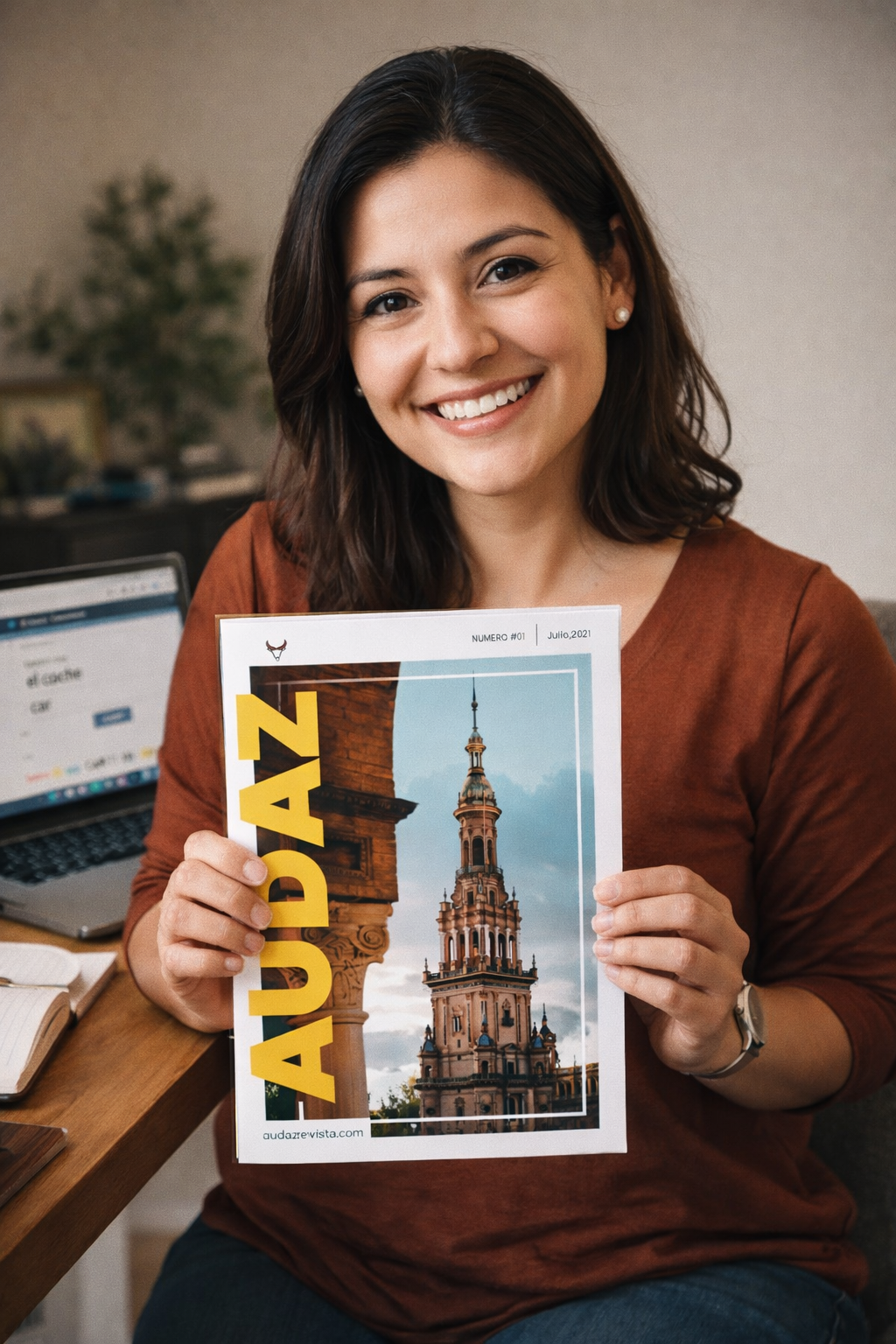
Every Spanish learning success story starts with a question, how long does it actually take to learn Spanish? According to language education research, the attrition rate for self-study language courses approaches 100%. Library patrons who checked out Spanish learning materials got no further than 17% through before abandoning them. And 82% of high school language students drop out before reaching proficiency.
Maria Gonzalez-Torres was determined not to become another statistic. Her Spanish fluency journey started six months ago when she could not order a coffee in Spanish. Today, she holds 30-minute conversations with native speakers, reads Gabriel Garcia Marquez in the original text, and scored B1 on her practice DELE exam. Every method she used is backed by research you can replicate.
Key Takeaway, Maria reached B1 Spanish fluency in 6 months by studying 90 minutes daily using three research-backed methods, spaced repetition vocabulary (Anki), comprehensible input (graded readers and podcasts), and daily output practice (speaking with a tutor). Her approach aligns with FSI data showing Spanish requires 600-750 hours total for professional proficiency.
Maria’s Starting Point. Zero Spanish, Full-Time Job, Big Goals
Maria Gonzalez-Torres is a 34-year-old marketing manager from Austin, Texas. Her parents immigrated from Mexico before she was born, but like many second-generation Americans, she grew up speaking only English at home. “I understood bits and pieces from my abuela, ” Maria told us, “but I could never respond. It felt like a part of my identity was locked behind a door I did not have the key to.”
Her Spanish fluency journey started in August 2025 with three clear constraints. She worked full-time (50+ hours per week). She had no prior formal Spanish education. And she gave herself exactly six months to reach a level where she could hold real conversations with her extended family in Guadalajara during a planned February visit.
These constraints shaped everything about her approach. Maria could not attend immersive classes or move abroad. She needed a method that fit into 90 minutes of daily study, was backed by real evidence, and produced measurable results each month.
The 6-Month Study Plan. Research Meets Reality
Before starting, Maria researched how long it actually takes to learn Spanish. The U.S. Foreign Service Institute (FSI) classifies Spanish as a Category I language, the easiest category for English speakers. Their data, based on over 70 years of teaching diplomats, shows it takes 600-750 hours of study to reach professional working proficiency (roughly B2/C1 on the CEFR scale).
Maria did the math. At 90 minutes per day for 6 months, she would accumulate roughly 270 hours. According to Cambridge English estimates of 200 guided learning hours per CEFR level, that put B1 (intermediate) within reach. B2 would require more time. She set her target at a solid B1.
Her daily schedule never changed. She woke up 30 minutes early for vocabulary review. She used her lunch break for listening practice. And she spent 30 minutes each evening speaking with a tutor on iTalki. This consistency, not intensity, was what made the difference.
Month-by-Month Breakdown. From “Hola” to Real Conversations
| Month | Focus Area | CEFR Progress | Key Milestone |
|---|---|---|---|
| Month 1 | Pronunciation + 500 core words | A1 | Ordered food in Spanish at a local taqueria |
| Month 2 | Present tense + basic conversations | A1-A2 | Had a 5-minute phone call with her abuela |
| Month 3 | Past tenses + reading graded texts | A2 | Finished first graded reader (A2 level) |
| Month 4 | Subjunctive + Spanish Netflix shows | A2-B1 | Watched “La Casa de Papel” with Spanish subtitles |
| Month 5 | Conversation fluency + cultural immersion | B1 | 30-minute unscripted conversation with tutor |
| Month 6 | DELE prep + real-world application | B1 | Passed practice DELE B1 exam |
Did you know? According to the Instituto Cervantes, over 60, 000 people take the DELE exam annually across 800+ testing centers in 100+ countries. The overall pass rate is approximately 70%, with a passing threshold of 60%.
Want to go deeper? Audaz Revista Issue 1 covers topics like this with original cultural features and language insights you will not find in a textbook. Explore Issue 1
The 3 Study Methods That Powered Maria’s Spanish Learning Success Story
Maria did not use a single app or textbook in isolation. She built her daily routine around three research-backed methods, each targeting a different language skill. Here is exactly what she did and why it works.
Method 1: Spaced Repetition Vocabulary (30 minutes/day)
Maria used Anki flashcards with a spaced repetition algorithm to learn new vocabulary. This was her non-negotiable morning habit. Research published in the Journal of Modern Learning Development shows that learners using spaced repetition systems retain 79.77% of target words after 10 days, compared to dramatically lower retention with traditional study methods.
The science behind this is the Ebbinghaus forgetting curve. Without spaced review, you forget 75% of new information within one week. SRS tools like Anki schedule reviews right before you would forget, keeping retention high with minimal daily effort. Maria started with the top 500 most frequent Spanish words, then expanded to 1, 000 by month 3.
When she encountered tricky gender rules for Spanish nouns, she created custom Anki cards with example sentences rather than isolated word-gender pairs. “Memorizing that ‘mano’ is feminine made no sense until I drilled it in context, ‘Dame la mano, ‘” she explained.
Method 2: Comprehensible Input (30 minutes/day)
During her lunch break, Maria consumed Spanish content at her level. In the first two months, this meant graded readers and the “News in Slow Spanish” podcast. By month 4, she graduated to regular podcasts and Spanish movies on Netflix with Spanish subtitles.
This approach is grounded in Stephen Krashen’s Input Hypothesis, which argues learners acquire language by understanding input just slightly above their current level. Nearly 40 years of second language acquisition research supports that comprehending a new language through listening and reading lies at the heart of development. Maria was careful to choose material where she understood 80-90% and could figure out the rest from context.
“One language sets you in a corridor for life. Two languages open every door along the way.”
Method 3: Active Output Practice (30 minutes/day)
Every evening, Maria spent 30 minutes in active Spanish conversation on iTalki with a tutor from Colombia. This was the hardest part of her routine, but research by linguist Merrill Swain demonstrates why it is essential. Swain’s Output Hypothesis, developed from observations of Canadian French immersion programs, found that students who rarely produced output retained persistent grammatical inaccuracies that never self-corrected.
Active speaking serves three critical functions, you notice gaps between what you want to say and what you can say, you test your grammar theories and get immediate feedback, and you process language at a deeper cognitive level than passive listening alone. Maria started with 10-minute sessions in month 1, gradually building to full 30-minute conversations by month 3.
Pro Tip, Maria also used the shadowing technique during her commute. Research published in Taylor & Francis shows that shadowing (repeating audio in real-time) produces significantly higher scores on intonation, fluency, and overall pronunciation. She shadowed 15 minutes each way, adding bonus practice without extra time commitment.
The Obstacles Maria Faced (and How She Overcame Them)
Maria’s journey was not a straight line. She hit three distinct walls, and each required a different strategy to break through.
The Week-3 Motivation Crash
Three weeks in, the initial excitement wore off. Grammar complexity increased, and Maria considered quitting. “I could barely form a present-tense sentence while my Anki deck kept throwing new words at me, ” she said. Her solution was simple but effective, she shifted her focus to quick wins. She practiced ordering food in Spanish at restaurants, texted her cousin simple phrases, and celebrated small milestones. According to research on learning motivation, these small wins release dopamine and rebuild the feedback loop that sustains long-term habits.
The A2 Frustration Wall (Month 2-3)
By month 2, Maria knew enough Spanish to realize how much she did not know. She could read children’s books but could not follow a normal conversation. Native speakers talked too fast, used too much slang, and blended words together. “It felt like everyone was speaking a completely different language from what I studied, ” she told us.
Her breakthrough came from staying at her level instead of jumping ahead. She switched from native-speed content to “Dreaming Spanish” videos at intermediate level and continued with graded readers. The research-backed principle, you need to understand at least 95% of a text to learn effectively from it. Jumping to native content too early wastes time and destroys confidence.
Common Mistake, Many learners try watching native Spanish TV shows in month 2 and get discouraged when they understand nothing. Researchers Nation and Waring found you need to know the most frequent 3, 000 word families to achieve 98% text coverage for adequate comprehension. Start with graded material and work up gradually.
The Month-4 Speaking Plateau
Maria could understand a lot by month 4, but she froze when speaking. Words that came easily in Anki reviews disappeared in conversation. This is the well-documented “intermediate plateau” that stalls many Spanish learners.
A study in Language Learning & Technology found that learners who combined passive listening with active speaking improved fluency 40% faster than those using passive methods alone. Maria doubled down on her iTalki sessions, adding a second weekly session focused purely on conversation. She also started journaling in Spanish for 10 minutes before bed. Within two weeks, the barrier broke.
Her tutor helped her master tricky concepts like the difference between ser and estar, which Maria called “the single most confusing thing about Spanish grammar.”
Maria’s Results After 6 Months. The Numbers
After exactly 180 days of consistent study, here is where Maria landed,
More importantly, Maria achieved her original goal. During her February trip to Guadalajara, she held extended conversations with her family. She described people and shared stories in Spanish for the first time. Her abuela cried.
“It was not perfect, ” Maria admitted. “I still paused to find words, mixed up ser and estar sometimes, and completely blanked on the subjunctive under pressure. But I communicated. My tia told me stories about my grandfather that she had never shared in English because she did not know how. That alone was worth every minute of study.”
Maria’s DELE B1 practice score of 72% put her above the 60% passing threshold. For context, the Instituto Cervantes reports that approximately 70% of test-takers pass the DELE, so her score puts her solidly in the successful majority. She plans to take the official DELE B1 exam in May 2026.
5 Lessons from Maria’s Spanish Fluency Journey You Can Apply Today
Maria’s Spanish fluency journey is not about talent or luck. Here are the five research-backed lessons from her experience,
- Consistency beats intensity. Maria never studied more than 90 minutes in a day, but she never skipped a day either. Daily 30-minute sessions outperform weekend cramming because spaced repetition requires regular intervals.
- Use three methods, not one. No single method covers all four language skills. Spaced repetition built vocabulary. Comprehensible input trained her ears. Output practice trained her speaking ability.
- Stay at your level. Researchers recommend 95-98% comprehension for effective learning. If you understand less than 80%, the material is too advanced. Drop down a level and build up.
- Track progress monthly. Maria took a practice CEFR test every month. Free online placement tests from the Instituto Cervantes take 15-20 minutes and give you a clear level estimate.
- Connect learning to identity. According to research on intrinsic motivation by psychologists Deci and Ryan, learners who connect language study to personal meaning persist far longer than those driven by external goals alone.
If you are wondering how long it takes to learn Spanish, Maria’s story provides a clear data point, 270 hours of structured study over 6 months, using research-backed methods, produces B1 fluency. That is the answer backed by both FSI data and real-world results.
If Maria’s journey inspires you to explore the rich culture behind the language, our guide to Spanish festivals and celebrations is a great place to start building that cultural connection.
Audaz Revista
Take Your Spanish Further
Audaz Revista Issue 1 is out now, a full-length bilingual magazine for serious Spanish learners. Latin American culture, grammar deep-dives, and language insights written by educators.
Frequently Asked Questions
Can you really learn Spanish in 6 months?
Yes, reaching B1 (intermediate) level in 6 months is realistic with 1.5-2 hours of focused daily study. The FSI classifies Spanish as a Category I language, requiring 600-750 total hours for professional proficiency. At 90 minutes per day, 6 months gives you roughly 270 hours, enough for solid B1. Maria’s case proves this is achievable even with a full-time job.
What is the most effective method for learning Spanish quickly?
Research shows the most effective approach combines three methods, spaced repetition for vocabulary (SRS tools like Anki retain 79.77% of words after 10 days), comprehensible input for listening and reading (material where you understand 80-90%), and active output practice for speaking. A 2020 study found this combination improves fluency 40% faster than passive methods alone.
How many hours per day should I study Spanish?
Research suggests 60-90 minutes of focused daily study is the sweet spot for consistent progress without burnout. Consistency matters more than intensity. Maria studied exactly 90 minutes every day, split into three 30-minute blocks, morning vocabulary, lunchtime listening, and evening speaking. Even 30 minutes daily produces meaningful results over 6 months.
What is the intermediate plateau and how do you overcome it?
The intermediate plateau is a well-documented phenomenon where learners stall around B1-B2 level. After about 50 hours in any skill, you fall into auto-pilot mode. Maria overcame it by increasing active output (doubling her speaking sessions), adding Spanish journaling, and mixing up her study routine. The key is combining passive and active practice rather than relying on just one approach.
Is B1 Spanish fluent enough to have real conversations?
B1 is the CEFR’s threshold for independent communication. At B1, you can travel confidently, understand the main points of TV and radio on familiar topics, discuss work and personal experiences, and hold conversations with patient native speakers. You will still pause for words and make grammar errors, but you can communicate meaningfully. Maria held 30-minute family conversations at B1 level.
What CEFR level can you reach in 6 months of Spanish study?
At 1.5-2 hours daily (270-360 total hours), most dedicated learners reach A2 to B1. At 3 hours daily (540 hours), a strong B1 or early B2 is achievable. Your actual results depend on method quality, consistency, and prior language learning experience. Maria reached B1 at 90 minutes per day because she used research-backed methods rather than casual studying.
Written by the Audaz Revista editorial team
Audaz Revista is the reading guide for Spanish learners. We tell you what you can read in Spanish at your level, and help you finish it.
Start Your Own Spanish Learning Journey
Get weekly Spanish tips, study plans, and success stories delivered to your inbox.
Share
Topics

audazrevista



Get the Inside Scoop