15 Spanish Words Your Textbook Never Taught You
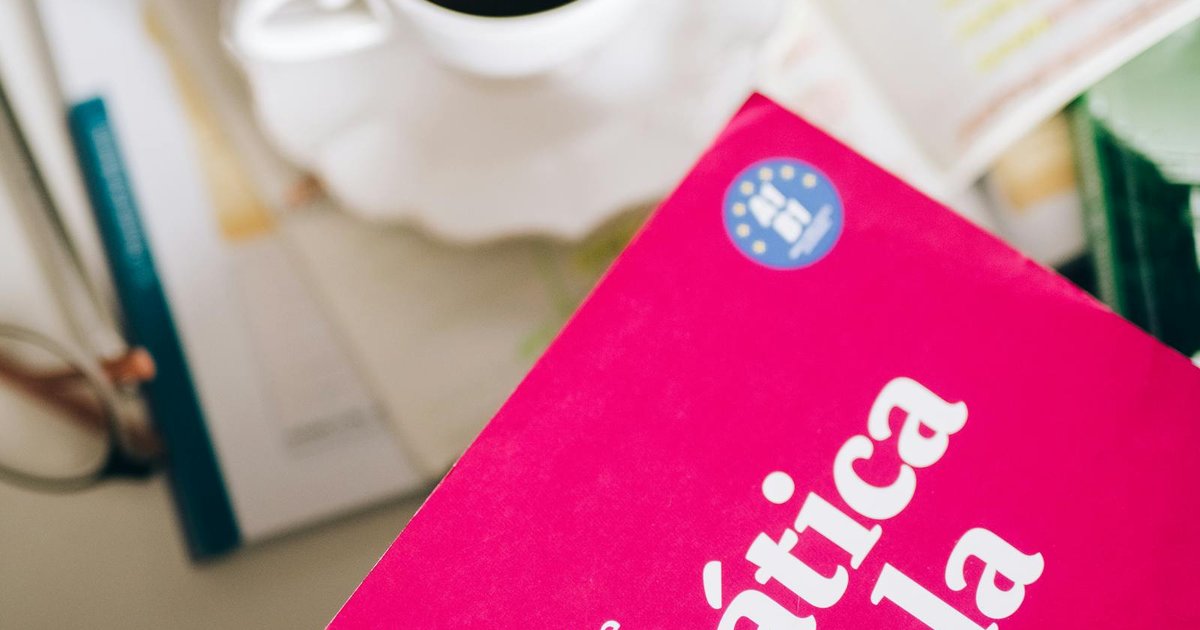
These are 15 Spanish words your textbook never taught you, the ones native speakers reach for every day. Think sobremesa (the lingering chat after a meal), friolero (someone who is always cold), and madrugada (the small hours between midnight and dawn). Each one captures a feeling, a moment, or a habit that English needs a whole sentence to explain. Learn them and your Spanish stops sounding like a phrasebook and starts sounding alive.
Why does your textbook skip the good words?
Your Spanish textbook handed you hola, gracias, and a few conjugation tables. Useful, but safe. What it left out are the words that make you sound like you belong: the ones natives use without thinking, the ones that fill gaps English does not even know it has.
Textbooks prefer tidy vocabulary that maps one-to-one onto English. Real Spanish is messier and far more interesting. The 15 words below carry emotion, culture, and social meaning that direct translation flattens. Learn them and you stop translating word by word and start thinking in Spanish. That is the real level up.
Words with no English equivalent
These are the untranslatable ones. Each captures something English takes a full sentence to describe.
1. Sobremesa: the after-meal conversation (so-breh-MEH-sah)
Meaning: The time spent lingering at the table after a meal, talking, laughing, and enjoying each other’s company. No rush, no checking the bill, just being together. Literally it means “over the table.”
Example: “La sobremesa duró tres horas ayer.” (The after-meal conversation lasted three hours yesterday.)
Textbooks skip it because it is not a thing you can point at. It is a cultural practice baked into a single word, and it tells you how Spanish speakers value relationships over schedules.
2. Estrenar: to use something for the very first time (eh-streh-NAR)
Meaning: That feeling of wearing new shoes, opening a new phone, or living any brand-new moment for the first time. English needs “use for the first time” or “break in.” Spanish just says estrenar.
Example: “Mañana voy a estrenar mis zapatos nuevos.” (Tomorrow I’m going to wear my new shoes for the first time.)
One word, done. No English verb covers it cleanly, which is exactly why it never makes the textbook.
3. Madrugar: to wake up painfully early (mah-droo-GAR)
Meaning: Not just waking up early, but waking up painfully early, before dawn, when the world is still dark and you are questioning your life choices. There is a related noun too: madrugada (mah-droo-GAH-dah), the small hours between midnight and sunrise.
Example: “Tengo que madrugar mañana para coger el vuelo.” (I have to get up crazy early tomorrow to catch the flight.)
Textbooks teach levantarse temprano (to get up early) but miss the emotional weight of madrugar, which carries a sense of sacrifice.
4. Desvelado/a: wide awake when you want to sleep (des-veh-LAH-doh)
Meaning: The state of being unable to sleep, or kept awake against your will. Not quite insomnia, but that exhausted, wide-awake feeling at 3am when your brain will not switch off.
Example: “Estoy desvelado porque mi vecino tuvo una fiesta.” (I’m sleep-deprived because my neighbour had a party.)
This is also where the classic spanish ser vs estar spain question shows up. You say estoy desvelado, using estar for a temporary state, never soy desvelado. Textbooks teach the ser vs estar rule but rarely show it living inside a word like this. If the distinction still trips you up, our guide to common Spanish grammar mistakes breaks it down clearly.
5. Empalagar: when something is too sweet to bear (em-pah-lah-GAR)
Meaning: When something is so sweet it becomes unpleasant. That fifth bite of cake you regret. It also works for overly affectionate people or sappy films that make you cringe.
Example: “Este pastel me empalaga.” (This cake is sickeningly sweet.) Or: “Esa película me empalagó.” (That film was nauseatingly sappy.)
It is specific, visceral, and alive. Textbooks prefer safe, generic vocabulary, so words like this get left out.
Everyday slang natives use constantly
This is how native speakers actually talk, not the sanitised version your textbook gave you. For more of these, see our roundup of Spanish slang words native speakers love.
6. Mola: that’s cool (MOH-lah, Spain)
Meaning: The everyday Spanish way to say “that’s cool” or “that’s awesome.” From the verb molar. You will hear it constantly in Madrid, Barcelona, and everywhere in between.
Example: “¡Mola mucho tu camiseta!” (Your t-shirt is really cool!)
It is pure slang, so textbooks skip it. But it is one of the most frequent words among young people in Spain. Miss it and you miss half the conversation.
7. Flipar: to be blown away (flee-PAR, Spain)
Meaning: To be amazed, shocked, or blown away by something. It can be positive or negative depending on context.
Example: “Vas a flipar cuando veas su casa.” (You’re going to freak out when you see their house.)
Walk into any bar in Spain and you will hear it within five minutes. Textbooks avoid it because it is colloquial and always evolving.
8. Currar: the real way to say “to work” (koo-RRAR, Spain)
Meaning: The informal way to say “to work.” Textbooks teach trabajar, but actual Spaniards say currar all the time. The noun form is curro (job).
Example: “No puedo salir, tengo que currar mañana.” (I can’t go out, I have to work tomorrow.)
Knowing both the formal and the street version is what makes your Spanish flexible in real conversations.
9. Tío/Tía: “dude” and “mate,” not “uncle” (TEE-oh / TEE-ah, Spain)
Meaning: “Dude,” “mate,” “man,” “girl.” Used constantly between friends in Spain, with nothing to do with family. Literally it means “uncle” or “aunt.”
Example: “¡Tío, no te vas a creer lo que me pasó!” (Dude, you’re not going to believe what happened to me!)
Your textbook says tío means uncle, and it does. But in casual conversation in Spain it means “dude” about ninety percent of the time. Context is everything.
10. Quedada: a casual meetup with friends (keh-DAH-dah, Spain)
Meaning: A planned, low-key get-together with friends. Not a formal event, not a party, just “let’s all meet up.” The verb quedar (keh-DAR) means “to meet up” or “to arrange to meet.”
Example: “¿Hacemos una quedada este viernes?” (Shall we do a meetup this Friday?)
Textbooks teach quedar as “to remain” or “to stay” and rarely explain its social meaning, which is the most common one in Spain. It also ties straight into Spanish social etiquette, where making and keeping plans has its own unwritten rules.
Emotional words English simply lacks
There is a word in Spanish for that feeling. English just does not have it. These prove that learning a language is also about discovering new ways to feel.
11. Morriña: a deep, aching longing (moh-RREE-nyah, Galicia)
Meaning: Homesickness, but deeper. A bittersweet ache for a place, a time, or a person far away. It is close to the Portuguese saudade, but distinctly Galician, and it hits you in the chest.
Example: “Siento morriña de mi pueblo.” (I feel a deep longing for my hometown.)
Notice you say siento (from sentir, a felt state) rather than soy, the same pattern behind spanish ser vs estar spain: emotions are states you are in, not identities you are.
12. Ilusión: excited anticipation, not “illusion” (ee-loo-see-OHN)
Meaning: Hopeful, excited anticipation about something ahead. When a child says “me hace mucha ilusión” about Christmas, they are buzzing with excitement. It has nothing to do with being deceived or fooled.
Example: “Me hace mucha ilusión verte mañana.” (I’m really looking forward to seeing you tomorrow.)
Textbooks translate it as “illusion” and move on, but that is a false friend that trips learners up constantly. Getting it right marks you as someone who truly understands the language.
13. Vergüenza ajena: secondhand embarrassment (ver-GWEN-thah ah-HEH-nah)
Meaning: The cringe you feel watching someone else do something humiliating, even when they have no idea. Literally “someone else’s shame.” German has Fremdschämen for the same idea.
Example: “Me da vergüenza ajena verlo bailar así.” (Watching him dance like that gives me secondhand embarrassment.)
English only recently landed on “cringe” for this. Spanish has named that squirming feeling for centuries.
Regional gems from across the Spanish-speaking world
Spanish is not one language. It is dozens of flavours across more than twenty countries. These two prove how much textbook Spanish leaves out.
14. Chévere: everything good, Caribbean style (CHEH-veh-reh, Venezuela/Colombia/Caribbean)
Meaning: The Caribbean, Venezuelan, and Colombian version of Spain’s mola. Anything good is chévere. Your new haircut? Chévere. Last night’s party? Chévere. Life in general? Todo chévere.
Example: “La fiesta estuvo chévere.” (The party was awesome.)
Most textbooks lean on neutral or Peninsular Spanish, but with anyone from Venezuela, Colombia, Ecuador, or the Caribbean, chévere is essential. For more region-specific vocabulary, see our guide to Spanish food terms that make you sound native.
15. Neta: “for real” the Mexican way (NEH-tah, Mexico)
Meaning: “For real,” “seriously,” or “the honest truth.” Used as a question (¿Neta?) and as a statement (Neta.). Literally “the net truth.”
Example: “¿Neta te vas a España?” (Are you seriously going to Spain?) Or: “Neta, es el mejor restaurante.” (Honestly, it’s the best restaurant.)
It is pure Mexican slang. Learning regional differences like this is what takes you from textbook speaker to someone who genuinely gets it.
How does spanish ser vs estar spain connect to these words?
Your textbook probably taught the rule in isolation: ser for permanent things, estar for temporary things. Simple, until it is not. These 15 words show exactly where that tidy rule bends.
Take desvelado. You say “estoy desvelado” with estar, because being sleepless is temporary. But “soy madrugador” (I’m an early riser) uses ser, because that is an identity trait. Same root idea, different verb, different meaning.
Or take ilusión. You would say “estoy ilusionado” (I’m excited about something specific) versus “soy una persona ilusionada” (I’m a generally hopeful person). The spanish ser vs estar spain distinction changes the whole emotional register of what you are saying. That is why learning vocabulary in context beats memorising lists: you see the grammar living inside real words instead of trapped in a sterile drill.
Frequently Asked Questions
What Spanish words does your textbook never teach you?
The most useful ones carry emotional nuance, cultural context, or a social function that formal courses skip. Words like sobremesa (the lingering chat after a meal), madrugada (the hours between midnight and dawn), estrenar (to use something for the first time), and vergüenza ajena (secondhand embarrassment) reveal how Spanish-speaking cultures perceive time, personality, and daily life in ways that direct translation misses entirely.
Are there Spanish words with no English translation?
Yes. Several Spanish words describe concepts English has no single word for. Sobremesa (the post-meal lingering conversation), madrugada (the midnight-to-dawn hours), morriña (a deep Galician homesickness), and estrenar (to wear or use something for the first time) are among the most cited. Learning them expands not just your vocabulary but your sense of what Spanish-speaking cultures consider worth naming.
How do you remember unusual Spanish vocabulary?
Meet these words in real context: Spanish books, films, podcasts, and conversations where the meaning is obvious from the situation. Linking a word to a memory or image works better than memorising a definition. For example, tying madrugada to a specific night you were awake at 3am makes it stick. Flashcard apps with full example sentences beat plain word-to-word cards for vocabulary like this.
Why is the ser vs estar rule so confusing in Spain?
Because “permanent versus temporary” is only half the story. The spanish ser vs estar spain distinction often turns on whether you mean a state or an identity. Estoy desvelado describes a temporary state, while soy madrugador describes who you are. Many emotion words follow the same logic, which is why seeing them in context, rather than in a grammar table, finally makes the rule click.
What is the difference between untranslatable words and regional slang?
Untranslatable words name concepts that exist in Spanish-speaking culture but have no direct English equivalent, like sobremesa. Regional slang is informal vocabulary tied to a specific place that usually does have a rough translation, like mola in Spain or chévere in the Caribbean, both meaning “cool.” Untranslatable words are worth learning for cultural understanding, while slang is worth learning to blend in.
Your next step
Your textbook gave you the skeleton. These 15 words give you the soul. From sobremesa‘s warmth to flipar‘s energy to morriña‘s ache, they turn your Spanish from functional into something felt.
Here is what to do right now: pick three words from this list, write them on a sticky note, and use them in conversation this week, whether with a language partner, a Spanish-speaking colleague, or just yourself in the shower. You will say them badly at first, then better, then naturally. For more vocabulary that makes you sound like a local, keep reading Audaz Revista and start with our guide to Spanish slang words native speakers use.
¡Mola mucho, tío! (That’s really cool, dude!) See? You are already doing it.
Share
Topics

audazrevista
You may also like



Get the Inside Scoop