Tarragona Like a Local: 10 Things the Guidebooks Miss
Tarragona Like a Local: 10 Things the Guidebooks Miss
Pack your bags. We’re heading to one of Spain’s most underrated coastal cities.
Tarragona sits about an hour south of Barcelona on the Mediterranean coast. Most tourists blow right past it on the train. That’s their loss, and your gain. Because this ancient Roman city is hiding some of the best food, history, and local culture in all of Catalonia.
If you’re looking for a Tarragona Spain travel guide that actually tells you what matters, you’ve found it. Forget the same old “visit the amphitheatre” advice. We’re going deeper.
Here are ten things the guidebooks completely miss.
1. The Serrallo Fishermen’s Quarter Is Where Locals Actually Eat
Every travel guide sends you to Plaça de la Font for food. Locals? They head to El Serrallo (el seh-RAH-yoh), the old fishermen’s neighbourhood by the port. This is where you’ll find the freshest seafood in Tarragona, cooked the way it’s been done for generations.
Walk past the fishing boats and into one of the small restaurants lining the harbour. Order the suquet de peix (soo-KET deh PAYSH, a traditional Catalan fish stew). It’s rich, warming, and absolutely nothing like what tourist restaurants serve.
Here’s a useful phrase: “¿Qué es lo más fresco hoy?” (keh es lo mahs FRES-koh oy) means “What’s the freshest today?” Ask this and the waiter will respect you immediately.
2. Tarragona’s Roman Walls Are Free to Explore (and Almost Empty)
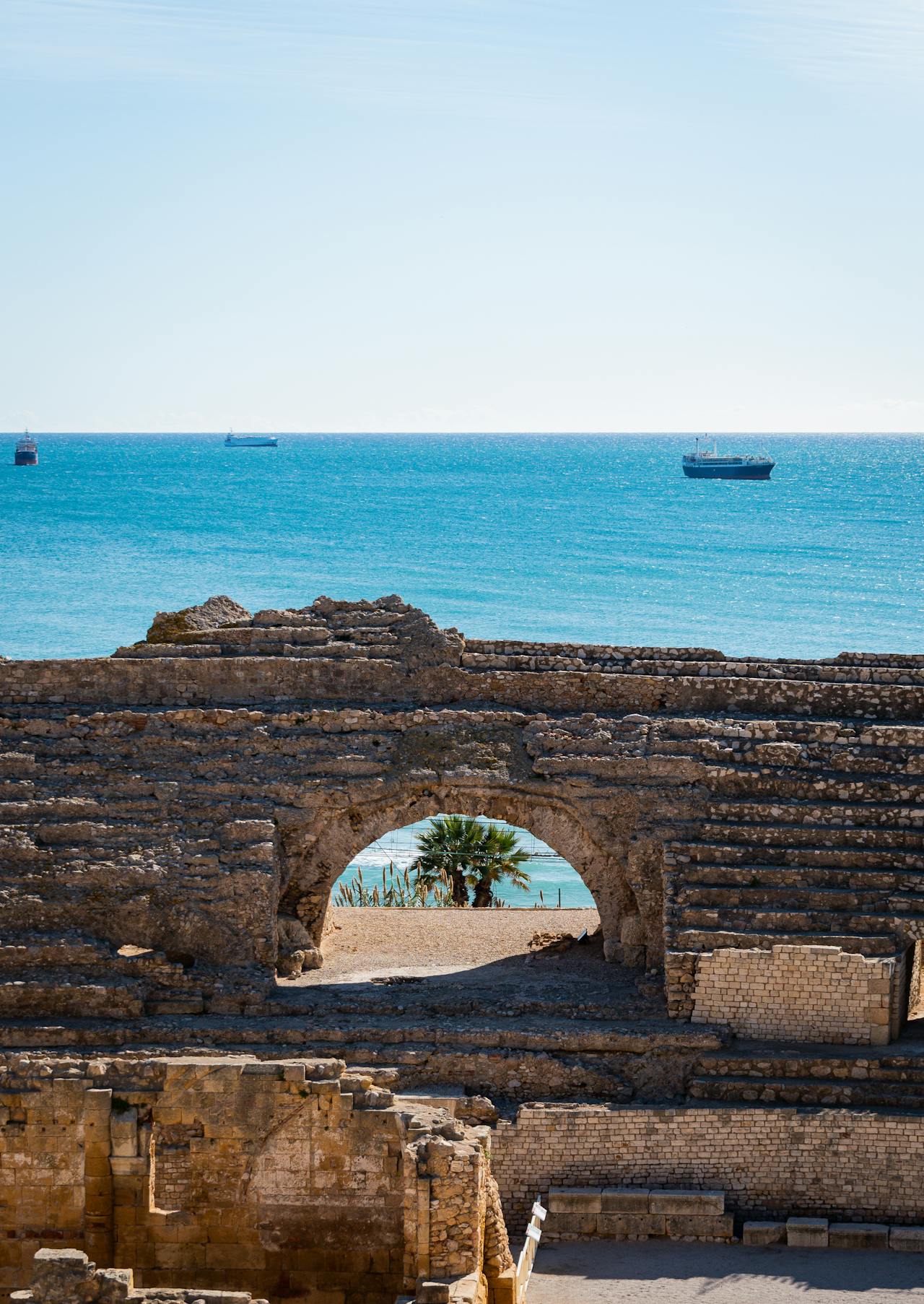
The Passeig Arqueològic (pah-SAYG ar-keh-oh-LOH-jik) is a walkway along the ancient Roman walls. It’s technically in most guidebooks, but here’s what they don’t tell you: go at sunset.
In the late afternoon, this place empties out completely. You’ll have 2,000 year old walls practically to yourself. The views over the old town and out to sea are spectacular. According to UNESCO’s World Heritage listing, Tarragona’s Roman archaeological ensemble is one of the most significant in the western Mediterranean.
Bring a bocadillo (boh-kah-DEE-yoh, a Spanish sandwich) and enjoy the golden light. This is where the magic happens.
3. Skip the Tourist Cafés, Find a Vermouth Bar Instead
Tarragona has a thriving vermut (ver-MOOT, vermouth) culture that most visitors never discover. Locals gather for l’hora del vermut (LO-rah del ver-MOOT, vermouth hour) before lunch, typically around noon on weekends.
Head to the bars around Plaça del Rei. Order your vermut with a side of olives and patatas bravas (pah-TAH-tahs BRAH-vahs, crispy potatoes with spicy sauce). This is how native speakers actually spend their Sundays. No guidebook will tell you that Tarragona’s vermouth scene rivals even Barcelona’s.
Say “Un vermut, si us plau” (oon ver-MOOT, see oos PLOW, “A vermouth, please” in Catalan). You’ll get a big smile for using the local language.
4. The Balcó del Mediterrani Is More Than a Viewpoint
Most Tarragona local tips mention the Balcó del Mediterrani (bal-KOH del meh-dee-teh-RAH-nee, the Balcony of the Mediterranean). It’s the famous lookout at the end of the Rambla Nova. But here’s what nobody tells you.
There’s a local tradition called “tocar ferro” (toh-KAR FEH-roh, touching iron). You grab the iron railing and it supposedly brings good luck. Watch the locals and you’ll see them doing it, almost unconsciously, as they walk past. Now you know the secret.
The views stretch across the entire Mediterranean coastline. On a clear day, you can see all the way to the port. It’s the perfect spot to practise your travel vocabulary with a local who stops to enjoy the view beside you.
5. The Cathedral Cloister Has a Secret Garden
Tarragona’s cathedral is beautiful. You probably know that. But tucked inside its cloister is a quiet garden with orange trees, a fountain, and some seriously playful carved details on the columns.
Look closely at the column capitals. You’ll find depictions of a cat funeral procession (yes, really) and rats carrying a dead cat. Medieval Catalan humour at its finest. Most tourists walk through in five minutes. Spend twenty. Look up. Look closely. The details reward patience.
Entry is affordable, and the garden is one of the most peaceful spots in the entire city. Your Spanish is about to level up just from the signs and descriptions inside.
6. Platja de l’Arrabassada Beats Any Beach in Barcelona
Here’s the real talk: Barcelona’s beaches are overcrowded and honestly a bit grimy. Tarragona’s Platja de l’Arrabassada (PLAH-jah deh lah-rah-bah-SAH-dah) is a golden sand beach with crystal clear water, a fraction of the crowds, and the same gorgeous Mediterranean setting.
Locals come here on weekday mornings. Bring a towel, some fruit, and a book. There are small chiringuitos (chee-rin-GEE-tohs, beach bars) where you can grab a cold drink and some grilled sardines.
If you want a proper Tarragona Spain travel guide moment, this is it. Sun, sea, and the sound of Spanish conversations drifting across the sand.
7. The Mercat Central Is a Language Classroom
Forget what your textbook told you about learning vocabulary from flashcards. The Mercat Central (mer-KAHT sen-TRAHL, central market) in Tarragona is where real language learning happens.
Stroll through the stalls. Point at things. Ask “¿Cómo se llama esto?” (KOH-moh seh YAH-mah ES-toh, “What’s this called?”). Vendors are friendly and often delighted when visitors try their Spanish. You’ll learn more food vocabulary in thirty minutes here than in a week of Duolingo.
The market is open mornings, Monday through Saturday. Go early for the best selection and the liveliest atmosphere. Pick up some food vocabulary before you visit and you’ll feel like a local.
Look for seasonal specialities. In summer, the stalls overflow with ripe tomatoes and peaches. In winter, you’ll find calçots (kal-SOTS, grilled green onions), a beloved Catalan delicacy. Try asking “¿Qué hay de temporada?” (keh eye deh tem-poh-RAH-dah, “What’s in season?”). The vendors love that question.
8. Castells Are Tarragona’s Most Jaw-Dropping Tradition
Tarragona is the heartland of castells (kahs-TELS, human towers). These aren’t just stacks of people. They’re a UNESCO-recognised cultural tradition dating back to the eighteenth century. Teams of castellers (kahs-teh-YERS, tower builders) form towers up to ten levels high, with a small child climbing to the very top.
The first time you see one, your jaw will drop. The crowd goes completely silent as the tower rises. Then erupts when the enxaneta (en-sha-NEH-tah, the child who crowns the tower) raises their hand.
According to UNESCO’s Intangible Cultural Heritage listing, castells represent “values of cooperation, teamwork, and community solidarity.” Visit during the Concurs de Castells competition, held every even-numbered year in October, for the most spectacular display.
9. The Roman Aqueduct Is a Hidden Hiking Trail
About four kilometres outside the city centre, the Pont del Diable (PONT del dee-AH-bleh, Devil’s Bridge) stands in a pine forest. It’s a perfectly preserved Roman aqueduct, and you can walk right across the top of it.
Most visitors don’t realise there’s a lovely hiking trail that connects the aqueduct to the outskirts of Tarragona. The path winds through Mediterranean forest, with wildflowers in spring and the scent of pine in summer. It’s a world away from the tourist centre.
This is one of those Tarragona local tips that transforms a quick photo stop into a genuine experience. Pack water, wear decent shoes, and give yourself a couple of hours. If you’re into Spanish history and culture, walking where Romans walked two thousand years ago is unforgettable.
10. The Evening Paseo Is Sacred (Join It)
Every Spanish city has a paseo (pah-SAY-oh, evening stroll), and Tarragona’s is one of the best. As the sun drops and the heat fades, locals pour out onto the Rambla Nova. Families, couples, friends, everyone walks, talks, and enjoys the evening air.
This is how native speakers actually talk. Not in classrooms or textbooks, but during these relaxed, unhurried walks. Listen to the conversations floating around you. Notice the rhythm and melody of spoken Spanish. Try joining in.
Stop at a terrace for a clara (KLAH-rah, beer mixed with lemon soda). Sit and watch the city come alive. Tarragona’s paseo happens every evening, but weekends are the liveliest. There’s no entrance fee. No booking required. Just show up and walk.
If you want to strike up a conversation, try “¡Qué bonita noche!” (keh boh-NEE-tah NOH-cheh, “What a beautiful night!”). It’s simple, friendly, and opens doors. Spaniards love talking about the weather, the food, and their city. You’ll be surprised how quickly a greeting turns into a real connection.
Your Tarragona Adventure Starts Now
This is the kind of Tarragona Spain travel guide you won’t find in any bookshop. It’s built from local knowledge, real experiences, and the sort of details that turn a holiday into something you’ll remember forever.
Tarragona isn’t trying to be Barcelona. It doesn’t need to be. It has Roman ruins, stunning beaches, world-class seafood, and a community that genuinely welcomes curious visitors. That’s more than enough.
Learn a few phrases. Wander the old streets. Try the vermouth. Watch the castells. Talk to the fishermen in El Serrallo. Let this city surprise you.
If you loved these Tarragona local tips, explore more of our travel guides across Spain and start planning your next adventure. And if you’re brushing up on your travel Spanish phrases, we’ve got you covered there too.
Now you’re ready to explore. Go use these phrases and have an incredible experience. Your Spanish is about to level up.
Share
Topics
You may also like


Get the Inside Scoop