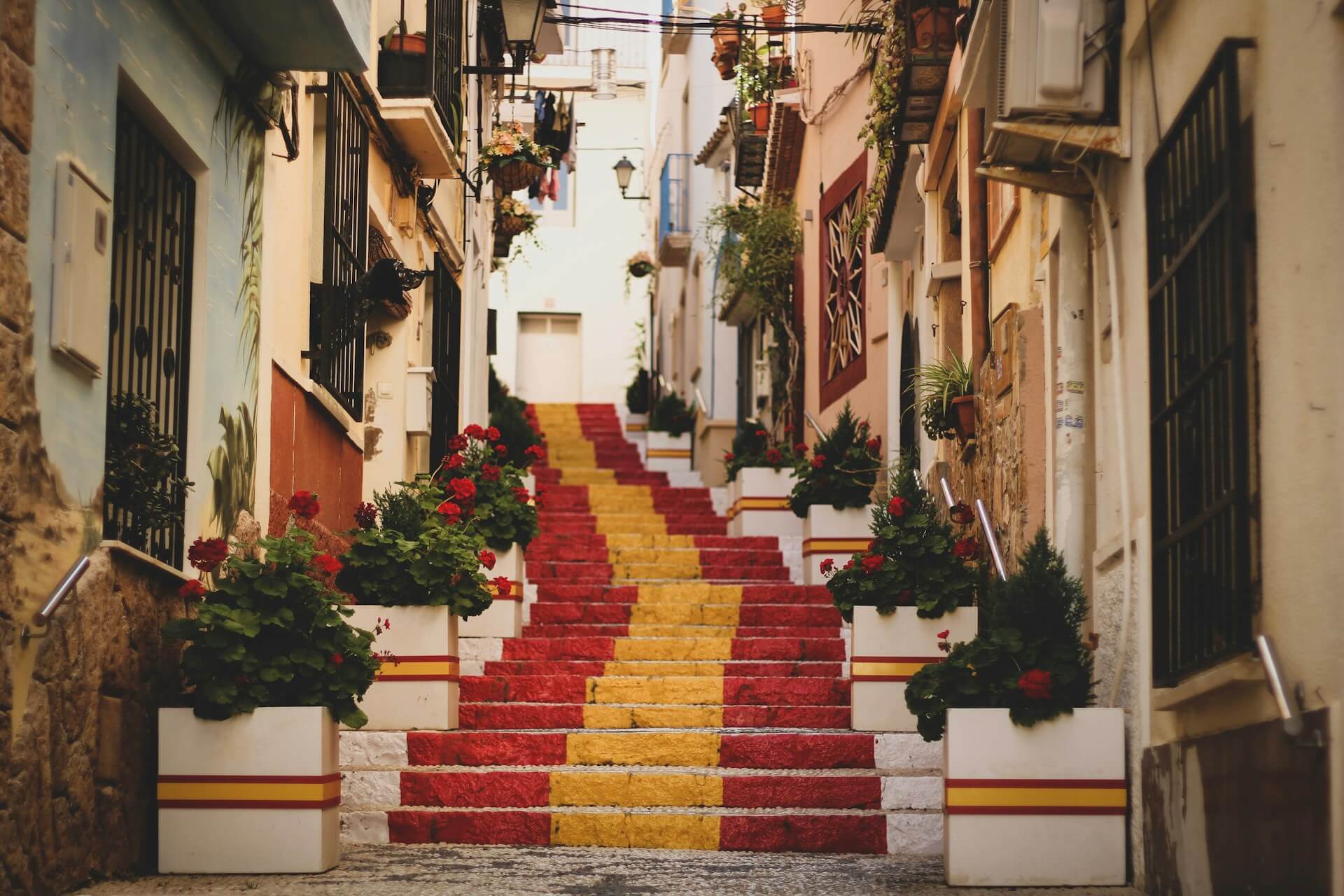
The Botellón Explained: Why Spaniards Swear by It

What Exactly Is a Botellón?
Picture this. It’s 10pm on a Friday night in Seville. The sun has only just set. And in a park near the university, hundreds of people are gathering with plastic bags full of drinks, snacks, and portable speakers.
Welcome to the botellón (bo-tay-YOHN), Spain’s beloved outdoor social tradition that turns public spaces into massive, impromptu parties.
At its core, a botellón is simple. Friends gather outdoors, everyone brings their own drinks and mixers, and the night unfolds organically. No cover charges. No overpriced cocktails. No velvet ropes or dress codes. Just people, conversation, music, and the kind of atmosphere that money genuinely cannot buy.
Think of it as a picnic meets a house party meets a street festival, except nobody planned it and everybody’s invited.
The word itself comes from botella (bo-TAY-ya, bottle), with the suffix -ón making it bigger. So a botellón is literally a “big bottle” situation. Which, honestly, is exactly what it is.
A Brief History: From Post-Franco Freedom to National Tradition
The botellón didn’t appear from nowhere. Its roots trace back to the 1980s and early 1990s, during Spain’s cultural explosion following Franco’s death in 1975.
After decades of authoritarian rule, young Spaniards were hungry for freedom, expression, and community. La Movida Madrileña (the Madrid Scene) brought art, music, and nightlife bursting into public consciousness. But bars and clubs were expensive, especially for university students surviving on tight budgets.
The solution? Take the party outside.
What started as students gathering in parks and plazas before heading to clubs gradually evolved into something much bigger. By the mid-1990s, the botellón had become a cultural institution. University towns like Salamanca, Granada, and Santiago de Compostela became famous for massive weekly gatherings of thousands.
A 2014 study by researchers at Universidad Complutense de Madrid found that the botellón tradition had become deeply embedded in Spanish youth socialisation, functioning as a primary space for building social networks outside institutional settings.
Today, the tradition continues strong, though it’s evolved. It’s not just for students anymore. Families do it. Work colleagues do it. Retired neighbours do it (though they’d never call it a botellón).
The Unwritten Rules Everyone Follows
Here’s the thing about botellones. They look chaotic from the outside. But there’s an entire code of conduct that everyone instinctively follows. Break these rules, and you’ll stick out immediately.
Rule 1: Everyone Contributes
This isn’t a free-for-all. The expectation is simple. If you’re drinking, you brought something. Maybe it’s a bottle of rum. Maybe it’s three litres of Coca-Cola. Maybe it’s a bag of ice or a sleeve of plastic cups. But you show up with something.
The Spanish phrase: poner (po-NEHR, to put in/contribute). “¿Qué pones?” means “What are you bringing?”
Rule 2: Clean Up After Yourself
This one’s non-negotiable. Leave your spot cleaner than you found it. Carry a plastic bag for rubbish. The fastest way to earn disapproval from Spaniards is to leave a mess behind.
The word you’ll hear: recoger (reh-ko-HEHR, to pick up/clean up). “Venga, vamos a recoger” means “Come on, let’s clean up.”
Rule 3: Keep It Chill
A botellón is about buen rollo (bwen RO-yo, good vibes). It’s not about getting hammered as fast as possible. It’s social drinking. Conversation first, drinking second. If someone’s being aggressive or too loud, the group self-regulates quickly.
Rule 4: Timing Matters
Don’t show up at 8pm expecting a party. Botellones start late, usually between 10pm and midnight. They’re pre-game culture. Most people eventually move to bars or clubs around 1-2am. Some stay until sunrise. There’s no wrong answer.
Rule 5: Location, Location, Location
Regular spots exist. Every city has its known botellón zones, usually parks, riverbanks, or plazas near university areas. Ask any local under 30 and they’ll know exactly where tonight’s botellón is happening.
Essential Botellón Vocabulary
You cannot survive a botellón without these words. Memorise them. Use them. You’ll sound like you’ve been doing this for years.
- Botellón (bo-tay-YOHN) – The gathering itself. “¿Hay botellón esta noche?” (Is there a botellón tonight?)
- Litronas (lee-TRO-nas) – One-litre beer bottles. The classic botellón drink. Cheap and shareable.
- Calimocho (kah-lee-MO-cho) – Red wine mixed with Coca-Cola. Sounds terrible. Tastes surprisingly good. The unofficial drink of Spanish youth.
- Garrafón (ga-ra-FOHN) – Cheap, low-quality alcohol (usually spirits). Literally “big jug.” The stuff that gives you a headache the next day.
- Quedar (keh-DAR) – To meet up/make plans. “¿Quedamos a las diez?” (Shall we meet at ten?)
- Molar (mo-LAR) – Slang for “to be cool.” “Este sitio mola” (This spot is cool).
- Buen rollo (bwen RO-yo) – Good vibes/good energy. The goal of every botellón.
- (bo-TEH-yo) – A smaller, more intimate version. Just a few friends rather than a massive gathering.
- (KYOS-ko) – The kiosk/corner shop where you buy supplies last minute.
- Cubata (koo-BAH-ta) – A mixed spirit drink (rum and coke, gin and tonic, etc.)
Regional Variations: Every City Does It Differently
Andalucía: The OG Botellón Culture
Southern Spain basically invented outdoor socialising. In cities like Seville, Granada, and Málaga, the warm climate means botellones happen year-round. They tend to be larger, louder, and more festive. Flamenco music from portable speakers isn’t uncommon. The atmosphere is pure alegría (joy).
Signature drink: tinto de verano (TEEN-to deh beh-RAH-no, summer red wine) mixed with lemon Fanta. Refreshing, cheap, and quintessentially Andalusian.
Madrid: The Pre-Club Warm-Up
In Madrid, the botellón serves a more functional purpose. It’s the warm-up before hitting clubs that don’t open until 2am. Popular spots include parks near the university district and along the Manzanares River. Madrileños (people from Madrid) tend to be more mobile, moving between spots throughout the night.
Barcelona: Beach Botellones
Barcelona’s coastline changes the game entirely. Beach botellones along Barceloneta and surrounding areas are legendary. Sand, sea breeze, and sunset drinks create an atmosphere that’s hard to beat anywhere in Europe. Note: police enforcement here is stricter than in other cities, so be respectful of noise levels.
University Towns: The Megabotellón
Cities like Salamanca, Granada, Alcalá de Henares, and Santiago de Compostela take botellón culture to another level. With massive student populations, Thursday nights regularly see gatherings of 5,000+ people. These are events, not just drinks. DJs show up. Food vendors appear. It becomes a mini-festival.
The Social Significance: Democratising Nightlife
Here’s what most outsiders miss about the botellón. It’s not just about cheap drinks. It’s about accessibility.
Spanish nightlife is famously expensive. A cubata in a Madrid club can cost 12-15 euros. For students, young workers, or anyone on a tight budget, that’s simply not sustainable for regular socialising.
The botellón democratises social life. It removes economic barriers to participation. Everyone can afford a 1.50 euro litrona or a three-euro bottle of wine. Your social life isn’t determined by your bank account.
According to a 2019 report by the Spanish Ministry of Health, approximately 62% of Spaniards aged 15-34 had participated in a botellón in the previous year. The report noted that for many young people, it represented their primary form of weekend socialisation.
There’s also a generational equity aspect. In a country where youth unemployment has historically been high (reaching 55% in 2013 and still hovering around 28% in recent years), the botellón provides a social outlet that doesn’t require disposable income.
How to Join a Botellón as a Foreigner
Good news. Botellones are possibly the easiest social situation to join in Spain. Here’s your step-by-step:
- Find where it’s happening. Ask your hostel staff, language exchange partners, or classmates. Check local university social media groups. Or just follow the sound of music and laughter after 10pm.
- Bring supplies. Don’t show up empty-handed. A bottle of something (even just mixers) is your entry ticket.
- Approach with confidence. Walk up to a group that looks friendly and say: “¿Os importa si me uno?” (ohs eem-POR-ta see meh OO-no, Do you mind if I join?). The answer is almost always yes.
- Share what you brought. Offer drinks or snacks to the people near you. This is how conversations start naturally.
- Relax into it. Don’t try too hard. The whole point is being chill. Let conversations flow. Ask questions about Spain. Practise your Spanish. People love helping foreigners learn.
Your Botellón Survival Kit Checklist
- Drinks (beer, wine, spirits, or just mixers to share)
- Plastic cups (vasos de plástico)
- Ice if possible (hielo)
- Snacks to share (crisps, nuts, olives)
- A plastic bag for rubbish
- A bottle opener (abrebotellas)
- A light jacket (nights get cool, even in summer)
- Cash for the kiosko (not everywhere takes card)
- A portable charger (your phone will die)
- Good vibes (buen rollo)
The Legal Landscape: What You Should Know
Let’s talk about the elephant in the room. Botellones exist in a legal grey area that varies by city and region.
Since the mid-2000s, various Spanish municipalities have passed leyes antibotellón (anti-botellón laws) restricting public drinking. Fines can range from 100 to 600 euros depending on the city and the specific infraction.
However, enforcement varies wildly. In some cities, police actively patrol known botellón spots. In others, they turn a blind eye unless there are noise complaints or property damage. University towns tend to be more relaxed. Tourist-heavy areas tend to be stricter.
The practical reality:
- Most botellones happen without incident
- Being respectful (low noise, cleaning up, no damage) dramatically reduces risk
- Designated botellón zones exist in some cities where drinking is tolerated
- If police ask you to move, just move. Don’t argue. Don’t make a scene.
- Never drink and drive. Spain has strict drink-driving laws (0.5g/l limit, lower for new drivers)
Why This Tradition Matters
The botellón isn’t just about alcohol. It’s about a fundamentally different approach to social life. One that prioritises connection over consumption, community over commerce, and shared experience over individual spending.
In a world where socialising increasingly means spending money (restaurants, bars, clubs, events), the botellón reminds us that the best nights often cost almost nothing. Just good company, an open sky, and the willingness to show up.
So next time you’re in Spain and someone asks “¿Quedamos para un botellón?”, say yes. Bring a litrona. Learn some new words. Make some friends. And remember to clean up when you leave.
Your Spanish (and your social life) will thank you.
Sources: Spanish Ministry of Health, “Encuesta sobre Uso de Drogas en Enseñanzas Secundarias en España” (2019); Universidad Complutense de Madrid, “El botellón como fenómeno social” (2014).
Related reading: Explore more about Spanish lifestyle and living on Audaz Revista.
Share
Topics

audazrevista

Get the Inside Scoop