5 Phrases That Make Your Spanish Sound Native
Five phrases make your Spanish sound native in Spain: esto está para chuparse los dedos (this is finger-lickin’ good), ponme una caña y una tapa (get me a small beer and a tapa), ¿nos cobras cuando puedas? (can you charge us when you can?), vamos de vermú (let’s go for a pre-lunch vermouth), and está de muerte (it’s to die for). Memorise these, drop them at a tapas bar, and locals stop seeing a tourist. These are the real Spanish food words Spain uses every single day, the ones your textbook skipped.
Why these Spanish food words unlock the real Spain
Forget what your textbook told you. The fastest way to sound like a native speaker in Spain isn’t mastering the subjunctive. It’s knowing what to say when someone slides a plate of golden croquetas (kro-KAY-tahs, fried bechamel bites) in front of you.
Spanish food words aren’t just vocabulary. They’re cultural passwords. Say the right phrase at a tapas bar, and suddenly you’re not a tourist. You’re someone who gets it. Your textbook probably taught you la comida está buena (lah ko-MEE-dah ehs-TAH BWEH-nah, the food is good). That’s fine. It’s also incredibly boring. Native speakers in Spain have far more colourful ways to talk about food, and these phrases capture the whole experience: crowded market stalls, late-night tapas crawls, lazy Sunday drinks.
You’d hear these five at a bustling mercado (mer-KAH-doh, market), a neighbourhood bar, or a family dinner. Your basic Spanish phrases for beginners will get you by. But these will make people think you’ve lived in Spain for years. Let’s dig in.
1. “Esto está para chuparse los dedos” (this is finger-lickin’ good)
Pronounce it EHS-toh ehs-TAH PAH-rah choo-PAR-say lohs DAY-dohs. Literally it means “this is for licking your fingers,” the Spanish version of “finger-lickin’ good.” The difference is that in Spain people actually say it, regularly, at the dinner table, in restaurants, while devouring someone’s grandmother’s tortilla española (tor-TEE-yah ehs-pahn-YOH-lah, Spanish potato omelette).
This isn’t just a compliment. It’s a declaration. You’re telling whoever cooked that the food is so good you can’t waste a single drop. Use it after tasting someone’s home cooking, at a tapas bar when the gambas al ajillo (GAHM-bahs ahl ah-HEE-yoh, garlic prawns) arrive sizzling in olive oil, or anytime you want to go beyond muy bueno (very good) and genuinely impress a native speaker. Say it out loud right now. Seriously, do it.
2. “Ponme una caña y una tapa” (get me a small beer and a tapa)
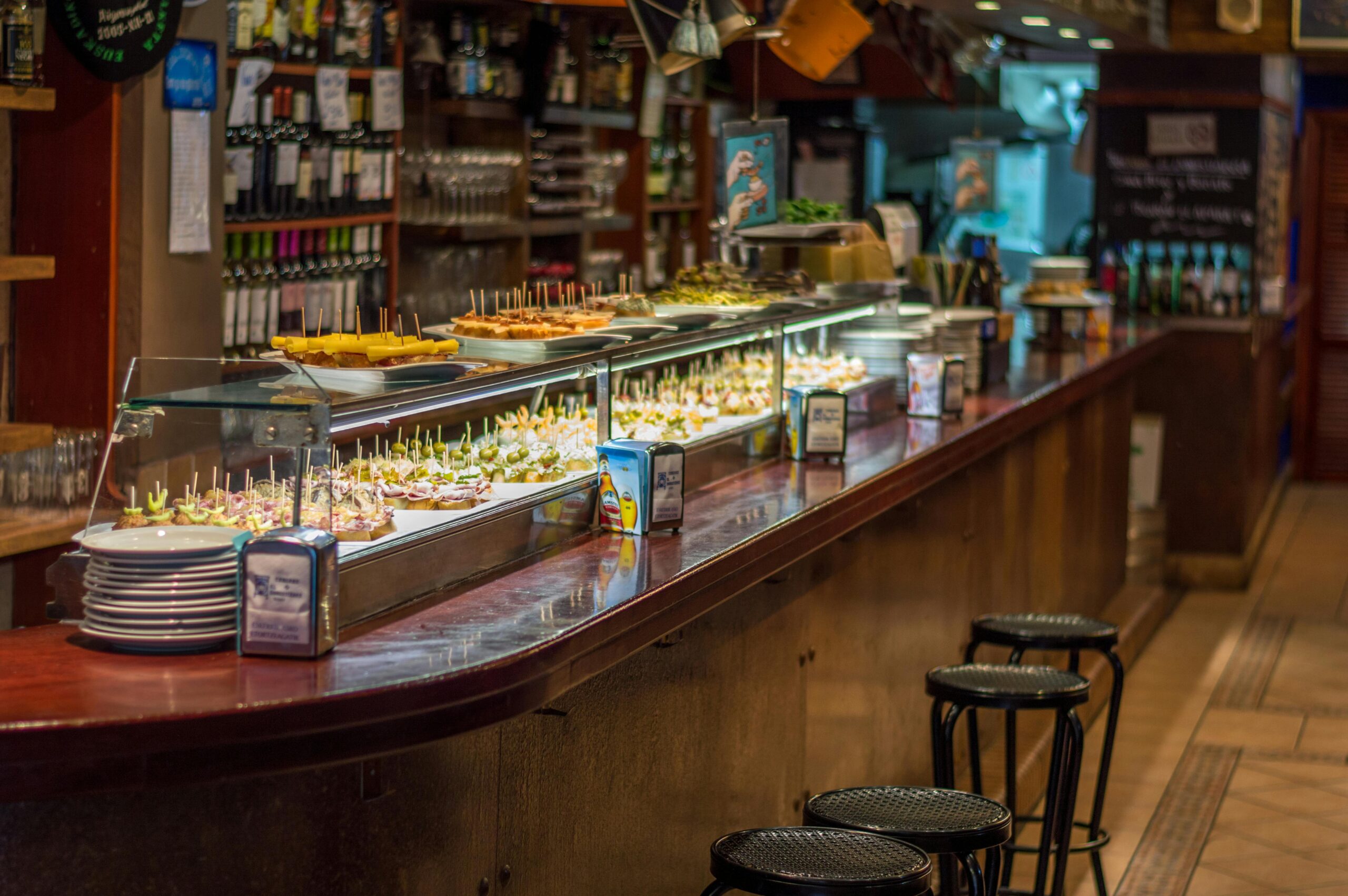
Pronounce it PON-may OO-nah KAH-nyah ee OO-nah TAH-pah. This is your golden ticket to fitting in at any bar in Spain. A caña (KAH-nyah) is a small draft beer, roughly 200ml. It’s the standard order. Not a pint. Not a bottle. A caña.
Why does it matter? Because ordering una cerveza (OO-nah ser-VAY-sah, a beer) marks you as a tourist instantly. Locals order cañas. The small glass keeps the beer cold and fresh in Spain’s heat, so you finish it quickly and order another. In many regions, especially Granada and parts of Andalucía, your caña arrives with a free tapa. You don’t even ask. The bartender just sets something delicious in front of you.
Want a slightly bigger beer? Ask for una doble (OO-nah DOH-blay, a double). A tiny one? Say un corto (oon KOR-toh, a short). Knowing these Spanish slang words native speakers actually use makes all the difference.
3. “¿Nos cobras cuando puedas?” (can you charge us when you can?)
Pronounce it nohs KOH-brahs KWAHN-doh PWEH-dahs. Forget la cuenta, por favor (the bill, please). It works, but it’s the phrase every tourist learns on day one. Here’s what native speakers actually say when they want the bill: ¿nos cobras cuando puedas?, literally “can you charge us when you can?” Polite, casual, and very Spanish.
It matters because in Spain the waiter will never bring the bill unless you ask. That isn’t rude. It’s respectful. They don’t want to rush you, and your table is yours for as long as you like. Use it at the end of any meal, when the conversation winds down and you’re ready to leave. Just never mid-meal, or you’ll confuse the waiter. The phrase signals confidence and cultural awareness in one breezy sentence.
4. “Vamos de vermú” (let’s go for a pre-lunch vermouth)
Pronounce it VAH-mohs day ver-MOO. This is one of those Spanish food words that describes an entire social ritual, not just a drink. Ir de vermú (eer day ver-MOO, to go for vermouth) means heading out for a pre-lunch drink, usually around noon on a weekend. It involves vermut (ver-MOOT, vermouth), olives, a few tapas, and a lot of conversation.
The vermú tradition has had a massive revival across Spain over the past decade. In Madrid and Barcelona, dedicated vermuterías (ver-moo-teh-REE-ahs, vermouth bars) are everywhere. Think of it as the Spanish version of brunch, except better, because there’s vermouth. Use it naturally like this: ¿Quedamos el domingo para ir de vermú? (shall we meet Sunday for vermouth?) or conozco un sitio genial para el vermú (I know a great spot for vermouth). The Spanish don’t just eat. They build experiences around food.
5. “Está de muerte” (it’s to die for)
Pronounce it ehs-TAH day MWER-tay. When food is beyond good, when it’s extraordinary, Spaniards say it’s de muerte (day MWER-tay, literally “of death”). It means “to die for,” and they use it constantly.
The phrase carries real weight. You wouldn’t use it for an average meal. It’s reserved for the moments when the jamón ibérico (hah-MOHN ee-BAY-ree-koh, Iberian cured ham) melts on your tongue, when the paella (pie-AY-uh, a rice dish) has that perfect crunchy bottom layer called socarrat (so-kah-RAHT), when the churros con chocolate (CHOO-rohs kon cho-ko-LAH-tay, fried dough with hot chocolate) come fresh from the fryer. You’ll hear it as el marisco aquí está de muerte (the seafood here is to die for) or prueba este queso, de muerte (try this cheese, to die for). That’s how native speakers really talk about food: with emotion and enthusiasm, not textbook phrases. If you’ve been learning the Spanish words your textbook never taught you, put this one at the top of your list.
How these phrases fit Spanish food culture
Notice the pattern across all five. Each one ties a single phrase to a whole cultural moment: the home-cooked meal, the bar order, the unhurried bill, the weekend ritual, the dish worth swooning over. That’s why Spanish food words in Spain land so differently from textbook vocabulary. They carry the rhythm of how people actually live and eat.
Two words capture this even more sharply, and neither has an English equivalent. Sobremesa (SOH-bray-MAY-sah) is the long after-meal chat at the table, lingering for hours over coffee. Tapear (tah-pay-AHR) is the act of hopping between bars sharing small plates. They aren’t just labels for food. They’re windows into Spanish life. For a deeper list of these, see our guide to 15 food terms that make your Spanish sound native, a perfect companion to the five phrases here.
Practice these phrases this week
Reading them isn’t enough. Say each phrase out loud three times, focusing on the stressed syllables (the capital letters in each pronunciation guide). Pick your favourite and write it on a sticky note for your fridge. Then use it: next time you eat something delicious, say ¡esto está para chuparse los dedos! out loud, even if nobody’s listening. Quick test, can you explain the difference between a caña and a cerveza? If yes, you’re already ahead of most learners.
Here’s what separates textbook Spanish from the kind that connects you with people: context. Anyone can memorise vocabulary lists. But knowing that de muerte is the highest food compliment in Spain, that ordering a caña instead of a cerveza marks you as an insider, that sobremesa is a sacred tradition with no English equivalent, that’s what transforms your Spanish entirely. These five phrases give you something your textbook never could: the ability to eat, drink, and socialise like a real Spaniard, not a tourist fumbling through a menu.
Want more guides that teach the Spanish people actually speak, not the version stuck in old grammar books? Explore Audaz Revista’s collection of real-world Spanish guides and keep building toward fluency that feels effortless. Now go order a caña, and honestly? Your Spanish is about to be de muerte.
Frequently Asked Questions
What are the best Spanish food words to sound native in Spain?
The five phrases that make you sound native are esto está para chuparse los dedos (this is finger-lickin’ good), ponme una caña y una tapa (get me a small beer and a tapa), ¿nos cobras cuando puedas? (can you charge us when you can?), vamos de vermú (let’s go for a pre-lunch vermouth), and está de muerte (it’s to die for). Each ties to a real cultural moment, which is why locals respond to them.
What is the difference between a caña and a cerveza in Spain?
A caña is a small draft beer of roughly 200ml served in a small glass, and it’s the standard order locals use. Cerveza simply means “beer” and ordering it that way marks you as a tourist. Ask for una doble for a larger draft or un corto for a tiny one.
How do you ask for the bill like a local in Spain?
Say ¿nos cobras cuando puedas?, meaning “can you charge us when you can?” It’s casual and natural, far more local than la cuenta, por favor. In Spain the waiter won’t bring the bill until you ask, since they don’t want to rush you, so use this phrase only when you’re ready to leave.
What does “ir de vermú” mean?
Ir de vermú means going out for a pre-lunch drink, usually around noon on a weekend, built around vermut (vermouth), olives, a few tapas, and long conversation. It’s a beloved Spanish social ritual that has surged in popularity over the past decade, especially in Madrid and Barcelona.
Share
Topics

audazrevista
You may also like


Get the Inside Scoop