Ordering Food in Spanish: 80+ Essential Phrases for Restaurants and Cafes [2026]
![Ordering Food in Spanish: 80+ Essential Phrases for Restaurants and Cafes [2026]](https://audazrevista.com/wp-content/uploads/2026/02/ordering-food-in-spanish-restaurant-phrases.jpg)
Key Takeaway, Knowing 20-30 core restaurant phrases will get you through 95% of dining situations across all 21 Spanish-speaking countries. This guide covers every stage of the dining experience, from calling for a reservation to splitting the bill, with pronunciation notes and region-specific tips.
Picture this, you are sitting at a terrace in Madrid, or at a family-run restaurant in Oaxaca, or at a bustling Buenos Aires steakhouse. The waiter approaches, menu in hand, and waits. Dining in Spanish is one of the most rewarding and immediately practical skills you can develop.
Restaurant situations are predictable. Unlike an unexpected conversation in the street, ordering food follows a recognizable script every single time. That makes it one of the best places to build confidence in Spanish, you know the phrases you need, and you can prepare them before you even walk through the door.
Before we get into restaurant phrases specifically, make sure you have a handle on the basics. Our guide to Spanish greetings and farewells covers the essential social phrases you will use entering and leaving any Spanish-speaking establishment.
1. Making a Reservation
In Spain and most of Latin America, showing up without a reservation on weekend evenings is risky at popular restaurants. Learning to make a reservation by phone is excellent speaking practice, it forces you to communicate without visual cues.
Reservation Phrases
- “Quisiera reservar una mesa para dos personas”, I would like to reserve a table for two people
- “¿Tienen mesa disponible para esta noche?”, Do you have a table available for tonight?
- “¿Puedo hacer una reserva para el sábado a las ocho?”, Can I make a reservation for Saturday at 8 o’clock?
- “La reserva es a nombre de Rivera”, The reservation is under the name Rivera
- “¿Cuánto tiempo de espera hay?”, How long is the wait?
- “¿Tienen mesa en la terraza?”, Do you have a table on the terrace?
- “Somos cuatro personas”, We are four people
Pro Tip, When calling ahead in Spain, it is standard to give your last name, not your first. “A nombre de García” (under the name García) is how reservations are typically recorded at Spanish restaurants.
2. Arriving at the Restaurant
The first 60 seconds in a Spanish restaurant set the tone for the whole meal. A confident greeting and clear table request immediately signal that you are comfortable in the language.
Arrival Phrases
- “Buenas tardes, tengo una reserva a nombre de…”, Good afternoon, I have a reservation under the name of…
- “¿Tienen alguna mesa libre?”, Do you have any free tables?
- “Una mesa para dos, por favor”, A table for two, please
- “¿Podemos sentarnos afuera?”, Can we sit outside?
- “¿Podría darnos una mesa más tranquila?”, Could you give us a quieter table?
- “¿Está libre esta mesa?”, Is this table free?
- “Preferimos sentarnos cerca de la ventana”, We prefer to sit near the window
3. Reading the Menu and Asking Questions
Spanish menus follow a recognizable structure across most countries. Knowing the section names helps you navigate even an unfamiliar menu with confidence.
Menu Vocabulary
- Entrantes / Entradas / Botanas, Starters / Appetizers (varies by country)
- Platos principales / Segundos, Main courses
- Postres, Desserts
- Bebidas, Drinks
- Menú del día, Set menu (Spain), typically a 3-course lunch at fixed price
- La carta, The a la carte menu
- Plato del día, Today’s special
- Para compartir, To share
Asking About the Menu
- “¿Qué recomienda usted?”, What do you recommend?
- “¿Cuál es el plato del día?”, What is the daily special?
- “¿Qué lleva este plato?”, What does this dish contain?
- “¿De qué está hecho?”, What is it made of?
- “¿Contiene mariscos?”, Does it contain seafood?
- “¿Tiene nueces?”, Does it have nuts?
- “¿Es picante?”, Is it spicy?
- “¿Qué tipo de carne es?”, What type of meat is it?
Dietary Needs
- “Soy vegetariano/vegetariana”, I am vegetarian (male/female)
- “Soy vegano/vegana”, I am vegan (male/female)
- “Tengo alergia al gluten”, I am allergic to gluten
- “Tengo alergia a los mariscos”, I am allergic to shellfish
- “No como carne de cerdo”, I don’t eat pork
- “¿Tienen opciones sin gluten?”, Do you have gluten-free options?
- “¿Pueden prepararlo sin…?”, Can you prepare it without…?
4. Placing Your Order
There are several natural ways to order in Spanish. The most polite and universally understood is “Quisiera…” (I would like…) or “Me gustaría…” (I would like…). Using the conditional tense automatically adds a layer of politeness that native speakers appreciate.
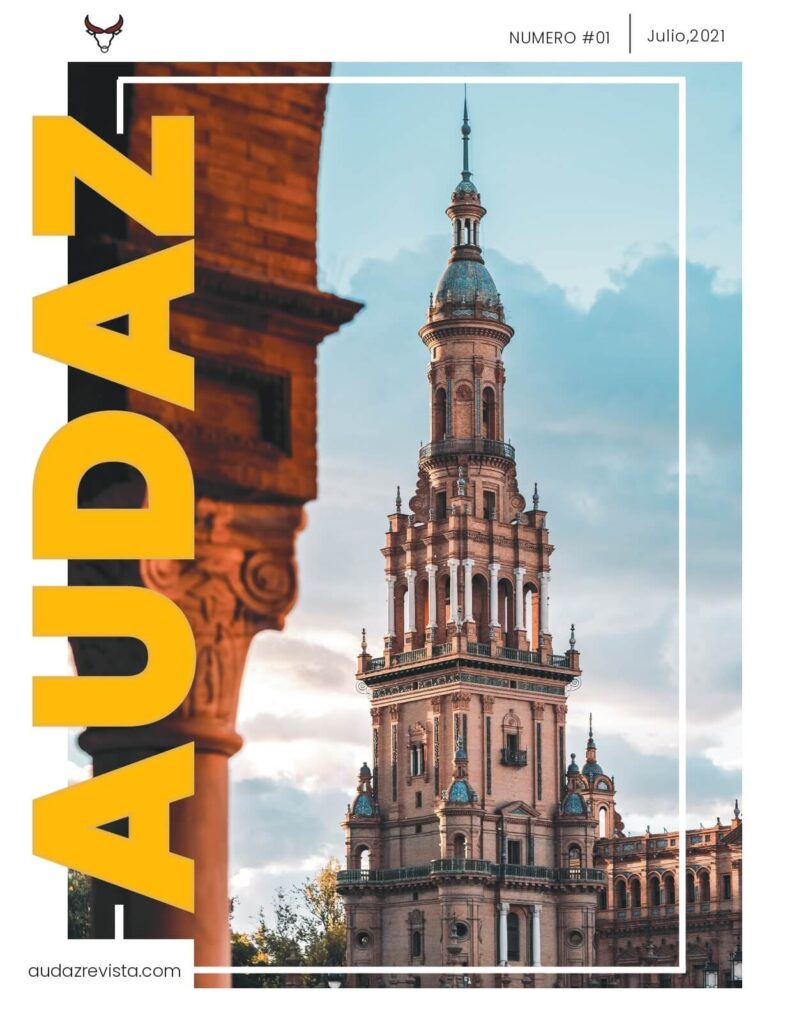
Want to go deeper? Audaz Revista Issue 1 covers topics like this with original cultural features and language insights you will not find in a textbook. Explore Issue 1
Quick grammar note, “Quiero” (I want) is grammatically correct but can sound abrupt. “Quisiera” (I would like) is the conditional form of querer, it softens the request and is the polite standard in most Spanish-speaking countries.
Ordering Phrases
- “Quisiera pedir…”, I would like to order…
- “Me gustaría el pollo asado, por favor”, I would like the roast chicken, please
- “Para mí, la ensalada mixta”, For me, the mixed salad
- “Voy a querer la paella”, I am going to have the paella (Latin America)
- “Para empezar, quisiéramos la sopa del día”, To start, we would like the soup of the day
- “¿Me puede traer un vaso de agua, por favor?”, Can you bring me a glass of water, please?
- “¿Tienen vino de la casa?”, Do you have house wine?
- “Una botella de agua mineral sin gas”, A bottle of still mineral water
- “Un café solo / cortado / con leche”, An espresso / macchiato / white coffee
Modifying Your Order
- “Sin cebolla, por favor”, Without onion, please
- “Con la salsa aparte”, With the sauce on the side
- “¿Puede hacerse sin sal?”, Can it be made without salt?
- “La carne, bien cocida / al punto / poco hecha”, The meat, well done / medium / rare
- “¿Puedo cambiar las papas fritas por ensalada?”, Can I swap the fries for salad?
5. During the Meal
Compliments and Requests
- “¡Está delicioso!”, It’s delicious!
- “¡Está muy rico!”, It’s very tasty! (common in Latin America)
- “¡Qué bueno está!”, How good it is!
- “Disculpe, ¿me puede traer más pan?”, Excuse me, can you bring me more bread?
- “¿Podría traerme otro tenedor?”, Could you bring me another fork?
- “Disculpe, creo que hay un error en mi pedido”, Excuse me, I think there is an error in my order
- “Esto no es lo que pedí”, This is not what I ordered
- “¿Me puede traer la sal, por favor?”, Can you bring me the salt, please?
Calling the Waiter
- “Disculpe”, Excuse me (most universal, works everywhere)
- “Oiga”, Excuse me / Hey (Spain, slightly more assertive)
- “Perdona”, Pardon / Excuse me (Spain, informal)
- “Joven”, Young man (common in Mexico, Colombia, Venezuela for male servers)
- “Señorita”, Miss (for female servers throughout Latin America)
6. Paying the Bill
Bill and Payment Phrases
- “La cuenta, por favor”, The bill, please (universal)
- “¿Me trae la cuenta?”, Can you bring me the bill?
- “La nota, por favor”, The bill, please (Spain, also used in Mexico)
- “¿Podemos pagar por separado?”, Can we pay separately?
- “Lo dividimos en dos / en tres”, We split it in two / in three
- “¿Aceptan tarjeta de crédito?”, Do you accept credit cards?
- “¿Solo aceptan efectivo?”, Do you only accept cash?
- “Creo que hay un error en la cuenta”, I think there is an error in the bill
- “¿Está incluido el servicio?”, Is service included?
- “Quédese con el cambio”, Keep the change
Tipping Tip, Tipping customs vary significantly. In Spain, tipping is appreciated but not expected, rounding up or leaving 5-10% is standard. In Mexico, 10-15% is customary. In Argentina, 10% is typical. In some countries (like Chile), service charge is already included, look for “servicio incluido” on your bill.
Audaz Revista
Take Your Spanish Further
Audaz Revista Issue 1 is out now, a full-length bilingual magazine for serious Spanish learners. Latin American culture, grammar deep-dives, and language insights written by educators.
7. Regional Variations to Know
| Country / Region | “Bill” | “Appetizer” | “Waiter” |
|---|---|---|---|
| Spain | La nota / la cuenta | Entrantes / tapas | Camarero |
| Mexico | La cuenta | Botanas / antojitos | Mesero / joven |
| Argentina | La cuenta / el vuelto | Entrada | Mozo / moza |
| Colombia | La cuenta / el cheque | Entrada | Mesero / mesera |
8. Quick Reference Phrase Card
| Situation | Spanish | English |
|---|---|---|
| Reservation | Quisiera reservar una mesa para dos | I’d like to reserve a table for two |
| Table request | Una mesa para cuatro, por favor | A table for four, please |
| Menu request | ¿Me trae la carta, por favor? | Can you bring me the menu? |
| Recommendation | ¿Qué recomienda usted? | What do you recommend? |
| Ordering | Quisiera el pollo asado, por favor | I would like the roast chicken, please |
| Vegetarian | Soy vegetariano/a | I am vegetarian |
| Allergy | Tengo alergia a los mariscos | I am allergic to shellfish |
| Water | Un vaso de agua, por favor | A glass of water, please |
| Delicious | ¡Está delicioso! / ¡Qué rico! | It’s delicious! / How tasty! |
| Call waiter | Disculpe / Oiga | Excuse me |
| The bill | La cuenta, por favor | The bill, please |
| Split bill | ¿Podemos pagar por separado? | Can we pay separately? |
9. Common Mistakes to Avoid
Even confident Spanish speakers make these predictable errors in restaurant settings. Knowing them in advance saves embarrassment,
- Saying “Quiero” instead of “Quisiera”, “Quiero la paella” sounds like a demand. Use “Quisiera” or “Me gustaría” for a natural, polite request.
- Confusing “embarazada” with “embarrassed”, “Embarazada” means pregnant, not embarrassed. If you want to say you’re embarrassed, say “Me da vergüenza” or “Estoy avergonzado/a.”
- Using “caliente” for spicy food, “Caliente” means hot in temperature. For spicy, say “picante.” Asking if your soup is “picante” when you meant hot in temperature can confuse servers.
- Forgetting “por favor” and “gracias”, Spanish-speaking cultures place high value on courtesy. Using these words consistently marks you as a respectful, welcome guest.
- Mispronouncing “pollo”, “Pollo” (chicken) is pronounced “PO-yo” not “POL-lo.” The double-L in Spanish makes a Y sound in most countries. Order “pol-lo” and you might get a confused look.
For a broader foundation in Spanish conversation, beyond restaurants, read our guide to learning conversational Spanish, which covers the speaking strategies that transfer from restaurants to every real-world situation.
Frequently Asked Questions
How do you order food in Spanish?
Use “Quisiera pedir…” (I would like to order…) or “Me gustaría…” followed by the dish name. “Para mí, …” (For me, …) is also natural and widely used. Always add “por favor” to any request. The conditional form “Quisiera” is more polite than “Quiero” (I want) and is preferred in most restaurant settings.
How do you ask for the check in Spanish?
“La cuenta, por favor” is understood everywhere. In Spain, “La nota, por favor” is equally common. To signal the waiter, make gentle eye contact and raise your hand slightly, no need to snap fingers or shout. You can also mime writing on your palm, which is universally understood as “bring the bill.”
How do you say “I am vegetarian” in Spanish?
“Soy vegetariano” (male speaker) or “Soy vegetariana” (female speaker). For vegan, “Soy vegano/vegana.” For specific allergies, use “Tengo alergia a…” followed by the ingredient. Note that vegetarianism is less common in some Latin American countries and parts of Spain, being specific about what you cannot eat is often more effective than just saying “vegetarian.”
How do you call a waiter in Spanish?
“Disculpe” (excuse me) with eye contact works universally across all Spanish-speaking countries. In Spain, “Oiga” is also natural. In Mexico and Colombia, “Joven” (young man) is commonly used for male servers and is not considered rude. The key is calm, polite eye contact, aggressive waving or snapping is frowned upon everywhere.
How do you ask what is in a dish in Spanish?
“¿Qué lleva este plato?” (What does this dish contain?) is the most natural phrasing. You can also ask “¿De qué está hecho?” (What is it made of?) or target specific ingredients, “¿Lleva mariscos?” (Does it contain seafood?), “¿Tiene lactosa?” (Does it contain lactose?), or “¿Contiene frutos secos?” (Does it contain nuts?).
Get Weekly Spanish Tips
Get practical Spanish lessons, cultural tips, and travel phrases every week.
Written by the Audaz Revista editorial team
Audaz Revista is the reading guide for Spanish learners. We tell you what you can read in Spanish at your level, and help you finish it.
Share
Topics

audazrevista
You may also like


Get the Inside Scoop