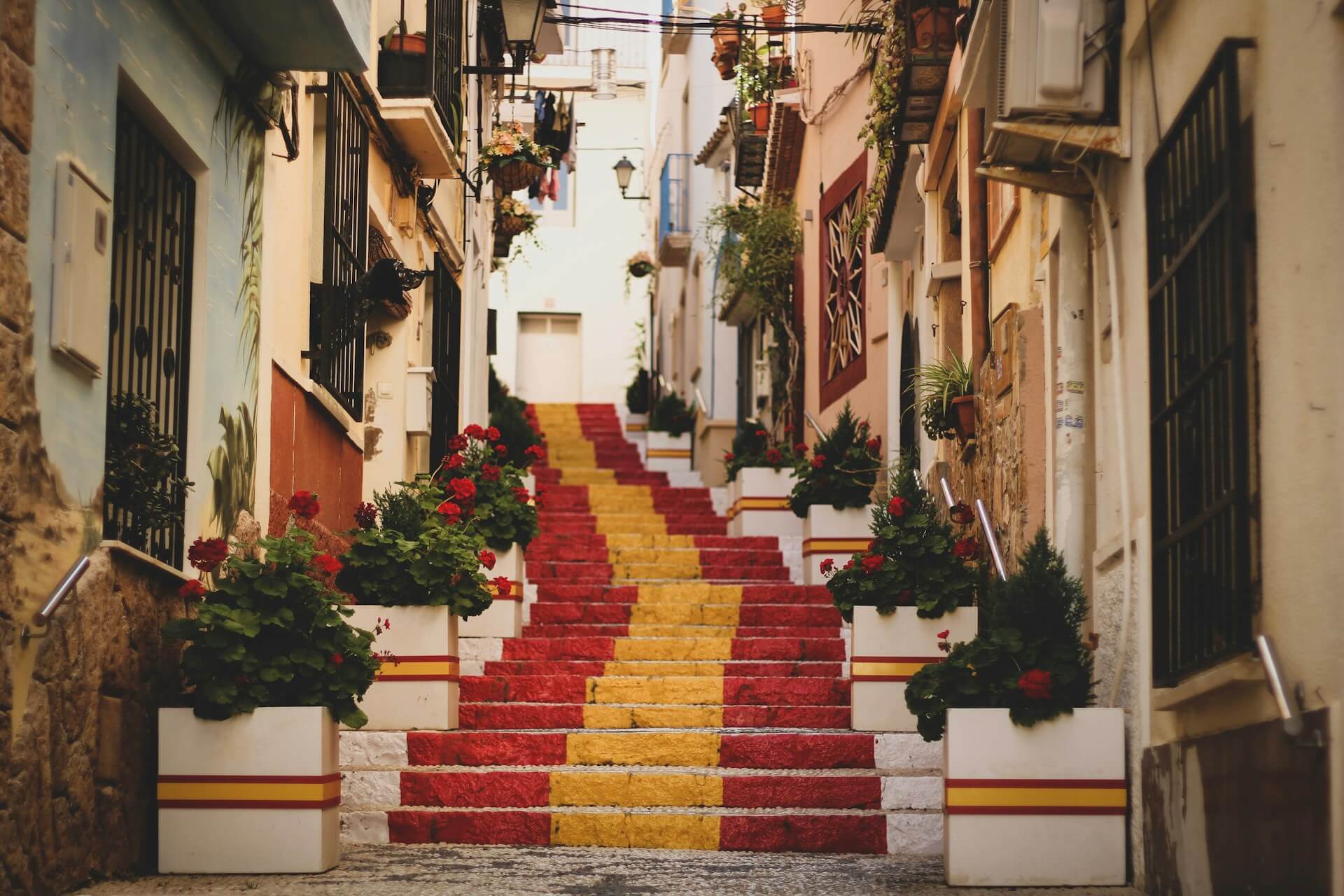
Here is the honest verdict: pick Bilbao in the spanish basque country spain region if you want world-class food, the Guggenheim, and moody green hills, and pick Tarragona in Catalonia if you want Roman ruins, Mediterranean beaches, sunshine, and a cheaper trip. They are both wonderful and completely different. Bilbao is rich, rainy, and culinary. Tarragona is sunny, ancient, and relaxed. Below we settle it dimension by dimension so you stop overthinking and book the right one.
Bilbao vs Tarragona at a glance
Both cities sit in Spain, but they could not feel more different. Bilbao is the cultural capital of the Basque Country up on the green, rainy north coast, famous for the Guggenheim museum and a food scene that punches absurdly above its weight. Tarragona sits an hour south of Barcelona on the warm Mediterranean coast in Catalonia, and it is basically an open-air Roman history book with beaches attached. One is about art and eating. The other is about ruins and sun. Your choice comes down to what kind of traveller you are, and, if you are learning Spanish, which language reality you want to walk into.
Which city has better culture and sights?
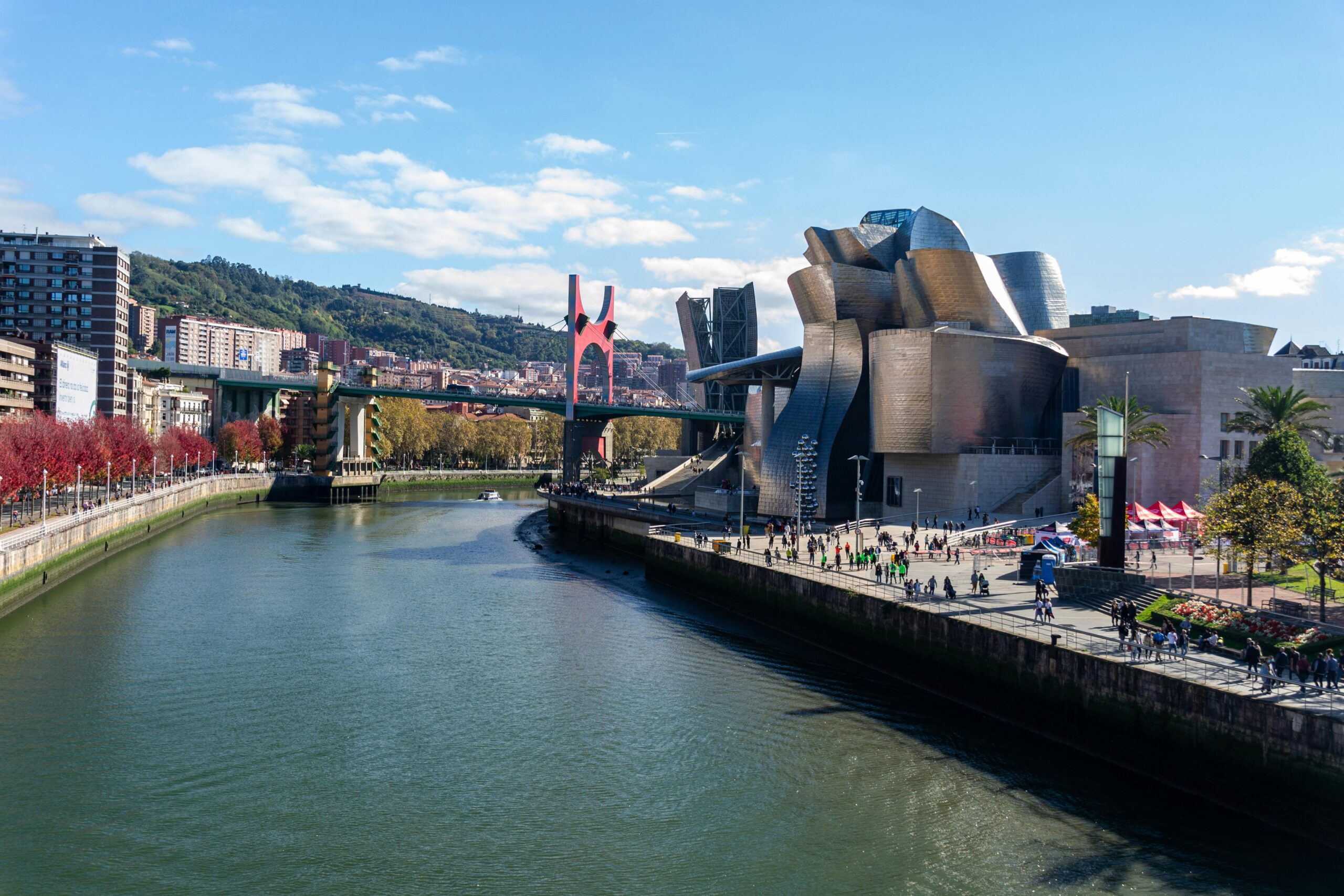
This one is close, because they win on totally different things. Bilbao is the modern art and architecture pick. The Guggenheim Museum Bilbao, with its rippling titanium shell by Frank Gehry, single-handedly dragged the city from gritty industrial port to global design destination. The old town, the Casco Viejo (literally “old quarter”), is a tangle of narrow streets, churches, and bars. It is a city that reinvented itself and is proud of it.
Tarragona plays the long game, and by long we mean two thousand years. This was Tarraco, one of the most important cities in Roman Spain, and the ruins are everywhere: a seafront Roman amphitheatre, the old forum, city walls, and an aqueduct just outside town. Walking Tarragona is like wandering through ancient Rome with a sea breeze. If you love history you can read with your feet, Tarragona wins. If you love bold modern culture, Bilbao wins.
Which city has better food?
Let us be blunt: Bilbao wins the food fight, and it is not really a fair fight. The Basque Country is one of the most celebrated food regions on the planet, and Bilbao’s bars are stacked with pintxos (small, often skewered bites of food, the Basque cousin of tapas) that you eat standing up with a glass of txakoli (a crisp, slightly fizzy local white wine). You hop bar to bar, point at what looks good, and eat like royalty for not very much. Picking up a few food terms that make your Spanish sound native will genuinely change how locals treat you at the counter.
Tarragona is not a food slouch. It is Catalan and Mediterranean, which means excellent seafood, rice dishes, and calçots (sweet grilled spring onions you dunk in romesco sauce) in season. The food is fresh, sunny, and good value. It just is not the obsessive, museum-grade food culture that Bilbao has. For a dedicated eater, Bilbao is the destination. For a relaxed seafood-and-wine holiday, Tarragona does the job beautifully.
Which is cheaper, Bilbao or Tarragona?
Tarragona is the cheaper trip, broadly speaking. As a smaller coastal city in the orbit of Barcelona rather than a famous cultural destination in its own right, accommodation and eating out tend to land lighter on your wallet. You also get a lot of free sightseeing, since half the Roman ruins are simply part of the streetscape.
Bilbao is not expensive by big-European-city standards, and the pintxos model means you can eat very well without a fancy sit-down bill. But it is a bigger, richer, more touristed city, so expect to pay a bit more for hotels and headline attractions like the Guggenheim. If budget is the deciding factor, Tarragona edges it.
Which has better beaches and outdoors?
Tarragona, easily, if your idea of a holiday involves a towel and the sea. It sits on the Mediterranean Costa Daurada with proper sandy city beaches you can walk to, plus reliable sunshine. You can do Roman ruins in the morning and swim in the afternoon, which is a hard combination to beat.
Bilbao is on the Atlantic, which is greener, wilder, and cooler, with more rain. It is gorgeous for hiking the surrounding hills and for nearby Basque coast trips, but the city itself is not a beach holiday. If you want guaranteed sun and sand, Tarragona. If you want dramatic green landscapes and do not mind the drizzle, Bilbao.
Which is better for learning Spanish?
This is the part most travel guides skip, and for a Spanish learner it matters more than the beaches. Here is the truth: neither of these cities is monolingually Spanish, because both sit in regions with a strong second language of their own.
Bilbao is in the Basque Country, where alongside Spanish you will see and hear Euskara (the Basque language, which is unrelated to Spanish or any other language and is one of the oldest living languages in Europe). Signs are often bilingual. Tarragona is in Catalonia, where Catalan (a Romance language related to Spanish, French, and Italian, not a dialect of Spanish) is the co-official local language and is widely spoken day to day.
So what does that mean for your español? In both cities, standard Castilian Spanish is universally understood and spoken, so you will get plenty of practice either way. The nuance: in Tarragona, locals switching into Catalan around you can be confusing for a beginner, but Catalan shares Latin roots with Spanish, so you can often half-follow it. In Bilbao, Euskara is completely alien to a Spanish learner, but it sits more obviously apart, so the Spanish you hear stays clean and clear. For pure Spanish immersion, both work fine and Bilbao is arguably the slightly less confusing of the two. Either way, brushing up on Spanish social etiquette and local rules before you go will help you blend in fast.
What is the vibe of each city?
Bilbao feels like a confident, design-led, foodie city that knows it is cool. It is busier, slicker, and more cosmopolitan, with the energy of a place that has something to prove and has proven it. Tarragona feels slower, sunnier, and more laid-back, a human-sized coastal town where the ancient past and the beach coexist without any fuss. One of those is your kind of trip, and you probably already know which.
The verdict: who should go where?
Go to Bilbao if you are a serious eater, an art and architecture lover, or a traveller who wants a rich, modern, cultural city and does not mind grey skies and a higher spend. The food alone justifies the trip, and the spanish basque country spain setting gives you a culture you will not find anywhere else, language included.
Go to Tarragona if you want sunshine, beaches, ancient Roman history, and a cheaper, more relaxed trip with easy access to Barcelona. It is the better pick for a sun-and-sea holiday with a heavy dose of culture thrown in for free.
For a Spanish learner specifically, you can pick either with confidence: both give you real Castilian practice, just know going in that one comes with Basque and the other with Catalan, and that is a feature, not a bug. It is part of what makes northern and eastern Spain so endlessly interesting. If you are fascinated by how regional culture shapes daily life, you might enjoy our look at the cultural similarities between India and Spain too.
Still torn? Read more honest, no-fluff guides to Spanish language, culture, and travel at Audaz Revista, and start planning the trip that actually fits you.
Frequently Asked Questions
Is Bilbao or Tarragona better for first-time visitors to Spain?
It depends on what you want. Bilbao suits first-timers chasing food and culture in a manageable, walkable city. Tarragona suits first-timers who want sun, beaches, and Roman history, plus an easy day trip to Barcelona. Neither is a wrong choice for a first trip.
Do people speak Spanish in Bilbao and Tarragona?
Yes. Standard Castilian Spanish is spoken and understood in both cities. Bilbao also uses Euskara (Basque), and Tarragona also uses Catalan, both as co-official regional languages, so you will see bilingual signs, but you can get by and practise your Spanish comfortably in either place.
Is the Basque Country part of Spain?
Yes. The spanish basque country spain region is an autonomous community in northern Spain, and Bilbao is its largest city. It has its own language, Euskara, and a strong distinct identity, while remaining part of Spain.
Which city is cheaper to visit?
Tarragona is generally the cheaper trip, with lower accommodation costs and a lot of free Roman sightseeing built into the streets. Bilbao is reasonable thanks to affordable pintxos, but hotels and major attractions tend to cost a little more.
Can I visit both Bilbao and Tarragona on one trip?
You can, though they sit on opposite sides of Spain, Bilbao on the northern Atlantic coast and Tarragona on the eastern Mediterranean coast. It works best as part of a longer Spain itinerary with a flight or train between regions rather than a quick weekend combo.
Share

audazrevista
You may also like



Get the Inside Scoop