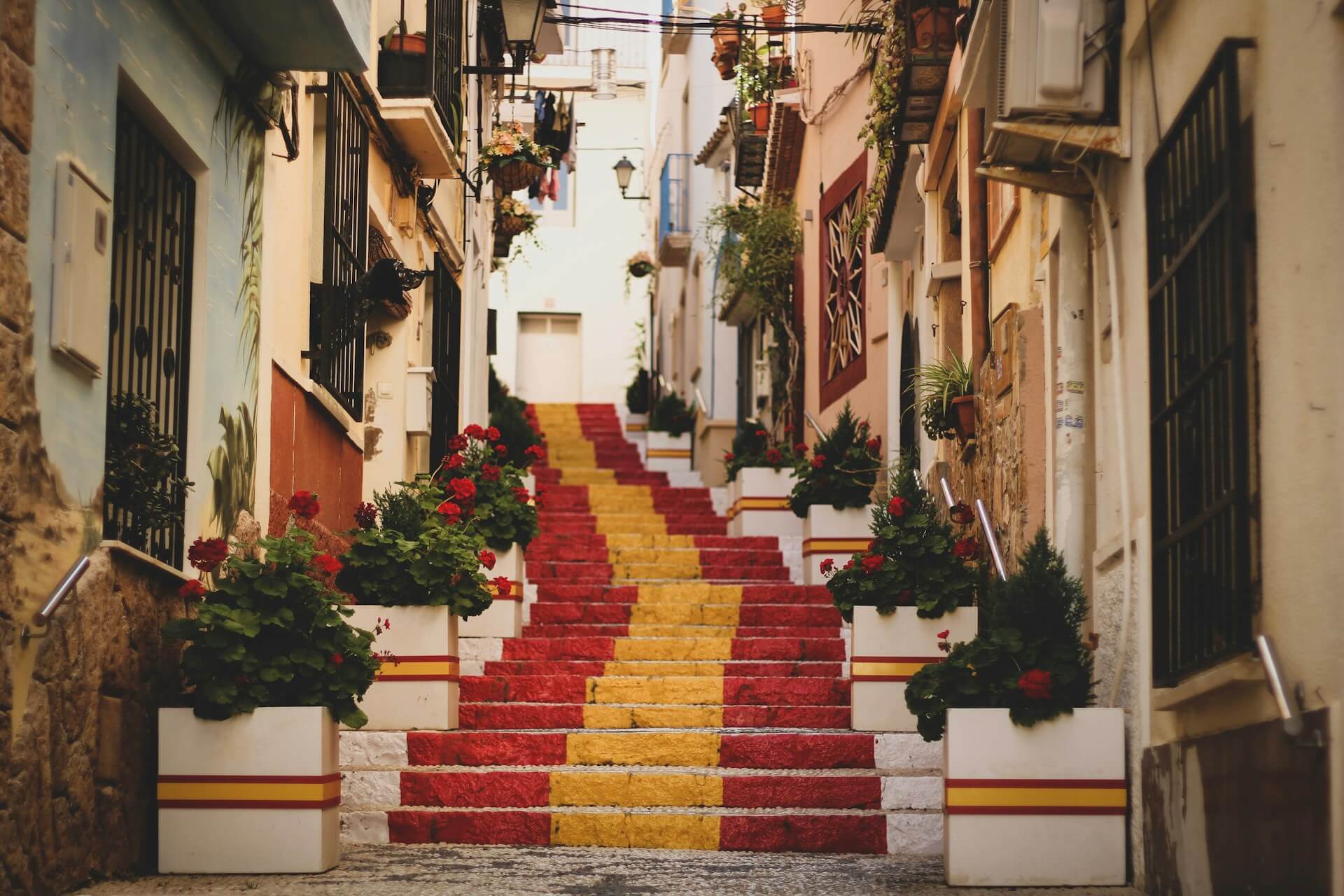
Hispanic Heritage Month: 10 Spanish Words Lists Skip

By Camila Rossi, Culture writer, Buenos Aires & Barcelona
Updated September 16, 2026 · Reviewed by the Audaz editorial team
Which Spanish words actually carry identity? Country words do. We counted the nine pages that rank for Hispanic Heritage Month phrases, 23,194 words between them. They used hispano, latino or Hispanic 430 times. They used a country word four times. That is 107 to 1. Pew’s newest survey finds the opposite in the people being celebrated: 53% of US Hispanic adults describe themselves by their country of origin, and 27% by a pan-ethnic term. Below are 10 country words, each one checked against the Real Academia Española.
- 430 pan-ethnic labels to 4 country words across the nine ranking pages.
- Seven of those nine pages print no country identity word at all.
- Pew, October 2025, 4,923 Hispanic adults: 53% use country of origin, 27% a pan-ethnic term.
- Only 1% prefer Latinx. Only 1% prefer Latine.
- One word on our list also means fool in eleven countries. Read the register notes.
Every September the same article appears. Ten phrases to celebrate Hispanic Heritage Month. They are always the same ten. Feliz Mes de la Herencia Hispana. Orgullo latino. Nuestra cultura.
None of that is wrong, exactly. It is just not how anybody talks.
So we stopped guessing and counted. We took the pages that actually rank for these queries and measured which identity words they print. Then we compared that against what Pew found when it asked Hispanic adults the same question directly.
The gap is not small. It is 107 to 1.
What did we actually count?
We fetched the pages that come back for the Hispanic Heritage Month celebration and phrase searches on 16 September 2026. Eleven pages returned something. Two of them were JavaScript shells with under 100 visible words, so the body never arrived and we dropped them. One page, the Smithsonian’s Latino museum, returned a 403 and could not be read at all. That left nine pages and 23,194 visible words.
Then we counted two fixed lists of words, ignoring accents and capitals.
The first list is the pan-ethnic labels: hispano, latino, latinx, latine, Hispanic, herencia hispana and their plurals and feminines. The second list is the gentilicio for all 20 Spanish-speaking countries, plus the common self-applied city and country nicknames. A gentilicio is the word for a person from a place. The RAE defines it as an adjective or noun that shows a relationship with a geographic place.
One page used a pan-ethnic label 138 times on its own. It printed no country word once.
How do we know the four are real?
Because a scanner cannot read. It flagged 12 hits, and we read every one of them in context before publishing a number. Eight were wrong.
Wikipedia’s language switcher offers the page in Español. That is an interface menu, not an identity word. A tour company’s signup form has a country dropdown containing Argentina, next to Armenia and Australia. A bio mentions CNN en Español. A photo credit names an artwork called Chicano Legacy 40 Años. Gloria Anzaldúa’s line about español deficiente is about the language, not the person.
That is a 67% false positive rate on the scanner, and it is why the headline number is four and not twelve.
The four that survived are worth looking at closely. All four sit inside quotations, on two pages, and both quotations are in English. Both are attributed by those pages to Mexican-American writers. One is given to Gary Soto: “I was the first Chicano to write in complete sentences.” The other is given to Carlos Fuentes: “I am not Mexican. I am not gringo. I am not Chicano. I am not gringo in the U.S. and Mexican in Mexico. I am Chicano everywhere.” We are reporting what those pages print, and have not gone behind either attribution.
So even the four real ones are not the page speaking. They are the page quoting somebody who insisted on his own word.
Seven of the nine pages celebrate Hispanic heritage for a combined 17,972 words without once naming a single country the way its people name themselves.
What do Hispanic adults actually call themselves?
Pew Research Center asked 4,923 Hispanic adults this directly, in English and Spanish, between 6 and 16 October 2025. The answer runs the other way from the listicles.
Ask about the pan-ethnic labels on their own and the picture sharpens again. 54% prefer Hispanic. 30% prefer Latino. 14% have no preference. Latinx gets 1%. Latine gets 1%.
Both of those last two words appear on the pages we counted. Both are preferred by one person in a hundred.
One honest caveat, because it matters. Pew surveys Hispanic adults in the United States. That is not the same population as people living in Latin America, and we are not going to pretend it is. What the survey establishes is narrower and still useful: even inside the country that invented this observance, the pan-ethnic label is the minority answer.
Why is hispano the wrong word to hand a learner?
Because hispano and Hispanic are not the same word, and neither are latino and Latino.
Open the RAE and read the order of the senses. The first sense tells you what a word mostly means.
| Word | RAE sense 1 | Where the English meaning appears |
|---|---|---|
| hispano | Natural de Hispania. From Hispania, the Roman name for Iberia. | Sense 5: a person of Spanish American origin living in the United States. |
| latino | Natural del Lacio, región de Italia. From Lazio, in Italy. | A separate second entry, sense 1: latinoamericano. |
Read that again. In Spanish, the plain first meaning of hispano is Roman Iberian, and the plain first meaning of latino is Roman Italian. The American meanings are real and the RAE lists them. They are just filed fifth, and in a second entry.
This is why a learner who leads with soy hispano in Bogotá or Lima gets a pause. The word is understood. It just sounds like a census form.
What are the 10 words people use instead?
Here they are. Every one is in the Real Academia Española dictionary, and the definition column is what the RAE says, translated plainly. We picked ten places, not ten favourites.
| Word | Place | What the RAE says | How it lands (our read) |
|---|---|---|---|
| boricua | Puerto Rico | adj. puertorriqueño. Applied to people. | Warm, everyday, used with pride |
| chapín | Guatemala | adj. Used in Costa Rica, El Salvador, Guatemala, Honduras and Nicaragua: guatemalteco. | Everyday across Central America |
| catracho | Honduras | adj. coloq. hondureño. The same entry also gives a fried tortilla dish. | Colloquial, affectionate |
| guanaco | El Salvador | Sense 4: salvadoreño. Sense 2, in eleven countries: a foolish or simple person. | Careful. See the warning below |
| tico | Costa Rica | adj. coloq. costarricense. Applied to people. | Colloquial, used by Costa Ricans themselves |
| nica | Nicaragua | adj. coloq. nicaragüense. Applied to people. | Colloquial and common |
| chilango | Mexico City | adj. coloq. Méx. From Ciudad de México. | Colloquial, and heard constantly in the city itself |
| rolo | Bogotá | adj. Col. bogotano. Applied to people. | Colloquial, Colombian |
| porteño | Buenos Aires | Sense 3: from Buenos Aires. Senses 1 and 4 to 8 cover five other port cities. | Neutral, but ambiguous. See below |
| charrúa | Uruguay | Sense 1: uruguayo. Senses 2 to 5 cover an Amerindian people and their language. | Proud, historically loaded |
Ten words, ten places: Puerto Rico, Guatemala, Honduras, El Salvador, Costa Rica, Nicaragua, Mexico, Colombia, Argentina and Uruguay.
Four of the ten carry the RAE’s coloquial marker outright: catracho, tico, nica and chilango. The rest are ordinary words with a regional label. Either way these are words people say to each other, which is why they carry identity, and why a corporate celebration page never prints them.
Which of these can get you in trouble?
Three of them, and the dictionary says so plainly. This is the part the phrase lists skip, and it is the part that matters most if you are going to open your mouth.
The RAE gives guanaco four senses. Sense 4 is salvadoreño. Sense 2 is persona tonta, simple, a foolish or simple person, and it lists that meaning as current in Argentina, Chile, Costa Rica, Guatemala, Honduras, Mexico, Nicaragua, Paraguay, Peru, the Dominican Republic and Uruguay. Salvadorans use it about themselves. Eleven countries use it to call somebody an idiot. If you are not Salvadoran, say salvadoreño.
porteño is not a nationality. The RAE gives it eight senses. Sense 1 is a person from any port city in Spain or the Americas. Buenos Aires is sense 3. Valparaíso in Chile is sense 4. Puerto Carreño in Colombia, Puerto Cabello and Puerto La Cruz in Venezuela follow. So porteño means an Argentine only when Buenos Aires is already the subject. If you want the Argentine identity marker that actually works everywhere, it is the pronoun vos, not a demonym.
charrúa carries a history. The RAE’s first sense is simply uruguayo, and Uruguayans use it about their football team with real pride. Senses 2 to 5 record who the Charrúa actually were: an Amerindian people of the northern Río de la Plata, and their language. Using it as a cheerful sports nickname without knowing that is worth avoiding.
There is a fourth trap that did not make the list. Gallego means a person from Galicia in Spain. But the RAE’s fifth sense records it in the Antilles, Argentina, Colombia and Uruguay meaning any person born in Spain or of Spanish descent. A Catalan called gallego in Buenos Aires will have views. Words change their charge at the border more often than learners expect.
How do you use these without sounding like a tourist?
Three rules cover almost every situation.
If you want the safe general-purpose phrases to sit underneath these, our guide to the common Spanish phrases every beginner needs covers the neutral ground. For the food vocabulary that goes with the Mexico City entry above, see the Mexican menu words nobody teaches.
How did we work this out?
Three steps, all repeatable.
First, the corpus. We fetched the ranking pages for the Heritage Month celebration and phrase queries on 16 September 2026 and saved the raw HTML. Pages with under 100 visible words were excluded as JavaScript shells, which removed two. One page returned 403 and is named in our notes as unread rather than quietly dropped.
Second, the count. Two fixed word lists, whole-word matching, accents and capitals ignored. Then a hand read of all 12 gentilicio hits in context, which cut the figure from 12 to 4.
Third, the words. Every one of the ten was checked against dle.rae.es, the Real Academia Española dictionary. The RAE blocks automated readers with a 403, so each entry was read from its Internet Archive snapshot and saved. Three candidate words were dropped because we could not verify them: paisa and quisqueyano have no archived entry, and cachaco turned out not to be a demonym at all. The RAE defines it as an elegant or well-mannered young Colombian, and separately as a despective Peruvian word for a police officer. It is a good word. It is not a country word, so it is not on the list.
That last one is the honest cost of the method. We wanted a Colombian entry, checked the obvious candidate, found the dictionary did not support the claim, and swapped it for rolo, which it does.
Why does any of this matter for your Spanish?
Because identity words are the fastest tell of whether you learned Spanish from people or from a course.
The pan-ethnic vocabulary is administrative. It exists because Congress wrote a definition about fifty years ago, and Pew’s explainer records what that definition covers and who it leaves out. Brazilians are excluded, because the federal wording applies only to people of Spanish culture or origin. So are the Portuguese, Belizeans and Filipinos.
The country words are social. They are how 53% of people answer when nobody is filling in a form. They also fade fast: Pew finds 97% of Hispanic immigrants identify as Hispanic, against 50% by the fourth generation. The country word is often the last one standing.
If you want more of the cultural background behind these, our guide to Hispanic traditions across Latin America and the rundown of Hispanic Heritage Month contributions are the places to go next. For how the sounds shift country to country, try the regional dialect guide.
What should you do with this?
Pick one country. Learn its word. Learn who is allowed to say it and when.
That single move will do more for how you are received than ten pan-ethnic phrases learned off a graphic. It takes about a minute. It lasts.
Frequently asked questions
What are the best Spanish phrases for Hispanic Heritage Month?+
The ones that name a place. Country words like boricua for Puerto Rico, chapín for Guatemala, tico for Costa Rica or catracho for Honduras carry far more than pan-ethnic phrases such as orgullo latino. Pew’s October 2025 survey of 4,923 Hispanic adults found 53% describe themselves by country of origin and only 27% by a pan-ethnic term. Use the country word, and use it about the place before you use it about a person.
Is it hispano or latino in Spanish?+
Neither carries the meaning the English words carry. The RAE’s first sense of hispano is a person from Hispania, the Roman name for Iberia, and the United States meaning is its fifth sense. The first sense of latino is a person from Lazio in Italy, and the Latin American meaning sits in a separate second entry. Both are correct Spanish. Both sound administrative in conversation.
Why do so few people use Latinx?+
Because almost nobody prefers it. In Pew’s October 2025 survey, 1% of Hispanic adults said they prefer Latinx and 1% said they prefer Latine, against 54% for Hispanic and 30% for Latino. Awareness of the term has risen. Use has not followed.
Is guanaco an insult?+
It depends entirely on who says it. The RAE gives salvadoreño as one sense, and Salvadorans use it about themselves. But the same entry records guanaco meaning a foolish or simple person in eleven other countries, including Guatemala, Honduras and Nicaragua. If you are not Salvadoran, say salvadoreño.
Does porteño mean Argentine?+
Only when Buenos Aires is already the subject. The RAE lists eight senses. The first is a person from any port city in Spain or the Americas. Buenos Aires is the third sense, and Valparaíso in Chile, Puerto Carreño in Colombia, and Puerto Cabello and Puerto La Cruz in Venezuela follow it. For a marker that always reads as Argentine, the pronoun vos is more reliable.
Can a learner use these words at all?+
Yes, with two habits. Attach the word to the place rather than to a person you have just met, and wait until you have heard somebody use it about themselves. Until then the plain gentilicio, costarricense or puertorriqueño or hondureño, is always safe and never wrong.
Words stick when you meet them in a story, not a list. Our Spanish Reading Starter Pack gives you the first books worth finishing at your level, each with an honest rating, plus the method for reaching the last page. It is free. Get the Starter Pack.
Camila Rossi
Culture writer, Buenos Aires & Barcelona
Camila Rossi is a writer based between Buenos Aires and Barcelona who covers the everyday culture of the Spanish-speaking world: its rituals, its food, and its unwritten social codes. She grew up sharing mate at her grandmother’s table, and writes about the customs that guidebooks tend to skip.
Share
Topics

audazrevista
You may also like


Get the Inside Scoop