Updated November 11, 2026 · Reviewed by the Audaz editorial team
Can you learn Spanish from Mafalda? Yes, and it makes a good first real read. Mafalda is a comic strip by the Argentine cartoonist Quino, and it ran from 1964 to 1973. Each strip is only a few panels long and tells a whole joke, so you can read one in a minute and finish it. Start with the small numbered books from Lumen in Spain or Ediciones de la Flor in Argentina. Use the English Mafalda: Book One from 2025 to check yourself.
- Every strip stands alone, so you never get lost in a long plot.
- The pictures carry half the meaning, which helps you guess new words.
- The characters use vos instead of tú, the way people talk in Argentina and Uruguay.
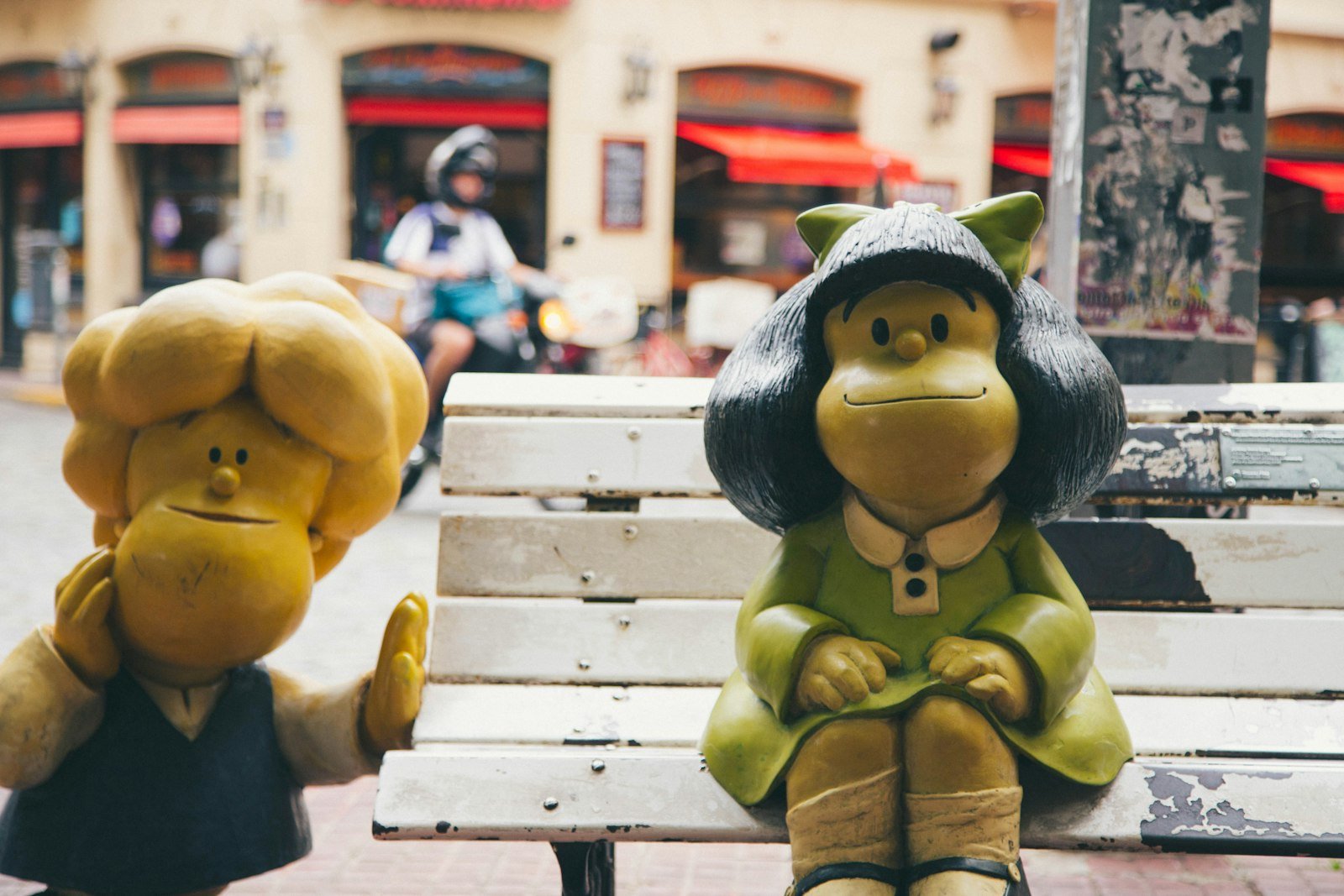
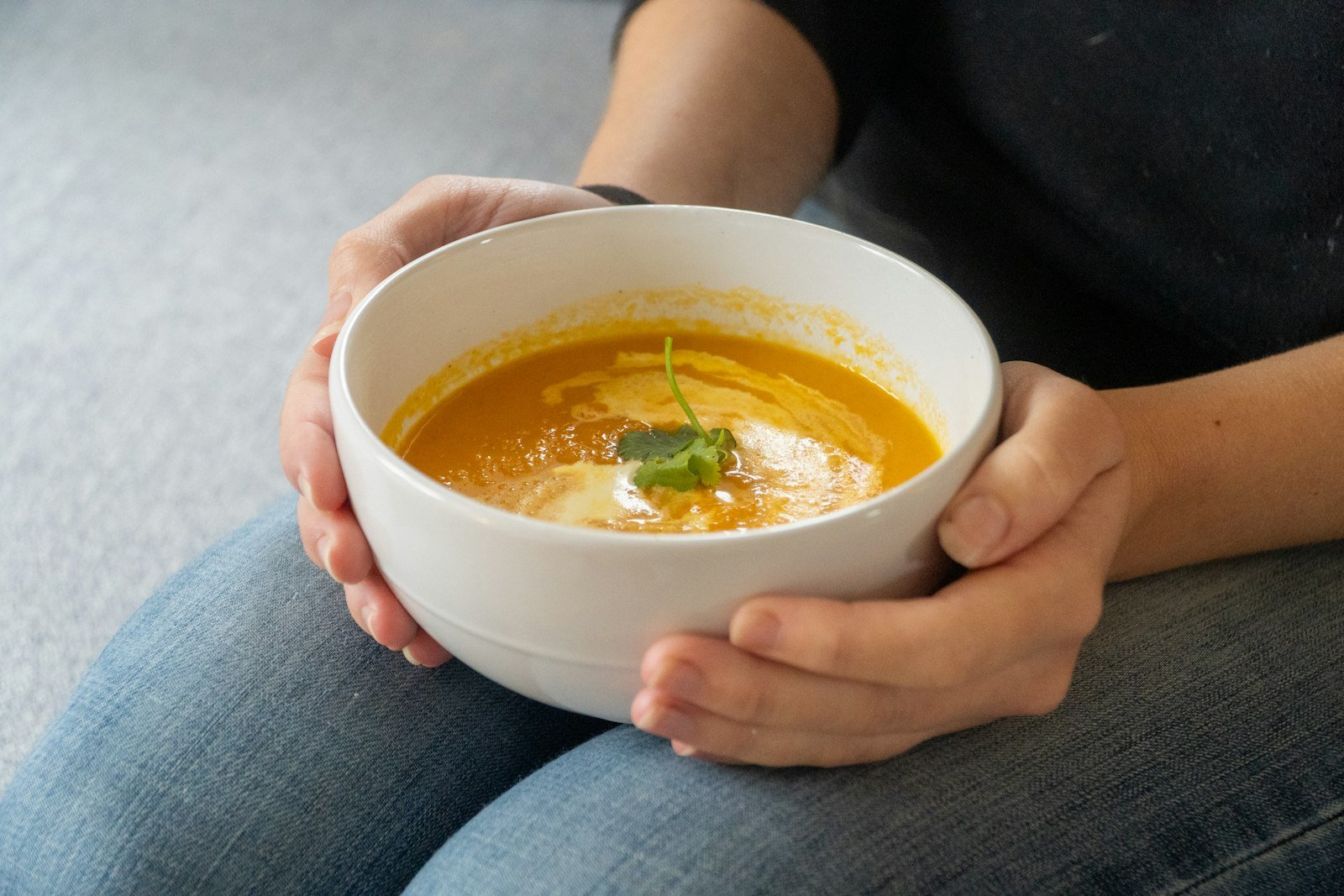
Most learners hit the same wall, where textbook dialogues are too easy and real novels are too long. Mafalda sits right in the middle of those two. She is a 6-year-old girl who hates soup, worries about the world and asks adults questions they can’t answer. Her English translator ranks the strip beside Peanuts and Calvin and Hobbes.
We won’t reproduce any strips here. The drawings and the words are still under copyright. Instead, we’ll tell you why the strip works for learners, which book to buy at which level, and what Spanish you’ll pick up.
In this guide (8)
Who is Mafalda, and who created her?
Quino was the pen name of Joaquín Salvador Lavado Tejón. He was born in Mendoza, Argentina, in 1932. Mafalda first appeared on 29 September 1964 in Primera Plana, a weekly magazine in Buenos Aires. The last strip ran on 25 June 1973.
In those 9 years, the strip moved from paper to paper and then into books. Mafalda has been translated into around 20 languages. In 2014, Quino received the Prince of Asturias Award for Communication and Humanities. He died in Mendoza on 30 September 2020, aged 88.
Why is Mafalda good for learning Spanish?
A comic strip is short, and that is its biggest gift to a learner. You can read one before your coffee gets cold. You can read 5 on the bus. Each one feels like a small win, and small wins keep you reading.
Frank Wynne, who translated the strip into English, put the rule well. In a 2025 interview with Latin American Literature Today, he said each strip’s joke “has to land” inside the strip. It can’t wait for the next one. For you, that means no plot to keep track of. If one strip is too hard, skip it and the next one starts fresh.
- The pictures help you guess. A face, a bowl of soup or a slammed door tells you what a sentence means before you check the dictionary.
- The Spanish is spoken Spanish. Children argue, parents sigh and friends tease each other. It’s how people really talk at home.
- The topics repeat. School, soup, the news, money and growing up come back again and again, so the same words come back too.
A word of honesty. Mafalda isn’t always easy at first. The jokes are often about politics, war and adult life in the 1960s. You might get the words and still miss the joke. That’s normal, and it gets easier with every book.
Which Mafalda book should you start with?
Mafalda is sold in 3 main forms: small numbered books, big collections of every strip, and translations. The numbering differs from one country to the next. In Argentina, Ediciones de la Flor sells 10 small books. In Spain, Lumen numbers its books from 0 to 10. In Mexico, Tusquets numbers them from 1 to 12.
The levels below are our suggestion, based on how much text sits on each page. Your own level matters more than any label.
| Your level | What to read | How to read it |
|---|---|---|
| A2, late beginner | Mafalda: Book One in English (Elsewhere Editions, 2025), next to a small numbered book in Spanish | Read a strip in Spanish first. Then check the English. Don’t look up every word. |
| B1, intermediate | The small numbered books: Lumen 0 to 10 in Spain, or De la Flor 1 to 10 in Argentina | Read 5 strips a day. Write down 1 new word from each. |
| B2 and up | Todo Mafalda (Lumen), the big hardback collection of 664 pages | Read a page or two a day. Look up the news stories the jokes are about. |
| Any level | Mafalda. Todas las tiras (Lumen), every strip in one volume | Keep it by the bed and open it anywhere. |
The English edition is new, and Elsewhere Editions published Mafalda: Book One on 10 June 2025, translated by Frank Wynne. It has 120 pages and is the first of 5 planned volumes.
Wynne said that “puns cannot be translated, they have to be reinvented.” So use the English to check the meaning, not each word. When the two versions say different things, the Spanish one is the real joke. Working out why can teach you more than any word list.
| Where | Publisher | What they sell |
|---|---|---|
| Argentina | Ediciones de la Flor | 10 small books |
| Spain | Lumen | Small books numbered 0 to 10, plus Todo Mafalda (664 pages) and Mafalda. Todas las tiras |
| Mexico | Tusquets | Small books numbered 1 to 12 |
| In English | Elsewhere Editions | Mafalda: Book One, out 10 June 2025, 120 pages. It is the first of 5 planned volumes. |
Source: From the facts in this guide.
Who are the main characters?
Each character has a strong habit, and their words follow it. Learn the habits, and you’ll guess the vocabulary before you see it.
| Character | Who they are | Words that go with them |
|---|---|---|
| Mafalda | The girl at the centre. Curious, worried about the world, and she hates soup. | la sopa (soup), el mundo (the world) |
| Felipe | A dreamy boy who is scared of school. | la escuela (school), soñar (to dream) |
| Manolito | The son of a Spanish shopkeeper. | la tienda (shop), el tendero (shopkeeper) |
| Susanita | She dreams of marriage and children. | casarse (to marry), los hijos (children) |
| Miguelito | A friend with hair like a lettuce, in the strip from 1966. | la lechuga (lettuce), el pelo (hair) |
| Guille | Mafalda’s little brother, from 1968. He loves soup and his pacifier. | el chupete (pacifier), el hermanito (little brother) |
| Libertad | The most political of the friends, from 1970. | la libertad (freedom), her own name |
The family pet is worth a smile too. Mafalda and Guille share a tortoise called Burocracia, which means bureaucracy. It’s a slow joke about slow offices, and it works in English as well.
What Spanish will you learn from Mafalda?
You’ll learn everyday Spanish from Buenos Aires, and the biggest feature is vos. In Argentina and Uruguay, people say vos where much of the Spanish-speaking world says tú. The verb endings change a little too. Mafalda and her friends use vos all the time, so the strip is a gentle way in.
Spanish teachers already use the strip this way. A lesson plan shared on todoele.net, a site for Spanish teachers, uses a Mafalda strip to teach vos. The table below shows the pattern it gives.
| With tú | With vos | What changes |
|---|---|---|
| ¿Qué quieres tomar? | ¿Qué querés tomar? | Present tense: the stress moves to the end, and ie becomes e. |
| Tú tienes muchos amigos. | Vos tenés muchos amigos. | No stem change with vos, so it’s often easier. |
| Llama a Mafalda. | Llamá a Mafalda. | Commands: the stress moves to the last syllable. |
| Vino por ti. | Vino por vos. | After a preposition, you say vos, not ti. |
Other tenses stay the same as with tú, so there’s less to learn than it looks. For the full picture, read our guide to Argentine Spanish and vos. Once you know it, Mafalda’s arguments start to sound like real voices.
How should you read a Mafalda strip?
Do this with 3 strips a day, and you’ll finish a small book in a few weeks. Keep a short list of the words that come back. Sopa will be on it by day 2.
What should you read after Mafalda?
When the strips start to feel easy, move to short books. Our list of short Spanish books you can finish in a weekend is a good next step. If you want to see how hard the famous classics really are, we measured 25 of them in Spanish classics by reading level.
For writers who are alive and writing now, try our list of contemporary Spanish authors. Their books are a good step once comic strips feel easy.
Try it this week. Buy or borrow one small Mafalda book. Read 3 strips a day for 7 days. On day 7, read the first 3 again and notice how much more you get.
Words from this guide
| Spanish | English |
|---|---|
| la sopa | soup |
| el mundo | the world |
| la escuela | school |
| soñar | to dream |
| el tendero | shopkeeper |
| casarse | to marry |
| la lechuga | lettuce |
| el chupete | pacifier |
| el hermanito | little brother |
| la libertad | freedom |
Frequently asked questions
Is Mafalda good for Spanish learners?
Yes. Each strip is short and complete, the pictures help you guess the meaning, and the Spanish is everyday spoken Spanish from Buenos Aires. The political jokes can be hard at first.
What level of Spanish do you need to read Mafalda?
A strong A2 learner can start with help from the English edition. B1 learners can read the small numbered books on their own. These levels are our suggestion.
Is Mafalda available in English?
Yes. Elsewhere Editions published Mafalda: Book One on 10 June 2025, translated by Frank Wynne. It is the first of 5 planned volumes.
Why does Mafalda say vos instead of tú?
Mafalda is from Buenos Aires, where people use vos for the informal you. You’ll see forms like querés and tenés instead of quieres and tienes.
Who created Mafalda?
The Argentine cartoonist Quino, whose real name was Joaquín Salvador Lavado Tejón. The strip ran from 29 September 1964 to 25 June 1973.
Mafalda’s Buenos Aires comes through in every strip. Our next issue, Ciudades que hablan, takes you to 18 cities across the Spanish-speaking world. Each one gets a single story, told in Spanish by someone who lives there. Join the waitlist and we’ll tell you when it opens.

Your Spanishcould use some.
In Spanish, reading tends to fall apart at the first word you don’t know. Audaz Revista is a Spanish magazine written by experts, where you tap that word and keep going. Edition 1 is out now.
Pay once, and it opens the moment you pay. See what's in Edition 1
Try it. Tap any word.
.
We love meeting up with friends to go out for tapas.
From "5 Spanish customs you should know", Edition 1.
Pay once, and it opens the moment you pay. See what's in Edition 1