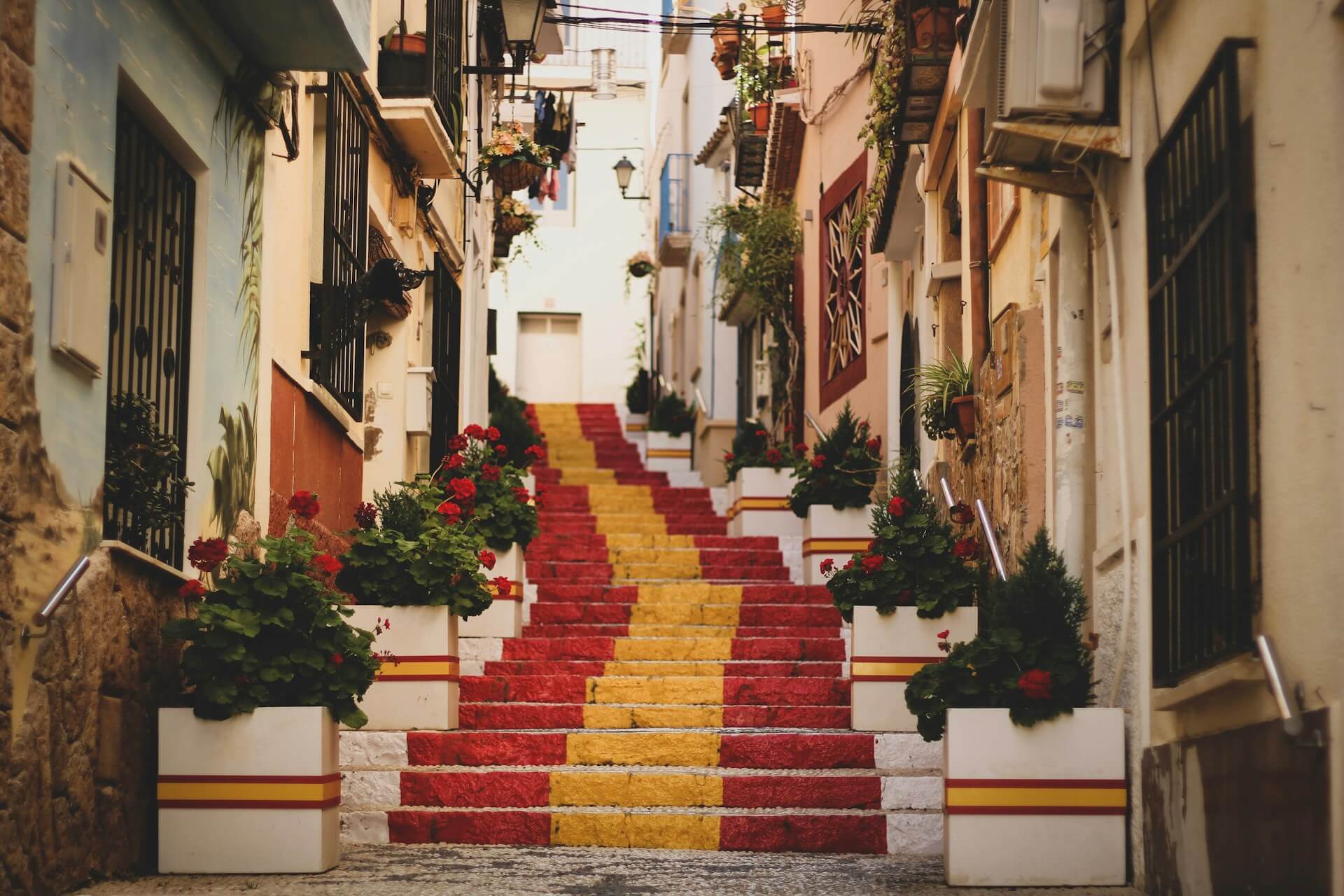
Barcelona Like a Local: Where the Real Spain Happens
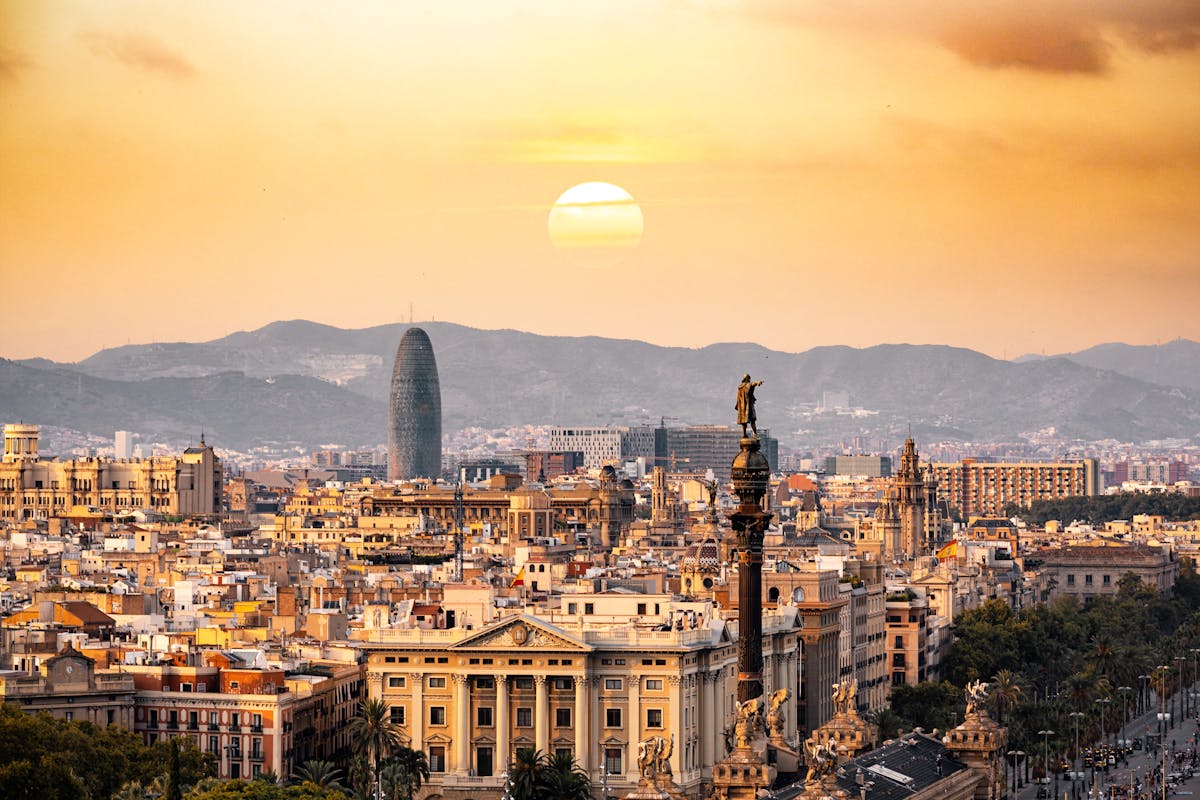
In This Article
- Beyond Tourist Barcelona
- The Barrios You Should Actually Visit
- Where Locals Actually Eat
- The Language Reality: Catalan, Castellano, and Everything Between
- Barcelona’s Daily Rhythm (And How to Match It)
- Hidden Cultural Gems the Guidebooks Skip
- Which Barcelona Neighbourhood Matches Your Vibe?
- Essential Barcelona Phrases
- Conclusion
Pack your bags. We’re going somewhere incredible.
But we’re not doing La Rambla. We’re not queuing for the Sagrada Família. And we’re definitely not eating paella on the beachfront for 25 euros.
The Barcelona that 30 million tourists see every year is real, but it’s a performance. The Barcelona that barceloneses (bar-theh-loh-NEH-sehs, Barcelona locals) actually live in is completely different. It’s endlessly more interesting. And it’s the best place in Spain to hear Spanish come alive in everyday conversation.
According to the Barcelona City Council’s statistics department, the city has 1.6 million residents across 73 distinct barrios (BAH-ree-ohs, neighbourhoods). Most tourists see exactly three of them. This guide covers the other seventy.
Beyond Tourist Barcelona: What Locals Want You to Know
Here’s the real talk. Barcelona residents have a complicated relationship with tourism. The city receives more visitors per year than it has residents. That creates tension. But here’s what most tourists miss: barceloneses are generous with people who show genuine interest in their culture and their language.
Show up to a neighbourhood bar in Gràcia. Order a vermut (ber-MOOT, vermouth) in Catalan or Castilian Spanish. Ask about the local festes (FES-tehs, festivals). You’ll discover a city that’s warm, passionate, and eager to share itself with anyone willing to look past the tourist facade.
According to the Spain Tourism Board, Barcelona is Spain’s most visited city, yet most visitors never venture beyond the same three-kilometre strip. If you’ve already explored Barcelona’s hidden spots, this guide goes deeper into the cultural fabric that makes each neighbourhood unique.
The Barrios You Should Actually Visit
Gràcia: The Village Inside the City
Gràcia (GRAH-thee-ah) was an independent town until 1897. Residents still act like it. It has its own identity, its own festivals, and a fierce independence that makes it feel nothing like the rest of Barcelona or any other city in Spain.
What you’ll find: Tiny plazas filled with locals drinking cañas (KAH-nyahs, small beers). Independent bookshops. Vintage clothing stores. Some of the best vermut bars in the city.
Don’t miss: Plaça del Sol in the evening. Grab a bench, buy a beer from one of the surrounding bars, and watch the neighbourhood come alive. This is sobremesa (soh-breh-MEH-sah) without the table.
Poble Sec: The Food Capital Nobody Talks About
Poble Sec (POH-bleh SEK) sits at the foot of Montjuïc. It has quietly become Barcelona’s most exciting food neighbourhood. Carrer Blai, its main street, is lined with pintxos (PEEN-chohs, small snacks on bread) bars where everything costs between one and three euros.
What you’ll find: Barcelona’s best value tapas. A genuinely multicultural neighbourhood. Some of the city’s most creative small restaurants.
Essential phrase: “¿Qué me recomiendas?” (keh meh reh-koh-mee-EN-dahs, What do you recommend?) Say this in any Poble Sec bar and you’ll eat better than you would in any tourist restaurant.
Sant Antoni: Barcelona’s Coolest Transformation
Sant Antoni (sahnt ahn-TOH-nee) has undergone a dramatic transformation. The reopening of the stunning Mercat de Sant Antoni in 2018 turned this formerly overlooked neighbourhood into one of the city’s most vibrant.
What you’ll find: The Sunday book market (one of Europe’s oldest, running since 1876). Craft coffee shops. A growing food scene that rivals Poble Sec.
El Born: Culture Without the Crowds
El Born (el BORN) has galleries, the Picasso Museum, and stunning medieval architecture. It also has narrow streets that shake off tour groups by mid-afternoon. That leaves the neighbourhood to locals and in-the-know visitors.
Don’t miss: The Born Cultural Centre, a former market building that now houses archaeological ruins from 1714 Barcelona. It’s a profound, beautiful space that most visitors walk right past.
Where Locals Actually Eat (And What to Order)
This is where the magic happens. Barcelona’s food scene is extraordinary, but you have to know where to look. Spanish cuisine changes from region to region, and Barcelona blends Catalan traditions with influences from across the Mediterranean.
Breakfast: Forget the hotel buffet. Locals eat at the bar (bar). Yes, the bar. Morning bars in Barcelona serve café con leche (kah-FEH kon LEH-cheh) and a bikini (bee-KEE-nee), which is Barcelona’s word for a ham and cheese toasted sandwich. In the rest of Spain, they call it a mixto (MEEKS-toh).
Lunch: Look for the menú del día (meh-NOO del DEE-ah, menu of the day). For 12-15 euros, you get a starter, main course, dessert, bread, and a drink. This is how locals eat during the workweek. It’s the best-value meal in European dining. If you want to understand the full rhythm of Spanish meals, our guide to Spanish daily habits explains why lunch is sacred.
Essential Barcelona foods:
- Pa amb tomàquet (pah ahm too-MAH-ket) – Bread rubbed with tomato and olive oil. Catalan, simple, and addictive.
- Bombas (BOM-bahs) – Potato croquettes with spicy sauce. Born in Barceloneta.
- Fideuà (fee-deh-WAH) – Like paella but with short pasta noodles instead of rice. Locals prefer it.
- Croquetas (kroh-KEH-tahs) – Creamy fried béchamel bites. Every bar has them. Judge a bar by its croquetas.
The Language Reality: Catalan, Castellano, and Everything Between
Forget what your textbook told you about Spanish in Spain being one uniform language. Barcelona is bilingual. Everyone speaks both castellano (kahs-teh-YAH-noh, Castilian Spanish) and català (kah-tah-LAH, Catalan). Street signs, menus, and official communication appear in both.
Catalan is not a dialect of Spanish. It’s a separate Romance language with its own grammar, vocabulary, and literary tradition. Around 10 million people speak it. When you arrive in Barcelona, you’ll notice that many signs, shop names, and menus are in Catalan first.
Key differences you’ll notice:
- “Thank you” is gràcies (GRAH-see-ehs) in Catalan vs. gracias (GRAH-thee-ahs) in Castilian
- “Good morning” is bon dia (bon DEE-ah) in Catalan vs. buenos días (BWEH-nohs DEE-ahs) in Castilian
- “Please” is si us plau (see oos PLOW) in Catalan vs. por favor (por fah-BOR) in Castilian
Practical advice: Start in Castilian Spanish. Everyone speaks it. But learning a few Catalan phrases shows respect and earns genuine warmth. Even a simple “Bon dia” when entering a shop creates a connection that “Buenos días” doesn’t. If you want to build your Spanish slang vocabulary, Barcelona is one of the best places to hear it in action.
Understanding this linguistic landscape is part of understanding Spain’s incredible regional diversity, something you can explore further in our guide to Hispanic culture traditions and values.
Barcelona’s Daily Rhythm (And How to Match It)
Barcelona operates on its own clock. Matching it makes everything better. Like the rest of Spain, the city follows a rhythm that surprises first-time visitors.
The daily rhythm:
- 8-9am: Coffee at the bar. Quick, standing up, social.
- 9am-1:30pm: Work and errands. Markets are busiest from 9-11am.
- 1:30-2pm: La comida (lunch). Everything slows down.
- 2-4pm: Lunch and rest. Many small shops close. Read more about the surprising truth behind Spain’s siesta tradition.
- 4-8pm: The afternoon. Shopping, errands, coffee. Energy returns.
- 8-9pm: El vermut (vermouth hour). Bars fill with pre-dinner drinkers.
- 9:30-10:30pm: Dinner. Yes, really this late.
- 11pm onwards: The night begins. Barcelona is famous for its nightlife for a reason.
Pro tip: Don’t eat dinner at 7pm. Restaurants will be empty. You’ll get tourist-mode food. Wait until 9:30pm, go where locals go, and experience the real Barcelona dining scene.
Hidden Cultural Gems the Guidebooks Skip
CCCB (Centre de Cultura Contemporània de Barcelona): While tourists crowd the MACBA across the square, the CCCB hosts Barcelona’s most thought-provoking exhibitions. Check what’s showing before you visit.
Bunkers del Carmel: The best view in Barcelona, and it’s free. Old Spanish Civil War anti-aircraft batteries sit on a hilltop with 360-degree views of the entire city. Locals bring wine and watch the sunset. It’s extraordinary.
Mercat de la Boqueria at the right time: Everyone knows La Boqueria market. But go at 7:30am, before the tourists arrive. Stand at the bar at the back (Pinotxo or El Quim) and eat breakfast with the market vendors. Completely different experience.
The beaches past Barceloneta: Skip Barceloneta beach. Walk fifteen minutes further to Platja del Bogatell or Platja de la Mar Bella. Cleaner, quieter, and where actual residents spend their summers.
Which Barcelona Neighbourhood Matches Your Vibe?
Answer these four questions to find your ideal barrio:
1. Your ideal evening involves:
A) A quiet plaza, a glass of wine, and a book
B) Bar-hopping with friends through narrow streets
C) A long dinner at a restaurant someone recommended
D) Live music and dancing until 2am
2. Your morning priority is:
A) Coffee and a pastry at a local bakery
B) Exploring a market and buying fresh ingredients
C) A run along the waterfront
D) Sleeping in (you were out until 4am)
3. You value most in a neighbourhood:
A) Character and independence
B) Food scene and value
C) Architecture and culture
D) Energy and nightlife
4. Your Spanish level is:
A) I want to practise with patient locals
B) I’m comfortable ordering and chatting
C) I’m here to absorb culture, language will follow
D) I communicate with enthusiasm and gestures
Results:
Mostly A’s: Gràcia is your barrio. Independent, cosy, community-focused.
Mostly B’s: Poble Sec or Sant Antoni. Food-driven, excellent value, local energy.
Mostly C’s: El Born. Cultural depth, architectural beauty, refined dining.
Mostly D’s: El Raval or Eixample. Diverse, vibrant, and always awake.
Essential Barcelona Phrases
Before you go, arm yourself with these. They work in both Castilian Spanish and include the Catalan equivalents for bonus points.
| Situation | Castilian | Catalan |
|---|---|---|
| Entering a shop | Buenos días | Bon dia |
| Ordering a beer | Una caña, por favor | Una canya, si us plau |
| Asking for the bill | La cuenta, por favor | El compte, si us plau |
| Thanking someone | Gracias | Gràcies |
| Saying goodbye | ¡Hasta luego! | Adéu! |
Conclusion
Tourist Barcelona is beautiful. Local Barcelona is transformative. The difference is where you go, when you go, and how willing you are to step beyond the guidebook.
Gràcia’s independent spirit, Poble Sec’s incredible food scene, the bilingual reality of Catalan and Castilian, the late-night dining rhythm that makes evenings feel endless: this is the Barcelona that barceloneses actually love. And it’s waiting for anyone curious enough to explore beyond La Rambla.
Whether you’re visiting for a weekend or moving for a year, approach Barcelona with openness, a few key phrases, and a willingness to eat dinner after 9pm. This corner of Spain will reward you for it.
Now you’re ready to explore. Go use these phrases and have an incredible experience.
]]>Share
Topics

audazrevista
You may also like


Get the Inside Scoop