The 7 Spanish Words You Need in Barcelona That Nobody Uses in Madrid
By Camila Rossi, Culture writer, Buenos Aires & Barcelona
Updated July 2, 2026 · Reviewed by our team
Barcelona Spanish sounds different from Madrid Spanish because Catalan shapes how locals speak. Seven words you will hear constantly in Barcelona, and almost never in Madrid, are plegar (to finish work), nen/nena (mate), hacer el vermut (the pre-lunch social ritual), putting el or la before people’s names, swapping venir for ir, rachola (tile), and faena (a job or task).
- Barcelona’s Spanish borrows heavily from Catalan. These 7 words and patterns are used every single day.
- Madrid speakers won’t use most of these. If you only learn textbook Spanish, Barcelona conversations will confuse you.
- You don’t need to speak Catalan to visit Barcelona. But knowing these 7 terms makes you sound like you’ve been there before.
- Each word includes what a Madrid speaker would say instead, so you can compare.
Why does Barcelona Spanish sound so different from Madrid?
Barcelona is bilingual. According to Idescat’s 2024 language survey, about 5.4 million people in Catalonia speak Catalan alongside Spanish. That is roughly 81% of the population over age 15. When those speakers switch to Spanish, Catalan grammar, vocabulary and rhythm come with them. The result is a version of Spanish that sounds perfectly natural in Barcelona and slightly alien in Madrid.
These are not mistakes. According to the Cervantes Institute’s catalogue of Hispanic voices, Barcelona Spanish has its own distinct phonetic and lexical profile shaped by centuries of contact with Catalan. Learning these features helps you understand locals and shows you have paid attention to more than the guidebook basics.
If you are curious about how Spanish changes across the whole country, our guide to Spain’s regional dialects maps out the full picture.
1. Plegar: “I’m done for the day”
In Barcelona, people pliegan when they finish work. “Ya pliego a las cinco” means “I knock off at five.” In standard Spanish, plegar means to fold something, like a sheet or a map. Barcelona borrowed the Catalan meaning: to stop, to close up, to call it a day. The Catalan language has about 10 million speakers across Catalonia, Valencia, the Balearic Islands and parts of southern France, and this kind of vocabulary bleed is common wherever Catalan and Spanish share a street.
In Madrid, you would say salir del trabajo or terminar de trabajar. If you tell someone in Madrid that you pliegas at five, they will picture you folding laundry.
Try it: “¿A qué hora pliegas hoy?” (What time do you finish work today?) You will hear this in every office, shop and bar in Barcelona.
2. Nen / Nena: Barcelona’s answer to “tío”
Madrid calls everyone tío and tía (literally uncle and aunt, used like “dude” or “mate”). Barcelona uses nen and nena instead. These come straight from Catalan, where they mean “boy” and “girl,” but in Barcelona Spanish they work as a warm, casual way to address anyone: friends, colleagues, even the person ahead of you in the queue.
“Oye, nen, ¿vienes o qué?” (Hey, mate, are you coming or what?) sounds completely natural in Barcelona. In Madrid, they would say the same sentence but with tío in place of nen.
3. Hacer el vermut: the ritual Madrid doesn’t have
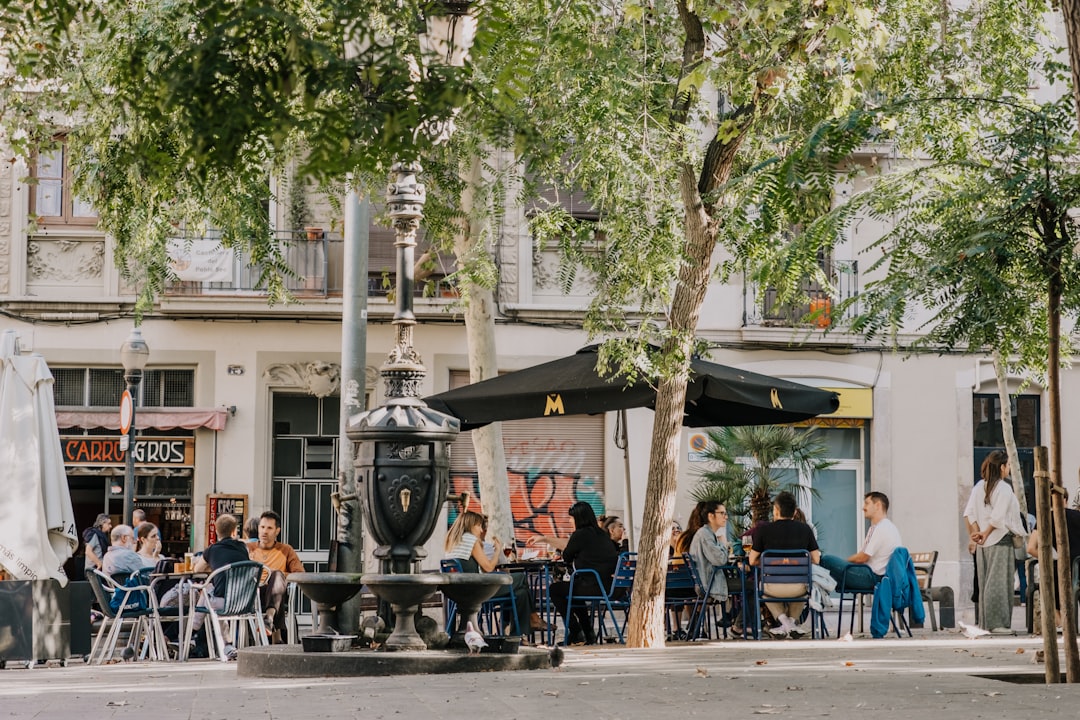
Around midday on a weekend, Barcelona empties its flats and fills its terraces for el vermut. “Hacer el vermut” means to go out for a glass of vermouth, some olives and a few patatas bravas before lunch. It is a social ritual, not just a drink order. You go with friends. You sit in the sun. You take your time.
Madrid has its own pre-lunch tradition, ir de cañas (going for small beers), but nobody there calls it “hacer el vermut.” The phrase is so tied to Barcelona and Catalan culture that vermouth bars have become a defining feature of the city’s food scene. If someone invites you to hacer el vermut, say yes. It is one of the best ways to spend a Saturday morning in Barcelona.
Hungry already? Our 20 Spanish food terms guide gives you the vocabulary for the table.
4. El Jordi, la María: why Barcelona puts articles before names
In Barcelona, people say “el Jordi dice que no puede venir” (the Jordi says he can’t come) or “la María ya ha llegado” (the María has arrived). They put the definite article (el or la) before people’s first names, the way you might say “the Dave” in English if that were normal.
In Madrid, this sounds wrong. Standard Spanish grammar does not put articles before names. But Catalan grammar does it as a standard rule, and Barcelona speakers carry the habit straight into their Spanish. Linguists call these transfers catalanismos: Catalan structures that surface when bilingual speakers use Spanish. Once you notice this one, you will hear it everywhere.
You do not need to copy this pattern to be understood. But when you hear “la Sandra” instead of just “Sandra,” you now know you are hearing Barcelona Spanish, shaped by Catalan grammar underneath.
5. Venir instead of ir: the directional swap that confuses everyone
This one trips up even fluent Spanish speakers from other regions. In Barcelona, people sometimes say “mañana vengo a tu casa” (tomorrow I’m coming to your house) when they mean “I’m going to your house.” They swap venir (to come) and ir (to go).
The reason is Catalan. In Catalan, the verbs venir and anar (to go) work differently from Spanish. The direction of travel is described from the listener’s perspective, not the speaker’s. When that logic bleeds into Spanish, the result is a venir where Madrid would always use ir.
If someone in Barcelona tells you “ya vengo” and then walks away from you, they are not confused. They are speaking Barcelona Spanish.
6. Rachola: the word you’ll hear if you rent a flat
Looking for an apartment in Barcelona? You will hear rachola sooner or later. It means tile, from the Catalan word rajola. In Madrid, the word is baldosa.
You will hear it from landlords showing you a flat, from builders doing renovations, and from neighbours complaining about the noise upstairs. It belongs to a whole set of construction and household words that Barcelona borrows from Catalan: paleta (bricklayer, vs albañil in Madrid) and lampista (plumber/handyman, vs fontanero) are two more.
7. Faena: Barcelona’s word for work
In Barcelona, faena means work or a task. “Tengo mucha faena” means “I’ve got a lot of work to do.” The word comes from Catalan feina, which is the everyday word for work.
In Madrid, faena exists but it means something slightly different: a tricky task, a nasty piece of work, or the matador’s performance with the cape in a bullfight. If you tell someone in Madrid “tengo mucha faena,” they might think you are being dramatic. In Barcelona, it is as neutral as saying “I’ve got stuff to do.”
This one catches people out because the word is technically the same. The difference is how casually Barcelona uses it compared to the rest of Spain.
Barcelona vs Madrid: a quick comparison
| Barcelona says | Madrid says | English meaning |
|---|---|---|
| Plegar | Salir del trabajo | To finish work |
| Nen / Nena | Tío / Tía | Mate / Dude |
| Hacer el vermut | Ir de cañas | Pre-lunch social drinks |
| El Jordi, la María | Jordi, María | Using articles before names |
| Vengo a tu casa | Voy a tu casa | I’m going to your house |
| Rachola | Baldosa | Floor tile |
| Faena | Trabajo / Tarea | Work / Task |
Do I need to learn Catalan before visiting Barcelona?
No. Everyone in Barcelona speaks Spanish, and you will be understood perfectly in standard Castilian. But these seven words and patterns will appear in conversation around you constantly. Recognising them means you won’t be caught off guard when the Spanish you hear doesn’t match the Spanish you learned.
A few Catalan basics do help too. Saying bon dia (good morning), gràcies (thank you) or adéu (goodbye) in Catalan earns you a warmer welcome than sticking strictly to Spanish. Locals notice, and they appreciate it. If you are visiting for a festival, our San Fermín guide and guide to saying excuse me in Spain cover more of the phrases that help in real situations.
For more words that make you sound like a local across all of Spain, see our 8 slang words that make your Spanish sound native.
Frequently asked questions
Spending time in the capital first? our language lover’s guide to Madrid maps 9 spots, from free intercambios to a 3 euro cinema, where you can practise before you compare the two cities.
What language do they speak in Barcelona?+
Barcelona is bilingual. People speak both Spanish (Castilian) and Catalan. Everyone understands Spanish, and most conversations can happen in either language. Signs, menus and official documents appear in both.
Is Barcelona Spanish different from Madrid Spanish?+
Yes. Barcelona Spanish is influenced by Catalan grammar and vocabulary. Locals use Catalan-origin words like plegar (to finish work), nen/nena (mate), and rachola (tile) that people in Madrid would not use. The accent is also different: softer, slightly slower, with Catalan pronunciation habits underneath.
Will people in Barcelona understand my textbook Spanish?+
Completely. Standard Spanish works everywhere in Barcelona. These seven words are things you will hear locals say, not things you need to produce. Knowing them helps you understand, but you can speak standard Spanish and be perfectly understood.
Should I learn Catalan or Spanish for a trip to Barcelona?+
Learn Spanish first. It is useful across all of Spain and Latin America. Then learn a few Catalan greetings (bon dia, gracies, adeu) as a courtesy. Locals appreciate the effort and it shows respect for the culture.
Are these Barcelona words considered slang or proper Spanish?+
Most are Catalan loanwords that have become standard in Barcelona’s version of Spanish. They are not slang in the traditional sense. They are regional vocabulary, used by all ages and social classes. A professor and a taxi driver in Barcelona both say plegar and nen.
Vocab from this article · tap to review
Audaz Interactive is coming: whole magazine issues you can read like this. Join the list to get Issue 2 first.
Planning a trip to Barcelona, or just curious about how Spanish actually sounds on the ground? Subscribe to Audaz for practical language guides, cultural deep-dives and no-textbook-energy grammar help, straight to your inbox.
Camila Rossi
Culture writer, Buenos Aires & Barcelona
Camila Rossi is a writer based between Buenos Aires and Barcelona who covers the everyday culture of the Spanish-speaking world: its rituals, its food, and its unwritten social codes. She grew up sharing mate at her grandmother’s table, and writes about the customs that guidebooks tend to skip.
Share
Topics

audazrevista
You may also like



Get the Inside Scoop