Learn 20 Spanish Food Terms in 10 Minutes (The Fun Way)
Why Spanish Food Words Matter More Than You Think
Forget what your textbook told you. The fastest way to sound natural in Spain isn’t mastering the subjunctive. It’s knowing what to say when someone slides a plate in front of you.
Spanish food words are everywhere. Markets, restaurants, street stalls, family kitchens. Learn these twenty terms and you’ll unlock real conversations in seconds. That’s not an exaggeration.
We’ve grouped them into four sections so you can absorb them fast. Ready? Your Spanish is about to level up.
At the Market: 5 Words That Open Doors
Spanish markets are loud, colourful, and absolutely worth visiting. But they’re also where most learners freeze up. These five words will get you moving with confidence.
1. Mercado (mer-KAH-doh) – Market
Mercado is your starting point. Tell a local “voy al mercado” (I’m going to the market) and watch their face light up. Markets are sacred in Spain. Knowing the word shows you’re taking the culture seriously.
Real-world tip: Ask “¿dónde está el mercado?” (WHERE es-TAH el mer-KAH-doh, where is the market?) and any local will happily point the way.
2. Verduras (ver-DOO-rahs) – Vegetables
Verduras covers your market staples. Tomatoes, peppers, courgettes. Point at what you want and say “¿cuánto cuestan las verduras?” (how much are the vegetables?). Simple and effective.
Real-world tip: Vendors love it when you try. Even a wobbly pronunciation gets a warm smile.
3. Aceite (ah-SAY-tay) – Olive Oil
Spain produces more olive oil than any other country on earth. Aceite is everywhere. Drizzled on bread, poured over salads, used in almost every dish. You’ll see it at every market stall and every dining table.
Real-world tip: Saying “aceite de oliva” (ah-SAY-tay day oh-LEE-vah, olive oil) at a market stall signals you know what you’re looking for.
4. Jamón (hah-MON) – Cured Ham
This is where the magic happens. Jamón is Spain’s most beloved food. You’ll see whole legs hanging in every market and bar. There are two main types: jamón serrano (mountain ham) and the prized jamón ibérico (from black-footed Iberian pigs).
Real-world tip: If someone offers you a slice, say “con mucho gusto” (with great pleasure). You’ll make a friend instantly.
5. Queso (KAY-soh) – Cheese
Spain has over 150 regional cheeses. Queso is the umbrella word. At markets you’ll spot manchego (from La Mancha), tetilla (from Galicia), and cabrales (a powerful blue from Asturias). Ask to try before you buy. That’s completely normal.
Real-world tip: “¿Puedo probar?” (PWEH-doh proh-BAR, may I try?) is one of the most useful phrases you’ll ever learn.
Want to go deeper on market and restaurant vocabulary? Check out 15 Food Terms That Make Your Spanish Sound Native for more terms that actually get used in everyday conversation.
At the Restaurant: 6 Words Every Diner Needs
Ordering in a Spanish restaurant without the right vocabulary is stressful. With it, it’s one of the best experiences you’ll have. These six words change everything.
6. Carta (KAR-tah) – Menu
Don’t ask for the “menú” if you want the full menu. In Spain, “menú” usually means the fixed-price lunch deal. Carta is what you want when you’re choosing freely. Say “¿me trae la carta?” (may I have the menu?) and you’re sorted.
Real-world tip: The menú del día (daily set menu) is usually incredible value at lunch. Two or three courses for a fixed price. Don’t skip it.
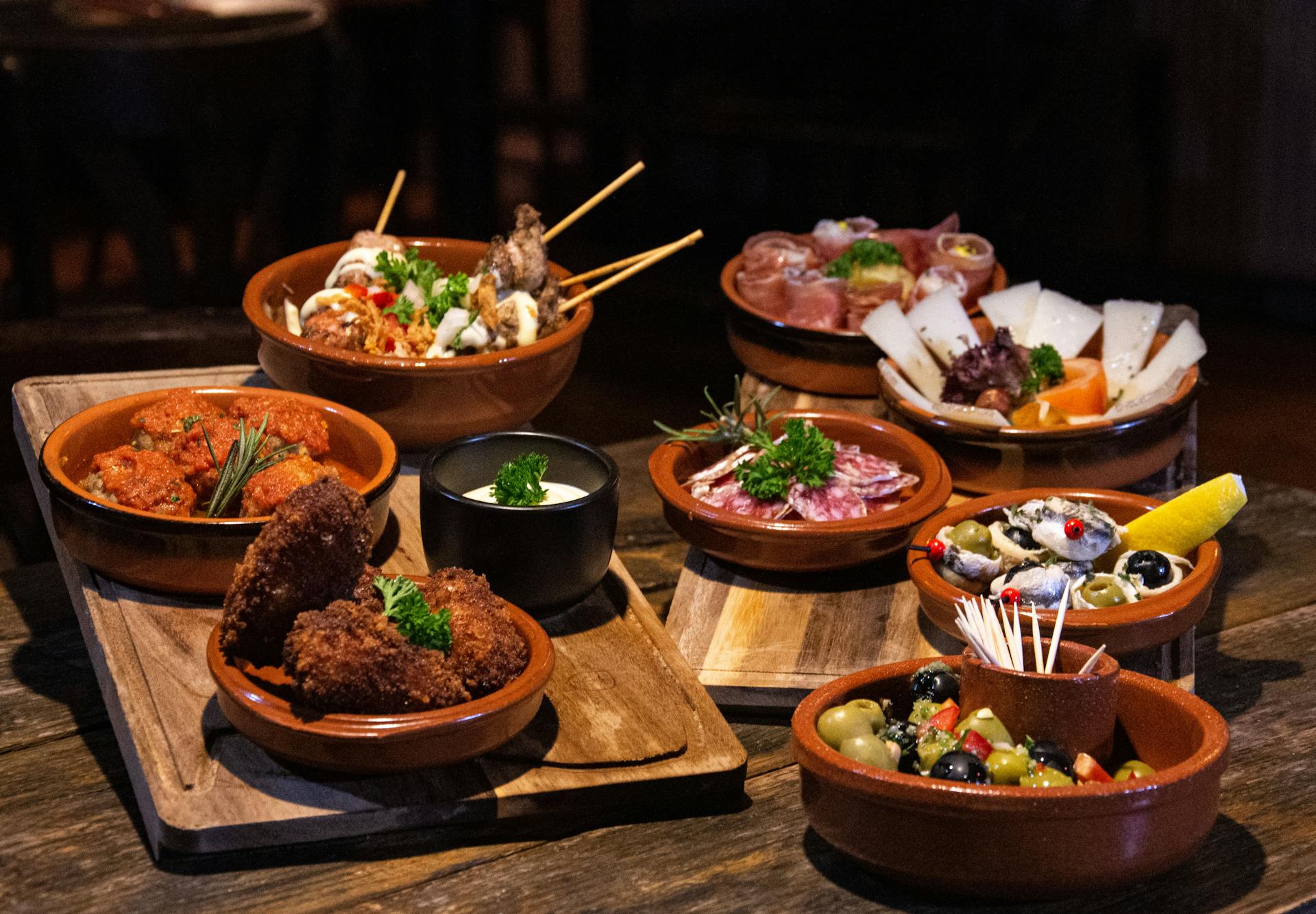
7. Tapas (TAH-pahs) – Small Dishes
Tapas isn’t just a word, it’s a whole social ritual. Small plates shared between friends. The origin is genuinely debated, but one popular story says bartenders used to cover (tapar) drinks with bread to keep out flies. The cover became food. The tradition stuck.
Real-world tip: In some regions, especially Andalusia, tapas are free with your drink. In others, you pay. Always worth asking.
8. Raciones (rah-SYOH-nes) – Large Shared Plates
Bigger than tapas, raciones are full portions meant for sharing. Think calamares (squid), patatas bravas (crispy potatoes with sauce), or croquetas (croquettes). Order a few for the table and share. This is how Spaniards actually eat with friends.
Real-world tip: Ordering “una ración de…” (a portion of…) shows you understand the rhythm of a Spanish meal.
9. La Cuenta (la KWEN-tah) – The Bill
Catching your waiter’s eye and asking for la cuenta is a skill in itself. Spanish dining is relaxed. Nobody rushes you out. But when you’re ready, just say “¿nos trae la cuenta, por favor?” and you’re done like a pro.
Real-world tip: Splitting bills is called “a escote” (ah es-KOH-tay). Useful for group dinners.
10. Sobremesa (sob-reh-MAY-sah) – Post-Meal Conversation
This is one of those Spanish concepts that doesn’t exist in English. Sobremesa is the time spent talking and relaxing after a meal, before anyone gets up from the table. It can last an hour. Sometimes two. It’s considered rude to rush it.
Real-world tip: If you’re invited to a Spanish home for lunch, plan to stay. The sobremesa is part of the invitation.
11. Mariscos (mah-REES-kohs) – Seafood
Mariscos covers shellfish and seafood broadly. Spain has a long coastline and an obsession with fresh seafood. Gambas (prawns), almejas (clams), mejillones (mussels), these all fall under mariscos on a menu.
Real-world tip: A marisquería (mah-rees-keh-REE-ah) is a seafood restaurant. Find one near the coast and you will not be disappointed.
Want to know exactly what to say when the waiter comes over? Read our guide on 7 Spanish Food Terms That Make You Sound Like a Native at Any Restaurant. It walks you through the whole ordering experience step by step.
Street Food: 5 Words for Eating on the Go
Spain’s street food scene is underrated. From churros at dawn to bocadillos on the go, these five words will fuel your adventures between sights.
12. Churros (CHOO-rohs) – Fried Dough Sticks
Churros need no introduction, but the Spanish experience deserves one. Fresh, hot, and served with thick hot chocolate for dipping. This is breakfast culture in its purest form. Forget what you’ve had at a theme park. The real thing is on another level.
Real-world tip: Find a churrería (choo-reh-REE-ah) early in the morning. The queue tells you everything you need to know about quality.
13. Bocadillo (boh-kah-DEE-yoh) – Baguette Sandwich
The bocadillo is Spain’s lunchtime staple. A crusty baguette filled with whatever you like. Jamón, tortilla, tuna, cheese. Simple, filling, and incredibly good when made fresh.
Real-world tip: Order “un bocadillo de jamón” and you’ve got lunch sorted for under three euros in most places.
14. Tortilla (tor-TEE-yah) – Spanish Omelette
Stop right there. Spanish tortilla is NOT a flatbread. It’s a thick, round omelette made with eggs and potato. Sometimes onion, sometimes not (this is a genuine debate that divides families). It’s served hot or cold, at any time of day.
Real-world tip: Ordering a tortilla in a bar? It’ll come in a thick slice. Eat it cold the next morning and it’s even better. This is not a drill.
15. Pinchos (PEEN-chohs) – Bread-Based Snacks
Popular in the Basque Country, pinchos (also spelled pintxos) are bite-sized snacks served on bread, often skewered with a toothpick. Think of them as the northern version of tapas, but often more elaborate. Whole bars dedicate their menus to pinchos alone.
Real-world tip: In San Sebastián, the pincho culture is so serious it’s been called a world-class culinary experience. Go hungry.
16. Gazpacho (gath-PAH-choh) – Cold Tomato Soup
Gazpacho is summer in a bowl. A chilled, blended soup of tomatoes, cucumber, peppers, garlic, and olive oil. It originated in Andalusia, where summers are brutal and cold food is survival. Now it’s on menus across Spain year-round.
Real-world tip: Don’t be surprised if it arrives in a glass. Drinking your gazpacho is perfectly acceptable. Encouraged, even.
These words are just the start. Spanish has hundreds of food expressions that textbooks skip entirely. Our guide to 15 Spanish Slang Words Native Speakers Love includes some you’ll hear every day around food and drink.
Desserts and Drinks: 4 Words to Finish Strong
The Spanish don’t rush dessert or coffee. These four words will help you slow down, soak it in, and end every meal like a local.
17. Flan (flan) – Caramel Custard
Flan is on almost every Spanish dessert menu. It’s a silky, baked custard with caramel sauce on top. Simple, classic, and genuinely delicious when made properly. Don’t skip it because it sounds plain. Try it once and you’ll understand.
Real-world tip: “Flan casero” means homemade flan. Always order this over the packaged version if you spot it.
18. Horchata (or-CHAH-tah) – Tiger Nut Drink
Horchata in Spain is very different from the Mexican version. The Spanish kind is made from tiger nuts (chufas, CHOO-fahs) and is a creamy, slightly sweet cold drink. It’s the signature drink of Valencia and tastes like nothing else you’ve had.
Real-world tip: Order a horchata with a farton (FAR-ton, a soft pastry for dipping). This is the Valencia way and it’s magnificent.
19. Café con Leche (kah-FAY kon LAY-chay) – Coffee with Milk
Spanish coffee culture is serious. Café con leche is half espresso, half hot milk. It’s the most common morning order and it’s perfect every time. Don’t order a latte. Don’t ask for oat milk at a traditional bar (save that for the cities). Just ask for a café con leche and enjoy it properly.
Real-world tip: In Spain, coffee comes after dessert, not with it. Ordering coffee too early at a restaurant signals you’re in a rush. Relax.
20. Sobao (soh-BAH-oh) – Butter Sponge Cake
Less famous than churros but equally beloved in the north, sobao is a rich, buttery sponge cake from Cantabria. You’ll find them in bakeries and cafes throughout northern Spain. Soft, slightly sweet, and perfect with coffee.
Real-world tip: Pick up a box at the local bakery to take home. Sobaos travel well and make excellent gifts. Your family will thank you.
How to Actually Remember These Words
Reading a list is one thing. Using these words is another. Here’s how to lock them in fast.
Say them out loud right now. Seriously, try a few pronunciations as you read. Your brain retains words better when your mouth is involved. This is backed by cognitive science research on active recall and multi-sensory learning.
Group them by meal. Market words for morning. Restaurant words for lunch. Street food for the afternoon. Desserts and drinks for the evening. Build a mental day-trip through Spain.
Use them in a sentence today. You don’t need a native speaker nearby. Talk to yourself in the kitchen. Name the foods you’re cooking. Point at things and say the Spanish word. It sounds silly. It works brilliantly.
If you’re building a broader vocabulary base, our guide to the 500 Most Common Spanish Words pairs perfectly with this one. Food words are more common in everyday Spanish than most learners realise.
And if you’re just getting started with conversational Spanish, bookmark our list of 100+ Common Spanish Phrases for Beginners. It’s one of the most practical resources on the site.
Your 20 Spanish Food Words: Quick Reference
| Spanish Word | Pronunciation | English Meaning | Section |
|---|---|---|---|
| Mercado | mer-KAH-doh | Market | At the Market |
| Verduras | ver-DOO-rahs | Vegetables | At the Market |
| Aceite | ah-SAY-tay | Olive Oil | At the Market |
| Jamón | hah-MON | Cured Ham | At the Market |
| Queso | KAY-soh | Cheese | At the Market |
| Carta | KAR-tah | Menu | At the Restaurant |
| Tapas | TAH-pahs | Small Dishes | At the Restaurant |
| Raciones | rah-SYOH-nes | Large Shared Plates | At the Restaurant |
| La Cuenta | la KWEN-tah | The Bill | At the Restaurant |
| Sobremesa | sob-reh-MAY-sah | Post-Meal Conversation | At the Restaurant |
| Mariscos | mah-REES-kohs | Seafood | At the Restaurant |
| Churros | CHOO-rohs | Fried Dough Sticks | Street Food |
| Bocadillo | boh-kah-DEE-yoh | Baguette Sandwich | Street Food |
| Tortilla | tor-TEE-yah | Spanish Omelette | Street Food |
| Pinchos | PEEN-chohs | Bread-Based Snacks | Street Food |
| Gazpacho | gath-PAH-choh | Cold Tomato Soup | Street Food |
| Flan | flan | Caramel Custard | Desserts & Drinks |
| Horchata | or-CHAH-tah | Tiger Nut Drink | Desserts & Drinks |
| Café con Leche | kah-FAY kon LAY-chay | Coffee with Milk | Desserts & Drinks |
| Sobao | soh-BAH-oh | Butter Sponge Cake | Desserts & Drinks |
Try this phrase today. You’ve got this.
Pick one word from each section. Use them in a sentence. Say them out loud over the next four days. By the weekend, they’ll feel natural. That’s how this works.
Ready for the next level? Read this: 15 Food Terms That Make Your Spanish Sound Native.
Sources: Spain is the world’s largest olive oil producer, accounting for over 44% of global production (International Olive Council, 2023). Research published in the Journal of Cognitive Psychology (2019) by Kornell and Bjork confirms that active recall through verbal repetition significantly improves vocabulary retention compared to passive reading alone.
Related: Curious what Spaniards actually order in the morning? See our guide to the real Spanish breakfast and what locals eat.
Share
Topics

audazrevista

You may also like

Get the Inside Scoop