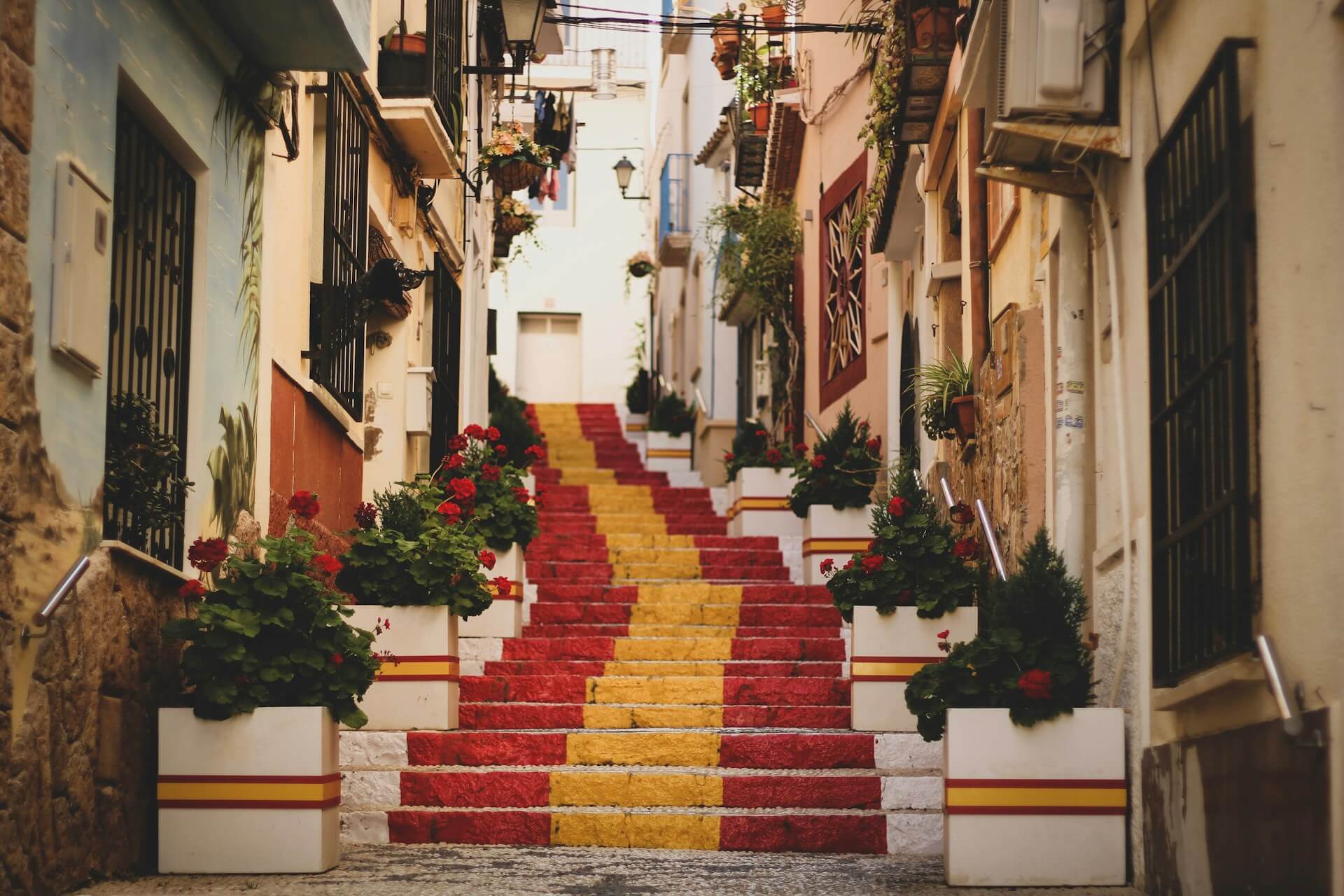
Skip the Tourist Traps in Girona. Do This Instead.
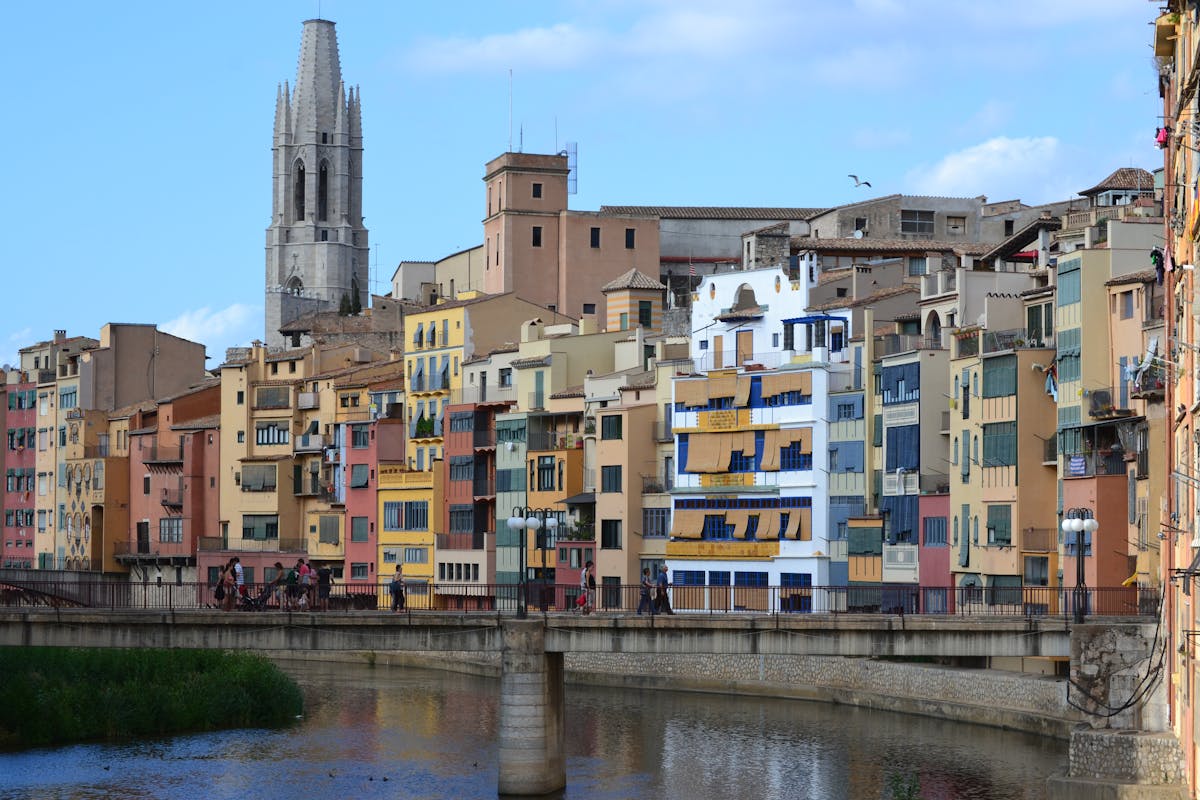
Forget what your textbook told you about Girona. Most travel guides will send you straight to the cathedral steps, tell you to snap a selfie on the Eiffel Bridge, and call it a day. That’s not Girona. That’s the postcard version, and you deserve so much more.
The real Girona? It’s the one hiding behind those tourist hotspots. It’s the callejones (kah-yeh-HOH-ness, narrow alleyways) where locals share vermut (ver-MOOT, vermouth) on Sunday mornings. It’s the riverside bars where nobody speaks English and nobody cares. This is where the magic happens.
Girona is one of Spain’s most underrated cities. While Barcelona gets all the attention just ninety minutes south, this medieval gem quietly serves up better food, fewer crowds, and an authenticity that bigger cities lost years ago. If you’re hunting for girona spain hidden gems, you’ve come to the right place.
What’s Inside
Tourist Traps to Skip (and Why)
Let’s get something straight. Girona’s famous sights aren’t bad. They’re just… incomplete. Stopping at the obvious spots is like reading the first chapter of a book and saying you finished it. Here’s what to rethink.
The Cathedral Steps Photo Op
Yes, the Girona Cathedral is stunning. Yes, the ninety steps make for a dramatic photo. But here’s the real talk: every single tourist does this. You’ll spend twenty minutes waiting for a clear shot while dodging selfie sticks. The cathedral itself charges admission, and most visitors never even go inside. They just snap the exterior and leave.
The cathedral has the widest Gothic nave in the world at 22 metres. That’s a fact worth experiencing from the inside, not just photographing from the outside. But even better? Skip the main entrance queue entirely. We’ll tell you how in the next section.
The Eiffel Bridge (Pont de les Peixateries Velles)
Designed by Gustave Eiffel’s company before the famous tower, this red iron bridge is Girona’s most photographed spot. It’s genuinely beautiful. But the bridge itself takes about thirty seconds to cross, and the best views of the colourful houses along the Onyar River are actually from other bridges nearby. The Pont de Pedra (PONT deh PEH-drah, Stone Bridge) gives you a wider, more dramatic panorama without the crowds.
The Jewish Quarter “Guided Tour” Circuit
Girona’s Call Jueu (KAH-yeh HOO-eh-oo, Jewish Quarter) is genuinely one of Europe’s best-preserved medieval Jewish neighbourhoods. But the standard guided tour circuit rushes you through in forty-five minutes, hitting the same three streets every group visits. You’ll learn more and feel more by wandering alone. Bring a good pair of walking shoes instead of a tour booking.
Rambla de la Llibertat Shopping
This tree-lined boulevard is lovely for a stroll, but the shops are mostly tourist-oriented. Overpriced souvenirs, generic Spanish fans, and “I Love Girona” magnets. The real shopping happens elsewhere, and we’re about to show you where.
What to Do Instead: Authentic Girona Experiences
Pack your bags for the real Girona. These are the girona spain hidden gems that locals actually love, and tourists consistently miss.
Walk the City Walls (Passeig de la Muralla)
This is Girona’s best-kept secret in plain sight. The Passeig de la Muralla (pah-SAY deh lah moo-RAH-yah, Wall Walk) is a restored section of the city’s medieval fortifications. You can walk along the top of the ancient walls for free, getting 360-degree views of terracotta rooftops, the Pyrenees in the distance, and the cathedral from angles you’ll never find on Instagram.
Start near the Jardins de la Francesa and walk south. The entire route takes about forty-five minutes. Early morning is best. You’ll share the walls with joggers and the occasional cat, not tour groups.
Get Lost in the Barri Vell Back Streets
The Barri Vell (BAH-ree VEY, Old Quarter) is far bigger than most tourists realise. Beyond the main tourist streets, there’s a maze of carrerons (kah-reh-RONS, tiny lanes) where medieval stone walls press close enough to touch both sides. You’ll find hidden courtyards with lemon trees, small art galleries, and doors that haven’t changed in five hundred years.
No map needed. Seriously. Getting lost is the point. Every wrong turn leads somewhere beautiful. If you want to discover hidden spots like a local, this is exactly how you start.
The Sant Pere de Galligants Monastery
While everyone queues for the cathedral, this Romanesque Benedictine monastery sits nearly empty. It houses Girona’s archaeology museum and its cloister is one of the most peaceful spots in the entire city. The carved stone capitals date from the 12th century, and you can study them without a single person blocking your view.
Sunday Morning Vermut Culture
Here’s the real talk. If you want to experience Girona like a local, show up to Plaça de la Independència on a Sunday morning. Locals gather for l’hora del vermut (LOR-ah del ver-MOOT, vermouth hour), a pre-lunch ritual of vermouth, olives, and endless conversation. It’s not a tourist event. It’s just life. Pull up a chair at any bar with outdoor seating and order a vermut. You’ve just become a temporary local.
This tradition happens across Spain, and understanding daily life and social customs in Spain will transform your entire trip.
Cross the River to Mercadal
Most tourists stay on the east bank (the old town side). Cross any bridge to the Mercadal neighbourhood and you’ll find the Girona that residents actually use. Independent bookshops, local bakeries, vintage stores, and the Saturday market where farmers sell produce you won’t find in any supermarket. This is where real life happens.
The Local Food Scene + Spanish Food Vocabulary
Girona punches absurdly above its weight when it comes to food. The province of Girona holds multiple Michelin stars, but you don’t need a fancy reservation to eat incredibly well here. Your Spanish is about to level up with these essential food words.
Must-Try Local Dishes
Xuixo (SHOO-shoh): Girona’s signature pastry. A fried, sugar-coated roll filled with crema catalana (Catalan custard). You’ll find them in every bakery, but the best ones come from the small shops on Carrer de la Força. Order one with your morning café amb llet (kah-FEH ahm YET, coffee with milk) and you’ll understand why locals are obsessed.
Botifarra (boh-tee-FAH-rah): A traditional Catalan sausage that’s nothing like what you’re imagining. Fresh, herbed, and usually grilled over open flame. Ask for it amb mongetes (mohn-HEH-tess, with white beans) for the classic pairing.
Escalivada (ess-kah-lee-VAH-dah): Roasted vegetables, typically aubergine and red peppers, drizzled with olive oil. Simple, smoky, perfect. It’s a staple of Catalan cuisine and a word worth memorising.
Where the Locals Actually Eat
Skip any restaurant on the Rambla. Instead, head to these spots:
- Rocambolesc: Ice cream shop by the Roca brothers (of El Celler de Can Roca, ranked among the world’s best restaurants). Affordable, creative, and absolutely delicious.
- La Fabrica: A cycling-themed café popular with local cyclists and remote workers. Amazing coffee and healthy bocadillos (boh-kah-DEE-yoss, sandwiches).
- Any bar on Plaça de Sant Feliu: This tiny square behind the church has three bars that serve some of the best tapas (TAH-pahs, small shared dishes) in town. No menus in English. Perfect.
If you’re exploring more of Spain’s food culture, don’t miss our guide to experiencing Barcelona like a local. The food scenes of both cities share Catalan roots but have surprisingly different personalities.
Essential Girona Slang and Phrases
Forget what your textbook told you. Girona sits in Catalonia, which means you’ll hear both Castilian Spanish and Catalan. Knowing a few Catalan phrases will instantly earn you respect. And if you want to really learn spanish slang words that natives use, start right here.
Catalan Basics for Girona
- Bon dia (bon DEE-ah): Good morning. Use this instead of “buenos días” and watch faces light up.
- Merci (mur-SEE): Thank you. Yes, it sounds French, but it’s everyday Catalan.
- Si us plau (see oos PLOW): Please. The magic word that makes everything smoother.
- Adéu (ah-DAY-oo): Goodbye. Casual, friendly, and appreciated.
Street Spanish You’ll Actually Hear
- Tío/Tía (TEE-oh / TEE-ah): Literally “uncle/aunt,” but used like “dude” or “mate.” You’ll hear this constantly.
- Mola (MOH-lah): “That’s cool.” Perfect for when someone recommends a restaurant or shows you a hidden viewpoint.
- Guiri (GHEE-ree): Slang for tourist or foreigner. It’s not rude exactly, but you’d rather not be one. Follow this guide and you won’t be.
- Quedamos (keh-DAH-moss): “Let’s meet up.” If a local says this to you, congratulations. You’ve made a friend.
- Flipar (flee-PAR): To be amazed or blown away. “Vas a flipar con este sitio” means “you’re going to love this place.”
Want to go deeper? Our complete guide to Spanish slang words native speakers actually use covers the expressions that’ll make you sound like you belong.
Day Trip Ideas From Girona
Girona is perfectly positioned as a base for exploring the Costa Brava and beyond. Here are three day trips that most tourists miss entirely.
Besalú (30 Minutes by Car)
A tiny medieval town with a jaw-dropping Romanesque bridge. Besalú has a Jewish mikveh (ritual bath) that’s one of only three discovered in Europe. The town feels like it hasn’t changed in eight centuries. Go on a weekday morning and you might have the bridge to yourself.
Tossa de Mar (40 Minutes by Car)
Skip Lloret de Mar (pure tourist chaos) and head to Tossa instead. The walled old town, called Vila Vella (VEE-lah VEY-ah, Old Town), sits on a rocky headland above turquoise water. Marc Chagall called it “the blue paradise.” Walk up to the lighthouse at sunset. You’ll understand why.
The Volcanic Zone of La Garrotxa (45 Minutes by Car)
Most people don’t know Catalonia has dormant volcanoes. La Garrotxa Natural Park has over forty volcanic cones covered in beech forest. The Fageda d’en Jordà (fah-HEH-dah den ZHOR-dah) is a beech forest growing directly inside a volcanic crater. It’s surreal, peaceful, and about as far from “tourist Spain” as you can get. If you love off-the-beaten-path nature like the hidden spots in Mallorca, this will blow your mind.
Best Times to Visit Girona
Timing matters. A lot. The difference between visiting Girona at the right time versus the wrong time is the difference between a magical experience and a sweaty, crowded disappointment.
Best: May and October
May is spectacular. The Temps de Flors (TEMPS deh FLOORS, Flower Festival) transforms the entire city into an art installation during the second or third week of May. Courtyards, patios, churches, and ruins are decorated with massive floral displays. Locals open their private gardens to the public. It’s free, it’s breathtaking, and it’s the single best reason to visit Girona (source: Girona City Council Tourism).
October brings warm days, cool evenings, golden light, and virtually no tourists. The restaurants are calmer, the prices are lower, and the city belongs to locals again.
Good: March, April, June, September, November
Shoulder season is excellent. March and April have occasional rain but gorgeous spring colours. June is warm but not unbearable. September and November offer lovely weather and reasonable crowds.
Avoid: July and August
Temperatures regularly hit 35°C and the city fills with summer tourists. If you must visit in summer, go early morning or late evening. The locals do the same, retreating indoors during the heat for la siesta (lah see-ESS-tah, the afternoon rest).
Budget Tips for Girona
Girona is significantly cheaper than Barcelona. Here’s how to stretch your euros even further.
- Free city walls walk: The Passeig de la Muralla costs nothing and is Girona’s best experience.
- First Sunday free museums: The Girona Art Museum and several other institutions are free on the first Sunday of each month.
- Menú del día: (meh-NOO del DEE-ah, menu of the day) Almost every restaurant offers a multi-course lunch menu for €10-15, including bread, water, and sometimes wine. This is how locals eat affordably, and the food quality is excellent.
- Fill your water bottle: Girona’s tap water is perfectly safe and good quality. Skip the bottled water.
- Stay in the Mercadal: Accommodation on the west bank of the river is typically 20-30% cheaper than the old town, and you’re just a bridge crossing away from everything.
- Bus from Barcelona: The ALSA bus from Barcelona costs around €13-16 each way and takes about ninety minutes. Cheaper than the train and almost as fast.
- Girona Airport deals: Ryanair flies into Girona-Costa Brava Airport. Sometimes flights from other European cities are absurdly cheap. The airport bus to the city centre costs €2.75.
According to Spain’s National Statistics Institute (INE), Girona province welcomed 2.7 million international tourists in 2024, yet the vast majority headed straight to the coastal resorts, leaving the city itself refreshingly uncrowded (source: INE Tourism Statistics).
Girona Insider vs Tourist Quiz
Think you’re ready to explore Girona like a local? Let’s find out. Answer honestly!
Question 1: It’s Sunday morning. What do you do?
- Head straight to the cathedral for photos (Tourist move)
- Find a terrace bar and order vermut with olives (Insider move ✓)
Question 2: You want the best view of the colourful houses. Where do you go?
- The Eiffel Bridge, obviously (Tourist move)
- Pont de Pedra or the city walls for a wider, crowd-free panorama (Insider move ✓)
Question 3: Lunchtime. Where are you eating?
- A restaurant on the Rambla with photos of the food on the menu (Tourist move)
- Wherever the menú del día board looks best on a side street (Insider move ✓)
Question 4: Someone says “bon dia.” How do you respond?
- “Buenos días!” in your best Spanish accent (Tourist move)
- “Bon dia!” right back at them, with a smile (Insider move ✓)
Question 5: You have a free afternoon. What’s the plan?
- Follow the guided tour through the Jewish Quarter (Tourist move)
- Get deliberately lost in the Barri Vell back streets and see what you discover (Insider move ✓)
Scoring:
- 5 Insider answers: You’re basically a local. Girona’s going to love you.
- 3-4 Insider answers: You’re on the right track. Keep reading Audaz Revista.
- 0-2 Insider answers: No judgement. That’s exactly why we wrote this guide. Your Spanish is about to level up.
Your Girona Adventure Starts Here
Girona doesn’t need more tourists taking the same photos at the same spots. It needs curious travellers willing to wander, taste, listen, and connect. The girona spain hidden gems aren’t hiding, exactly. They’re just waiting for people who know where to look.
Walk the ancient walls at dawn. Order a xuixo from a tiny bakery. Say “bon dia” to the person at the next table. Get lost in the Barri Vell and refuse to check your map. Sit in Plaça de la Independència with a vermut and watch Sunday unfold around you.
This is how native speakers actually experience their cities. Not through guided tours and gift shops, but through everyday rituals, favourite corners, and the kind of slow exploration that turns a trip into a memory.
Now you’re ready to explore. Go use these phrases and have an incredible experience. We’re going somewhere incredible, and it starts with you.
Share
Topics

audazrevista
You may also like

Get the Inside Scoop