In This Article
- 1. The Patios Festival. Cordoba’s Best Kept Secret
- 2. Medina Azahara. The Forgotten Palace City
- 3. Tapas Bars in San Basilio the Tourists Miss
- 4. Calleja de las Flores at Dawn (Not Midday)
- 5. The Roman Bridge at Golden Hour
- 6. The Lesser-Known Plazas Where Locals Gather
- 7. The Juderia Back Streets Most Visitors Walk Right Past
- Spanish Travel Phrases for Exploring Cordoba
- Conclusion
Everyone who visits Cordoba, Spain goes straight to the Mezquita. This Spanish city rewards the curious. And yes, the Mezquita is stunning. But here is what nobody tells you, the real magic of this Spanish city hides where tour buses never stop.
We are talking flower-filled patios behind unmarked doors. Ancient ruins that rival the Alhambra but draw a fraction of the crowds. Tapas bars where the menu is whatever the owner cooked that morning. These are the seven spots locals in Cordoba, Spain keep for themselves.
1. The Patios Festival. Cordoba’s Best Kept Secret
Every May, something special happens in Cordoba, Spain. Locals throw open the doors of their private courtyards for the Festival de los Patios (fes-tee-VAHL deh lohs PAH-tee-ohs, the Patios Festival). UNESCO named it an Intangible Cultural Heritage in 2012. Yet most visitors have never heard of it.
Picture this, hundreds of homes compete for the most beautiful patio. Walls drip with geraniums. Jasmine climbs ancient stone. Ceramic pots burst with color at every turn. Neighbors spend the whole year getting ready. The rivalry is fierce and the pride is real.
The best part? Entry is totally free. Just walk through the narrow streets of old Cordoba in southern Spain, follow the signs, and step into one gorgeous courtyard after another. The Ayuntamiento de Cordoba says over 50 patios take part each year, spread across six old neighborhoods.
The festival runs for the first two weeks of May. If you can time your visit for this window, do it. There is nothing else like it anywhere in Spain. For more hidden gems, check out our guide to hidden spots in Mallorca.
2. Medina Azahara. The Forgotten Palace City
Just eight kilometers west of Cordoba, Spain sit the ruins of Medina Azahara (meh-DEE-nah ah-THAH-rah, the Shining City). This was once the grandest palace city in medieval Europe. Today, it draws only a tiny share of the visitors the Mezquita gets.
Caliph Abd al-Rahman III built it in the 10th century. He meant it to be the capital of Al-Andalus. At its peak, 12, 000 people lived here. Its gardens, fountains, and marble halls wowed visitors from across the known world.
Then it fell. Invaders sacked it during the collapse of the Caliphate of Cordoba in 1010. For nearly a thousand years, it lay buried under farmland. Only about 10% has been dug up so far.
UNESCO gave it World Heritage status in 2018. The on-site museum is great and the ruins are hauntingly lovely. Visit early morning to dodge the heat and have the site nearly to yourself. A taxi from central Cordoba costs about 15 euros. You can also take the seasonal shuttle bus.
This spot makes you rethink what you knew about medieval Spain. It is truly one of Europe’s most underrated sites, and a must-visit in Spanish Cordoba, Spain.
3. Tapas Bars in San Basilio the Tourists Miss
The Barrio de San Basilio (BAH-ree-oh deh san bah-SEE-lee-oh, San Basilio neighborhood) is where locals in this Spanish corner of Cordoba, Spain go to eat. Not the spots near the Mezquita with their laminated English menus. The real places.
San Basilio sits in the southwest corner of the old city. It is quieter, more lived-in, and packed with tabernas (tah-BEHR-nahs, traditional taverns) that have not changed in decades. This is Spanish food culture at its finest.
Here is what to order,
- Salmorejo (sal-moh-REH-hoh, thick cold tomato soup). Cordoba’s signature dish, thicker and richer than gazpacho, topped with jamón and hard-boiled egg
- Flamenquín (flah-mehn-KEEN, breaded ham and pork roll). A Cordoban specialty you will not find done right anywhere else
- Berenjenas con miel (beh-rehn-HEH-nahs kon mee-EHL, eggplant with honey). Crispy fried eggplant drizzled with local honey
- Rabo de toro (RAH-boh deh TOH-roh, oxtail stew). Slow-cooked for hours, falling apart tender
The Cordoba Tourism Board says San Basilio holds some of the city’s oldest running tabernas. Several date back over a century. Prices here are lower than in the tourist zone. A full tapas lunch with drinks in Cordoba, Spain will cost you under 15 euros per person.
Want to learn the phrases you need for ordering like a local? Our Spanish travel phrases guide covers exactly that.
4. Calleja de las Flores at Dawn (Not Midday)
Yes, everyone knows Calleja de las Flores (kah-YEH-hah deh lahs FLOH-rehs, Street of the Flowers). It is on every postcard. It is in every guidebook. By noon, it is packed with selfie sticks and you can barely see the flowers.
Here is the local secret, go at dawn.
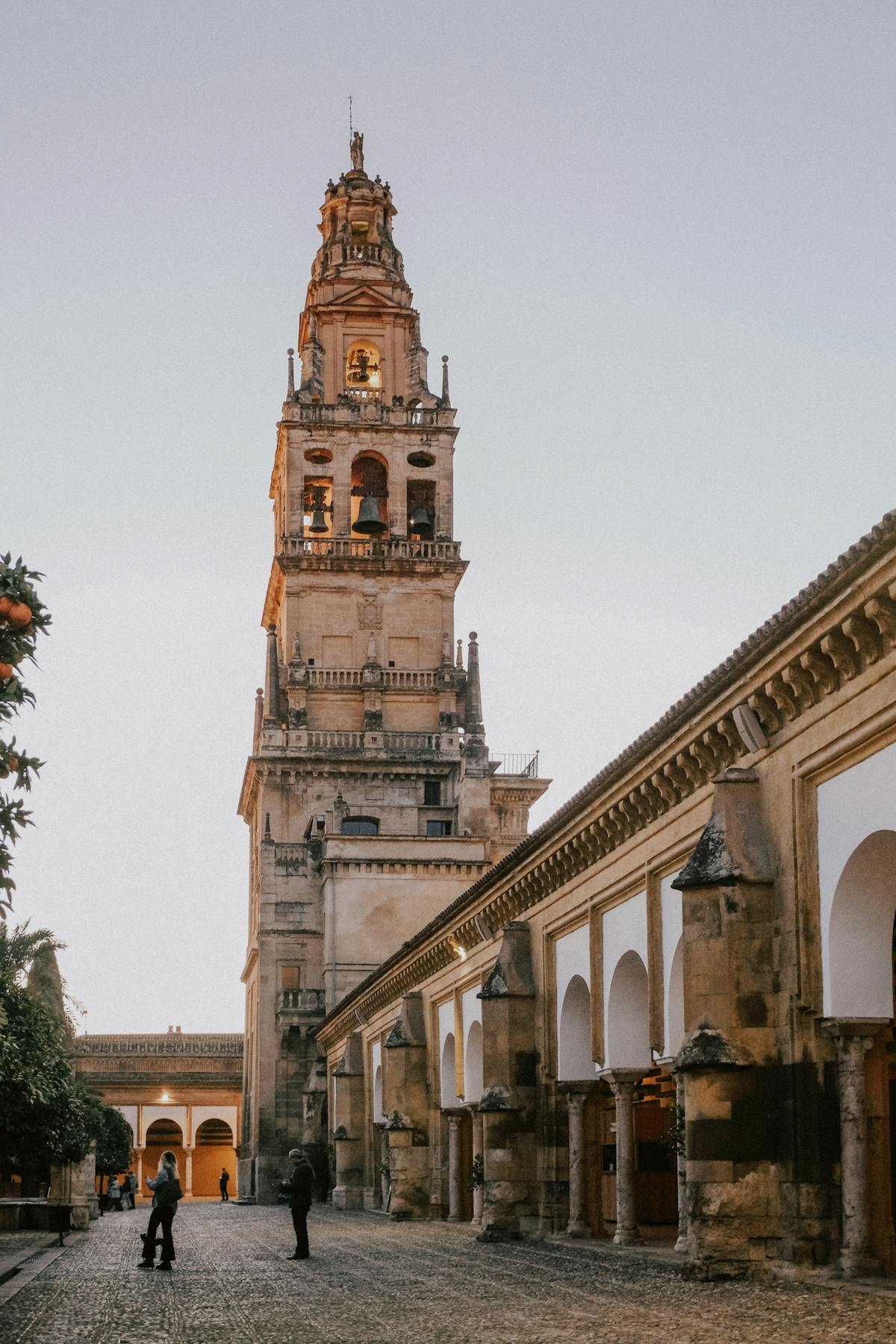
Between 7:00 and 8:00 AM, this tiny alley is empty. Morning light hits the white walls and blue flower pots at a fresh angle. The flowers gleam with dew. The Mezquita bell tower rises behind them in soft golden light. It is a totally different scene.
Neighbors are just starting their day. You might catch someone watering flowers from a balcony above. A cat stretches in a doorway. The smell of fresh coffee drifts from a window. This is the Calleja de las Flores that people in Spanish Cordoba, Spain actually love, not the midday tourist crush.
After your dawn visit, grab breakfast at a cafe on nearby Plaza de la Corredera. Order a tostada con tomate (tohs-TAH-dah kon toh-MAH-teh, toast with crushed tomato) and cafe con leche. This is how locals start their mornings in Spanish Cordoba.
5. The Roman Bridge at Golden Hour
The Puente Romano (PWEN-teh roh-MAH-noh, Roman Bridge) in Cordoba, Spain is 2, 000 years old. It has survived floods, wars, and centuries of foot traffic. Most tourists cross it by day, snap a photo, and move on. Locals know the real show is at sunset.
Stand on the south bank of the Guadalquivir River about an hour before sunset. From here, you see the full view, the Roman Bridge over the water, the Mezquita rising behind it, and the old city against a sky of orange, pink, and deep purple. Few sights in Spain match this moment in Cordoba.
The Torre de la Calahorra (TOH-reh deh lah kah-lah-OH-rah, Calahorra Tower) at the south end of the bridge is worth a stop too. This 12th-century tower holds a museum about the three cultures that shaped Cordoba’s golden age. Christians, Muslims, and Jews all left their mark here.
After sunset, walk back across the bridge toward the old city. The Mezquita glows at night. Its reflection on the river is stunning. This evening walk is free, and it rivals any paid sight in this beautiful Spanish corner of Cordoba.
6. The Lesser-Known Plazas Where Locals Gather
Everyone ends up in Plaza de las Tendillas, the main square. But the soul of Cordoba, Spain lives in its smaller, quieter plazas.
Plaza del Potro, one of Spanish Cordoba’s gems in southern Spain, (PLAH-thah del POH-troh, Colt Square) is named in Don Quixote by Cervantes himself. It has a Renaissance fountain, the Museo de Bellas Artes, and the Museo Julio Romero de Torres. On warm evenings, locals sit on stone benches and talk for hours.
Plaza de la Corredera (PLAH-thah deh lah koh-reh-DEH-rah) is Cordoba’s only Castilian-style rectangular plaza. It once hosted bullfights and markets. Today, it has a Saturday morning flea market. You can find vintage ceramics, old books, and antiques at bargain prices.
Plaza de Capuchinos (PLAH-thah deh kah-poo-CHEE-nohs) is the hidden gem among hidden gems. This tiny square holds the Cristo de los Faroles (KREES-toh deh lohs fah-ROH-lehs, Christ of the Lanterns), a crucifix ringed by iron lanterns. Visit at night when the lanterns glow. It is hauntingly beautiful and nearly always empty.
1. In what year did UNESCO declare Cordoba’s Patios Festival an Intangible Cultural Heritage?
a) 2008 b) 2012 c) 2018
2. What is Cordoba’s signature cold soup called?
a) Gazpacho b) Salmorejo c) Ajoblanco
3. Which famous Spanish novel mentions Plaza del Potro?
a) Don Quixote b) La Celestina c) Lazarillo de Tormes
Answers, 1-b, 2-b, 3-a. How did you do?
7. The Juderia Back Streets Most Visitors Walk Right Past
The Judería (hoo-deh-REE-ah, Jewish Quarter) is on every tourist map. But most visitors stick to the main route between the Mezquita and the Synagogue. They miss the best parts of this Spanish quarter entirely.
Turn off the main path and you enter a maze of streets so narrow you can touch both walls with arms spread wide. White houses lean toward each other overhead. Tiny plazas pop up with a single orange tree and a worn stone bench.
Look for Calle Judíos (KAH-yeh hoo-DEE-ohs, Jewish Street), then turn into the smaller alleys that branch off it. This is where you will find,
- Hidden artisan workshops selling handmade cordobán (kor-doh-BAHN, Cordoban leather), a luxury craft that started here in the Middle Ages
- Tiny family-run shops selling abanicos (ah-bah-NEE-kohs, traditional fans) hand-painted by local artists
- The remains of a Moorish bathhouse tucked behind an unmarked door
- Courtyard gardens behind iron gates that look frozen in the 15th century
A 2023 study by the Universidad de Cordoba found over 200 historic structures in the Juderia, making it one of Spain’s richest historic quarters. Only about 30 appear on standard tourist routes. The rest hide in plain sight, waiting for curious visitors ready to wander.
The best plan is simple, get lost on purpose. Put away Google Maps for an hour and just walk. Every turn brings a surprise. This is how locals explore Cordoba, Spain, and it is how you should too. For more local travel tips, see our Pamplona travel guide for another Spanish city best found off the beaten path.
Spanish Travel Phrases for Exploring Cordoba
Ready to explore Spanish Cordoba, Spain like a local? Here are the Spanish expressions you need to find this city’s hidden corners,
- “¿Dónde comen los del barrio?” (DOHN-deh KOH-men lohs del BAH-ree-oh, Where do the neighborhood locals eat?) This question will point you to the best spots every time.
- “¿Me pone una tapa de salmorejo?” (meh POH-neh OO-nah TAH-pah deh sal-moh-REH-hoh, Can I get a tapa of salmorejo?) A must for ordering Cordoba’s top dish.
- “¿Está abierto el patio?” (ehs-TAH ah-bee-EHR-toh el PAH-tee-oh, Is the patio open?) Perfect during the Patios Festival to check before stepping in.
- “¡Qué bonito!” (keh boh-NEE-toh, How beautiful!) You will say this about 400 times per day in Cordoba.
- “¿A qué hora es la puesta de sol?” (ah keh OH-rah ehs lah PWES-tah deh sol, What time is sunset?) For timing your Roman Bridge visit just right.
Try one of these phrases today. You’ve got this. And for a full toolkit of travel Spanish, do not miss our full Spanish travel phrases guide.
Conclusion
Cordoba, Spain rewards the curious traveler. Yes, the Mezquita is a must-see. But the secret patios, the sunrise at Calleja de las Flores, the oxtail stew in a century-old taberna, the eerie glow of Cristo de los Faroles at night, these are the moments you will carry long after the photos fade.
The best travel experiences in Spanish cities are never on the main tourist route. They wait around the next corner, behind the unmarked door, in the plaza where only locals sit. Cordoba gives its best secrets to those who slow down and wander.
Pack your bags. Cordoba, Spain is waiting. And while you plan your trip, explore more of Spain’s best travel destinations right here on Audaz Revista.
Share
You may also like

Get the Inside Scoop