The Unfiltered Truth About Living in Girona
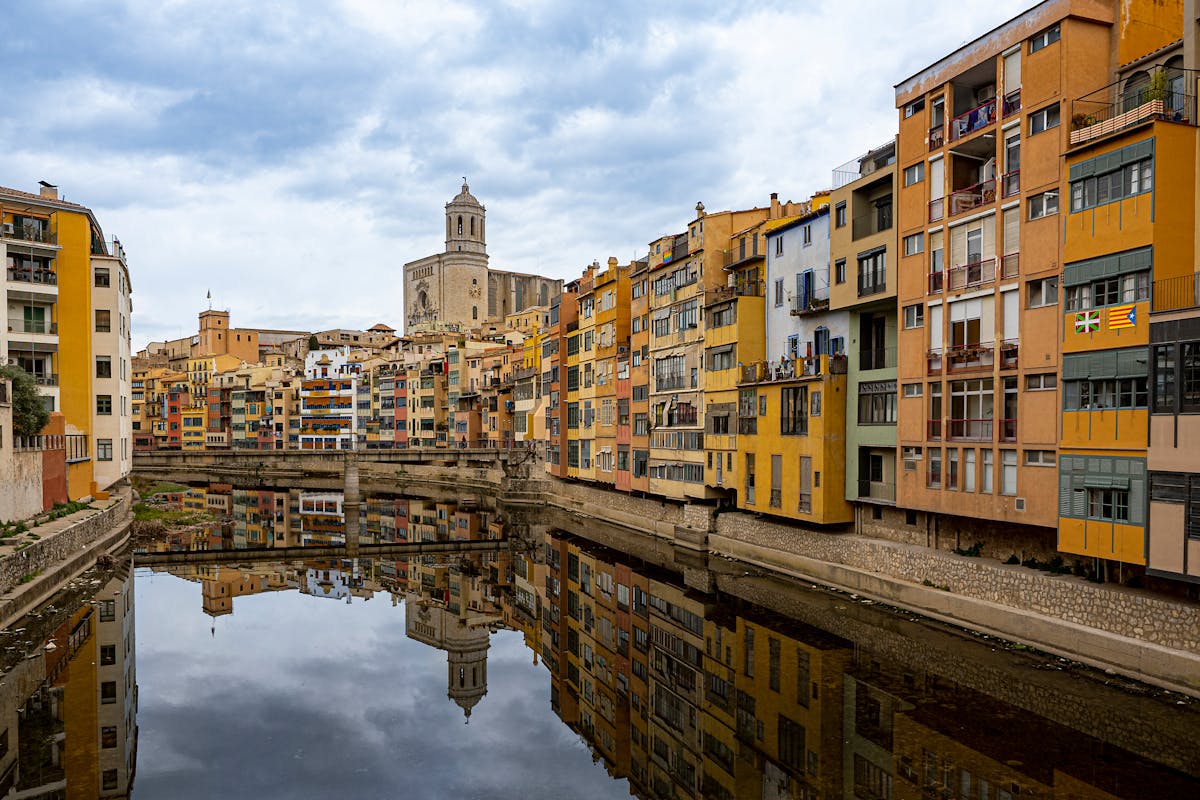
So you’ve seen the pastel-coloured houses on the Onyar River. Maybe you watched a cycling vlog that made Girona look like paradise. Or perhaps you’ve heard it’s “Barcelona without the chaos.” And now you’re thinking about moving there.
Good. Girona is genuinely one of Spain’s best-kept secrets for expats. But nobody talks about the parts that are hard. The Catalan language confusion. The winters that empty the streets. The bureaucracy that will test your patience like nothing else.
Here’s the real talk. I’m giving you the honest version, the stuff that expat Instagram never shows. Because knowing the challenges upfront is what separates people who thrive in Girona from people who leave after six months.
What’s Inside
- 1The Real Cost of Living in Girona
- 2The Catalan vs Spanish Situation (It’s Complicated)
- 3Bureaucracy and Paperwork: Brace Yourself
- 4Finding a Place to Live
- 5Best Neighbourhoods for Expats
- 6Social Life: Making Friends in a Small City
- 7The Food Scene (Yes, It’s Incredible)
- 8Essential Girona Vocabulary
- 9The Verdict: Is Girona Right for You?
The Real Cost of Living in Girona
Let’s start with money, because that’s what everyone really wants to know.
Girona is significantly cheaper than Barcelona, but it’s not the budget paradise some blogs make it out to be. Prices have crept up in recent years thanks to its growing reputation and the cycling/digital nomad crowd moving in. Here’s what you’re actually looking at in 2026.
Rent: A one-bedroom apartment in the city centre runs between €650 and €900 per month. Move to the outskirts or nearby towns like Salt and you can find places for €500 to €700. Shared flats with a private room go for €350 to €500.
Groceries: A weekly shop at Mercadona or Bonpreu (the local Catalan supermarket chain) costs around €40 to €60 for one person. The Mercat del Lleó (mehr-KAHT del yeh-OH, Girona’s main market) is pricier but the quality is unreal.
Eating out: A menú del día (meh-NOO del DEE-ah, the set lunch menu) costs €12 to €16 and includes a starter, main, dessert, drink, and bread. Dinner at a nice restaurant runs €25 to €40 per person. Coffee is €1.50 to €2.00.
Transport: Girona is tiny. You can walk or cycle everywhere. A bike costs about €100 to €200 secondhand. If you need the bus, a single ticket is €1.40 and a monthly pass is around €40. Trains to Barcelona take about 40 minutes on the AVE high-speed line (€12 to €20 each way).
Bottom line: A comfortable single life in Girona costs around €1,400 to €1,800 per month, all in. That’s roughly 30% less than Barcelona.
The Catalan vs Spanish Situation (It’s Complicated)
Here’s the thing nobody tells you upfront. Girona is in Catalonia, and Catalan is the dominant language. Not co-dominant. Dominant.
Street signs are in Catalan. Official paperwork comes in Catalan. Many locals speak Catalan to each other as their first choice. When you walk into a shop, you’ll often be greeted with “Bon dia!” (Catalan for good morning) rather than “¡Buenos días!”
The good news: everyone in Girona also speaks Spanish perfectly. If you respond in Spanish, people will switch. Nobody is offended. It’s just the rhythm of a bilingual city. But it can be confusing when you’re learning.
You’ll see signs saying “tancat” (Catalan for closed) and think, wait, that’s not cerrado (theh-RAH-doh, closed in Spanish). You’ll hear someone say “gràcies” and wonder if you’ve forgotten your Spanish. You haven’t. It’s just Catalan.
Pro Tip
Don’t stress about Catalan. Focus on your Spanish. But learning a few basic Catalan phrases like “Bon dia” (bon DEE-ah, good morning), “Moltes gràcies” (MOL-tes GRAH-see-es, thank you very much), and “Si us plau” (see oos PLOW, please) will earn you serious goodwill. Locals genuinely appreciate the effort.
Bureaucracy and Paperwork: Brace Yourself
Spanish bureaucracy is legendary, and not in a fun way. Here’s what you need to sort when you arrive.
NIE (Número de Identidad de Extranjero): Your foreigner identity number. You need this for everything, opening a bank account, signing a lease, getting a phone contract. Getting a NIE appointment in Girona is easier than Barcelona, but still prepare to wait 2 to 4 weeks. Book your cita previa (THEE-tah PREH-bee-ah, prior appointment) online the moment you arrive.
Empadronamiento (em-pah-droh-nah-mee-EN-toh): This is your registration on the local census. You need a signed rental contract and your passport. It proves you live in Girona and is required for healthcare, voting registration, and many official processes. Go to the Ajuntament de Girona (city hall) to register.
Healthcare: Once you have your NIE and empadronamiento, you can register for public healthcare at your local CAP (Centro de Atención Primaria, primary care centre). The system works well in Girona, with shorter wait times than Barcelona.
Here’s the honest part: none of this is fast. Expect to spend your first month just getting paperwork sorted. Bring printed copies of everything. Learn the phrase “He pedido cita previa” (ay peh-DEE-doh THEE-tah PREH-bee-ah, I’ve booked an appointment). You’ll say it a lot. If you’re still building your foundation, our complete guide to learning Spanish is a great starting point.
Finding a Place to Live
Housing in Girona is tight. It’s a small city with a university, a growing expat community, and increasingly popular tourism. Finding a flat takes work.
Where to search:
- Idealista (ee-day-ah-LEES-tah): Spain’s biggest property portal. Most listings are here.
- Fotocasa: The second-biggest portal. Some unique listings that aren’t on Idealista.
- Local agencies: Finques Frigola and Finques Barna are well-known Girona agencies. Going in person and speaking Spanish helps enormously.
- Facebook groups: “Pisos en Girona” and “Expats in Girona” have direct-from-owner listings.
What to expect: Landlords want a month’s deposit plus one month’s rent upfront. You’ll need your NIE (or at least proof you’ve applied). Having a Spanish bank account helps. Some landlords prefer tenants with a Spanish work contract, so freelancers may need to work harder to prove income.
Key phrase: When you call about a listing, start with: “Hola, llamo por el piso que anuncian en Idealista” (OH-lah, YAH-moh por el PEE-soh kay ah-NOON-thee-an en ee-day-ah-LEES-tah, Hello, I’m calling about the flat listed on Idealista). Be prepared to schedule a viewing quickly. Good flats go fast.
Best Neighbourhoods for Expats
Barri Vell (BAH-ree BEL, Old Quarter): Gorgeous medieval streets, the Jewish quarter, riverside views. It’s the most photogenic place to live, but flats are older, sometimes without lifts, and can be damp in winter. Expect to pay a premium for the location. Best for: romantics who want to feel like they live in a postcard.
Eixample (ay-SHAM-pleh): The more modern extension of the city, with wider streets, newer buildings, and better amenities. More practical, less charming. Great cafes and restaurants, close to everything. Best for: people who want comfort and convenience.
Sant Narcís (san nar-SEES): A real neighbourhood where working-class Girona lives. Less polished, more authentic. The weekly market here is brilliant. Rent is lower than the centre. Best for: people who want to live like a local, not a tourist.
Social Life: Making Friends in a Small City
This is where Girona can be challenging. It’s a small city, about 100,000 people. The social scene is intimate, not sprawling.
The cycling community is the easiest way in. Girona is the unofficial cycling capital of Europe, and the community is welcoming. Even if you’re not a serious cyclist, joining a group ride or hanging out at La Fabrica (a cycling cafe that’s become a Girona institution) will connect you with people.
The Saturday morning ritual at Mercat del Lleó is another way to build connections. Go every week, buy from the same vendors, chat in Spanish. You’ll become a regular within a month. That’s how relationships work in small Spanish cities. Consistency and presence.
Language exchanges (intercambios, een-ter-KAM-bee-ohs) happen regularly at bars around the university area. Check “Girona Language Exchange” on Facebook or Meetup. These are gold for meeting both locals and other expats.
The hard truth: making close local friends takes time. Catalans can seem reserved at first. Don’t take it personally. Keep showing up, keep speaking Spanish, and eventually the warmth comes. It just takes longer than in Andalusia, where a stranger will be your best friend in 15 minutes. For more on daily social customs in Spain, we’ve got you covered.
The Food Scene (Yes, It’s Incredible)
Girona punches absurdly above its weight when it comes to food. This tiny city has El Celler de Can Roca, regularly ranked among the best restaurants in the world. You can’t just walk in (the waiting list is months long), but its influence has elevated every kitchen in the city.
For everyday eating, here’s where to go:
- Rocambolesc: Jordi Roca’s (the youngest Roca brother) ice cream shop on Carrer de Santa Clara. Creative, playful, and absolutely delicious. Try the burnt caramel.
- Mercat del Lleó: The central market for fresh produce, meat, cheese, and prepared food. The bar inside does incredible bocadillos (boh-kah-DEE-yohs, sandwiches).
- The Eixample bar scene: Calle Nou and surrounding streets have tapas bars that rival anything in Barcelona at half the price.
Catalan cuisine is its own thing, distinct from the rest of Spain. Look for these local specialities: botifarra (boh-tee-FAH-rah, Catalan sausage), escalivada (es-kah-lee-BAH-dah, roasted vegetables), and crema catalana (KREH-mah kah-tah-LAH-nah, the Catalan version of crème brûlée that predates the French version by centuries).
Essential Girona Vocabulary
| Spanish / Catalan | Pronunciation | Meaning |
|---|---|---|
| empadronamiento | em-pah-droh-nah-mee-EN-toh | Census registration (required for residency) |
| cita previa | THEE-tah PREH-bee-ah | Prior appointment (you need these for everything) |
| intercambio | een-ter-KAM-bee-oh | Language exchange |
| alquiler | al-kee-LEHR | Rent/rental |
| fianza | fee-AHN-thah | Deposit (for housing) |
| menú del día | meh-NOO del DEE-ah | Set lunch menu (best value eating out) |
| bocadillo | boh-kah-DEE-yoh | Sandwich on a baguette |
Practice Time
You need to sort your bureaucracy. Practise these essential phrases:
1. “I’ve booked an appointment for my NIE.” = “He pedido cita previa para el NIE.”
2. “I need to register on the census.” = “Necesito hacer el empadronamiento.”
3. “Where is the nearest health centre?” = “¿Dónde está el centro de salud más cercano?”
4. “I’m calling about the flat on Idealista.” = “Llamo por el piso que anuncian en Idealista.”
Say each one aloud three times. These are the phrases that will genuinely save you time and stress. Spanish bureaucracy is 50% easier when you can communicate what you need.
The Verdict: Is Girona Right for You?
Girona is perfect if you want a slower pace, world-class food, easy access to Barcelona, stunning medieval architecture, and a manageable size where you can build a real life. It’s not perfect if you need a big social scene, nightlife, or a city where Spanish is the only language you’ll hear.
The Catalan bilingualism is a quirk, not a dealbreaker. The bureaucracy is manageable if you’re patient. The winters are quiet, but some people love that. And the cost of living, while rising, is still very reasonable by European standards.
My honest advice: come for a month first. Rent a short-term flat, test the rhythm, see if Girona’s pace matches yours. If it does, you’ve found something special. A small, beautiful, food-obsessed city that feels like a secret the rest of the world hasn’t figured out yet.
Your Spanish is about to level up. And Girona, with its bilingual streets and patient locals, might just be the place where it happens. If you’re curious about other Spanish cities worth exploring, don’t miss our guide to Girona’s hidden gems for when you’re visiting as a tourist first.
Share

audazrevista
You may also like
Get the Inside Scoop