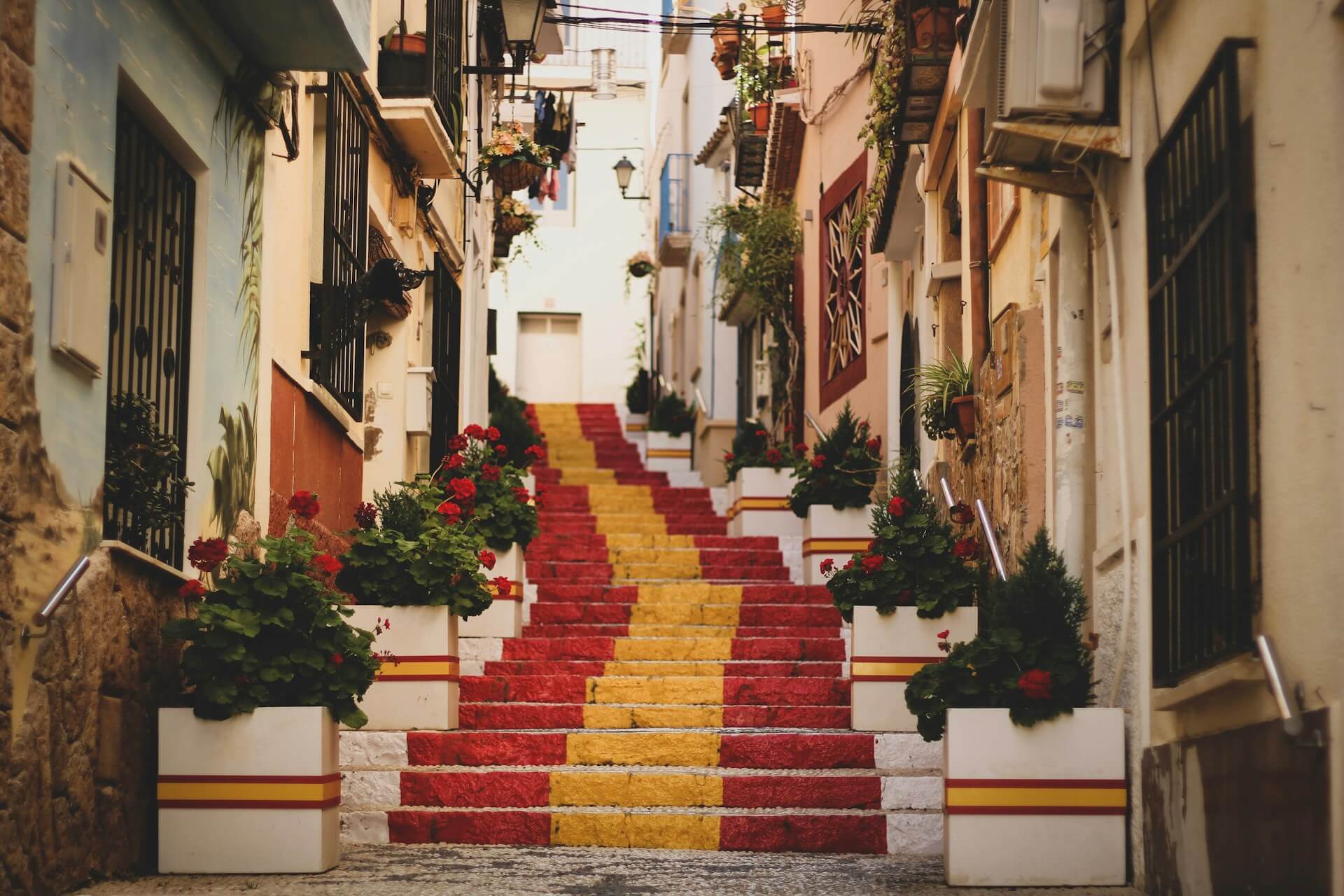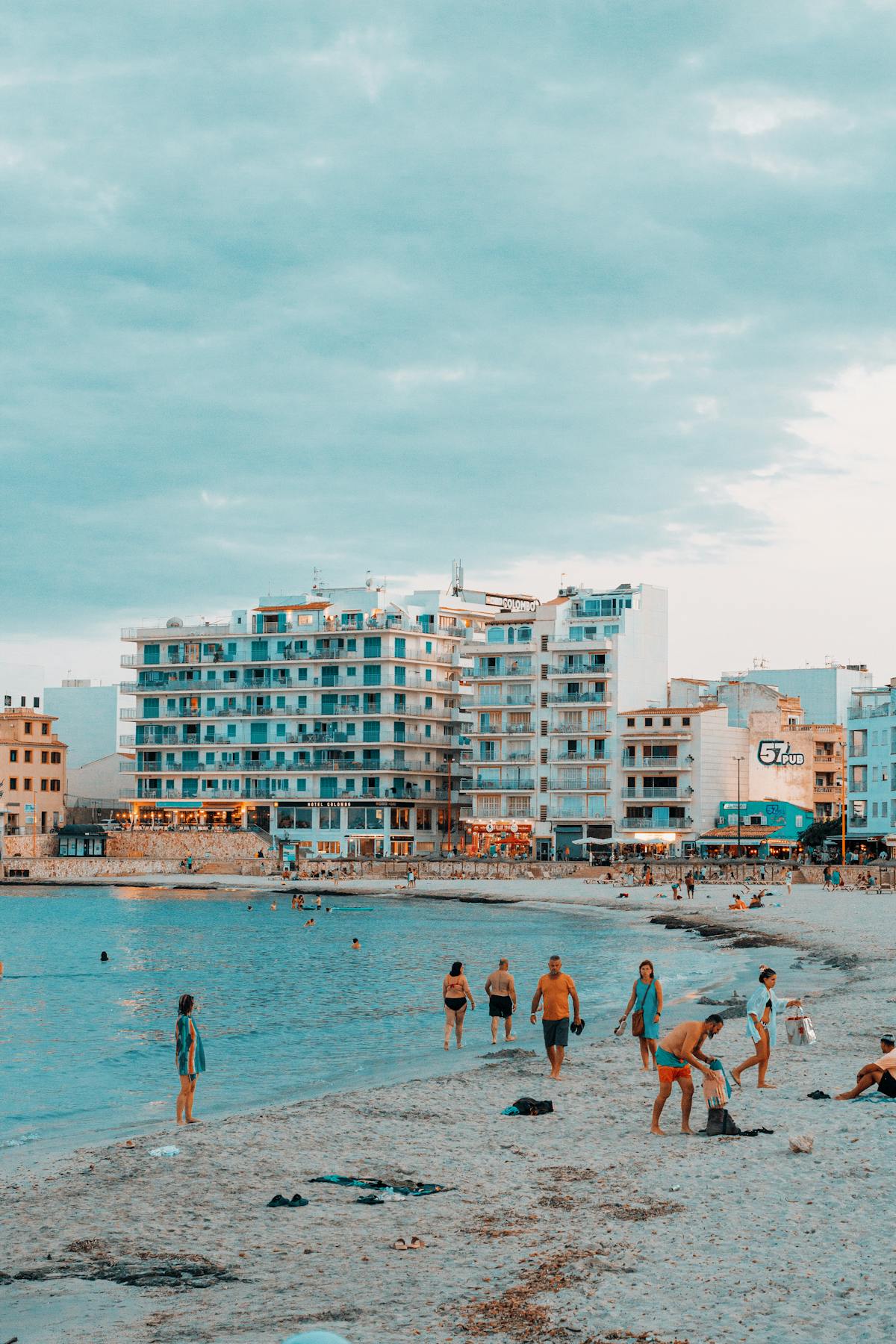
Mallorca Is Not What You Think. Let’s Fix That.
Pack your bags. We’re going somewhere incredible. And no, it’s not the all-inclusive resort strip that gives Mallorca its dodgy reputation. We’re heading to the real island, the one with hidden coves, mountain villages where time stopped, and a food scene that will ruin every ensaimada (en-sigh-MAH-dah, a spiral pastry) you ever eat outside of Spain.
Mallorca (mah-YOR-kah, also known as Majorca in English) is Spain’s largest Balearic island, and most visitors get it completely wrong. They stay in Magaluf. They eat at British pubs. They never hear a word of Spanish, let alone Mallorquin (mah-yor-KEEN, the local Catalan dialect).
Your Spanish is about to level up. Here’s your weekend itinerary with language tips at every stop.
Friday Evening: Arrive in Palma and Wander the Old Town
Forget the airport tourist bus. Grab a taxi and say “Al casco antiguo, por favor” (al KAS-koh an-TEE-gwoh, por fah-VOR), meaning “to the old town, please.” This one phrase sets the tone for your entire weekend.
Palma’s casco antiguo is stunning. The Cathedral of Santa Maria, known locally as La Seu (lah SEH-oo, Catalan for “the seat”), dominates the skyline. According to the Consell de Mallorca (Mallorca’s governing council), La Seu is one of the tallest Gothic cathedrals in Europe, with its main nave reaching 44 metres high. It took over 300 years to build, starting in 1229.
Walk through the narrow carrers (kah-RREHRS, Mallorquin for “streets”). Notice how the signs use both Castilian Spanish and Catalan. This is your first clue that Mallorca has its own linguistic identity, separate from mainland Spain.
Where to Eat Friday Night
Head to the Santa Catalina neighbourhood. This former fishermen’s quarter is now Palma’s foodie heartbeat. Skip the places with menus in five languages. Look for restaurantes (rehs-tow-RAN-tes) where the menu is only in Spanish or Catalan.
Order tumbet (toom-BET), Mallorca’s signature vegetable dish layered with potatoes, peppers, aubergine, and tomato sauce. It’s like a Balearic ratatouille, but better. Say: “Que me recomienda?” (keh meh reh-koh-mee-EN-dah, “What do you recommend?”). That single phrase opens doors everywhere in Spain.
Saturday Morning: The Serra de Tramuntana Mountains
Rent a car on Saturday morning. You need it for this part. Tell the rental agent: “Necesito un coche para el fin de semana” (neh-seh-SEE-toh oon KOH-cheh PAH-rah el feen deh seh-MAH-nah, “I need a car for the weekend”).
Drive north into the Serra de Tramuntana (SEH-rrah deh trah-moon-TAH-nah), a UNESCO World Heritage mountain range that runs along Mallorca’s northwestern coast. According to UNESCO’s 2011 designation, this landscape represents “an outstanding example of a Mediterranean agricultural landscape” shaped by thousands of years of human cultivation.
This is where the magic happens. The road winds through olive groves, past stone terraces built by Moors over a thousand years ago, and through tunnels carved into solid rock.
Stop 1: Valldemossa
The village of Valldemossa (bai-deh-MOH-sah) is impossibly pretty. Stone houses, flower pots on every doorstep, and a famous monastery where Chopin and George Sand spent a winter in 1838. Visit the Cartuja (kar-TOO-hah, Charterhouse monastery) and see the actual piano Chopin used.
At the local bakery, order a coca de patata (KOH-kah deh pah-TAH-tah, a sweet potato bun) with your coffee. It’s soft, slightly sweet, and unique to this village. Say: “Una coca de patata y un cafe con leche” (OO-nah KOH-kah deh pah-TAH-tah ee oon kah-FEH kon LEH-cheh). Ordering coffee in Spanish is a life skill.
Stop 2: Deia
Ten minutes further along the coast road, Deia (DAY-ah) is a tiny hillside village that has attracted artists, writers, and musicians for decades. Robert Graves, the English novelist, lived here for most of his adult life.
Walk down to Cala Deia (KAH-lah DAY-ah), a small rocky cove with crystal-clear water and a couple of rustic restaurants. Order pa amb oli (pah am-b OH-lee, Mallorquin for bread with oil), the island’s most traditional snack: crusty bread rubbed with tomato, drizzled with olive oil, and topped with jamon (hah-MON, ham) or cheese.
Stop 3: Soller
Continue to Soller (SOH-yehr), a town nestled in a valley of orange and lemon groves. The old tram that runs from Soller to its port, Port de Soller (port deh SOH-yehr), has been operating since 1913. Ride it. It costs about seven euros and takes you through orchards down to a beautiful horseshoe-shaped harbour.
At Port de Soller, order fresh pescado (pehs-KAH-doh, fish) at one of the waterfront restaurants. Say: “Que pescado es fresco hoy?” (keh pehs-KAH-doh ehs FRES-koh oy, “What fish is fresh today?”). The waiter will respect you for asking.
Saturday Afternoon: Hidden Coves
Here’s the real talk. Mallorca has over 200 beaches. The tourist ones are packed. The good ones require a bit of effort to reach.
Drive to Cala Deian (if you haven’t already visited from Deia) or head to Cala Tuent (KAH-lah too-ENT), a pebbly cove surrounded by pine forests near the Sa Calobra gorge. It’s quieter than its famous neighbour and far more beautiful.
The Spanish word for cove is cala (KAH-lah), and in Mallorca you’ll see it everywhere: Cala Millor, Cala d’Or, Cala Figuera. Knowing this one word helps you navigate the entire island’s coastline like a local.
Bring a picnic. Stop at a local supermercado (soo-pehr-mehr-KAH-doh, supermarket) and buy sobrassada (soh-brah-SAH-dah), Mallorca’s famous cured sausage made with paprika. Spread it on bread. Add some queso de Mahon (KEH-soh deh mah-ON, Mahon cheese from nearby Menorca). You’re having a Balearic feast on a hidden beach. This is peak travel.
Saturday Evening: Back to Palma
Drive back to Palma for the evening. The city’s nightlife starts late, very late, because this is Spain and the evening doesn’t rush.
Start with tapas (TAH-pas) along the Paseo del Borne, Palma’s elegant boulevard. Try frito mallorquin (FREE-toh mah-yor-KEEN), a traditional dish of fried offal, vegetables, and potatoes that’s been a local staple for centuries. It sounds intense. It’s delicious.
For drinks, head to the rooftop bars in the old town. Order a pomada (poh-MAH-dah), the Balearic cocktail of gin and lemonade. It’s light, refreshing, and very Mallorcan. Say: “Dos pomadas, por favor” (dohs poh-MAH-das, por fah-VOR, “Two pomadas, please”).
Sunday Morning: Markets and Ensaimadas
Sunday morning belongs to the markets. The Mercat de l’Olivar (mehr-KAT deh loh-lee-VAR, Olivar Market) in central Palma is where locals buy fresh fish, produce, and cured meats. Walk around. Point at things. Ask “Que es esto?” (keh ehs EHS-toh, “What is this?”). Vendors love curious visitors.
But first, breakfast. Find a bakery selling ensaimadas. These spiral pastries made with pork lard (yes, really) are Mallorca’s most iconic food. They come plain, filled with cream, cabello de angel (kah-BEH-yoh deh AN-hel, “angel hair” pumpkin jam), or sobrassada. They have been a protected designation of origin product since 2003, meaning a genuine Ensaimada de Mallorca can only be made on the island using traditional methods.
Order at the counter: “Una ensaimada grande de crema, por favor” (OO-nah en-sigh-MAH-dah GRAN-deh deh KREH-mah, por fah-VOR). Sit in the sun. Eat slowly. This is sobremesa culture at its finest.
Sunday Afternoon: One Final Gem
Before heading to the airport, make one more stop. Drive thirty minutes east to Manacor (mah-nah-KOR), hometown of tennis legend Rafa Nadal, and then continue to the Cuevas del Drach (KWEH-vas del drahch, Dragon Caves).
These underground caves contain one of the largest subterranean lakes in the world, Lago Martel (LAH-goh mar-TEL). The guided tour includes a live classical music concert performed on boats floating across the lake inside the cave. It’s surreal and unforgettable.
The word cueva (KWEH-vah, cave) is one you’ll use across Spain. The country is filled with spectacular caves, and knowing this word unlocks hidden attractions in Malaga, Girona, and beyond.
The Mallorquin Language: Your Bonus Vocabulary
Here’s something most visitors don’t realise. Mallorca’s local language is Mallorquin, a dialect of Catalan. Road signs, shop names, and menus often use Catalan rather than Castilian Spanish. You’ll hear both on the streets.
A few useful Mallorquin words to impress locals:
- Bon dia (bon DEE-ah): Good morning (Catalan greeting)
- Gracies (GRAH-see-ehs): Thank you (Catalan for gracias)
- Carrer (kah-RREHR): Street (you’ll see this on every street sign)
- Mercat (mehr-KAT): Market (instead of mercado)
Using even one Catalan word shows respect for local identity. Mallorcans appreciate it enormously. It’s the difference between being a tourist and being a traveller who genuinely connects.
Your Weekend Packing Checklist
Before you go, make sure you’ve packed these essentials:
- Comfortable walking shoes for Palma’s cobblestone streets and mountain villages
- Swimwear and a towel for hidden coves (some are clothing-optional, so don’t be surprised)
- Cash for small village cafes and bakeries that don’t take cards
- This vocabulary list saved on your phone
- Sunscreen, because the Balearic sun is no joke, even in spring
Now you’re ready to explore. Go use these phrases and have an incredible experience. Mallorca is waiting, and your Spanish is ready for it.
Share
You may also like
Stuck on the Spanish Imperfect Tense? Here’s the Shortcut That Actually Works
The Botellón Explained: Spain’s Outdoor Social Tradition and the Phrases You Need
Get the Inside Scoop