How to Negotiate at a Spanish Market Like a Local
In This Article
- Why Spanish Markets Matter for Language Learners
- Step 1: Greet the Vendor Like You Belong
- Step 2: Ask Prices with Confidence
- Step 3: Request Quantities Like a Pro
- Step 4: Taste Before Buying
- Step 5: Negotiate Politely
- Step 6: Pay and Say Goodbye
- Essential Spanish Food Words for the Market
- Best Markets to Practice Your Spanish
- Conclusion
Forget what your textbook told you about Spanish food words. The best classroom is not a classroom at all. It’s a busy Spanish market at 10 a.m. on a Saturday.
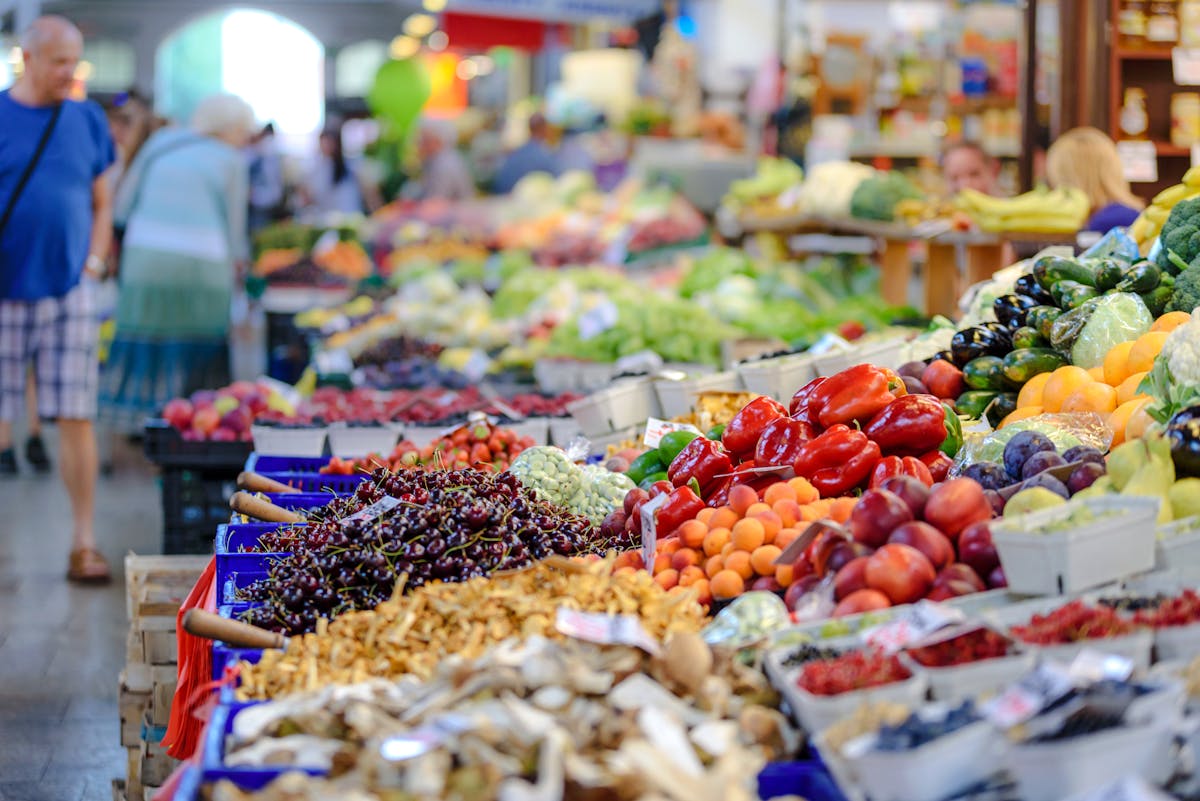
Picture this, bright towers of fruit. Vendors shouting prices. The smell of freshly sliced jamon (hah-MON, cured ham) in the air. This is where real Spanish happens. And you’re about to walk in like you own the place.
Whether you’re at Madrid’s Mercado de San Miguel or Barcelona’s La Boqueria, this guide gives you every phrase and every Spanish food word you need to shop like a local in Spain.
Why Spanish Markets Matter for Language Learners
Spanish markets are language gold mines. Every stall is a mini class. You practise greetings, numbers, and food vocab in under five minutes.
Linguist Dr. Stephen Krashen’s research shows that real-world chats are the best way to learn Spanish verb conjugations. Markets give you that, low-pressure, high-reward practice. These are the Spanish food words you’ll actually use across Spain every day.
Plus, vendors in Spain are warm. They’ll slow down for you. They’ll fix your mistakes with a smile. This is how locals really talk.
Step 1: Greet the Vendor Like You Belong
First impressions matter. A good greeting opens doors and gets you better prices. Here’s what to say,
- Buenos dias (BWEH-nos DEE-as), “Good morning.” Use this before 2 p.m.
- Buenas tardes (BWEH-nas TAR-des), “Good afternoon.” Use this after 2 p.m.
- Hola, que tal? (OH-la, keh TAL), “Hi, how’s it going?” Casual and friendly.
Smile. Make eye contact. Spanish vendors respond to warmth. Skip the greeting, and you’ll feel the chill. Knowing the right Spanish food words matters, but context matters just as much in Spain.
Pro tip, if there’s a queue, wait your turn. Cutting the line is a sure way to lose respect at any local Spanish spot.
Step 2: Ask Prices with Confidence
Now for the key phrase. Learn this one,
Say out loud, “Cuanto cuesta esto?” (KWAN-toh KWES-tah ES-toh)
Meaning, “How much does this cost?”
Now try, “A cuanto estan los tomates?” (ah KWAN-toh es-TAN los toh-MAH-tes)
Meaning, “How much are the tomatoes?”
Seriously, say them out loud right now. Your Spanish is about to level up.
Other useful price phrases,
- Cuanto es? (KWAN-toh es), “How much is it?” Quick and casual.
- Es muy caro (es mwee KAH-roh), “It’s very expensive.” Say it with a smile, not a frown.
- Tiene algo mas barato? (tee-EH-neh AL-goh mas bah-RAH-toh), “Do you have something cheaper?”
Step 3: Request Quantities Like a Pro
Asking for the right amount is key. These phrases help you learn Spanish verb conjugations in action,
- Un kilo de… (oon KEE-loh deh), “A kilo of…”
- Medio kilo de… (MEH-dee-oh KEE-loh deh), “Half a kilo of…”
- Una bolsa de… (OO-nah BOL-sah deh), “A bag of…”
- Un poco de… (oon POH-koh deh), “A little bit of…”
- Dos de estos (dohs deh ES-tohs), “Two of these.” Point and smile.
- Una docena de… (OO-nah doh-SEH-nah deh), “A dozen of…”
You can also point and say “Pongame un poco” (PON-gah-meh oon POH-koh). It means “Give me a little.” It’s casual, friendly, and how locals order at markets across Spain.
Step 4: Taste Before Buying
Here’s a secret most tourists miss. At many Spanish markets, you can taste before you buy. This is common at cheese, olive, and embutidos (em-boo-TEE-dos, cured meats) stalls.
The magic phrase is,
- Puedo probar? (PWEH-doh proh-BAR), “Can I try?”
That’s it. Two words. Say them with a smile, and vendors will happily slice you a sample. This works great at charcuterias (char-koo-teh-REE-as, delis) and cheese stalls. You’ll pick up Spanish food words fast when you can taste what they mean in Spain.
Spain’s tourism board, Turespana, says market visits are now the second most popular activity for visitors. Only museum tours rank higher. Tasting is a huge part of that.
Step 5: Negotiate Politely
Here’s the real talk. Bargaining at Spanish markets isn’t like haggling at a bazaar. Prices at big markets like La Boqueria are usually fixed. But at mercadillos (mer-kah-DEE-yos, flea markets and street markets), there’s room to haggle.
Polite phrases for this,
- Me puede hacer un descuento? (meh PWEH-deh ah-SER oon des-KWEN-toh), “Can you give me a discount?”
- Si compro dos, hay descuento? (see KOM-proh dohs, eye des-KWEN-toh), “If I buy two, is there a discount?”
- Cual es su mejor precio? (kwal es soo meh-HOR PREH-see-oh), “What’s your best price?”
Always haggle with warmth, not force. A smile goes further than a frown. If the vendor says no, accept it. The bond matters more than saving fifty cents.
Step 6: Pay and Say Goodbye
Time to pay. Most stalls prefer cash. Larger ones take cards. Key phrases,
- Cuanto le debo? (KWAN-toh leh DEH-boh), “How much do I owe you?”
- Acepta tarjeta? (ah-SEP-tah tar-HEH-tah), “Do you take cards?”
- Muchas gracias (MOO-chas GRAH-see-as), “Thank you very much.”
- Hasta luego (AH-stah loo-EH-goh), “See you later.”
Saying “hasta luego” instead of just “adios” tells them you’ll be back. Vendors remember that. Next time, you might get a free peach tossed in.
Essential Spanish Food Words for the Market
You’ll want to know your Spanish food words before stepping into any mercado in Spain. Here’s your cheat sheet,
| Category | Spanish | Pronunciation | English |
|---|---|---|---|
| Frutas (FROO-tahs, fruits) | Manzanas | man-SAH-nas | Apples |
| Frutas | Fresas | FREH-sas | Strawberries |
| Verduras (behr-DOO-rahs, vegetables) | Tomates | toh-MAH-tes | Tomatoes |
| Verduras | Pimientos | pee-mee-EN-tohs | Peppers |
| Mariscos (mah-REES-kohs, seafood) | Gambas | GAM-bas | Prawns |
| Mariscos | Mejillones | meh-hee-YOH-nes | Mussels |
| Embutidos (em-boo-TEE-dohs, cured meats) | Chorizo | cho-REE-soh | Spiced sausage |
| Embutidos | Jamon serrano | hah-MON seh-RAH-noh | Cured mountain ham |
These Spanish food words are ones you’ll hear at every market in Spain. Learn them and your trip gets ten times better. You’ll also learn Spanish verb conjugations naturally by using them with vendors.
Best Markets to Practice Your Spanish
Ready to put your Spanish travel phrases to work? Here are the best markets in Spain for a real experience,
- La Boqueria (Barcelona). Iconic, bright, and touristy, but worth it for the sheer range of fresh food vocabulary
- Mercado de San Miguel (Madrid). A stunning gourmet market. Great for tasting your way through Spanish food
- Mercado Central (Valencia). Less touristy and packed with locals. Great for real chats
- Mercado de Triana (Seville). A true Andalusian market with friendly vendors and great seafood
- Mercado de la Ribera (Bilbao). Europe’s largest covered market. The Basque vendors love their food
Conclusion
Spanish markets are one of the best places to practise real, daily Spanish. You don’t need perfect grammar. You don’t need a big vocabulary. You just need a smile, a few key phrases, and the guts to try.
Every “cuanto cuesta” you say is a win. Every “puedo probar” brings you closer to fluency. The vendors are on your side. They want to help.
So grab a reusable bag, find your nearest mercado, and start talking. Master these Spanish food words and Spain’s markets become your classroom. You’ve got this. Ready for more? Explore our Spanish vocabulary guides to keep building your skills.
Share
Topics

audazrevista
You may also like


Get the Inside Scoop