Regional Spanish Food Vocabulary: A Delicious Tour of Spain’s Kitchens
Forget what your textbook told you about Spanish food words. If you walk into a restaurant in the Basque Country and ask for tortilla the same way you would in Andalusia, you’ll get a very different dish. And possibly a very confused waiter.
Spain doesn’t have one food vocabulary. It has dozens. Every region has its own names for ingredients, dishes, cooking methods, and even ways to order. And if you really want your Spanish to sound native, learning these regional food words is one of the fastest shortcuts to sounding like you actually belong.
Your Spanish is about to level up, one delicious region at a time.
Why Regional Food Vocabulary Matters
Spain has 17 autonomous communities, and each one treats food like a point of regional pride. According to the Real Academia de Gastronomía (Royal Academy of Gastronomy), Spain has over 1,500 unique traditional dishes registered across its regions. That’s not counting the countless local variations.
When you learn regional food words, you’re not just expanding your vocabulary. You’re showing cultural respect. A malagueño (mah-lah-GAY-nyoh, person from Málaga) lights up when you know the difference between espetos and sardinas a la plancha. A vasco (VAHS-koh, Basque person) will treat you like family if you can properly order pintxos.
This is where the magic happens. Food is the fastest bridge between “tourist” and “local.”
We’ve covered 15 essential food terms before. This guide goes deeper, taking you region by region through Spain’s incredible culinary vocabulary.
Andalusia: Sun, Seafood, and Gazpacho
Southern Spain’s food vocabulary reflects its hot climate and coastal access.
Essential Andalusian Food Words
- Gazpacho (gath-PAH-choh): The famous cold tomato soup. Every family has a different recipe, but the base is always tomato, pepper, cucumber, garlic, olive oil, and bread. Served ice-cold in summer.
- Salmorejo (sal-moh-REH-hoh): Córdoba’s thicker, creamier cousin of gazpacho. It’s made with more bread and no cucumber. Topped with jamón (hah-MOHN, cured ham) and hard-boiled egg. Order this, not gazpacho, if you want to impress a cordobés (kor-doh-BEHS, person from Córdoba).
- Espetos (ehs-PEH-tohs): Sardines threaded onto bamboo sticks and grilled over a fire pit right on the beach. This is Málaga’s signature dish.
- Pescaíto frito (pehs-kah-EE-toh FREE-toh): Mixed fried fish. The “í” instead of “ito” is the Andalusian pronunciation. Cádiz claims the best version.
- Pipirrana (pee-pee-RAH-nah): A chunky salad of tomato, green pepper, onion, and tuna. Common in Jaén and Granada. It’s essentially a deconstructed gazpacho you eat with a fork.
Ordering in Andalusia
“Ponme un salmorejo y unos espetos” (PON-meh oon sal-moh-REH-hoh ee OO-nohs ehs-PEH-tohs): “Give me a salmorejo and some sardine skewers.” The ponme (put me) is more natural in Andalusia than the textbook deme (give me).
Basque Country: The Epicentre of Spanish Cuisine
The País Vasco (pie-EES VAHS-koh, Basque Country) has the highest concentration of Michelin stars per capita in the world, according to the Michelin Guide. Food here isn’t just culture. It’s religion.
Essential Basque Food Words
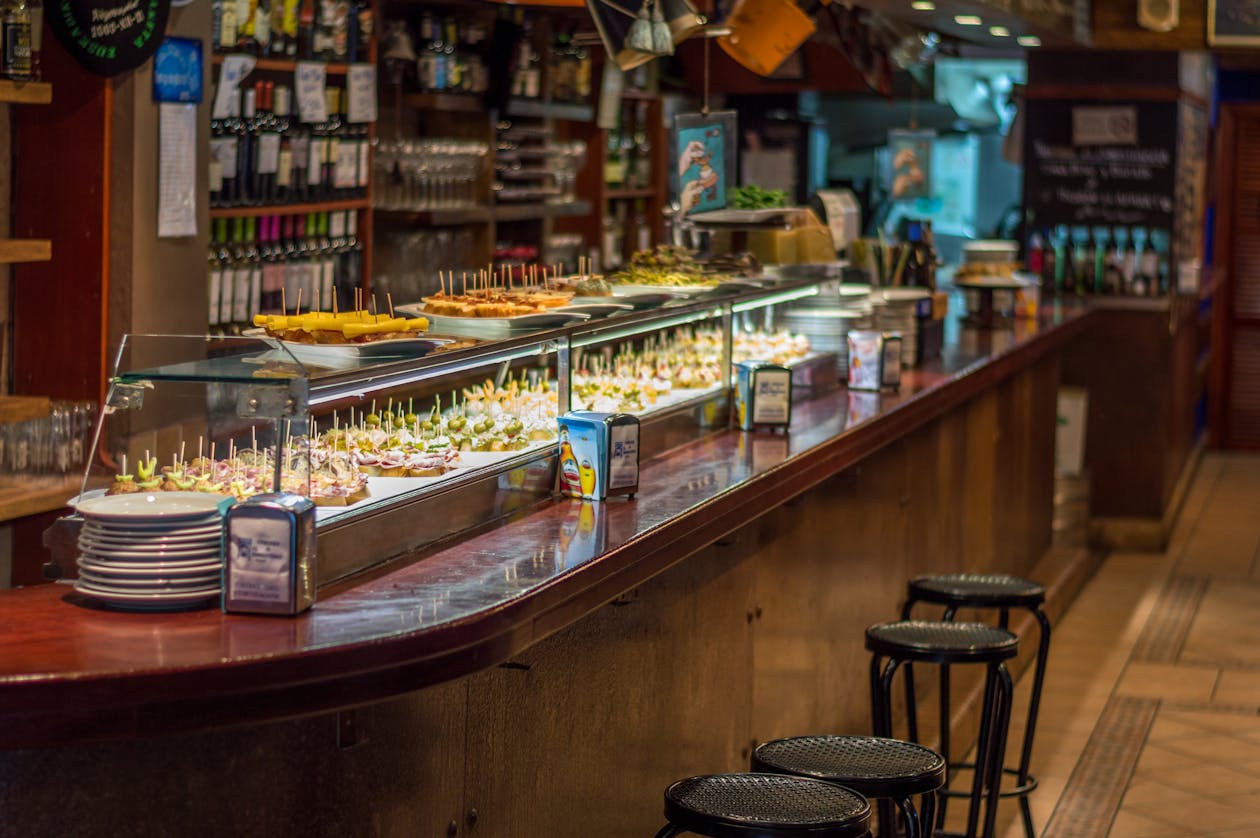
- Pintxos (PEEN-chohs): Not tapas. Never call them tapas. These are small bites typically served on bread with a toothpick, lined up along bar counters. The word comes from Basque, not Spanish. The toothpick (pincho) holds the creation together.
- Txangurro (chan-GOO-roh): Spider crab, baked in its shell with onion, tomato, and brandy. The “tx” is a Basque spelling that sounds like “ch.”
- Bacalao al pil-pil (bah-kah-LAH-oh al peel-PEEL): Salt cod cooked slowly in olive oil and garlic until the oils emulsify into a silky sauce. The “pil-pil” refers to the bubbling sound.
- Marmitako (mar-mee-TAH-koh): A tuna and potato stew that Basque fishermen invented on their boats. Hearty, warming, and deeply satisfying.
- Txakoli (chah-koh-LEE): A slightly sparkling, acidic white wine from the Basque region. It’s poured from a height to aerate it. Ordering it shows you know the region.
Ordering in the Basque Country
“¿Qué pintxos me recomiendas?” (keh PEEN-chohs meh reh-koh-mee-EN-dahs): “Which pintxos do you recommend?” In many pintxo bars, you just grab a plate, point at what you want, and count the toothpicks at the end to pay. But asking for recommendations starts a conversation, and that’s always the goal.
Catalonia: Where Innovation Meets Tradition
Catalan cuisine blends mountain and sea, and the vocabulary reflects both the Catalan language and Castilian Spanish.
Essential Catalan Food Words
- Pa amb tomàquet (pah am toh-MAH-ket): Bread rubbed with ripe tomato, drizzled with olive oil and salt. It’s the Catalan equivalent of a basic essential. Pronounced in Catalan, but you’ll see it on every menu in Barcelona. In Castilian, it’s pan con tomate (pahn kohn toh-MAH-teh).
- Escalivada (ehs-kah-lee-VAH-dah): Roasted vegetables (aubergine, pepper, onion) served cold with olive oil. The name comes from escalivar, meaning “to cook in embers.”
- Fideuà (fee-deh-WAH): Like paella, but made with thin noodles instead of rice. Valencia and Catalonia both claim it. Order this instead of paella and watch the locals nod approvingly.
- Crema catalana (KREH-mah kah-tah-LAH-nah): The Catalan version of crème brûlée, with a caramelised sugar top. Catalans will tell you they invented it before the French. They might be right.
- Calçots (kal-SOHTS): Long green onions grilled over an open flame, dipped in romesco (roh-MEHS-koh) sauce. Eaten during calçotada season (January to March) as a communal feast.
Ordering in Catalonia
“Para mí, la fideuà y una copa de cava” (PAH-rah mee, lah fee-deh-WAH ee OO-nah KOH-pah deh KAH-vah): “For me, the fideuà and a glass of cava.” Cava (KAH-vah) is Catalonia’s sparkling wine. Order it instead of champagne.
Galicia: Atlantic Flavours and Seafood Royalty
Galicia (gah-LEE-thee-ah), in Spain’s northwest corner, is a seafood paradise with its own culinary identity and language (gallego, gah-YEH-goh).
Essential Galician Food Words
- Pulpo a la gallega (POOL-poh ah lah gah-YEH-gah): Octopus served on a wooden board, drizzled with olive oil, sea salt, and pimentón (pee-men-TOHN, smoked paprika). Also called pulpo á feira in Galician. This is Galicia’s most iconic dish.
- Empanada gallega (em-pah-NAH-dah gah-YEH-gah): A large savoury pie filled with tuna, cod, or pork. Not to be confused with the small, fried empanadas from Latin America.
- Lacón con grelos (lah-KOHN kohn GREH-lohs): Cured pork shoulder with turnip greens. Heavy, warming, and perfect for Galicia’s rainy winters.
- Percebes (per-THEH-behs): Gooseneck barnacles. They look alien. They taste like the ocean concentrated into a tiny, perfect bite. They’re also terrifyingly expensive because harvesting them from wave-battered rocks is genuinely dangerous.
- Albariño (al-bah-REE-nyoh): Galicia’s signature white wine grape. Crisp, aromatic, and the perfect pairing for seafood. Pronouncing this correctly will earn you instant respect.
Ordering in Galicia
“Una ración de pulpo y una botella de albariño, por favor” (OO-nah rah-thee-OHN deh POOL-poh ee OO-nah boh-TEH-yah deh al-bah-REE-nyoh, por fah-VOR): “A serving of octopus and a bottle of albariño, please.” A ración (rah-thee-OHN) is a full serving, while a media ración (MEH-dee-ah rah-thee-OHN) is half. Know the difference, because ordering a ración of percebes could cost you 50 euros.
Castile and Madrid: Hearty, Honest, and Roasted
Central Spain’s food is built for cold winters and big appetites.
Essential Castilian Food Words
- Cochinillo asado (koh-chee-NEE-yoh ah-SAH-doh): Roast suckling pig. Segovia is the capital of this dish. The pig is so tender that restaurants famously carve it with the edge of a plate.
- Cocido madrileño (koh-THEE-doh mah-dree-LEH-nyoh): Madrid’s signature chickpea stew served in three courses: first the broth, then the chickpeas and vegetables, finally the meats. It’s a ritual, not just a meal.
- Bocadillo de calamares (boh-kah-DEE-yoh deh kah-lah-MAH-rehs): A fried squid ring sandwich. Madrid’s signature street food. Find the best ones near Plaza Mayor.
- Torrijas (toh-REE-hahs): Spain’s French toast, soaked in milk, fried, and dusted with cinnamon and sugar. Traditional during Semana Santa (Holy Week) but eaten year-round in Madrid.
- Oreja a la plancha (oh-REH-hah ah lah PLAHN-chah): Grilled pig’s ear. Crispy, chewy, and a true test of your culinary adventurousness. Very popular in traditional Madrid tascas (TAHS-kahs, old-style taverns).
Ordering in Madrid
“Un bocadillo de calamares y una caña” (oon boh-kah-DEE-yoh deh kah-lah-MAH-rehs ee OO-nah KAH-nyah): “A calamari sandwich and a small beer.” This is the quintessential Madrid snack. If you’re near ordering food in a Spanish restaurant, make sure you’ve nailed the basics first.
Valencia: Beyond Paella
Valencia is paella’s birthplace, but reducing Valencian cuisine to one dish is like reducing Italian food to pizza.
Essential Valencian Food Words
- Paella valenciana (pie-AY-uh bah-len-thee-AH-nah): The original contains chicken, rabbit, green beans, and white beans. Not seafood. Valencians will passionately correct you on this point.
- Arroz a banda (ah-ROHTH ah BAHN-dah): Rice cooked in fish broth but served separately from the fish. The “banda” means “apart.” It’s the seafood rice that tourists actually want when they order “paella.”
- All i pebre (eye ee PEH-breh): An eel stew made with garlic, paprika, and potatoes. A traditional dish from the Albufera (al-boo-FEH-rah) lagoon near Valencia.
- Horchata (or-CHAH-tah): A sweet, milky drink made from chufas (CHOO-fahs, tiger nuts). Served ice-cold, usually with fartons (far-TOHNS), long sweet pastries for dipping. Yes, that’s really what they’re called.
- Esgarraet (ehs-gah-rah-ET): Roasted red peppers with salt cod, dressed in olive oil. A Valencian tapa that rarely appears in tourist guides.
The Paella Rules
Here’s the real talk. Valencians take paella extremely seriously. If you want to avoid a lecture:
- Never add chorizo. That’s not a thing.
- Eat paella for lunch, never dinner. That’s the tradition.
- The socarrat (soh-kah-RAHT), the crispy rice at the bottom of the pan, is the best part. Scrape it out.
- It’s cooked in a paellera (pie-ay-YEH-rah), the flat, wide pan. Not a “paella pan.” The dish is named after the pan.
Market Shopping: Essential Vocabulary
Every Spanish city has a mercado (mer-KAH-doh, market), and shopping at one is a language immersion experience like no other.
Useful Market Phrases
- “¿Qué está de temporada?” (keh ehs-TAH deh tem-poh-RAH-dah): “What’s in season?” This shows you know and care about seasonal eating.
- “Póngame un cuarto de kilo” (POHN-gah-meh oon KWAHR-toh deh KEE-loh): “Give me a quarter kilo.” Spain uses metric, and markets sell by weight.
- “¿Esto qué es?” (EHS-toh keh ehs): “What is this?” Point and ask. Market vendors love explaining their products.
- “¿Cómo se prepara?” (KOH-moh seh preh-PAH-rah): “How do you prepare this?” Ask and you’ll get a mini cooking lesson for free.
- “¿Me lo puede envolver?” (meh loh PWEH-deh en-vol-VEHR): “Can you wrap it for me?”
For more on navigating a Spanish market like a pro, check our complete guide.
Cooking Verbs: The Action Words of Spanish Kitchens
If you follow Spanish recipes or watch cooking shows, these verbs are essential.
- Freír (freh-EER): To fry
- Asar (ah-SAR): To roast
- Guisar (gee-SAR): To stew or braise
- Picar (pee-KAR): To chop finely
- Sofreír (soh-freh-EER): To sauté lightly. The sofrito (soh-FREE-toh) is the base of countless Spanish dishes.
- Hervir (er-VEER): To boil
- Machacar (mah-chah-KAR): To crush or pound (for mortar and pestle work)
- Emplatear (em-plah-teh-AR): To plate (a more modern, culinary term)
The Bottom Line
Spanish food vocabulary is a gateway to understanding the country’s soul. Every region tells its own story through what it puts on the plate, and knowing the right words transforms you from someone reading a menu to someone having a conversation about culture, history, and identity.
Start with the region you’re visiting first. Learn five dishes, learn how to order them, and learn one market phrase. That’s enough to change your entire experience.
Now go use these words. Your Spanish is ready.
]]>Share
Topics

audazrevista
You may also like
Get the Inside Scoop