The Best Part of Every Spanish Meal Happens After the Food Is Gone
You’ve finished your last bite of tortilla española (tor-TEE-yah es-pan-YO-lah). The plates are cleared. The wine is nearly gone. In most countries, this is when you ask for the bill and leave.
In Spain? This is when the real meal begins.
Welcome to sobremesa (so-breh-MEH-sah), the Spanish tradition of lingering at the table after eating. It’s conversation, coffee, sometimes a copa (KO-pah, a glass of spirits), and absolutely zero rush to be anywhere else. And it might be the smartest cultural habit you’ve never heard of.
What Sobremesa Actually Means
The word sobremesa translates literally as “over the table.” But sobremesa meaning goes far deeper than its etymology suggests.
It’s the time after a meal, typically lunch, when everyone stays seated and talks. Not scrolling phones. Not watching television. Just talking. About politics, family gossip, football, philosophy, whatever comes up naturally when good food has put everyone in a generous mood.
The Real Academia Española defines sobremesa as “the time spent at the table after eating.” But ask any Spaniard and they’ll tell you it’s really about convivencia (con-vee-VEN-see-ah), the art of living together. It’s one of those Spanish words that English simply doesn’t have an equivalent for.
The Science Behind Why It Works
Here’s the real talk. Sobremesa isn’t just charming. Research suggests it’s genuinely good for you.
A 2018 study published in the Journal of Social and Personal Relationships found that shared mealtimes with extended conversation strengthen social bonds more effectively than almost any other regular activity. The key factor? Duration. Meals lasting longer than 45 minutes produced significantly stronger feelings of connection than shorter ones.
Dr. Robin Dunbar, an evolutionary psychologist at Oxford University, has demonstrated that the act of eating together triggers endorphin release, and lingering conversation amplifies this effect. His research suggests that communal dining with extended social time is one of the most powerful bonding mechanisms humans have.
Spanish culture figured this out centuries ago. No lab required.
Mental health benefits
- Reduced loneliness. Regular, meaningful face-to-face conversation combats isolation far more effectively than digital communication
- Lower stress. The transition from eating to relaxed conversation activates the parasympathetic nervous system, the body’s “rest and digest” mode
- Stronger relationships. Sobremesa creates a predictable, low-pressure space for connection that scheduled “quality time” rarely achieves
Spain consistently ranks among the happiest countries in Europe despite economic challenges. Sobremesa might be part of the reason.
How Sobremesa Actually Looks in Practice
Forget what your textbook told you. Here’s what really happens:
The weekday version
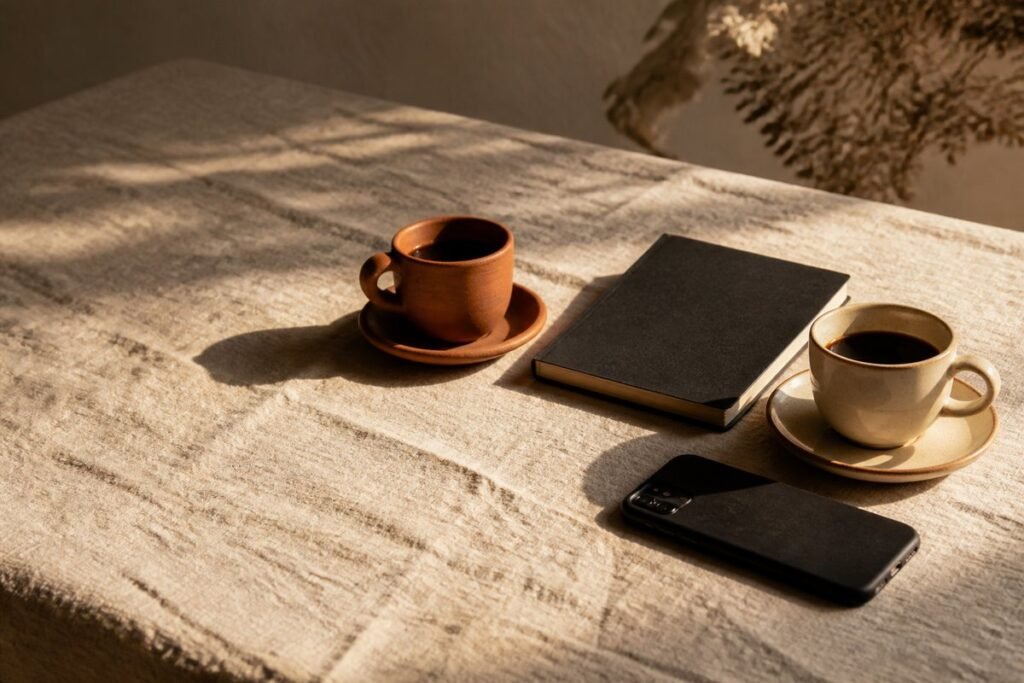
After a typical Spanish lunch (served between 1:30pm and 3:30pm), sobremesa lasts 20 to 40 minutes. Someone orders café solo (kah-FAY SO-lo, espresso) or cortado (kor-TAH-doh, espresso with a splash of milk). Conversation is relaxed. Maybe someone shares a funny story from the morning. Then gradually, people drift back to their afternoon activities.
The weekend version
This is where sobremesa transforms into an event. Weekend family lunches in Spain can start at 2pm and the sobremesa can stretch until 6pm or even 7pm. The table becomes a revolving stage: coffee gives way to chupitos (choo-PEE-tohs, small shots of liqueur), dessert appears, someone pulls out a deck of cards, children play nearby, and three generations share the same table for hours.
The restaurant version
In Spanish restaurants, no waiter will ever bring you the bill unless you ask. This isn’t bad service. It’s respect for your sobremesa. The phrase you need is ¿Nos trae la cuenta, por favor? (nos TRA-eh lah KWEN-tah, por fah-VOR), “Can you bring us the bill, please?”
If you’re visiting from a country where turning tables is standard practice, this difference will feel revolutionary. In Spain, the meal experience belongs to the diners, not the restaurant’s profit margin.
Sobremesa Vocabulary You’ll Actually Use
Your Spanish is about to level up. These phrases will make you sound like you’ve been doing sobremesa your whole life:
- ¿Tomamos un café? (toh-MAH-mos oon kah-FAY) – “Shall we have a coffee?” (the universal sobremesa starter)
- No hay prisa (no eye PREE-sah) – “There’s no rush” (the unofficial motto of sobremesa)
- Ponme un cortado (PON-meh oon kor-TAH-doh) – “Give me a cortado” (casual, used with friends)
- ¿Alguien quiere postre? (AL-gee-en kee-EH-reh POS-treh) – “Does anyone want dessert?”
- Estamos de sobremesa (es-TAH-mos deh so-breh-MEH-sah) – “We’re doing sobremesa” (a perfectly valid excuse for being late)
Why Other Countries Can’t Quite Replicate It
You might think, “Can’t I just linger after dinner anywhere?” Technically, yes. But sobremesa works in Spain because the entire culture supports it.
The siesta schedule creates a long lunch break that makes sobremesa possible on workdays. Restaurants don’t pressure you to leave. Spanish social norms celebrate slow meals rather than viewing them as inefficient. And the Mediterranean climate makes sitting outdoors after lunch genuinely pleasant for most of the year.
It’s a system. Remove any one piece, like the long lunch break or the cultural patience, and the whole thing collapses into just “eating slowly.”
How to Bring Sobremesa Into Your Life
You don’t need to move to Spain. Here’s how to start:
- Extend one meal per week. Pick a weekend lunch or dinner and commit to staying at the table for 30 minutes after the food is done. No phones
- Make coffee the bridge. The ritual of making coffee after eating creates a natural transition from meal to conversation
- Let conversation wander. Sobremesa has no agenda. The best conversations happen when nobody is trying to be productive
- Invite others. Sobremesa scales beautifully. Two people or twenty, the principle is the same: stay, talk, connect
- Don’t watch the clock. This is the hardest part for anyone from a time-obsessed culture. Practise letting time stretch
The Word English Needs
There’s a reason sobremesa keeps appearing on lists of “untranslatable words.” It describes something specific and valuable that English-speaking cultures do poorly: the deliberate, unhurried enjoyment of company after a shared meal.
Not “hanging out.” Not “catching up.” Not “having drinks.” Sobremesa is quieter, warmer, and more intentional than any of those. It’s the recognition that the best conversations happen when you’re full, relaxed, and nobody is going anywhere.
Try this phrase today: ¿Nos quedamos un rato más? (nos keh-DAH-mos oon RAH-toh mahs), “Shall we stay a bit longer?” That’s sobremesa in six words.
Now you understand this tradition better. Use this knowledge to connect authentically, whether at a table in Seville or your own kitchen.
Share

audazrevista
You may also like

Get the Inside Scoop