Updated November 4, 2026 · Reviewed by the Audaz editorial team
Which Spanish words come from Arabic? Spanish words from Arabic include aceite (oil), almohada (pillow), azúcar (sugar), naranja (orange) and ojalá (I hope). They arrived during the centuries of Muslim rule in the Iberian Peninsula, from 711 to 1492. An Arabic studies professor at the University of La Laguna puts the number still in daily use at about 1,000.
- 14 of our 20 words start with a or al, the Arabic word for the, which Spanish kept as part of the noun.
- Arabic carried words from much further away, so ajedrez, chess, goes all the way back to Sanskrit.
- Ojalá first meant if God wills, and today it simply means I hope.
You probably use some of these words already. You order arroz, ask for an almohada at a hotel, or say hasta luego on your way out. Each one carries a piece of history that most speakers never notice. Below are 20 everyday words, where each one came from, and what they tell you nearly 800 years of shared life.
For each word we read its entry in the RAE dictionary, the one the Spanish Academy keeps. That entry shows the path the word took. We only repeat what it says, and when the dictionary is unsure, so are we.
In this guide (9)
- Why does Spanish have so many words from Arabic?
- How many Spanish words come from Arabic?
- What are 20 everyday Spanish words from Arabic?
- Why do so many of these words start with al?
- Which words came into Arabic from further away?
- Which words changed their meaning on the way?
- What does ojalá really mean?
- Where can you see Arabic on the map of Spain?
- Questions
Why does Spanish have so many words from Arabic?
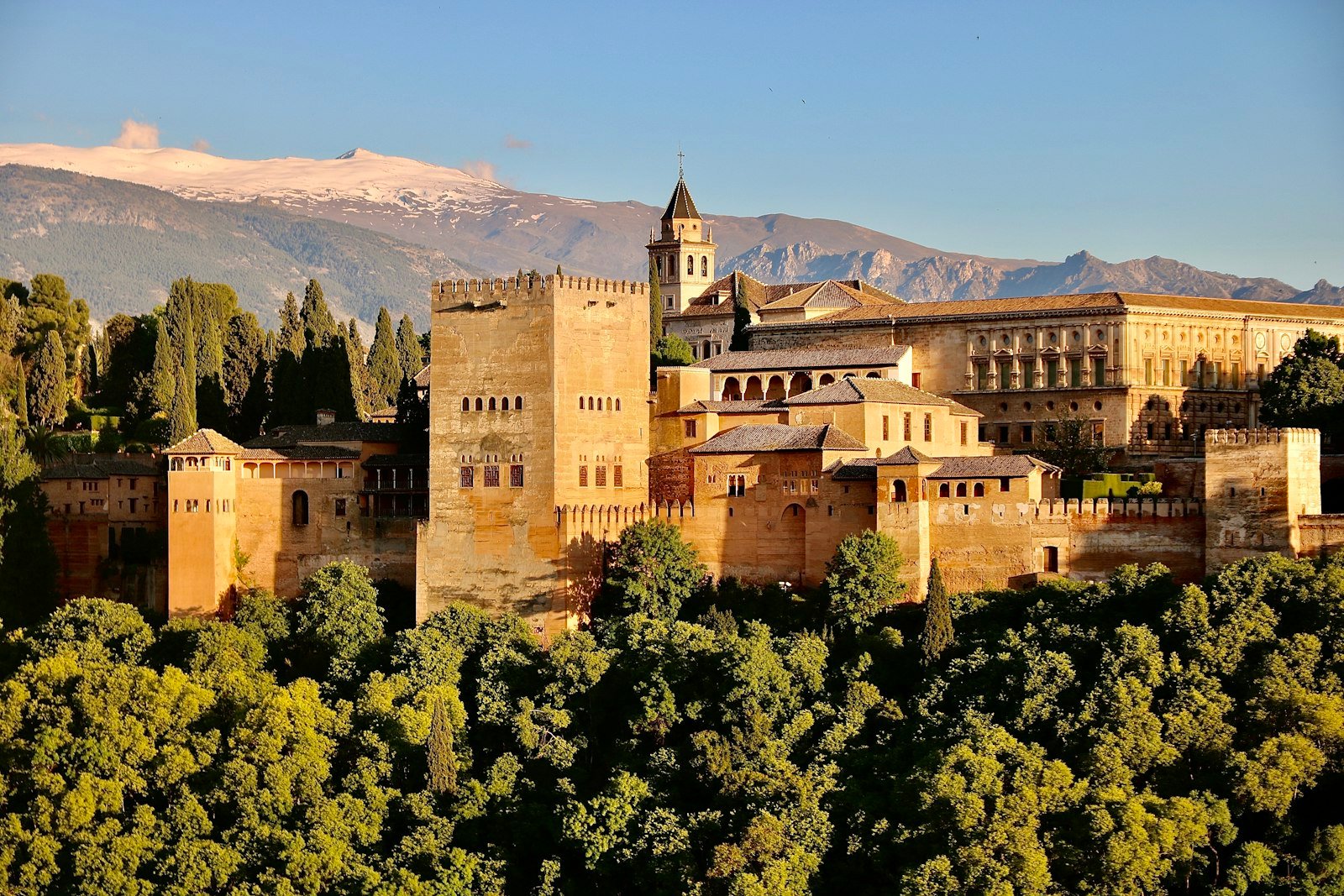
It began in 711. That year, Muslims arrived in the Iberian Peninsula and started a new life in a land they had never known. For centuries after that, much of what is now Spain and Portugal was ruled from cities like Córdoba and Granada. Those lands are known as al-Andalus. The last of its states fell in 1492.
People in al-Andalus spoke a form of Arabic known as Andalusi Arabic. Christians and Jews learned it too, and it lived side by side with local Romance dialects. The words came with the things of daily life, such as food, water, the home and the running of a town.
Most of the borrowing happened as the kingdom of Castile pushed south, mainly in the 11th, 12th and 13th centuries. Castile took over towns full of Arabic speakers, and their words came along. That’s why Arabic left so many words but changed the grammar very little.
How many Spanish words come from Arabic?
Nobody has an exact count, because it depends on what you include. Dolores Serrano-Niza teaches Arabic and Islamic studies at the University of La Laguna. She says Spanish has about 1,000 words from Arabic that people use in daily life.
She adds that some have faded, because the object they named is no longer used. Wider counts that add every derived word reach about 4,000, as this overview of Arabic in Spanish explains. Either way, you’ll meet these words from your first week of Spanish.
The map is full of it too. Serrano-Niza counts more than 4,000 place names in Spain that come from Arabic. We list a few of them further down.
What are 20 everyday Spanish words from Arabic?
We picked words a learner meets in the first months: food, the home, the town and 2 small words you’ll say every day. The third column shows the Arabic form the RAE dictionary gives. That’s the form spoken in al-Andalus.
| Spanish | English | Andalusi Arabic | The story in the dictionary |
|---|---|---|---|
| aceite | oil | azzáyt | From Aramaic zaytā before it reached Arabic. |
| aceituna | olive | azzaytúna | A little form of the same Aramaic word as aceite. |
| azúcar | sugar | assúkkar | Came through Greek and Middle Persian from Sanskrit śarkarā. |
| arroz | rice | arráwz | Came through Greek from Tamil arici. |
| naranja | orange | naranǧa | Came through Persian from Sanskrit nāraṅga. |
| zanahoria | carrot | safunnárya | From a Greek name for the wild carrot. |
| berenjena | aubergine | baḏinǧána | From Persian bātingān. |
| albahaca | basil | alḥabáqa | From classical Arabic ḥabaqah. |
| albóndiga | meatball | albúnduqa | From a Greek word for a nut, because of the round shape. |
| alcachofa | artichoke | alẖaršúfa | Its older roots are uncertain, says the dictionary. |
| almohada | pillow | almuẖádda | From classical Arabic miẖaddah. |
| alfombra | rug, carpet | alḥánbal | Once a cover for a raised seat. The Arabic word is still used in Morocco. |
| azulejo | glazed tile | azzuláyǧa | Not related to azul, blue, though it looks it. |
| alberca | water tank; a pool in Mexico | albírka | From classical Arabic birkah. |
| ajedrez | chess | aššaṭranǧ | From Sanskrit chaturaṅga, of four parts. |
| alcalde | mayor | alqáḍi | From qāḍī, a judge. |
| aldea | village | aḍḍáy‘a | From classical Arabic ḍay‘ah. |
| barrio | neighbourhood | bárri | Meant outside, and earlier wild. |
| hasta | until | ḥattá | Shaped by the Latin ad ista too. |
| ojalá | I hope, if only | law šá lláh | Meant if God wills. |
Five more you might know: algodón (cotton), almacén (store), tarea (task or homework), alfiler (pin) and fulano (so-and-so). Each one also comes from Arabic, says the dictionary.
Why do so many of these words start with al?
Look down the first column and you’ll see al again and again: almohada, alfombra, alcalde, alberca. In Arabic, al means the. Spanish speakers heard the word with its article and kept both, so the became part of the noun.
Sometimes the l blends into the next sound, so only the a is left. That’s why azzáyt gave aceite and arráwz gave arroz. It also explains something odd. In Spanish you say la almohada, so the pillow has its article twice: once in Spanish and once hidden in the Arabic.
We counted this ourselves from the 20 entries in the table. For alcachofa the dictionary only says perhaps, so we left it out of the second count.
Which words came into Arabic from further away?
This is the part that surprises most readers. For centuries Arabic was a main language of learning, so it often passed on words it had picked up from others. Nearly half of our 20 words reached Arabic from an older language first.
- Ajedrez, chess, came through Middle Persian from the Sanskrit chaturaṅga, meaning of four parts.
- Naranja, orange, came through Persian from the Sanskrit nāraṅga.
- Azúcar, sugar, travelled from Sanskrit through Middle Persian and Greek before Arabic.
- Arroz, rice, goes back through Greek to the Tamil arici.
- Aceite and aceituna, oil and olive, come from Aramaic.
- Albóndiga, meatball, comes from a Greek word for a nut. The cooks named it for its round shape.
Serrano-Niza’s colleague Maravillas Aguiar makes the same point about science. For centuries Arabic carried texts in medicine, astronomy and mathematics, much as English carries research today. Many of those words were older than Arabic too, and some had come from Greek.
| Oldest language | Spanish word today | Older word or path |
|---|---|---|
| Sanskrit | ajedrez, chess | chaturaṅga, through Middle Persian |
| Sanskrit | naranja, orange | nāraṅga, through Persian |
| Sanskrit | azúcar, sugar | śarkarā, through Middle Persian and Greek |
| Tamil | arroz, rice | arici, through Greek |
| Aramaic | aceite, oil | zaytā |
| Aramaic | aceituna, olive | A little form of zaytā |
| Persian | berenjena, aubergine | bātingān |
| Greek | zanahoria, carrot | A name for the wild carrot |
| Greek | albóndiga, meatball | A word for a nut |
Source: the RAE dictionary entries quoted in this guide.
Which words changed their meaning on the way?
Some words kept their meaning for a thousand years. Aceite was oil then and is oil now. Others drifted, and their old meaning tells you something about life in al-Andalus.
Barrio, neighbourhood, comes from a word for outside. Before that, in classical Arabic, it meant wild. Alcalde, mayor, comes from qāḍī, a judge. Alfombra, rug, once named a kind of cover for a raised seat. The dictionary notes that the Arabic word is still widely used in Morocco.
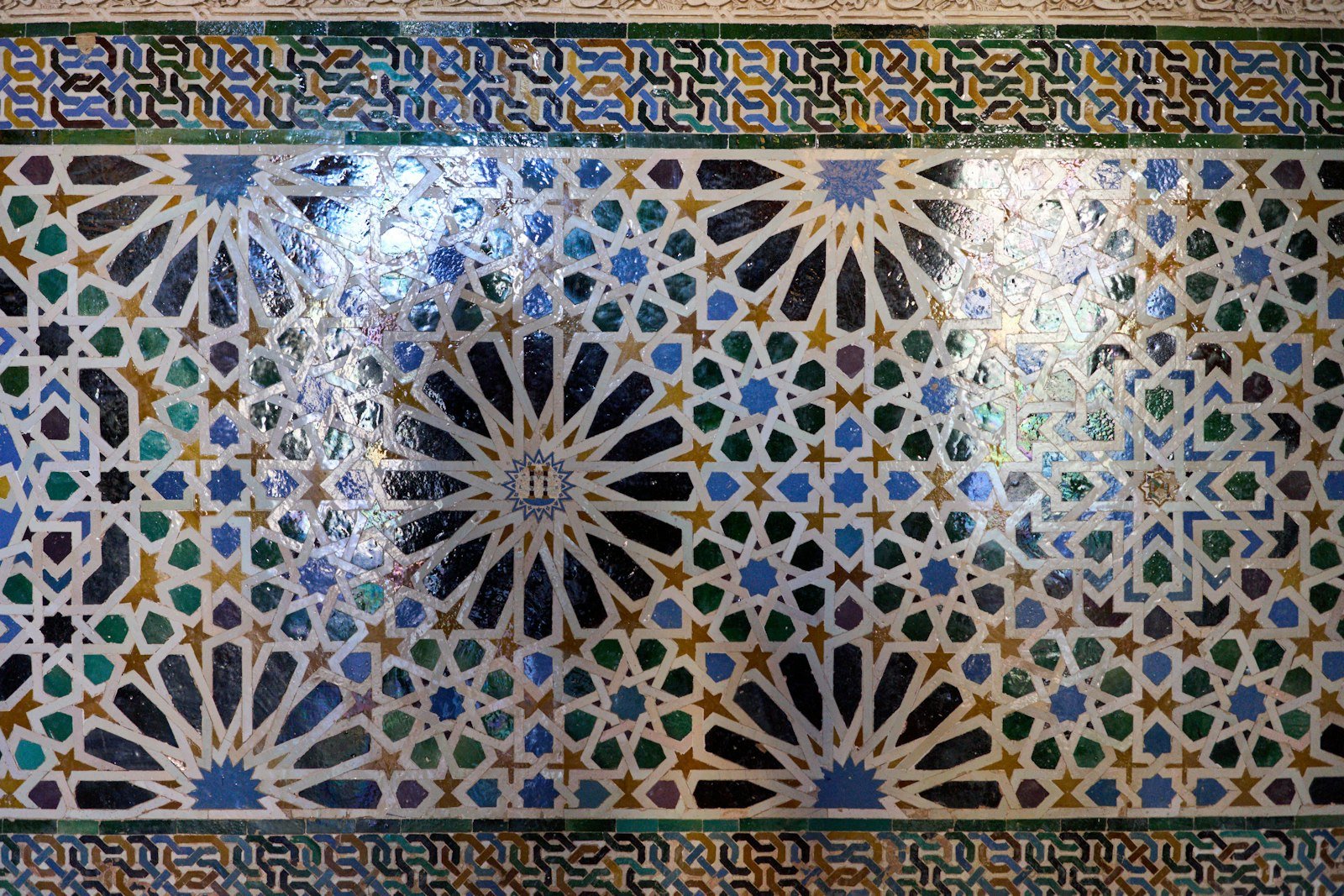
Don’t judge a word by its look. Azulejo, the glazed tile used on walls and floors, looks like it comes from azul, blue. The RAE dictionary keeps them as 2 separate words, and it traces the tile to Andalusi Arabic.
Alberca shows how a word can change by country too. Its first meaning is a water tank for watering fields. In Mexico, says the dictionary, an alberca is a swimming pool. Most other countries say piscina, and in Argentina you’ll hear pileta. Our guide to food words by country has more pairs like this.
What does ojalá really mean?
Ojalá means I hope, or if only. The RAE dictionary traces it to the Andalusi Arabic law šá lláh, if God wills. Portuguese has the same word, oxalá, and the first written record in Spanish dates from 1424.
Today it simply shows a strong wish for something to happen, says the dictionary. The verb after it goes in the subjunctive, so you say ojalá llueva, I hope it rains. The singer Silvio Rodríguez named a song Ojalá. It came out on his 1978 album Al final de este viaje, and you can find it on legal music services.
Hasta, until, is the other small word on our list. You use it every time you say hasta luego or hasta mañana. Our guide to Spanish greetings shows when each goodbye fits.
Some words have no neat English match. If you enjoy words with a long story, our list of untranslatable Spanish words is a good next read.
Where can you see Arabic on the map of Spain?
Place names keep old words long after people stop using them. Names that start with Guad often come from wādī, river or valley, like the Guadalquivir. Alcalá comes from the word for fortress, and Medina from the word for city.
| Place | Meaning | From the Arabic |
|---|---|---|
| Guadalquivir | the big river | al-wādī al-kabīr |
| Albacete | the plain | al-basit |
| Almería | the watchtower | al-meraya |
| Alcalá de Henares | the fortress | al-qal’a |
| Medina-Sidonia | city | madina |
| Gibraltar | the mountain of Tariq | jebel Tariq |
Spanish isn’t spoken the same way in every region, and Arabic words are just one layer of that. Our guide to the regional dialects of Spain shows how the language changes as you travel.
Try it this week. Next time you cook, name 5 things on the counter in Spanish. Then guess which ones came from Arabic. Aceite, arroz, azúcar and berenjena are a good start.
Words from this guide
| Spanish | English |
|---|---|
| el aceite | oil |
| la almohada | pillow |
| el azúcar | sugar |
| la naranja | orange |
| el ajedrez | chess |
| el alcalde | mayor |
| la aldea | village |
| el barrio | neighbourhood |
| hasta | until |
| ojalá | I hope, if only |
Frequently asked questions
Which Spanish words come from Arabic?
Everyday examples include aceite (oil), almohada (pillow), azúcar (sugar), arroz (rice), naranja (orange), alcalde (mayor), barrio (neighbourhood), hasta (until) and ojalá (I hope).
How many Spanish words come from Arabic?
About 1,000 are still in daily use, according to Arabic studies professor Dolores Serrano-Niza. Counts that add derived words reach about 4,000.
Why do Spanish words from Arabic start with al?
Al is the Arabic word for the. Spanish kept it as part of the noun, as in almohada and alfombra.
Does ojalá come from Arabic?
Yes. The RAE dictionary traces ojalá to the Andalusi Arabic law šá lláh, if God wills. Today it simply means I hope.
When did Arabic words enter Spanish?
Mostly between 711 and 1492, when Muslim states ruled much of what is now Spain. Most words came in from the 11th to the 13th century.
Every city has its own layers of history. Our next issue, Ciudades que hablan, takes you to 18 cities across the Spanish-speaking world. Each one gets a single story, told in Spanish by someone who lives there. Join the waitlist and we’ll tell you when it opens.

Your Spanishcould use some.
In Spanish, reading tends to fall apart at the first word you don’t know. Audaz Revista is a Spanish magazine written by experts, where you tap that word and keep going. Edition 1 is out now.
Pay once, and it opens the moment you pay. See what's in Edition 1
Try it. Tap any word.
.
We love meeting up with friends to go out for tapas.
From "5 Spanish customs you should know", Edition 1.
Pay once, and it opens the moment you pay. See what's in Edition 1