Spanish Riddles: 15 Adivinanzas With Answers
By the Audaz Revista editorial team
Updated October 13, 2026 · Reviewed by the Audaz editorial team
What are the best Spanish riddles for learners? Spanish riddles are called adivinanzas, from adivinar, to guess. The 15 below come from 2 old collections, one by the Spanish writer Fernán Caballero and one printed in Chile in 1911. Each comes with its answer, the words it teaches and a level from A2 to B2. Many were told on both sides of the Atlantic.
- Fernán Caballero’s collection has 200 children’s riddles, each with its answer.
- Eliodoro Flores printed 795 riddles he heard in Chile, in a collection published in 1911.
- Flores linked around 60 of them to Caballero’s book, so the same riddle was told in both countries.
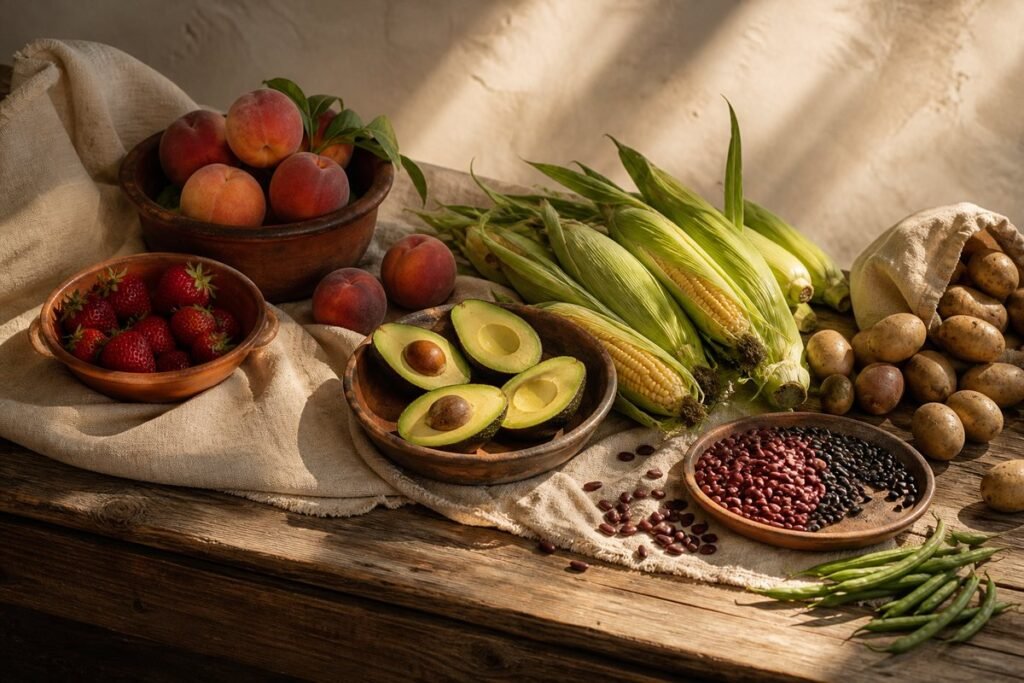
- Riddles about potatoes, chilli and corn point to the Americas, where those plants are native.
A riddle is a tiny poem with a secret inside. For a learner, the guess is the best part, because you have to understand every word to get there. At Audaz Revista, we quote each riddle exactly as it was printed.
What is an adivinanza?
An adivinanza describes something without naming it, and the listener works out what it is. Chile’s national digital library, Memoria Chilena, puts it well.
“La adivinanza por su finalidad está destinada a plantear un problema en términos tales, que la solución sea posible, pero no inmediata.” In English: a riddle sets a problem so that the answer is possible, but not immediate. Memoria Chilena, Biblioteca Nacional de Chile.
Where do these 15 riddles come from?
Two books. The first is by Fernán Caballero, the pen name of the Spanish writer Cecilia Böhl de Faber (1796 to 1877). Her book of tales and sayings has 200 children’s riddles, or adivinas infantiles, with every answer. It’s free on Wikisource.
The second is Adivinanzas corrientes en Chile, riddles told in Chile. Eliodoro Flores gathered them over several years, from his home town of Constitución to Santiago. It came out in 1911 and is also free on Wikisource. Memoria Chilena calls it one of the oldest riddle collections in the country.
Flores wrote each riddle exactly as he heard it, in the Chilean spelling of his time. So he writes i for y and jente for gente. We keep his spelling in the quotes.
How do you use a riddle to practise Spanish?
A riddle makes you read for meaning. You have to hold the whole picture in your head, which makes riddles good vocabulary practice.
Which Spanish riddles can A2 learners solve?
These 6 use everyday words.
Riddle 1 (A2)
Un platito de avellanas, que de día se recoge y de noche se derrama.
A little plate of hazelnuts, gathered up by day and spilled out at night.
Show the answer+
Las estrellas (the stars).
Words: platito (little plate), avellanas (hazelnuts), de día (by day), de noche (at night).
Riddle 2 (A2)
En alto vive, en alto mora, en alto teje, la tejedora.
She lives up high, she dwells up high, up high she weaves, the weaver.
Show the answer+
La araña (the spider).
Words: en alto (up high), morar (to dwell), tejer (to weave), la tejedora (the weaver).
Riddle 3 (A2)
Una arquita muy chiquita, y blanca como la cal, que todos saben abrir, pero ninguno cerrar.
A tiny little chest, as white as lime. Everyone knows how to open it, but nobody can close it.
Show the answer+
El huevo (the egg).
Words: arquita (little chest, from arca), chiquita (tiny), la cal (lime, the white powder used for whitewash), abrir and cerrar (to open and to close).
Riddle 4 (A2)
Entre pared y pared hay una santa mujer, que con el diente llama a la gente.
Between wall and wall there is a holy woman, who calls the people with her tooth.
Show the answer+
La campana (the bell). The tooth is the clapper that strikes it.
Words: pared (wall), el diente (tooth), llamar (to call), la gente (people).
Riddle 5 (A2)
Ayer vinieron, hoy han venido, vendrán mañana con mucho ruido.
They came yesterday, they have come today, they will come tomorrow with a lot of noise.
Show the answer+
Las olas del mar (the waves of the sea).
Words: ayer, hoy, mañana (yesterday, today, tomorrow), el ruido (noise).
Riddle 6 (A2)
¿Qué cosa es que mientras más grande, menos se ve?
What thing is it that the bigger it gets, the less you see?
Show the answer+
La oscuridad (the dark).
Words: mientras más… menos (the more… the less), grande (big), se ve (is seen).
Which Spanish riddles are trick questions?
These look like maths, but the answer is a joke on the listener. Both were told in Spain and in Chile.
Riddle 7 (A2)
Siete pájaros en una azotea, matando tres, ¿cuántos quedan?
Seven birds on a flat roof. If you kill three, how many are left?
Show the answer+
Los tres muertos (the three dead ones). The others fly away.
Words: pájaros (birds), la azotea (flat roof), matar (to kill), quedar (to be left).
Riddle 8 (B1)
Un cántaro lleno, ¿de qué pesa menos?
A full clay jug. What does it weigh less of?
Show the answer+
De agujeros (of holes). A full jug has no holes in it.
Words: el cántaro (clay jug), lleno (full), pesar (to weigh), el agujero (hole).
Which Spanish riddles need B1 Spanish?
These use older words or a clever image, so read each one twice.
Riddle 9 (B1)
Dos compañeras, van a compás, con los pies delante y los ojos detrás.
Two companions walk in step, with their feet in front and their eyes behind.
Show the answer+
Las tijeras (the scissors). The finger holes are the eyes.
Words: compañeras (companions), a compás (in step), delante and detrás (in front and behind).
Riddle 10 (B1)
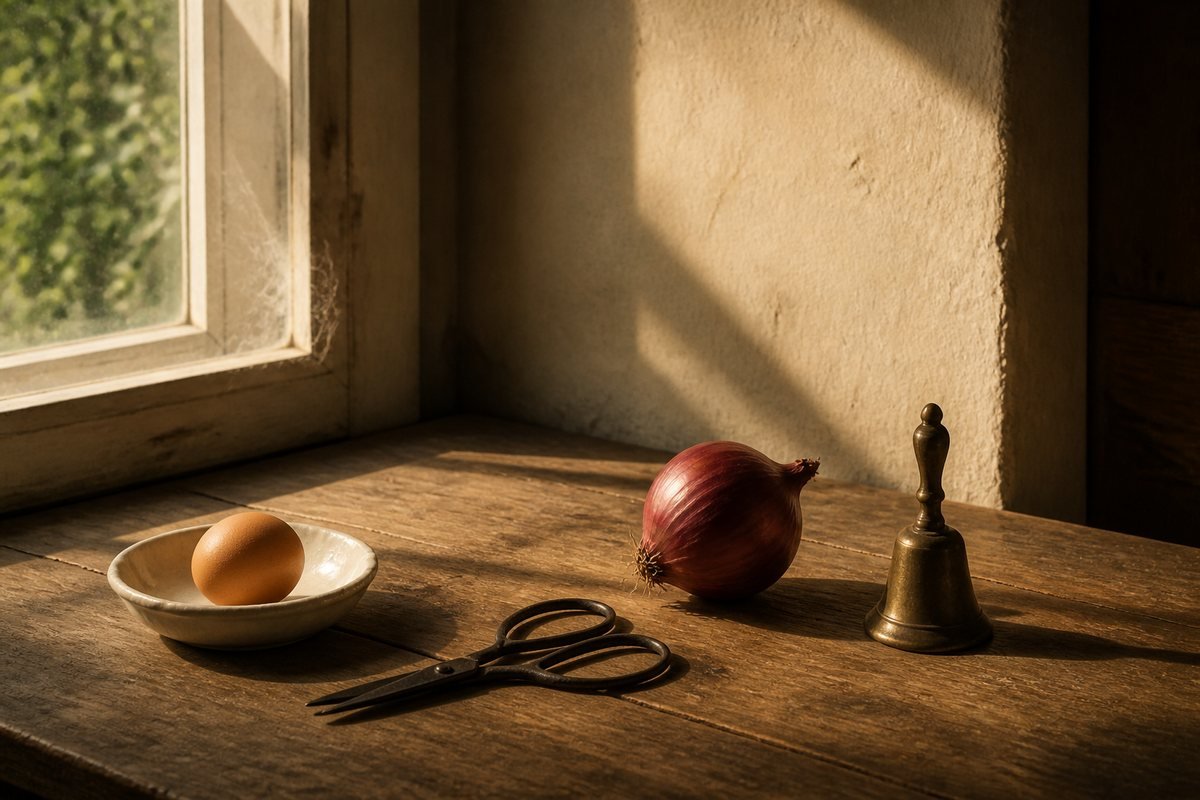
Una señora con muchas basquiñas y que se pone la peor encima.
A lady with many skirts, who puts the worst one on top.
Show the answer+
La cebolla (the onion). The dry outer skin is the worst skirt.
Words: la basquiña (an old word for a skirt), ponerse (to put on clothes), encima (on top).
Riddle 11 (B1)
De día, morcilla; de noche, tripilla.
By day a blood sausage, by night a little gut.
Show the answer+
La media (the stocking). By day a leg fills it out. At night it lies empty and limp.
Words: la morcilla (blood sausage), la tripa (gut), la media (stocking).
Riddle 12 (B1)
Antes que nazca la madre, anda el hijo por la calle.
Before the mother is born, the son is already walking down the street.
Show the answer+
El humo (smoke). Think of a fire that smokes before the flame catches.
Words: nacer (to be born), antes que (before), andar (to walk), la calle (street). Note the subjunctive nazca after antes que.
Which riddle is the B2 challenge?
This one is a small poem, and every line is a picture.
Riddle 13 (B2)
Guardada en estrecha cárcel por soldados de marfil, está una roja culebra que es la madre del mentir.
Kept in a narrow jail by soldiers of ivory, there lives a red snake that is the mother of lying.
Show the answer+
La lengua (the tongue). The ivory soldiers are the teeth.
Words: estrecha (narrow), la cárcel (jail), el marfil (ivory), la culebra (snake), mentir (to lie).
Which Spanish riddles only make sense in the Americas?
Flores compared his riddles with a Spanish collection of about 2,000, then with a second one. Almost 60% of his riddles were in neither, so he couldn’t say where they began. Some looked American to him, because they describe plants native to the Americas.
Memoria Chilena says most Chilean riddles still come from Spanish culture. Both ideas can be true. Riddles travelled, and then new ones grew around local food.
Riddle 14 (B1)
Pampa verde, flor morá, debajito está la bolá.
A green plain, a purple flower, and underneath lies the bunch of balls.
Show the answer+
La papa (the potato). Papa is the word for potato in Latin America. Spain says patata.
Words: la pampa (plain), morá (spoken form of morada, purple), debajito (just underneath).
Flores wrote what he heard, so morá and bolá drop their d.
Riddle 15 (A2)
Pica i no saca sangre.
It bites and draws no blood.
Show the answer+
El ají (chilli pepper). Picar means to sting or bite, and it also means to taste hot.
Words: picar (to sting, to taste spicy), sacar (to draw out), la sangre (blood).
A third riddle in his book is about corn: Una planta larga i delgá que da fruto en la mitá. A long, thin plant with fruit in the middle.
How did the same riddle change between Spain and Chile?
Put the two books side by side and the answers stay the same, but the words move. Flores said nearly everyone in Chile knew the bell riddle.
| Answer | Fernán Caballero’s version | Flores’s version, Chile 1911 |
|---|---|---|
| The stars. | Un platito de avellanas (a little plate of hazelnuts). | Una fuente de avellanas (a bowl of hazelnuts). |
| The bell. | Entre pared y pared hay una santa mujer (a holy woman between two walls). | Una vieja con un diente (an old woman with one tooth). |
| The stocking. | De día, morcilla (by day, a blood sausage). | De dia chorizo (by day, a chorizo). |
| The tongue. | Por soldados de marfil (by soldiers of ivory). | Con soldados de marfil (with soldiers of ivory). |
Everyday words still shift by country today. Our guide to Latin American and Spain Spanish shows more.
How did children play adivinanzas in Chile?
Flores remembered winter nights in Constitución, when children met a contar cuentos and a echar adivinanzas, to tell stories and throw out riddles. A wrong answer earned a penitencia, a forfeit. The loser might have to sing a song, crow like a rooster or walk on all fours.
Take turns asking a riddle from this list. A wrong guess earns a small forfeit, like saying a tongue twister. For more everyday customs and their words, see Latin American traditions in Spanish.
Frequently asked questions
What is a riddle in Spanish?+
A riddle is an adivinanza, from the verb adivinar, to guess. Some old riddles are also called adivinas or acertijos.
What is the most famous Spanish riddle?+
No one has counted, but the bell riddle is a good guess. In 1911, Flores said nearly everyone in Chile knew it.
What level of Spanish do I need for riddles?+
Many simple riddles work at A2. Older ones with rare words, like the tongue riddle, suit B1 or B2.
Every Spanish word lives in a place. Our next issue, Ciudades que hablan, takes you to 18 cities across the Spanish-speaking world. Each one gets a single story, told in Spanish by someone who lives there. Join the waitlist and we’ll tell you when it opens.
Audaz Revista
Audaz Revista is the reading guide for Spanish learners. We tell you what you can read in Spanish at your level, and help you finish it.
Share
Topics

audazrevista
Get the Inside Scoop