In This Article
- Myth #1: Flamenco Is Just Dancing
- Myth #2: Flamenco Represents All of Spain
- The Palos. Flamenco Has More Styles Than You Think
- Duende. The Spirit That Makes Flamenco Alive
- Modern Flamenco. Jazz, Hip-Hop, and Global Fusion
- Flamenco Fashion. From Seville to the Runway
- UNESCO Said It. Flamenco Is World Heritage
- Spanish Flamenco Vocabulary You Need to Know
- Conclusion
Forget what your textbook told you. If you think Spanish flamenco culture is just a woman in a red dress spinning on a stage, think again. Flamenco is one of the most misread art forms on Earth. Most of what tourists “know” about it is flat-out wrong.
We’re here to bust the biggest myths. We’ll break down what flamenco really is. And we’ll boost your Spanish vocab along the way. Ready? Let’s go.
Myth #1: Flamenco Is Just Dancing
This is the biggest myth out there. Most people hear “flamenco” and picture a dancer. But flamenco rests on four pillars. Dance is only one of them.
- Cante (KAHN-teh, singing). The soul of flamenco. A raw, deep voice that tells stories of love, loss, and survival. Many purists say cante is the most vital part of Spanish flamenco culture.
- Baile (BYE-leh, dance). The footwork, the arms, the fire. Yes, this is what tourists see first. But it’s only one piece.
- Toque (TOH-keh, guitar playing). The Spanish guitar doesn’t just back up flamenco. It drives it. The tocaor (toh-kah-OR, guitarist) builds the sound that holds it all together.
- Jaleo (hah-LEH-oh, shouts of support). The clapping, the cries of “ole!” and “asi se canta!” This isn’t random noise. Jaleo is a set part of every show. Without it, flamenco feels dead.
The Fundacion Cristina Heeren is one of Seville’s top flamenco schools. They note that cante jondo (deep song) existed long before formal flamenco dance. The voice came first. Everything else grew from it.
So next time someone calls flamenco “a dance, ” correct them gently. It’s a full world of sound, motion, and feeling.
Myth #2: Flamenco Represents All of Spain
Here’s the thing. Walk into a bar in Barcelona and ask for flamenco. You’ll get a polite smile and a nod toward a tourist tablao. Walk into a bar in Seville’s Triana neighborhood? You’ll hear it spilling out of doorways.
Spanish flamenco culture is rooted in Andalusia (ahn-dah-loo-SEE-ah), the south of Spain. It grew in the triangle between Seville, Jerez de la Frontera, and Cadiz. This isn’t a small detail. It’s core to what flamenco means.
The Roma people (called gitanos in Spain) played a huge role in shaping it. Their music mixed with Andalusian folk songs, Moorish sounds, and Sephardic Jewish tunes over hundreds of years. Research from the Universidad de Sevilla shows flamenco came from this cultural mix in the 1700s and 1800s.
Other Spanish regions have their own great music. Galicia has gaitas (bagpipes). Catalonia has sardanes (circle dances). The Basque Country has trikitixa (accordion music). Saying flamenco stands for all of Spain is like saying jazz stands for all of America. It’s from one place, shaped by certain people.
Want to learn more about Spain’s rich musical map? Read our deep dive on how music shaped modern Spain from flamenco to global sound.
The Palos. Flamenco Has More Styles Than You Think
Most outsiders think flamenco is one thing. One sound. One vibe. Wrong. Spanish flamenco culture holds over 50 distinct palos (PAH-lohs, styles or forms). Each has its own rhythm, mood, and rules.
Here are some you should know,
| Palo (Style) | Mood | Rhythm | What Makes It Unique |
|---|---|---|---|
| Solea (so-leh-AH) | Deep, serious | 12-beat cycle | Called the “mother” of flamenco. Heavy and moving. |
| Alegrias (ah-leh-GREE-ahs) | Joyful, bright | 12-beat cycle | From Cadiz. Festive and upbeat with classy dance. |
| Bulerias (boo-leh-REE-ahs) | Fast, wild | 12-beat cycle | The most showy palo. Improv rules here. |
| Tangos (TAHN-gohs) | Playful, rhythmic | 4-beat cycle | Not Argentine tango! A lighter, fun flamenco form. |
| Seguiriyas (seh-gee-REE-yahs) | Tragic, intense | 12-beat cycle | The darkest palo. Themes of death and deep grief. |
| Fandangos (fahn-DAHN-gohs) | Free, open | Free rhythm | Often sung without strict tempo. Very personal. |
Each palo has a compas (kohm-PAHS, rhythmic pattern). Everyone in the show must follow it. The compas is sacred. Get it wrong, and you lose respect in any flamenco circle fast.
When you visit a Feria de Abril in Seville, you’ll hear many palos in the casetas all night. It’s the best crash course in Spanish flamenco culture you’ll ever find.
Duende. The Spirit That Makes Flamenco Alive
There’s a Spanish word with no real English match, duende (DWEN-deh). Poet Federico Garcia Lorca called it “a power, not a work. A struggle, not a thought.” In flamenco, duende is that electric moment when a performer goes beyond skill and taps into something raw.
You can’t rehearse duende. You can’t fake it. A cantaor (kahn-tah-OR, male singer) hits a note that silences the whole room. That’s duende. A bailaora (bye-lah-OH-rah, female dancer) locks eyes with the crowd. Every footstrike feels like thunder. That’s duende too. It’s what makes Spanish flamenco culture so powerful and so hard to explain.
Lorca gave a famous talk in 1933 called “Play and Theory of the Duende.” He said, “The duende does not come at all unless he sees that death is possible.” Heavy words. But that fire is what sets a good show apart from one that changes your life.
1. What are the four pillars of flamenco?
Answer. Cante (singing), baile (dance), toque (guitar), jaleo (shouts of support)
2. Which region of Spain is flamenco from?
Answer. Andalusia, the Seville-Jerez-Cadiz triangle
3. How many distinct palos (styles) does flamenco have?
Answer. Over 50
4. What is duende?
Answer. The raw emotional spirit that lifts a flamenco show beyond technique
Modern Flamenco. Jazz, Hip-Hop, and Global Fusion
Here’s another myth, flamenco is stuck in the past. Nope. Modern Spanish flamenco culture is wildly fresh and always changing.
Paco de Lucia started the shift in the 1970s. He brought jazz chords and world music into flamenco guitar. Purists were not happy. But his album “Friday Night in San Francisco” with Al Di Meola and John McLaughlin became a best-seller. He showed flamenco could grow without losing its soul.
Today, the fusion goes even further,
- Rosalia mixes flamenco with electronic pop and reggaeton. Her album “El Mal Querer” won a Grammy. It brought millions of young fans to flamenco sounds.
- Niño de Elche pushes flamenco into wild new space. He blends it with noise music and avant-garde art.
- Chambao made “flamenco chill.” They fused classic cante with electronic beats.
- Lin Cortes brings together flamenco, hip-hop, and R&B. He carries Roma roots into modern urban music.
Spain’s Ministry of Culture reports that flamenco shows and festivals made over 500 million euros in 2024. The art form isn’t just alive. It’s booming.
Want to hear how Spanish music grew beyond flamenco? Read our piece on Spain’s musical path from flamenco to global sound.
Flamenco Fashion. From Seville to the Runway
Let’s talk fashion. Flamenco’s mark on global style is huge and often overlooked. This side of Spanish flamenco culture reaches far beyond the stage.
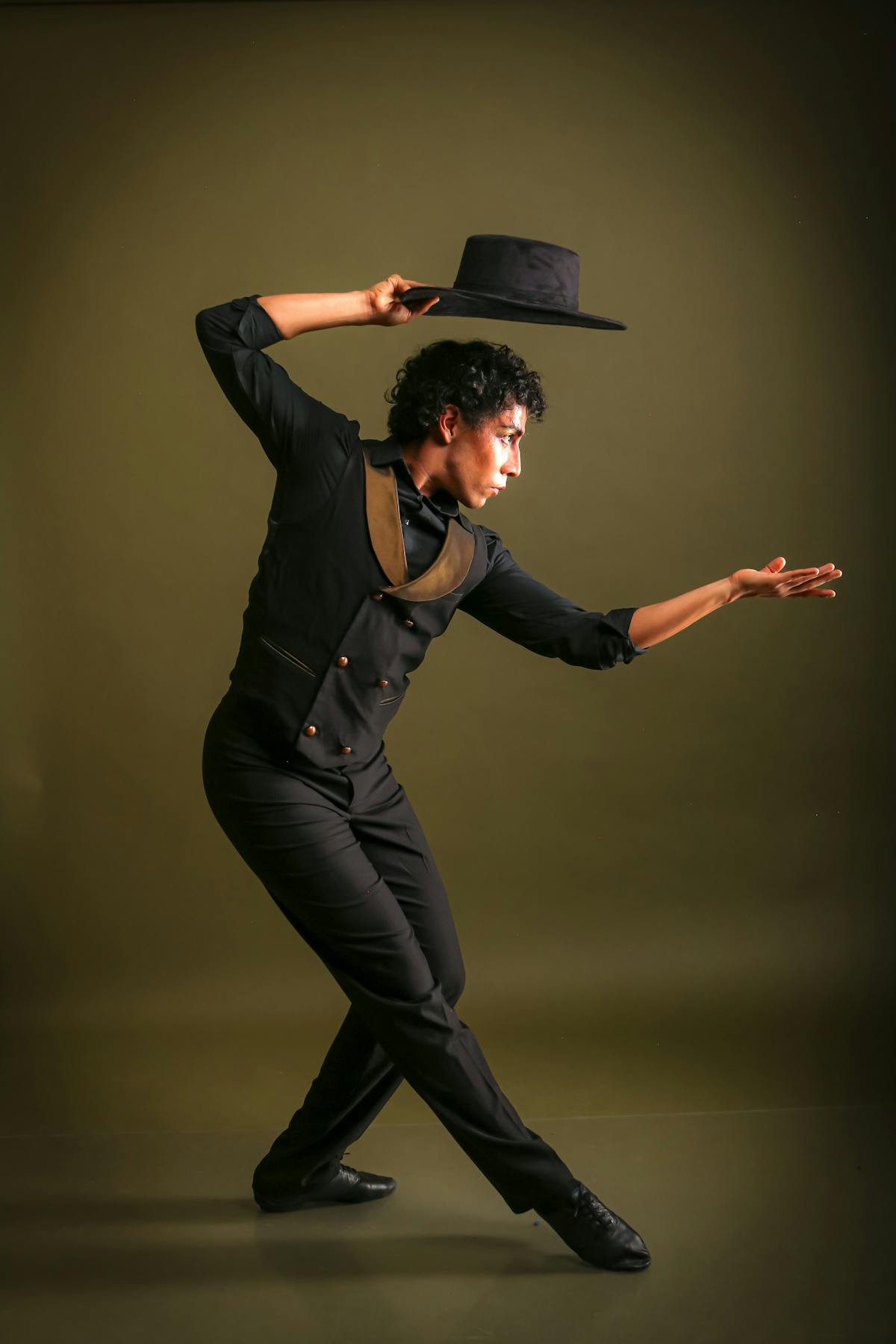
The traje de flamenca (TRAH-heh deh flah-MEN-kah, flamenco dress) is iconic. The fitted top, the ruffled skirt with volantes (boh-LAHN-tehs, ruffles), the bold polka dots. It’s not just a costume. It’s a living fashion that changes each year at Seville’s Feria de Abril.
Key flamenco fashion items,
- Bata de cola (BAH-tah deh KOH-lah, tail dress). The long-trained dress used on stage. Dancers move the heavy fabric as part of the dance. It takes years to learn.
- Mantoncillo (mahn-tohn-SEE-yoh, small shawl). A silk shawl with stitching, draped over the shoulders. It came from the Manila trade route. Now it’s a flamenco staple.
- Flores (FLOH-rehs, flowers). Fresh flowers pinned in the hair. A classic look. Usually red carnations or roses.
- Zapatos de flamenco (thah-PAH-tohs deh flah-MEN-koh, flamenco shoes). Handmade shoes with nails in the sole. Each shoe is really a musical tool.
Designers like Carolina Herrera, Oscar de la Renta, and Dolce & Gabbana have all pulled from flamenco looks. The polka dots, the ruffles, the bold shapes. These hit Paris and Milan runways every few seasons. Vogue España calls the traje de flamenca “one of the most copied shapes in global fashion history.”
The Feria de Abril is basically a live fashion show. Thousands of women debut custom trajes de flamenca. These cost from 500 to 5, 000 euros. Read our full guide on what first-timers get wrong about Feria de Abril to see this style event up close.
UNESCO Said It. Flamenco Is World Heritage
In 2010, UNESCO added flamenco to its list of Intangible Cultural Heritage of Humanity. That’s a big deal. It puts flamenco next to Japanese Noh theater and Indian yoga as treasures that belong to everyone.
The UNESCO nod came with a duty. Spain agreed to protect flamenco’s living roots. That means backing peñas flamencas (PEH-nyahs flah-MEN-kahs, flamenco social clubs) and making sure the art passes down the right way.
Today, over 800 peñas flamencas exist across Spain. These clubs are where real flamenco lives. Not tourist tablaos. Not staged shows. Real people gather to sing, play, and dance. Many peñas welcome visitors. They’re the best way to feel Spanish flamenco culture without a tourist price tag.
The Instituto Andaluz del Flamenco keeps archives, runs classes, and documents the tradition. If you’re serious about learning, their resources are gold.
Spanish Flamenco Vocabulary You Need to Know
Your Spanish is about to level up. These are key flamenco terms. They’ll make you sound like you know what’s going on at a show. Use these and you’ll learn Spanish phrases your textbook skipped.
Try saying these out loud. Seriously. Right now.
Tablao (tahb-LAH-oh). A venue built for flamenco shows.
Cuadro flamenco (KWAH-droh flah-MEN-koh). The group of performers (singer, guitarist, dancer, palmeros).
Palmeros (pahl-MEH-rohs). The people who clap (palmas) to keep the beat.
Quejio (keh-HEE-oh). The raw, pained cry in flamenco singing.
Pellizco (peh-YEETH-koh). That goosebump moment when a show hits you deep.
Aficionado (ah-fee-thee-oh-NAH-doh). A true flamenco fan.
Juerga (HWER-gah). A loose, informal flamenco gathering. The real deal.
Now try this sentence, “Fui a una juerga flamenca y senti el duende.” (I went to a flamenco gathering and felt the duende.) Your Spanish is about to level up.
These words change how you take in Spanish flamenco culture. Instead of sitting lost at a tablao, you’ll get the form, value the skill, and feel the duende when it hits. That’s what sets a tourist apart from a true aficionado.
If you’re growing your Spanish vocab beyond flamenco, check out our guides on key Spanish travel phrases and Spanish colors vocabulary.
Conclusion
Here’s the real talk. Flamenco is not a dance. It’s not a costume. It’s not background music for a tourist dinner. Spanish flamenco culture is a living, breathing art form. It carries centuries of history, pain, joy, and revolt in every compas.
Now you know the truth. Flamenco has four pillars. It comes from Andalusia and the Roma people. It has over 50 styles. And it keeps growing through modern fusion. You know about duende, the palos, the fashion roots, and the UNESCO status.
So here’s your next move. Find a local peña flamenca or a good tablao. Listen for the cante before you watch the baile. Feel the compas in your chest. When the duende arrives, let it wash over you.
Try this phrase today. You’ve got this, “El flamenco no se entiende, se siente.” (Flamenco isn’t understood, it’s felt.)
Pack your bags. Seville is calling.
Share

audazrevista
You may also like


Get the Inside Scoop