Updated October 28, 2026 · Reviewed by the Audaz editorial team
What are the most famous Mexican legends? The best known is La Llorona, the weeping woman who cries for her children by the water at night. Others Mexicans grow up with include El Cadejo, the ghost dog, the shape-shifting nahual, El Charro Negro, the volcano lovers Popocatépetl e Iztaccíhuatl, La Xtabay, El Callejón del Beso and La Mulata de Córdoba. Each one carries a handful of Spanish words worth keeping.
- La Llorona comes from the verb llorar, to cry, and her cry is the heart of the story.
- Many of these legends began before the Spanish arrived, then took new shapes in colonial times.
- The same ghost changes her name and her river from one country to the next.
A legend is a good teacher of Spanish. It’s short, it’s told out loud, and it repeats its key words until they stick. Below we retell 8 Mexican legends in our own words. For each one, we pull out the Spanish it leaves you with, and show where the story changes as it travels.
| Legend | Where it’s told | Spanish to take away |
|---|---|---|
| La Llorona | Mexico, Central America and beyond | llorar, to cry; ¡Ay, mis hijos!, oh, my children |
| El Cadejo | Southern Mexico and Central America | el perro, the dog; las cadenas, the chains |
| El nahual | Across Mexico | el nahual, a person who can take an animal’s shape |
| El Charro Negro | Jalisco, then all of Mexico | el traje negro, the black suit; la codicia, greed |
| Popocatépetl e Iztaccíhuatl | The Valley of Mexico | la mujer dormida, the sleeping woman |
| La Xtabay | The Maya world of Yucatán | la engañadora, the deceiver |
| El Callejón del Beso | Guanajuato | el callejón, the alley; el balcón, the balcony |
| La Mulata de Córdoba | Córdoba, Veracruz | la embarcación, the boat; el muro, the wall |
In this guide (11)
- Who is La Llorona, the weeping woman?
- How does La Llorona change from country to country?
- What is El Cadejo, the ghost dog?
- What is a nahual, and who is la Nahuala?
- Who is El Charro Negro?
- What is the legend of Popocatépetl and Iztaccíhuatl?
- Who is La Xtabay in Maya legend?
- What is the legend of the Callejón del Beso?
- Who was La Mulata de Córdoba?
- Why do so many Mexican legends sound alike?
- Questions
Who is La Llorona, the weeping woman?
La Llorona is the ghost of a woman who drowned her children. Sorry and cursed, she now looks for them at night, by rivers and through towns and cities. Most people never see her. They hear her, and the sound of her crying is what frightens them. In most tellings she wears white, has long black hair, and cries out ¡Ay, mis hijos!, oh, my children.
The story is old. Its roots lie in the beliefs of the Mexica and the Maya. One early figure is Chocacíhuatl, whose name joins the Nahuatl words for to cry and woman. The friar Bernardino de Sahagún began writing her story down around 1550. In one of the omens said to come before the fall of Tenochtitlan, the goddess Cihuacóatl appears in white over the waters of Lake Texcoco, crying for her children.
The legend took its familiar shape in colonial times, when Spanish and Indigenous stories mixed. Today the figure of La Llorona is part of the intangible cultural heritage of Mexico City.
The Spanish inside the name. Llorar means to cry, or to shed tears. So la Llorona is the crying woman, and her name tells you what she does.
Why tell such a dark story to children? Partly as a warning. Mothers have long said that La Llorona will come for children who disobey. In that role she works much like El Coco, the bogeyman. She also keeps small children away from ponds, lakes and rivers, where they could drown.
How does La Llorona change from country to country?
La Llorona is told from Mexico to Argentina, and in parts of the southern United States. The core stays the same: a woman in white, a terrible cry, and water. The details move with the map. Here are some of the versions collected on Spanish Wikipedia’s page on La Llorona.
| Country | How the story goes there |
|---|---|
| Mexico | She is Luisa, left by Don Nuño de Montes Claros. She weeps through the streets of Mexico City, and the water in her story is Lake Texcoco. |
| Guatemala | She is called María, and her son is Juan de la Cruz. |
| Costa Rica | She is the daughter of a Huetar king. Her own father throws her baby from a waterfall. |
| Colombia | In Pasto, people say she walks the cemeteries on 31 October with a candle in her hand. |
| Uruguay | She and her son drown by accident in the lake of Parque Rivera in Montevideo, on a stormy night. |
| Venezuela | She runs off into the plains and becomes a spirit who takes children left alone. |
There’s also a song. La Llorona is a popular Mexican song from Oaxaca, and its words change from singer to singer and region to region. Chavela Vargas, Lila Downs and Natalia Lafourcade have all recorded it, and it plays in the films Frida and Coco.
What is El Cadejo, the ghost dog?
El Cadejo is a huge spectral dog with shining eyes that drags chains behind it. It appears at night in lonely places, to watch over or torment people walking home late or drunk. The legend is well known in several states of Mexico and across Central America. In Costa Rica and Nicaragua people say el cadejos.
In many regions there are 2 of them. The white cadejo protects travellers. The black one tries to harm them, and some see it as the devil itself. In Costa Rica and Panama there’s only one, and it’s black, but it’s usually harmless. The roots are old. For Mesoamerican peoples, the dog was the companion of the dead on their journey to the afterlife.
Where the word comes from. Cadejo is a Spanish word, though the creature is older. According to the Spanish Royal Academy, it comes from a blend of cadarzo, a rough silk, and madeja, a skein of thread or a mop of hair. That fits a shaggy, tangled dog.
What is a nahual, and who is la Nahuala?
A nahual is a witch, a wizard or a spirit who can take the shape of an animal. The word also names the animal itself, a kind of second self. It comes from the Nahuatl nahualli, which means hidden or disguise.
Some traditions say every person is born with an animal spirit that protects and guides them. A woman whose nahual is a mockingbird, people say, will have a fine singing voice. In the darker version, powerful witches can turn into their animal, and not always for good reasons.
Many children met la Nahuala, a witch, through a cartoon. La leyenda de la Nahuala, an animated film, opened on 1 November 2007. It’s set in Puebla in 1807, and a boy named Leo has to rescue his brother from a witch in an old empty house. Our list of Mexican movies for learning Spanish has more films to practise with.
Who is El Charro Negro?
El Charro Negro is a tall, handsome man in an elegant black suit. He wears a short jacket, tight trousers and a wide-brimmed hat, and he rides a huge jet-black horse through the streets at night. His legend is said to come from Jalisco, though people tell of him all over Mexico.
He is often linked to the devil. Yet many tellings make him a figure of justice who punishes greedy people. Under the costume, the story is a warning about la codicia, greed, and how it can blind you.
What is the legend of Popocatépetl and Iztaccíhuatl?
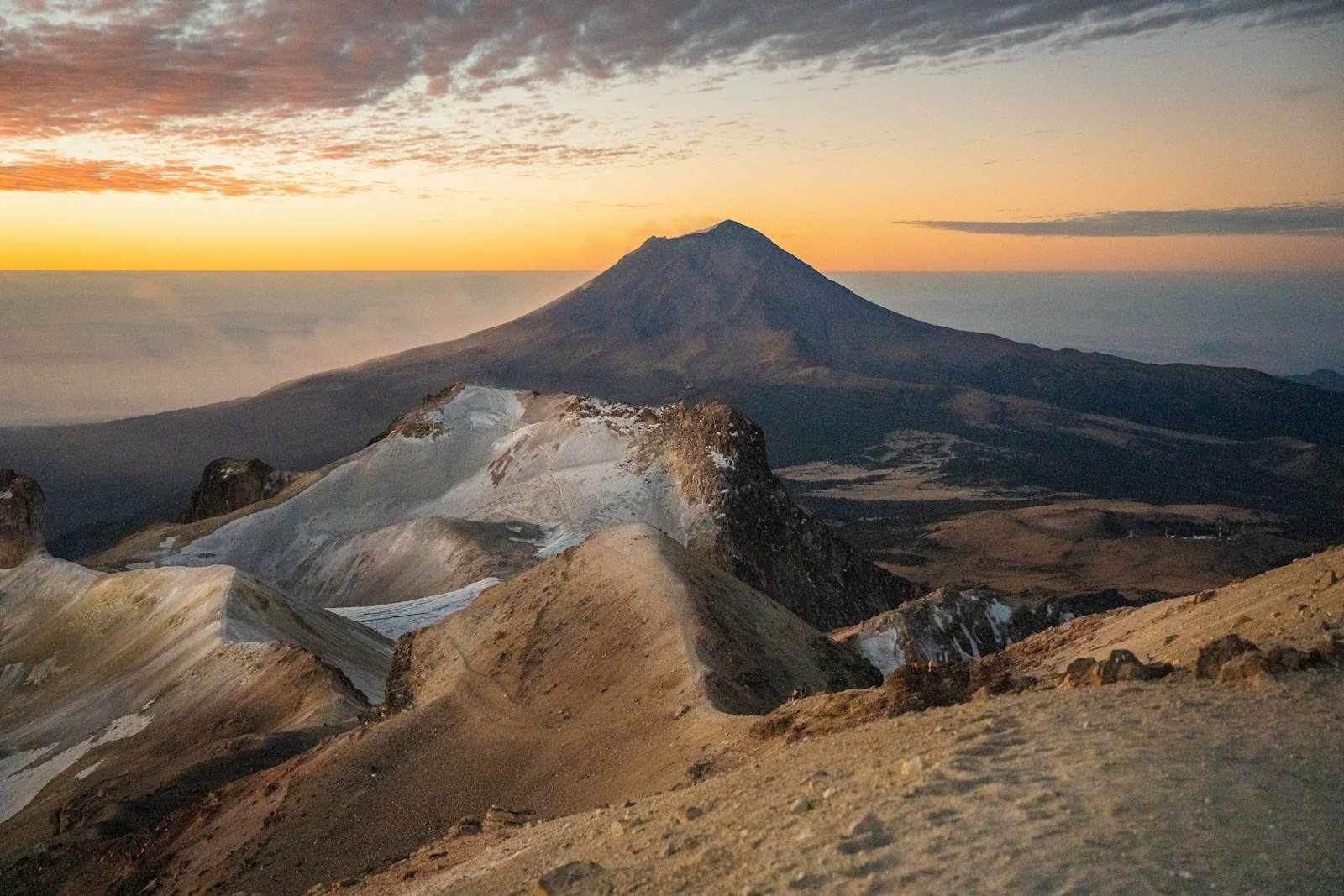
Two volcanoes stand over the Valley of Mexico, and this legend explains them. It has many versions. In a common one, the princess Iztaccíhuatl falls in love with Popoca, a warrior. Her father sends him to war and promises him her hand if he wins.
A rival sends back a false message that Popoca has died. The princess dies of grief. Popoca comes home victorious and finds her gone. He carries her body to the mountains and keeps watch beside her until he dies of sorrow too. The gods, moved, turn them both into mountains.
The names hold the story. Iztaccíhuatl means white woman in Nahuatl, and her outline looks like a woman lying down. That’s why people also call her la mujer dormida, the sleeping woman. Popocatépetl is the mountain that smokes. Now and then it still sends up smoke, as if to show he is still keeping watch.
Who is La Xtabay in Maya legend?
La Xtabay is a beautiful woman who bewitches men to lead them astray or kill them. Her name is often given as la engañadora, the deceiver. In some tellings her back is like a hollow tree trunk, and once she has a man close, her face turns into a demon’s.
Her story is a clear case of a legend that changed. Xtab was an old Maya goddess of death. After the conquest, she was recast as an evil spirit. The legend spread through much of Mesoamerica under other names, such as Siguanaba and Cegua. Some even tie her to La Llorona. The x at the start of her name is a Maya particle that marks a feminine name.
What is the legend of the Callejón del Beso?
This one is a love story, and it belongs to an alley in Guanajuato. Carmen is the daughter of a strict, controlling father. She falls for Carlos, a poor miner, and they meet in church on Sundays. When her father finds out, he locks her up and plans to marry her to a rich Spaniard.
Carlos rents the house across the alley, so his balcony faces hers. The balconies are only about 68 centimetres apart, so the two can meet in secret every day. One night the father catches them and stabs his daughter. Carlos, heartbroken, takes his own life soon after.
No document proves any of it. The story most likely spread in the late 19th or early 20th century. Today couples climb to the third step of the alley and kiss there. Tradition says that brings 7 years of happiness. Couples who visit and don’t kiss get 7 years of bad luck in love.
Hear the Spanish. A callejón is a narrow alley, and un beso is a kiss. El tercer escalón is the third step, the one couples kiss on.
Who was La Mulata de Córdoba?
This legend comes from colonial times, in Córdoba, in Veracruz. Soledad is a woman nobody can place. No one knows where she came from, and she never seems to grow older. Suitors follow her everywhere, and the town talks about the mystery around her.
In the version told by a 1948 opera, she ends up before the Inquisition in Mexico City. She is told to confess, or be condemned for dealings with the devil. She draws a ship on the wall instead. Then she climbs aboard, and the ship vanishes with her. That opera, by the composer José Pablo Moncayo, opened on 23 October 1948.
Why do so many Mexican legends sound alike?
Read these 8 together and you’ll notice a pattern. Many began as Indigenous beliefs about gods and spirits. After the conquest, those beliefs met Spanish ones, and the stories mixed. Spain has its own ghostly women in white who haunt rivers and fountains, and they look a lot like La Llorona.
That mixing is why the same figure turns up in many places with a new name. It’s also why these stories fit so well beside the customs of Día de los Muertos, when the dead are remembered with warmth. For more of the words behind the region’s customs, see our guide to Latin American traditions and the Spanish behind them and our wider guide to Mexican traditions.
Try it. Pick one legend and tell it out loud in Spanish in 5 sentences. Use the words from the table at the top.
Source: From the facts in this guide.
Words from this guide
| Spanish | English |
|---|---|
| llorar | to cry |
| ¡Ay, mis hijos! | oh, my children |
| el perro | the dog |
| las cadenas | the chains |
| la codicia | greed |
| la mujer dormida | the sleeping woman |
| la engañadora | the deceiver |
| el callejón | a narrow alley |
| un beso | a kiss |
| el tercer escalón | the third step |
Frequently asked questions
What is the most famous Mexican legend?
La Llorona, the weeping woman who cries for her children by the water at night. She is told across Mexico, Central America and beyond.
What does La Llorona mean in English?
The crying woman or the weeping woman. It comes from the Spanish verb llorar, to cry.
Is La Llorona a Mexican or a Latin American legend?
Both. Her roots are in Mexico, but versions are told from Mexico to Argentina, each with its own name, river and twist.
What is a nahual?
A person who can take the shape of an animal, or the animal spirit that goes with a person. The word comes from the Nahuatl nahualli, hidden or disguise.
What is the legend of the two volcanoes in Mexico?
The warrior Popoca and the princess Iztaccíhuatl loved each other and died apart. The gods turned them into the volcanoes Popocatépetl and Iztaccíhuatl.
Every legend lives in a place. Our next issue, Ciudades que hablan, takes you to 18 cities across the Spanish-speaking world. Each one gets a single story, told in Spanish by someone who lives there. Join the waitlist and we’ll tell you when it opens.


Your Spanishcould use some.
In Spanish, reading tends to fall apart at the first word you don’t know. Audaz Revista is a Spanish magazine written by experts, where you tap that word and keep going. Edition 1 is out now.
Pay once, and it opens the moment you pay. See what's in Edition 1
Try it. Tap any word.
.
We love meeting up with friends to go out for tapas.
From "5 Spanish customs you should know", Edition 1.
Pay once, and it opens the moment you pay. See what's in Edition 1