Spanish Breakfast: What Locals Actually Eat
By Camila Rossi, Culture writer, Buenos Aires & Barcelona
Updated July 4, 2026 · Reviewed by our team
What do Spaniards actually eat for breakfast? Usually something small. A coffee (café con leche) with a piece of toast (una tostada) topped with olive oil and grated tomato is the everyday reality. Churros are a weekend treat, not a daily habit. Most Spaniards also eat twice in the morning: a light desayuno at home, then a second breakfast, the media mañana, later on.
- The everyday Spanish breakfast is light and quick: coffee plus a tostada, not a big cooked plate.
- Churros con chocolate are a treat for weekends and special days, not what people eat every morning.
- Many Spaniards eat two breakfasts: a small one at home, then a mid-morning snack around 10 to 11am.
- The word almuerzo is a trap. In some regions it means the mid-morning snack. In others it means lunch.
What does a real Spanish breakfast look like?
Forget the travel-blog photo of a tower of churros and thick chocolate. That is a treat, not a Tuesday. The everyday Spanish breakfast is small, quick and simple.
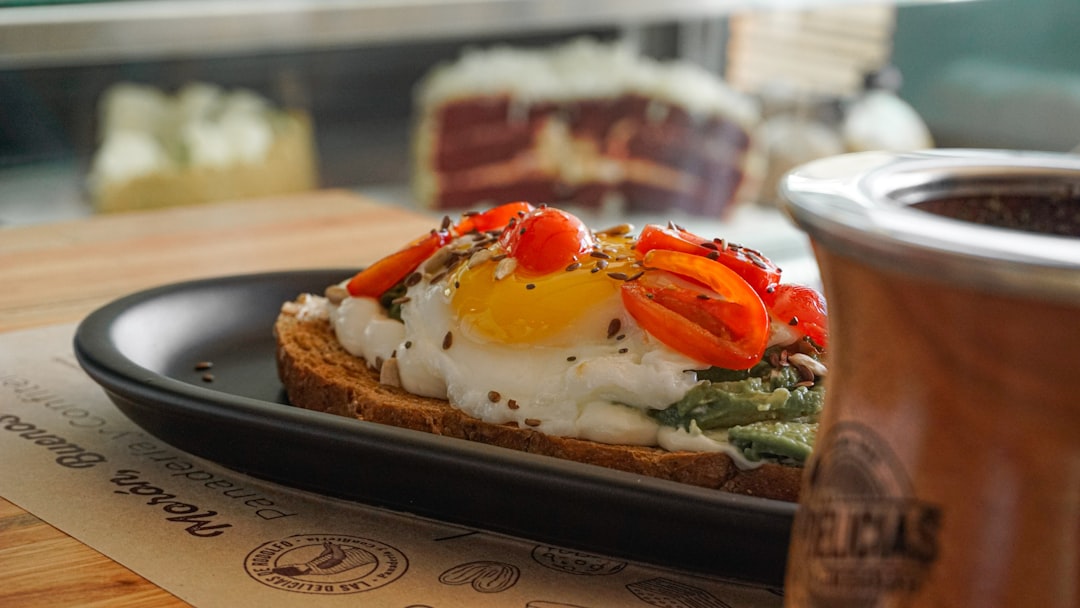
The classic is una tostada (a piece of toast) with a coffee. In much of Spain that toast comes as tostada con tomate: toasted bread rubbed or topped with grated tomato, a good pour of olive oil and a pinch of salt. You build it yourself at the table. Add jamón (cured ham) or cheese if you want it heartier.
Sweet options are just as common. A magdalena (a soft lemony sponge cake), a napolitana (a chocolate-filled pastry), or a few plain galletas (biscuits) dunked in coffee. Kids often have Cola Cao, a chocolate milk drink that is practically a national institution. If you want to widen your food words fast, our guide to 20 Spanish food terms in 10 minutes pairs nicely with this.
The point is the size. Spaniards do not do the big cooked breakfast. Mornings are for a light bite and a strong coffee. The serious eating happens later in the day, a rhythm Spain’s official tourism board spain.info describes across its guides to Spanish food culture.
Why do Spaniards eat breakfast twice?
Because lunch is late and far away. In Spain, la comida (the main midday meal) often lands between 2pm and 3pm. That is a long stretch from a 7am coffee. So the morning gets split in two.
The first is el desayuno: the small breakfast at home, usually between 7 and 9am. Light and often sweet. Then comes the second one, the media mañana (mid-morning), around 10 to 11am. This is the fun one. People leave the office, head to a bar or café, and have a proper snack. A pincho de tortilla (a slice of Spanish potato omelette), a small sandwich, or a fresh tostada, with another coffee.
Watch out for the word almuerzo. Spain’s Real Academia Española dictionary lists it as both a mid-morning bite and the midday meal. In much of eastern Spain, like Valencia, almuerzo means that mid-morning snack. In other regions and across much of Latin America, almuerzo means lunch itself. Same word, different meal. When someone invites you to almorzar, check the clock before you decide how hungry to be.
Are churros really a Spanish breakfast?
Yes and no. Churros are a genuine Spanish breakfast food, and they are eaten in the morning, not as a dessert. So the travel blogs are not wrong about that. What they get wrong is how often.
Churros con chocolate (fried dough sticks with thick hot chocolate) is a weekend and special-occasion treat. Think Sunday morning with family, or the small hours after a night out. Nobody is eating a plate of churros before work on a normal Wednesday. Treat it as a lovely ritual, not the daily norm.
A close cousin is the porra, a thicker, softer version of the churro popular in Madrid and the south. In Madrid you might dip soletillas (ladyfinger biscuits) in your chocolate. In Barcelona the same biscuits are called melindros. Little regional word swaps like these are half the fun of learning Spanish.
What do Spaniards drink at breakfast?
Coffee. Almost always coffee. The default is café con leche, roughly half strong espresso and half hot milk. If you want to sound like a local, learn a few variations before you order.
- Café con leche: espresso with plenty of hot milk. The breakfast standard.
- Café cortado: espresso “cut” with just a splash of milk. Smaller and stronger.
- Café solo: a plain espresso, no milk.
- Manchado: mostly milk with a stain of coffee. Good if you want it gentle.
- Zumo de naranja: freshly squeezed orange juice, a common add-on to any breakfast.
Coffee culture is a whole world of its own here. If you enjoy this side of things, our piece on coffee culture in Salamanca goes deeper into how Spaniards actually order and linger.
Does breakfast change around Spain?
It does, and that is where it gets tasty. Spain is a country of regions, and each one has its own morning habits and its own words. Food writers who live in Spain, like the team at Spanish Sabores, track these local breakfasts in detail. Here is a quick tour.
| Region | Local breakfast | What it is |
|---|---|---|
| Andalusia | Tostada con manteca colorá | Toast with seasoned pork lard, or with olive oil and honey |
| Catalonia | Pa amb tomàquet | Bread rubbed with tomato and olive oil (the Catalan name for pan con tomate) |
| Madrid | Porras con chocolate | Thick, soft churros dipped in hot chocolate |
| Basque Country | Pincho de tortilla | A wedge of potato omelette, sometimes with green pepper |
| Galicia | Bizcocho casero | Homemade sponge cake, often made with local butter |
| Mallorca | Ensaimada | A light, spiral pastry dusted with icing sugar |
Notice how the same idea shifts from place to place. Tomato toast is tostada con tomate in Madrid and pa amb tomàquet in Barcelona. Learning the regional word tells locals you have actually been paying attention. It is the kind of detail our Spanish lifestyle habits guide loves.
The breakfast vocabulary you actually need
Here is the short list that gets you through a real Spanish morning. Learn these ten and you can walk into any café and order like you belong.
| Spanish | English | How to use it |
|---|---|---|
| el desayuno | breakfast | “¿Qué hay para desayunar?” (What is there for breakfast?) |
| una tostada | a piece of toast | “Una tostada con tomate, por favor.” |
| café con leche | coffee with milk | The safe, everyday order. |
| un cortado | espresso with a splash of milk | For a smaller, stronger coffee. |
| zumo de naranja | orange juice | “Un zumo de naranja natural.” (freshly squeezed) |
| la media mañana | mid-morning (second breakfast) | “Nos vemos a media mañana.” |
| churros | fried dough sticks | A weekend treat, not a daily order. |
| la barra | the bar / counter | Standing at la barra is cheaper than a table. |
| la cuenta | the bill | “La cuenta, por favor.” |
| para llevar | to take away | If you are in a hurry, though locals rarely are. |
One local habit worth copying: order and eat at la barra (the counter). It is usually cheaper than sitting at a table, and it is where the morning chatter happens. Coffee, a tostada, five minutes of standing gossip, then off to work. That is a Spanish breakfast.
Frequently asked questions
What is a typical Spanish breakfast?+
Something light. Usually a coffee (café con leche) with a tostada, which is toast topped with grated tomato and olive oil, or with a sweet pastry like a magdalena or napolitana. Spaniards keep breakfast small and save the big meals for later in the day.
Do Spaniards really eat churros for breakfast?+
Sometimes, but not daily. Churros con chocolate are a genuine breakfast food, eaten in the morning rather than as dessert. Most people treat them as a weekend or special-occasion treat, not an everyday habit.
Why do Spaniards eat breakfast twice?+
Because lunch is late, often 2pm to 3pm. So the morning splits into a small desayuno at home around 7 to 9am, then a second breakfast, the media mañana, around 10 to 11am, usually a snack and another coffee at a bar.
Does almuerzo mean breakfast or lunch?+
It depends on the region. In parts of eastern Spain, like Valencia, almuerzo means the mid-morning snack. In other regions and across much of Latin America, almuerzo means lunch. Always check the time of day if someone invites you to almorzar.
What coffee should I order for a Spanish breakfast?+
Café con leche is the everyday choice, roughly half espresso and half hot milk. If you want it smaller and stronger, order a cortado. For plain espresso, ask for a café solo.
Want more honest, no-textbook guides to real Spanish life and language? Subscribe to Audaz and we will send our best Spanish-learning picks plus a free issue. Next, learn to order like a local with our 20 Spanish food terms in 10 minutes.
Camila Rossi
Culture writer, Buenos Aires & Barcelona
Camila Rossi is a writer based between Buenos Aires and Barcelona who covers the everyday culture of the Spanish-speaking world: its rituals, its food, and its unwritten social codes. She grew up sharing mate at her grandmother’s table, and writes about the customs that guidebooks tend to skip.
Share
Topics

audazrevista
You may also like

Get the Inside Scoop